



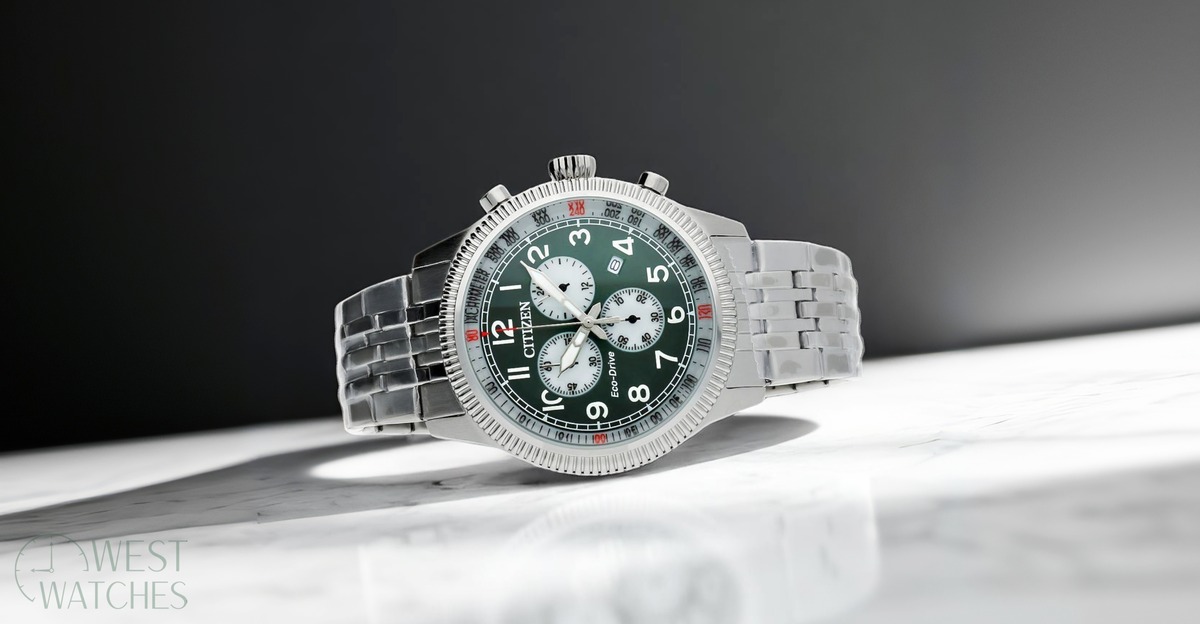
Titanium or steel watch? We examine the main differences between these materials
Wondering what will look better on your wrist—titanium or steel? The differences between these materials go beyond just weight and appearance. If you want to make an informed choice that will translate into comfort, durability, and style, this guide will dispel your doubts.
Titanium or steel watch? Find out which material will better withstand the rigors of everyday life.
If you want a watch that can withstand everyday use, it's a good idea to look at the issue from a broader perspective than just marketing slogans. Both materials – titanium and steel – have their strengths, but the differences between them in terms of durability can be surprising. Stainless steel, especially the 904L version, is considered to be more resistant to scratches and scuffs. This is why it is so often used in luxury models by brands that like to boast about their perfect finish even after years of wear.
Titanium, on the other hand, copes better with impacts and deformations – it has a high strength-to-weight ratio, which means that although it is lighter, it is not weaker. The natural oxide layer that forms on the surface of titanium also has a protective function, which affects its resistance to external factors, although unfortunately, it may be more susceptible to scratches, but in the case of titanium, they are easier to remove and mattify, and in practice, slight scratches are less noticeable than on the mirror surface of steel. The choice of material is therefore not only a matter of aesthetics, but also of what is more important to you in everyday life: resistance to minor scratches or major impacts.
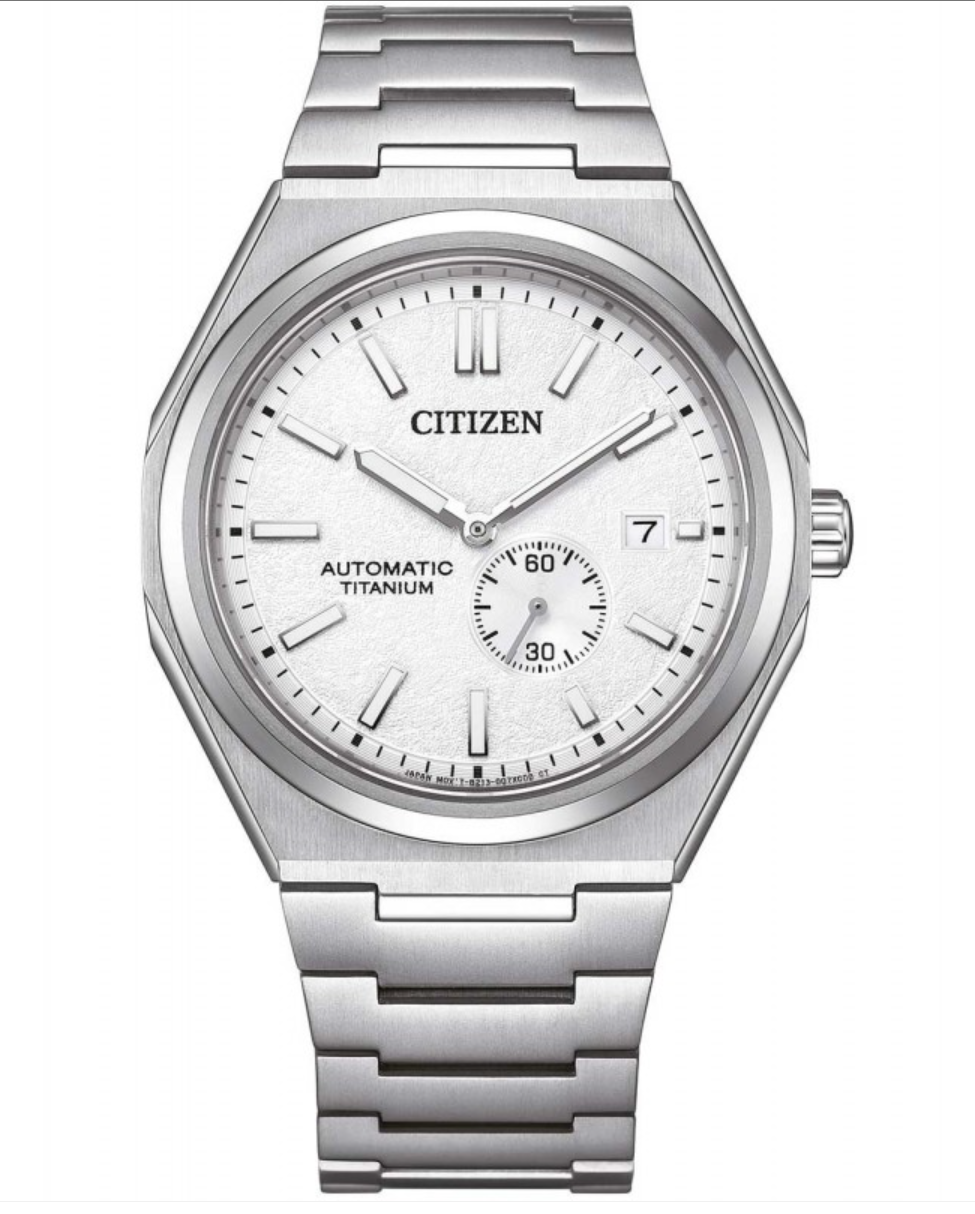
Lightweight, durable, and stylish – the Citizen Super Titanium Automatic NJ0180-80A is a watch designed for everyday comfort. With a titanium case and bracelet, it offers a modern look and unmatched lightness without compromising on durability.
Titanium versus steel: What do you really feel on your wrist? Surprising differences in wearing comfort
Not everyone notices this when trying it on for the first time, but over time, the difference in weight can really take its toll, especially if you have a larger case, wear your watch most of the day, or move around a lot. Titanium is noticeably lighter—up to 40-45% lighter than steel. And while this may seem insignificant at first, with prolonged use you begin to appreciate this lightness. The watch does not weigh you down, does not slide around your wrist so easily, and does not cause skin fatigue, even after several hours of wear.
On the other hand, steel gives a sense of "presence." Many classic watch enthusiasts consider a heavier watch to be more solid, durable, and even luxurious. For some, this weight is an indicator of quality and prestige. If you like to feel your watch on your wrist, steel is the natural choice. This is perfectly evident in the classic watches by Tissot, which, in their steel version, exude elegance, balanced proportions, and timeless character. Their weight on the wrist gives a feeling of stability and durability, which for many users is an indispensable part of the watch experience. But if you are looking for comfort and don't want to feel something weighing down your wrist – especially in summer – titanium is the clear winner.
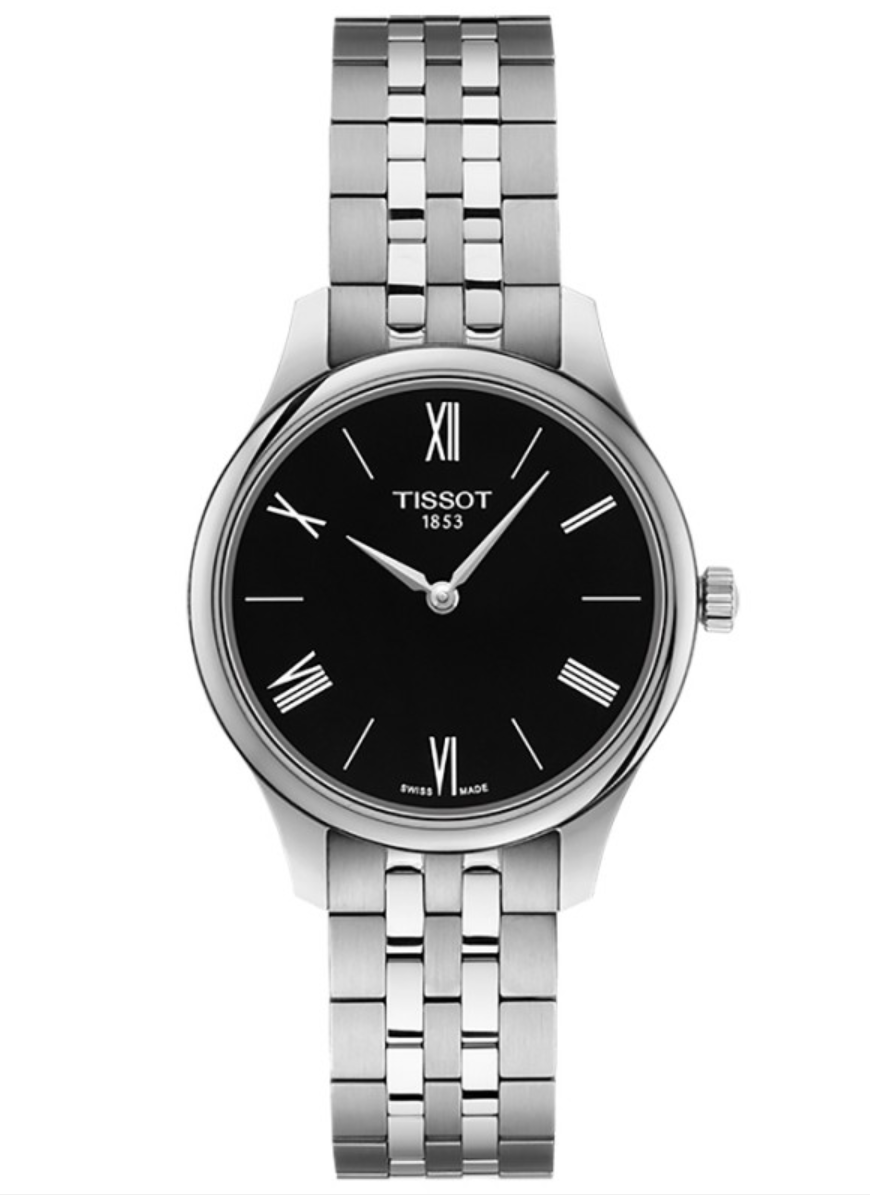
The Tissot T-Classic 31mm T063.209.11.058.00 is an elegant watch with a minimalist design, featuring a black dial and Roman numerals. The steel bracelet and Swiss precision make it the perfect accessory for both everyday wear and special occasions.
As you can see, comfort is a very individual matter, regardless of whether we are talking about women's watches or men's watches. Some will appreciate the lightness of titanium, which gives a feeling of freedom and an almost imperceptible presence on the wrist, while others prefer steel and its characteristic weight, which, according to many, is a sign of solidity and durability.
Shiny classic or modern matte? Choose a style that says more about you than a logo.
What strongly distinguishes titanium watches from steel ones is the finish and character of the material. Titanium has a decidedly more technical, modern look – raw, slightly gray, often matte. It usually does not shine, and even if it does, it is in a subtle, satin way. If you prefer minimalism and don't need shine, titanium will surprise you with its stylistic consistency with a modern wardrobe. In addition, it goes perfectly with everyday urban outfits – especially if you prefer subdued colors and simplicity in form. This is perfectly demonstrated, for example, by Epos watches, which combine matte elegance with technical sophistication, creating a consistent, modern design ideal for those who value style without exaggeration and functionality without compromise.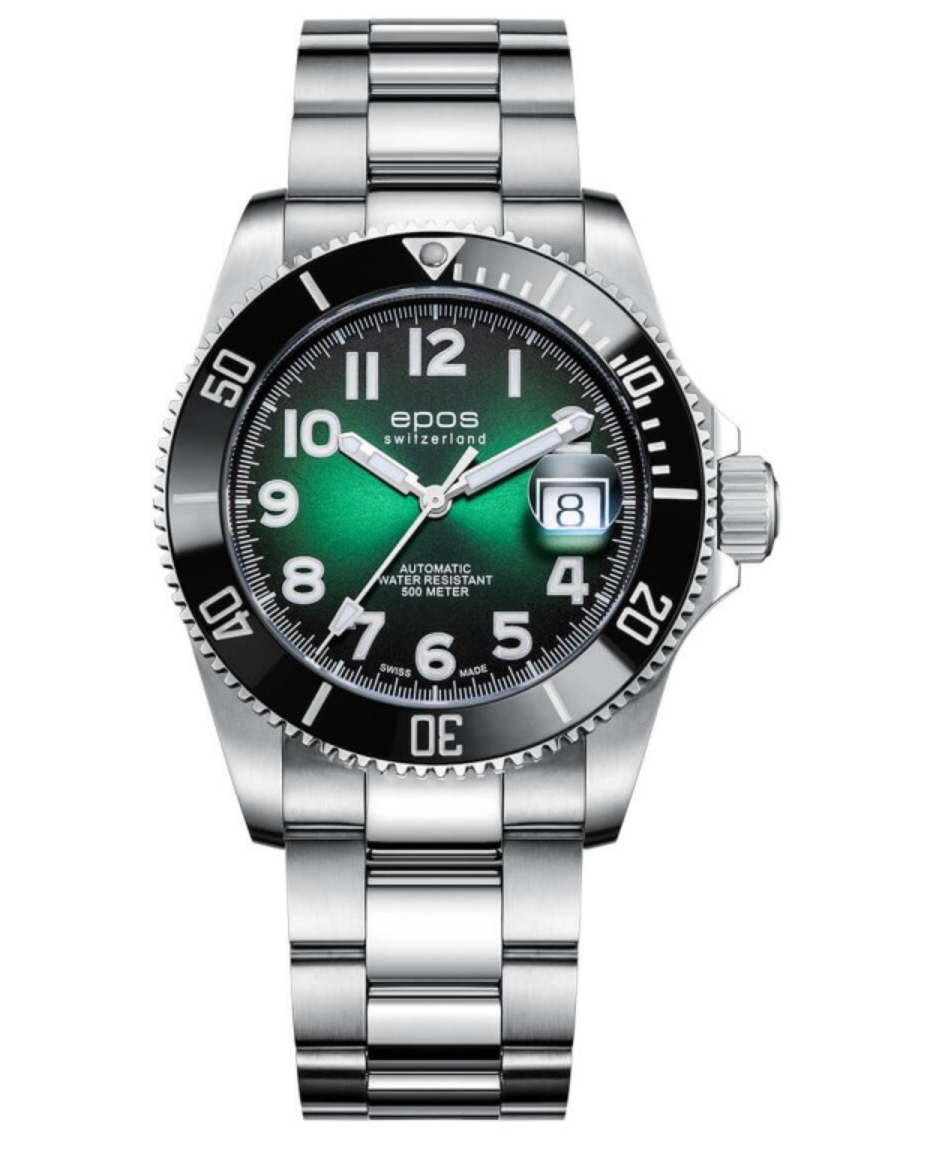
The Epos Sportive Diver Titanium Automatic 41.50 mm 3504.131.80.33.90 is a professional diving watch made of lightweight and durable titanium, ensuring exceptional comfort. Water resistance up to 500 m and an automatic movement make it a reliable companion for underwater expeditions.
Steel watches offer much more in terms of finish options. Polished steel can shine like a mirror, which attracts attention and is associated with elegance. If you want a more classic, sometimes even jewelry-like effect, steel offers more. You can choose from a variety of finishes: polished, brushed, with or without PVD coating. It is a material that works perfectly in both men's sports watches with rubber straps and in women's evening watches with bracelets. Titanium does not try to shine – and that is why many consider it more stylish.
Are you allergic to nickel? This choice could save your skin.
For people with sensitive skin, the choice of case and bracelet material is very important for health reasons – and this is no exaggeration. Stainless steel, although considered safe, contains nickel, which can cause allergic reactions in some people. Even 316L steel, which is referred to as "surgical," does not guarantee complete protection, especially with intensive use, high temperatures, and sweating. If you have ever noticed irritation or a rash where you wear your watch, it may be a sign that it is time to change the material.
Titanium, on the other hand, is completely hypoallergenic. It does not contain nickel, does not cause contact reactions, and its surface is naturally stable. That is why it is chosen not only by people with allergies, but also by those who simply prefer to avoid unnecessary chemical additives. Interestingly, titanium is not only used in watches – it is also used in implants, prostheses, and even medical equipment. That speaks for itself. So if you have even the slightest doubt about your skin's tolerance – play it safe and choose titanium.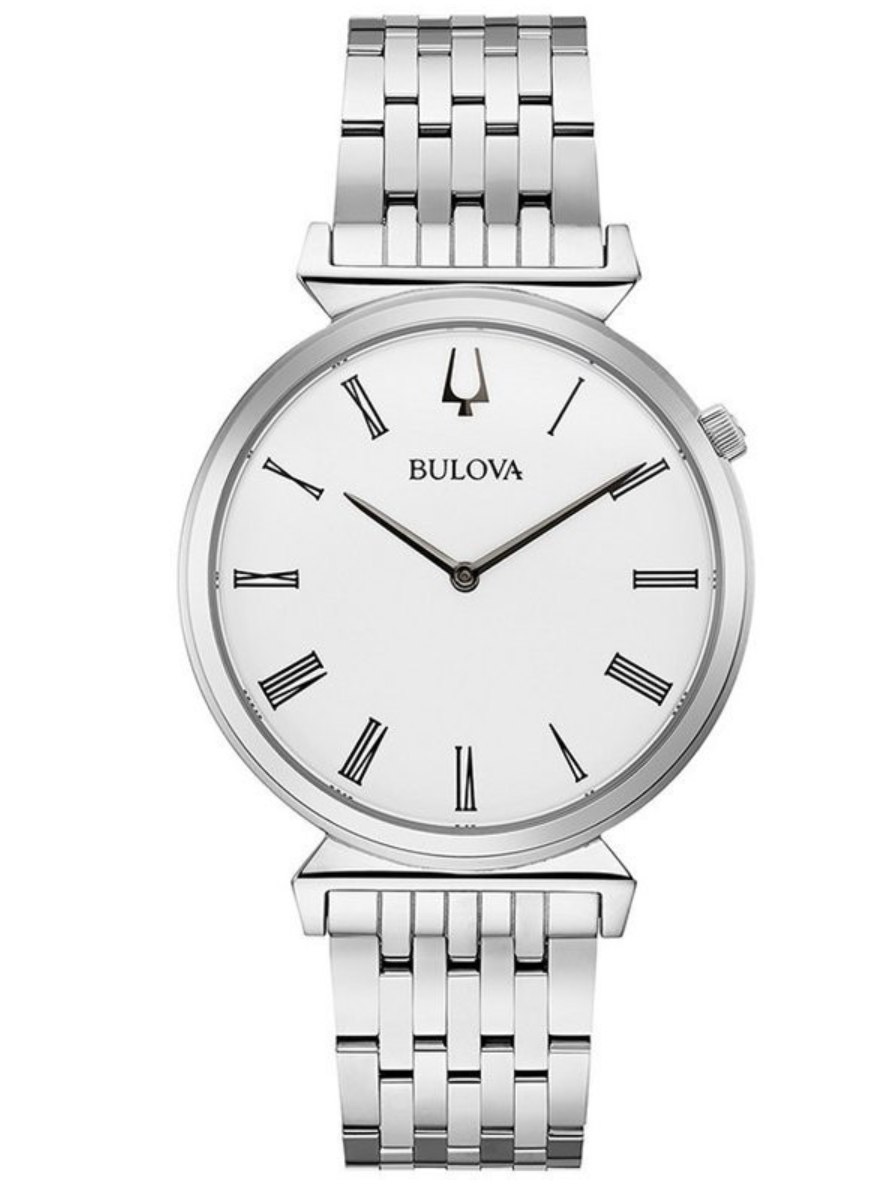
The Bulova Classic Unisex 96A232 is an elegant watch with a minimalist design, featuring a white dial and Roman numerals. Its versatile design and steel bracelet make it the perfect choice for both men and women.
Titanium or steel watch – which one is really worth buying? Profit and loss calculation
When it comes to price, it is worth taking a cool-headed look at the issue. Titanium watches are generally more expensive – for several reasons. First, the material itself is more costly to obtain. Secondly, its processing requires specialized machinery and expertise, which significantly increases the cost of production. Therefore, titanium watches are more likely to be found in the offerings of premium brands or those that focus on outdoor and sports watches. If you are looking for something durable, technical, and lightweight, you have to be prepared to pay a higher price, as is the case with Citizen watches.
Steel is much more affordable. It can be used to make both a cheap watch costing a few hundred zlotys and a luxury model costing several thousand – it all depends on the level of finish, the mechanism, and the brand. Importantly, servicing and repairs of steel watches are usually cheaper. Polishing, replacing links, adjusting the bracelet – all of this is simpler and less burdensome on the wallet in the case of steel. So if you care about affordable value for money, steel may prove to be a more practical choice – especially if you plan to have more than one watch in rotation.
If you want to see the differences for yourself and find out which material best suits your wrist, check out the range at WestWatches online watch store. There you will find a wide selection of models – from precisely crafted Bulova stainless steel watches to technically refined titanium watches from brands such as Epos and Citizen. It's the perfect place to find a watch that is not only stylish, but above all durable and comfortable for everyday use.

Krzysztof Szopa
Watch expert
An expert associated with WestWatches.pl, a place that has been providing watches for every occasion for years. Thanks to many years of experience in the watchmaking and jewellery industry, he passionately shares his knowledge, offering professional advice both in the online store and in the brick-and-mortar shop. He specialises in selecting original watches, watch accessories and jewellery that combine exceptional quality with competitive prices. His goal is to help customers find the perfect product that meets their expectations and emphasises their style.

See popular articles
316L, 904L and surgical steel – what is your watch made of?
Most steel watches, from affordable models to luxury constructions, are made of 316L steel. 904L steel contains more nickel, chromium and molybdenum, and therefore offers higher corrosion resistance, but in itself it does not mean greater scratch resistance. The term “surgical steel”, in turn, does not point to one strictly defined alloy. In watches it most often refers to 316L, but without a specific material designation it may simply be a marketing name. If you are choosing a watch for years, look therefore not only at the words “stainless steel”, but also at the grade of steel, which components are made of the given material and how they are finished.
Japanese or Swiss watches? We compare quality, movements and prices
If you are wondering whether Japanese or Swiss watches are better, the name of the country alone will not give you a good answer. In both cases you will find simple models for relatively little money, solid mid-range automatics and designs belonging to the world's watchmaking high end. Far more about quality will be told to you by the specific movement, the way the case and bracelet are made, the crystal, quality control, accuracy and price. Check how Japanese watches really differ from Swiss ones and what to pay attention to before you choose a model for yourself.

The lifespan of a quartz watch – how long does it really last, and when is it no longer worth repairing?
We value quartz watches above all for their accuracy, convenience and modest day-to-day demands. That does not mean, however, that they can run indefinitely and need nothing more than a new battery once every few years. Over time, the components of the movement itself also wear out, and the moment a watch starts giving trouble can look completely different depending on the model, the way it is used and the availability of parts. So how long can a quartz watch last, what wears out in it most often and when does repair still make sense? Check what its lifespan really depends on.
The second hand on a watch – why does it jump, move smoothly or stop?
The way the seconds hand moves can tell you a lot about a watch's movement, but it is not an infallible test. A single distinct jump per second most often points to quartz, several small movements per second are typical of a mechanical movement, and an almost continuous glide is associated with Spring Drive. There are exceptions, however: there is a quartz watch with a sweeping seconds hand, and a mechanical watch that makes exactly one jump per second. What is more, a stopped hand does not have to mean a fault. Check how to read these signals and when you really need a watchmaker's help.

How do you set an automatic watch? Date, time and time zone 21:00–3:00
An automatic watch does not need a battery, but it does require a little knowledge from its owner. Setting the time or date seems simple, yet the wrong moment or the wrong way of using the crown can affect how the movement works. Many questions concern changing the date at night, moving the hands backwards and restarting a watch after a longer break. Check how to set an automatic watch correctly, what to pay attention to with the crown and why people often talk about particular caution between 9:00 pm and 3:00 am.

Wodoszczelność 10 ATM i 20 ATM – czy możesz pływać i nurkować z takim zegarkiem?
Co naprawdę oznacza 10 ATM lub 20 ATM na zegarku i czy takie oznaczenie pozwala bez obaw wejść do basenu, morza albo nurkować? Same liczby mogą być mylące, dlatego sprawdź, jak czytać klasę wodoszczelności i dobrać zegarek do aktywności w wodzie.
Water resistance 3 ATM – what does it mean and what can you do with it?
3 ATM water resistance means the watch is prepared above all for rain, accidental splashes and brief contact with water during everyday activities. It does not mean that you can swim with it, shower in it or submerge it to a depth of 30 metres. It is precisely the “30 m” marking that most often misleads. It is the result of a pressure test carried out under controlled conditions, not a declared working depth. So if you see 3 ATM, 3 bar or Water Resistant 30 m on the case back or in the specification, treat the watch as resistant to everyday moisture, but not as a watch for water activities.

Rolex-style watches – the best alternatives to the Submariner, Explorer and Datejust
For years Rolex has been one of the most important style benchmarks in the watch world, but its price is not within everyone's reach. That is why it is worth looking at watches similar to Rolex and models inspired by its styling, which offer their own character, solid build quality and much more affordable prices. We are not talking about counterfeits here, but about legitimate watches from other brands that draw on similar solutions and design language. Check out watches inspired by Rolex's style and choose the model that suits your style and budget.
A bronze watch – why does each one change over time?
A bronze watch stands out because its appearance changes along with its owner. The case gradually darkens, turns matte and develops a patina, so two identical models can look completely different after just a few months. This is the greatest advantage of bronze, but also a trait you need to accept before buying. If you expect a watch that keeps its factory shine for years, steel may be a better direction. If, on the other hand, you like vintage looks, signs of use and the natural ageing of a material, bronze gives an effect that is hard to achieve in any other metal.