



What was the first watch in space? Find out what astronauts wear on their wrists
Did you know that the first watch that flew into space wasn't on a human wrist, but... attached to a dog's leg? The history of timepieces in space is a fascinating story of technological rivalry, astronaut courage, and extraordinary precision that could save lives. From the Soviet Pobeda and Gagarin's Sturmanskie to the legendary Omega Speedmaster, which passed NASA's most brutal tests – each of these watches became part of space exploration history. Discover what astronauts actually wear on their wrists and why even today, in the smartwatch era, they still choose mechanical legends.
Not just Gagarin – learn the true history of the first watch that flew into space (and it wasn't on a human wrist!)
When you think of the first watch in space, Yuri Gagarin and his legendary Sturmanskie probably immediately come to mind. But the story begins earlier – and in a way that can surprise even the greatest watch enthusiasts. On March 9, 1961, over a month before Gagarin's flight, a Soviet female dog named Chernushka set out into space aboard Korabl-Sputnik 4. A Pobeda 34-K watch was attached to her leg, and the experiment was designed to test how mechanical devices would cope with the extreme conditions of launch, g-forces, and vacuum. The dog returned safe and sound – and with it the watch, which can now be considered the first timepiece to leave Earth.
This story shows that before humans even looked at Earth from orbit, a mechanical watch was already there first. Interestingly, the idea of attaching a watch to an animal came from Dr. Abraham Genin, a scientist who wanted to test the reliability of Soviet constructions before a manned flight. Although this mission is rarely mentioned, it was the Pobeda 34-K that paved the way for tests that would define entire generations of aviation and space watches in the years to come.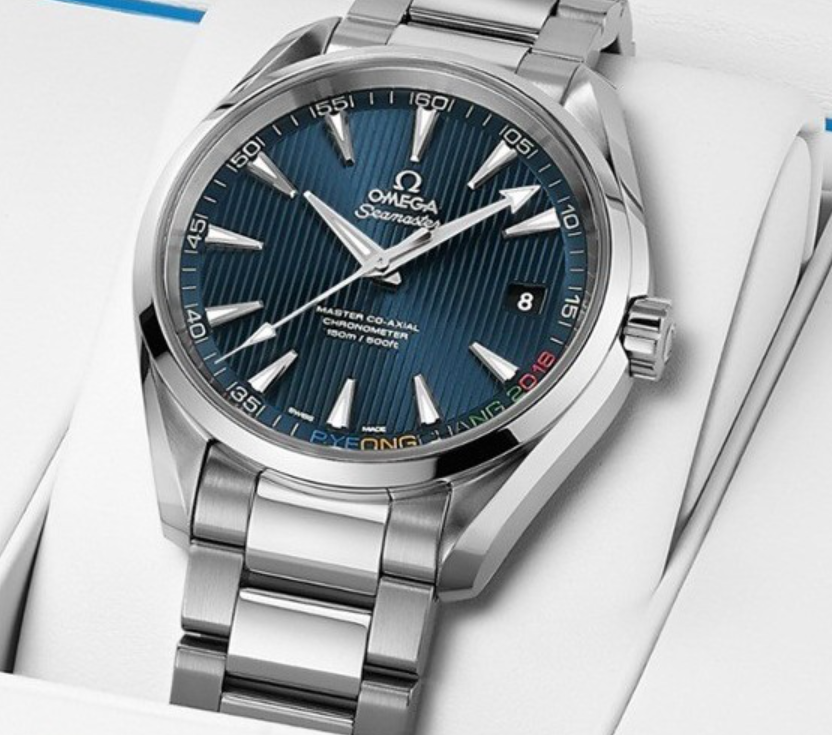
Omega Seamaster Aqua Terra "PyeongChang 2018" Limited Edition is a unique tribute to sporting spirit and precision, designed for the Winter Olympics in Korea. The limited edition features a blue dial with vertical guilloche and colorful "PYEONGCHANG 2018" details, symbolizing passion, perfection, and Olympic energy.
Only on April 12, 1961, when Gagarin set out aboard Vostok 1, did a watch first appear on a human wrist in space. Sturmanskie watches, which were only given to graduates of military flight schools, were not available for sale. They were a symbol of trust and prestige – proof that a pilot had completed a long training path and earned this privilege. It was this watch that accompanied Gagarin during the 108 minutes that changed history. It had no water resistance, wasn't a "space" model in today's sense, but it worked perfectly – which was enough to forever be recorded in the history of space exploration.
From Pobeda to Speedmaster – the story of how Omega conquered space and defeated the competition in NASA tests
When NASA began planning manned space flights in the 1960s, no one suspected that one of the most important pieces of astronaut equipment would be a mechanical watch. And yet – engineers knew that in case of onboard electronic system failure, astronauts needed to be able to manually measure time. That's why in 1964, official testing of wristwatches began, designed to meet the most brutal conditions imaginable.
Four brands entered the tests: Omega, Rolex, Longines-Wittnauer, and Hamilton. Right from the start, Hamilton was eliminated because they sent a pocket watch instead of a wristwatch. Three remained. Each watch had to pass 11 NASA tests, including extreme temperatures, vacuum, vibrations, humidity, corrosion, and even exposure to 130-decibel sound. Rolex and Longines failed at the thermal vacuum test stage – only the Omega Speedmaster ref. 105.003 survived everything.
That's when the legend was born. On March 1, 1965, Omega received NASA's official certification: Flight Qualified for All Manned Space Missions. Three weeks later, during the Gemini 3 mission, the Omega watch flew into space as part of standard equipment. Astronauts loved its reliability and simplicity – in a world where the smallest error could cost lives, the Speedmaster was a symbol of trust.
From that moment on, Omega was an inseparable companion of American space missions – from Gemini, through Apollo, to Skylab. Interestingly, the brand didn't know NASA was testing its watches – only photos from the first American spacewalk in 1965 revealed that astronaut Ed White was wearing a Speedmaster. This event completely changed the brand's history, which to this day can use the slogan: "First Watch Worn on the Moon."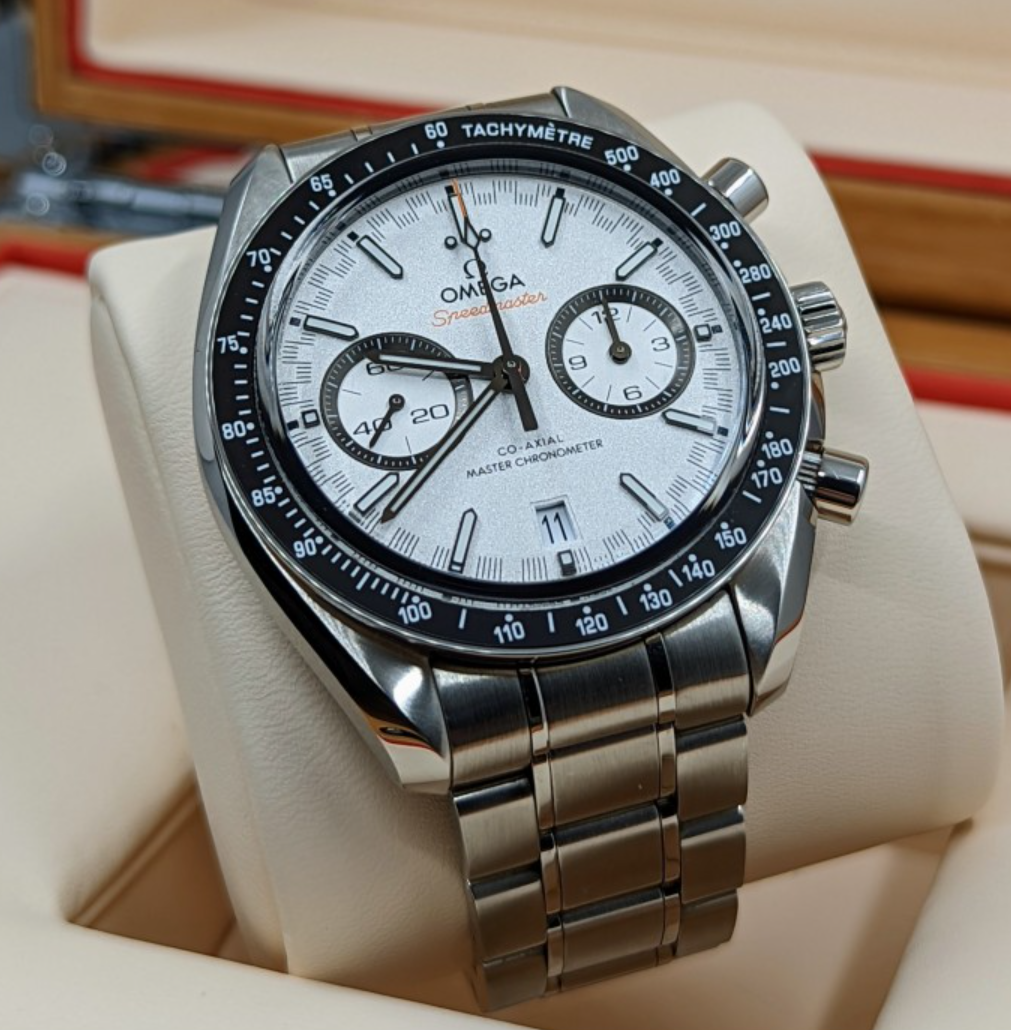
Omega Speedmaster Racing Co-Axial Master Chronometer Chronograph is a tribute to motorsport precision and elegance, combining excellent performance with timeless style. Its characteristic asphalt-textured dial and Master Chronometer certification make it a watch created for those who value perfection in every detail.
When time decided life or death – how Omega saved the astronauts of Apollo 13 mission
The story of the Apollo 13 mission is one of the most emotional moments in space exploration history – and one that best shows why a simple mechanical watch can be more important in a crisis than the most advanced computers. On April 13, 1970, at 10:08 PM, an oxygen tank explosion occurred in the service module. Instead of landing on the Moon, astronauts James Lovell, Jack Swigert, and Fred Haise fought for survival.
All electronic systems were reduced to minimum to conserve energy. When it turned out the capsule had deviated from course, a precise 14-second engine maneuver had to be performed to restore the proper return trajectory. Computers couldn't be used – only the Omega Speedmaster Professional, Swigert's watch, which was used to precisely measure time, was working. Lovell maintained course while watching Earth's horizon, and Swigert counted down the seconds. Their precision saved the entire crew.
After a safe splashdown in the Pacific on April 17, 1970, NASA awarded Omega the prestigious Silver Snoopy Award – the highest recognition for contribution to space mission safety. Since then, Snoopy has become one of the brand's symbols, and special edition watches featuring him are among the most coveted by collectors. Today, every owner of this model knows they're wearing not just a luxury item, but also a symbol of courage, precision, and human survival instinct.
Why do they still wear mechanical watches in the smartwatch era? An answer that will surprise every technology fan
In the age of smartwatches that measure pulse, sleep, and count steps, it's hard to believe that NASA astronauts still rely on mechanical watches. And yet – the reason is simple: in space, electronics often fail. Batteries don't withstand extreme temperatures, LCD displays crack or go dark, and delicate integrated circuits can stop working after just a few minutes of vacuum exposure. A mechanical hand-wound watch, without batteries and liquid crystals, simply works – regardless of conditions.
Watches like the Omega Speedmaster Professional have fully mechanical movements that can be wound manually, even in thick spacesuit gloves. That's precisely why NASA still uses them during EVAs (spacewalks). Newer, quartz models – like the Omega Speedmaster X-33 or Skywalker X-33 – are designed for work inside the station, where stable conditions prevail. Astronauts often wear two watches simultaneously: a classic Speedmaster as backup and the X-33 for operating digital functions.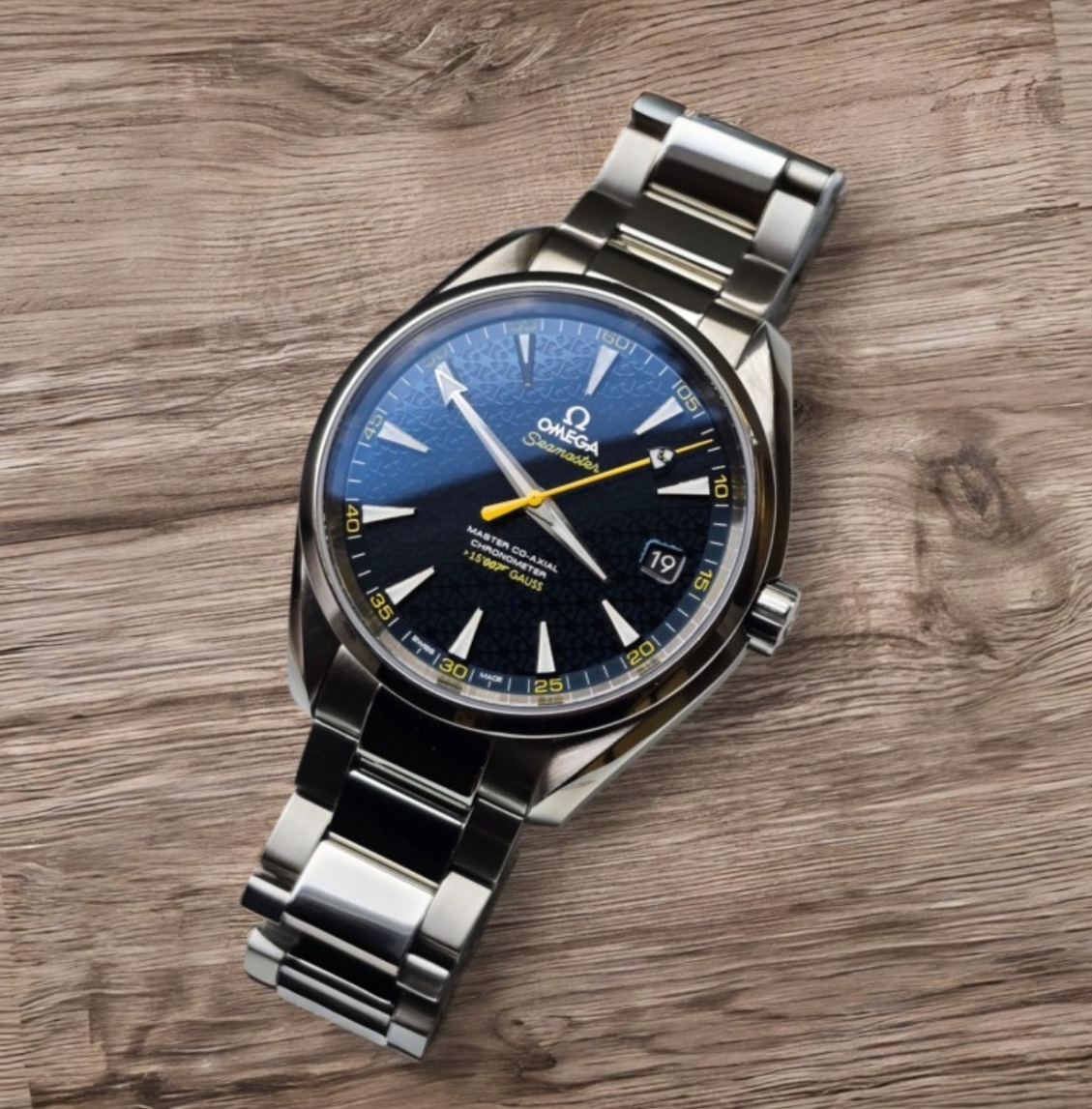
Omega Seamaster Aqua Terra 15'007 Gauss is an exceptional watch that combines unparalleled precision with elegant sporting character. Thanks to its resistance to magnetic fields up to 15,000 gauss and unique DNA-structure-inspired dial, it represents a symbol of innovation and excellence in Swiss craftsmanship.
Interestingly, despite enormous technological progress, no smartwatch has obtained NASA certification for spacewalks. Mechanics still wins over electronics because it provides something that can't be programmed – absolute reliability. Today, the Speedmaster is not just a working tool for astronauts, but also a symbol of tradition and precision that has survived six decades of cooperation with NASA and represents watchmaking artistry appreciated by watch enthusiasts worldwide. Modern editions of Swiss Omega watches available in our online watch store preserve the spirit of the original while delighting with precision, premium-class materials, and timeless design that works perfectly not only in space, but also in everyday style.

Krzysztof Szopa
Watch Expert
An expert associated with the WestWatches.pl brand, a place that has been providing watches for every occasion for years. Thanks to many years of experience in the watchmaking and jewelry industry, he passionately shares his knowledge, offering professional advice both in the online and physical store. He specializes in selecting original watches, watch accessories, and jewelry products that combine exceptional quality with competitive prices. His goal is to help customers find the ideal product that will meet their expectations and emphasize their style.

See popular articles
316L, 904L and surgical steel – what is your watch made of?
Most steel watches, from affordable models to luxury constructions, are made of 316L steel. 904L steel contains more nickel, chromium and molybdenum, and therefore offers higher corrosion resistance, but in itself it does not mean greater scratch resistance. The term “surgical steel”, in turn, does not point to one strictly defined alloy. In watches it most often refers to 316L, but without a specific material designation it may simply be a marketing name. If you are choosing a watch for years, look therefore not only at the words “stainless steel”, but also at the grade of steel, which components are made of the given material and how they are finished.
Japanese or Swiss watches? We compare quality, movements and prices
If you are wondering whether Japanese or Swiss watches are better, the name of the country alone will not give you a good answer. In both cases you will find simple models for relatively little money, solid mid-range automatics and designs belonging to the world's watchmaking high end. Far more about quality will be told to you by the specific movement, the way the case and bracelet are made, the crystal, quality control, accuracy and price. Check how Japanese watches really differ from Swiss ones and what to pay attention to before you choose a model for yourself.
The lifespan of a quartz watch – how long does it really last, and when is it no longer worth repairing?
We value quartz watches above all for their accuracy, convenience and modest day-to-day demands. That does not mean, however, that they can run indefinitely and need nothing more than a new battery once every few years. Over time, the components of the movement itself also wear out, and the moment a watch starts giving trouble can look completely different depending on the model, the way it is used and the availability of parts. So how long can a quartz watch last, what wears out in it most often and when does repair still make sense? Check what its lifespan really depends on.
The second hand on a watch – why does it jump, move smoothly or stop?
The way the seconds hand moves can tell you a lot about a watch's movement, but it is not an infallible test. A single distinct jump per second most often points to quartz, several small movements per second are typical of a mechanical movement, and an almost continuous glide is associated with Spring Drive. There are exceptions, however: there is a quartz watch with a sweeping seconds hand, and a mechanical watch that makes exactly one jump per second. What is more, a stopped hand does not have to mean a fault. Check how to read these signals and when you really need a watchmaker's help.

How do you set an automatic watch? Date, time and time zone 21:00–3:00
An automatic watch does not need a battery, but it does require a little knowledge from its owner. Setting the time or date seems simple, yet the wrong moment or the wrong way of using the crown can affect how the movement works. Many questions concern changing the date at night, moving the hands backwards and restarting a watch after a longer break. Check how to set an automatic watch correctly, what to pay attention to with the crown and why people often talk about particular caution between 9:00 pm and 3:00 am.

Wodoszczelność 10 ATM i 20 ATM – czy możesz pływać i nurkować z takim zegarkiem?
Co naprawdę oznacza 10 ATM lub 20 ATM na zegarku i czy takie oznaczenie pozwala bez obaw wejść do basenu, morza albo nurkować? Same liczby mogą być mylące, dlatego sprawdź, jak czytać klasę wodoszczelności i dobrać zegarek do aktywności w wodzie.
Water resistance 3 ATM – what does it mean and what can you do with it?
3 ATM water resistance means the watch is prepared above all for rain, accidental splashes and brief contact with water during everyday activities. It does not mean that you can swim with it, shower in it or submerge it to a depth of 30 metres. It is precisely the “30 m” marking that most often misleads. It is the result of a pressure test carried out under controlled conditions, not a declared working depth. So if you see 3 ATM, 3 bar or Water Resistant 30 m on the case back or in the specification, treat the watch as resistant to everyday moisture, but not as a watch for water activities.

Rolex-style watches – the best alternatives to the Submariner, Explorer and Datejust
For years Rolex has been one of the most important style benchmarks in the watch world, but its price is not within everyone's reach. That is why it is worth looking at watches similar to Rolex and models inspired by its styling, which offer their own character, solid build quality and much more affordable prices. We are not talking about counterfeits here, but about legitimate watches from other brands that draw on similar solutions and design language. Check out watches inspired by Rolex's style and choose the model that suits your style and budget.
A bronze watch – why does each one change over time?
A bronze watch stands out because its appearance changes along with its owner. The case gradually darkens, turns matte and develops a patina, so two identical models can look completely different after just a few months. This is the greatest advantage of bronze, but also a trait you need to accept before buying. If you expect a watch that keeps its factory shine for years, steel may be a better direction. If, on the other hand, you like vintage looks, signs of use and the natural ageing of a material, bronze gives an effect that is hard to achieve in any other metal.