



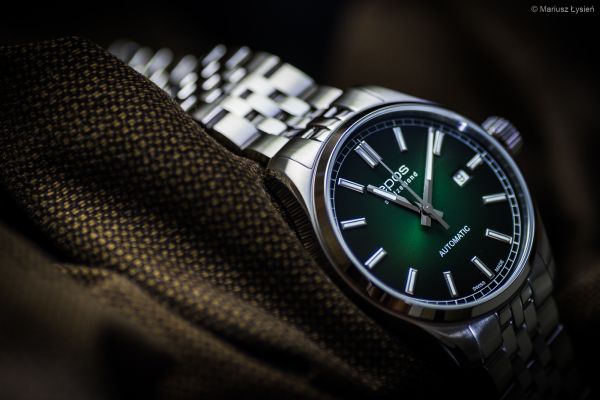
Is It Worth Buying Epos Watches? Luxury at an Affordable Price!
Can you imagine a watch combining Swiss precision with an affordable price? The Epos brand proves it's possible. These exceptional timepieces, crafted in the picturesque Vallee de Joux, blend artisanal tradition with innovation. In our guide, you’ll explore the history of a manufacturer that, since the 1920s, has consistently demonstrated that authentic Swiss watchmaking can be accessible to true watch enthusiasts. Discover why Epos watches deserve special attention and what sets them apart from other high-end brands.
From a workshop to prestige – the history of the Epos brand
Swiss watchmaking is full of fascinating stories, but the journey of Epos stands out. It all began in the 1920s in the scenic Vallee de Joux, where James Aubert laid the foundation for what we now know as Epos watches. It was here that the philosophy of blending traditional craftsmanship with affordability was born.
Subsequent decades brought numerous challenges, particularly during the 1980s, when the industry faced a crisis in traditional watchmaking. During this difficult time, Peter Hofer's visionary leadership not only saved the brand but gave it a new direction for growth. The takeover by the Chonge-Foster family marked the beginning of another fascinating chapter – introducing innovative technical solutions while preserving the artisanal character of production.
Noteworthy model: Epos North Star Automatic.
A fascinating example of combining watchmaking artistry with astronomy is the North Star model. This unique timepiece not only displays moon phases but also captivates with its deep blue dial featuring a subtle pattern resembling a starry sky. The 42 mm diameter ensures excellent readability while maintaining elegant proportions. It's a choice for those seeking something more than just a watch – a true masterpiece of watchmaking with a cosmic touch.
Swiss precision within reach – what makes Epos watches special?
The question “Is it worth buying an Epos watch?” frequently arises in discussions about high-end watches. The answer lies in their unique combination of in-house production and affordable pricing. The brand uses proven Swiss calibers, such as Unitas and Peseux, but modifies and embellishes them in-house. Particularly noteworthy is the fact that every mechanism is handled by skilled watchmakers who perform precise adjustments and decorations. The collection includes both automatic women's watches and men’s models with refined complications, as well as more understated everyday designs. What sets Epos apart is its commitment to perfection in every detail, from the choice of materials to the final finish.
At the heart of Epos mechanisms – why calibers matter
Classic men's watches are often considered timeless, but the mechanism is what truly defines the value of a timepiece. With Epos, you're dealing with something extraordinary – each caliber is not only carefully selected but also modified and enhanced in-house. Swiss watchmakers dedicate countless hours to hand-decorating bridges, creating Geneva stripes, and pearl-finishing main plates. These details make Epos watches stand out from the competition. Particularly noteworthy are models with complications such as moon phases and power reserves, each implemented with exceptional precision and attention to detail.
Limited editions and unique collections – discover exceptional Epos models
When it comes to classic women’s watches and men’s models, true uniqueness is rare, but Epos’s limited collections break this mold. The brand regularly introduces special editions limited to just a handful of pieces, instantly becoming collector’s items. Particularly impressive is the “One Minute Flying Tourbillon” model, available in only 10 pieces, with each watch being practically a handmade masterpiece of watchmaking. The "Drift Masters GP Limited Edition" collection demonstrates that Epos watches can blend a sporty spirit with the elegance of high-end watchmaking. These limited series are not just exceptional timepieces – they are also investments in rare and highly regarded models, whose value often increases over time.
A Polish touch in Swiss tradition – Epos watches tailored for our market
Few people know that Epos watches have a special connection to the Polish market. The “EPOS for Poland” series is not just a marketing gimmick but a genuine tribute to Polish enthusiasts of fine watchmaking. These models stand out not only with Polish day-of-the-week markings but also specially designed dials and unique complications. Moreover, collaboration with Bogusław Linda as the brand ambassador highlights how seriously Epos treats the Polish market. The collection includes both refined automatic women's watches with decorative dials and more robust men’s models that perfectly match Polish customers’ tastes. Each of these timepieces is a testament to how Swiss precision can harmoniously blend with local preferences.
Noteworthy model: Epos Emotion Izabela Łapińska.
This model is a perfect example of how Swiss watchmaking can merge with art. Collaboration with the Polish designer resulted in an extraordinary timepiece where the central feature is an artistically depicted red heart on the dial. The watch impresses not only with its design but also with precision craftsmanship in every detail. The navy blue strap perfectly complements the artistic dial, creating a harmonious whole.
Craftsmanship and innovation – how Epos watches are made
Behind every Epos watch stands a team of experienced craftsmen who combine traditional techniques with modern innovations. The production process begins with the careful selection of materials – only the highest quality steel, sapphire crystals, and specially prepared mechanisms are used. Special attention is paid to finishing every detail, from microscopic screws to massive cases. For classic men’s watches, polished indices and precisely crafted hands are standard. This attention to detail makes Epos watches stand out among brands in a similar price range. Every model undergoes rigorous quality tests, covering not only timekeeping accuracy but also water resistance and mechanical durability.
Prestige without excess – why does Epos offer such great value for money?
The secret to Epos’s attractive positioning lies in its well-thought-out business model and years of experience in production optimization. The brand effectively reduces marketing and distribution costs, focusing on what truly matters – the quality of its watches. This is why Epos watches often represent a perfect alternative to much more expensive brands, offering comparable craftsmanship and prestige. The same techniques and standards used by luxury brands are employed in their manufacturing process, yet efficient production management allows for maintaining reasonable prices. This makes Epos an ideal choice for those who value true watchmaking but don’t want to overpay for a brand name.
Noteworthy model: Epos Sportive Diver Automatic Titanium.
In the world of diving watches, this model stands out for its use of titanium in both the case and bracelet. As a result, despite its impressive size, it remains surprisingly lightweight on the wrist. The COSC certification confirms exceptional timekeeping precision, making it a reliable companion for underwater exploration. This is not just a diving watch – it’s a professional tool that also performs excellently in everyday use.
The choice of connoisseurs – who are Epos watches for?
When choosing a high-quality timepiece, you often ask yourself whether it matches your needs and lifestyle. Epos watches appeal particularly to individuals who value authentic craftsmanship and Swiss precision but also seek something beyond a well-known brand. It’s a proposition for discerning customers who understand that the true value of a watch lies not in the logo but in its craftsmanship and technical solutions. The collection includes minimalist models for work as well as more complex timepieces with additional complications. Notably, many customers choose Epos watches as their first significant purchase in the high-end segment, appreciating their excellent value for money and in-house production. Interestingly, the brand also attracts seasoned collectors who, despite owning timepieces from renowned brands, seek something less obvious. In an era when many wonder whether it’s worth buying an Epos watch, the answer seems clear – it’s an excellent choice for anyone looking for a combination of traditional watchmaking and reasonable pricing.
In times when many products are mass-produced, Epos watches represent a return to true craftsmanship and an individual approach to every timepiece. These are not just watches from an assembly line – they are small works of art where every detail matters. Whether you’re looking for your first serious watch or want to add something exceptional to your collection, Epos offers timepieces that can surprise even the most demanding watch enthusiasts.
If you’re looking for watches from this brand, visit WestWatches – the online watch store, where you’ll find hundreds of models to suit your taste. We invite you to explore!

Krzysztof Szopa
Watch Expert
An expert associated with WestWatches.pl, a destination that has been providing watches for every occasion for years. With extensive experience in the watchmaking and jewelry industry, he passionately shares his knowledge, offering professional advice both online and in-store. He specializes in selecting original watches, watch accessories, and jewelry products that combine exceptional quality with competitive prices. His goal is to help customers find the perfect product that meets their expectations and enhances their style.

See popular articles
316L, 904L and surgical steel – what is your watch made of?
Most steel watches, from affordable models to luxury constructions, are made of 316L steel. 904L steel contains more nickel, chromium and molybdenum, and therefore offers higher corrosion resistance, but in itself it does not mean greater scratch resistance. The term “surgical steel”, in turn, does not point to one strictly defined alloy. In watches it most often refers to 316L, but without a specific material designation it may simply be a marketing name. If you are choosing a watch for years, look therefore not only at the words “stainless steel”, but also at the grade of steel, which components are made of the given material and how they are finished.
Japanese or Swiss watches? We compare quality, movements and prices
If you are wondering whether Japanese or Swiss watches are better, the name of the country alone will not give you a good answer. In both cases you will find simple models for relatively little money, solid mid-range automatics and designs belonging to the world's watchmaking high end. Far more about quality will be told to you by the specific movement, the way the case and bracelet are made, the crystal, quality control, accuracy and price. Check how Japanese watches really differ from Swiss ones and what to pay attention to before you choose a model for yourself.
The lifespan of a quartz watch – how long does it really last, and when is it no longer worth repairing?
We value quartz watches above all for their accuracy, convenience and modest day-to-day demands. That does not mean, however, that they can run indefinitely and need nothing more than a new battery once every few years. Over time, the components of the movement itself also wear out, and the moment a watch starts giving trouble can look completely different depending on the model, the way it is used and the availability of parts. So how long can a quartz watch last, what wears out in it most often and when does repair still make sense? Check what its lifespan really depends on.
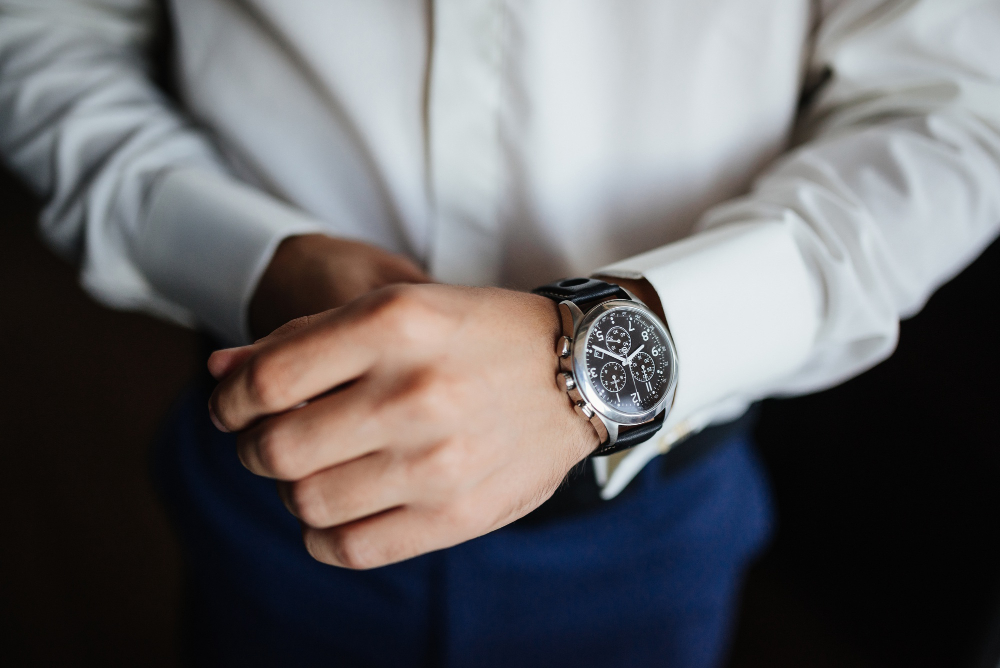
The second hand on a watch – why does it jump, move smoothly or stop?
The way the seconds hand moves can tell you a lot about a watch's movement, but it is not an infallible test. A single distinct jump per second most often points to quartz, several small movements per second are typical of a mechanical movement, and an almost continuous glide is associated with Spring Drive. There are exceptions, however: there is a quartz watch with a sweeping seconds hand, and a mechanical watch that makes exactly one jump per second. What is more, a stopped hand does not have to mean a fault. Check how to read these signals and when you really need a watchmaker's help.
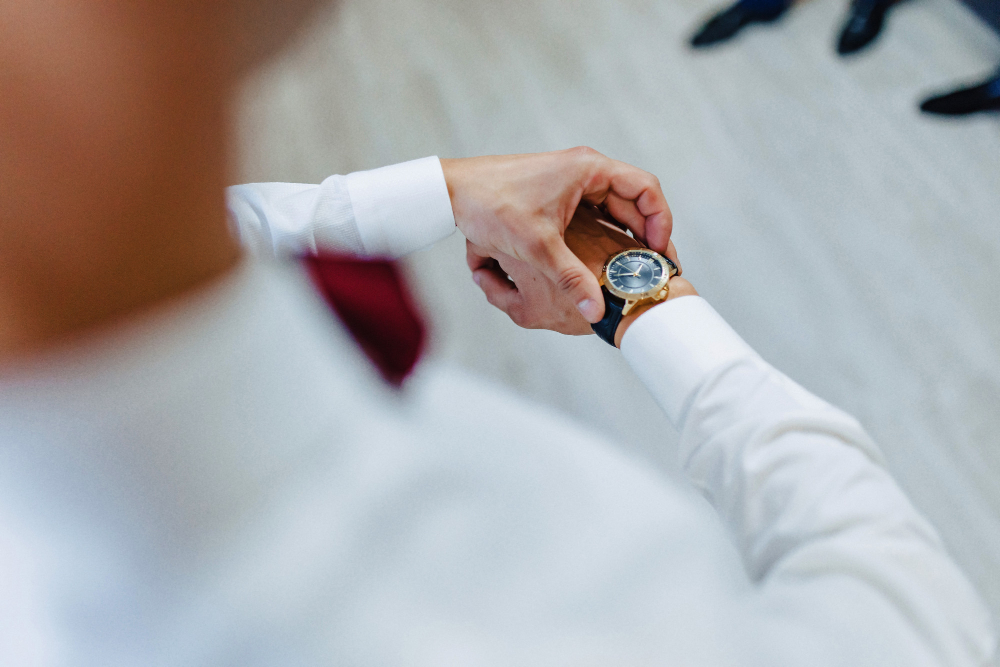
How do you set an automatic watch? Date, time and time zone 21:00–3:00
An automatic watch does not need a battery, but it does require a little knowledge from its owner. Setting the time or date seems simple, yet the wrong moment or the wrong way of using the crown can affect how the movement works. Many questions concern changing the date at night, moving the hands backwards and restarting a watch after a longer break. Check how to set an automatic watch correctly, what to pay attention to with the crown and why people often talk about particular caution between 9:00 pm and 3:00 am.

Wodoszczelność 10 ATM i 20 ATM – czy możesz pływać i nurkować z takim zegarkiem?
Co naprawdę oznacza 10 ATM lub 20 ATM na zegarku i czy takie oznaczenie pozwala bez obaw wejść do basenu, morza albo nurkować? Same liczby mogą być mylące, dlatego sprawdź, jak czytać klasę wodoszczelności i dobrać zegarek do aktywności w wodzie.
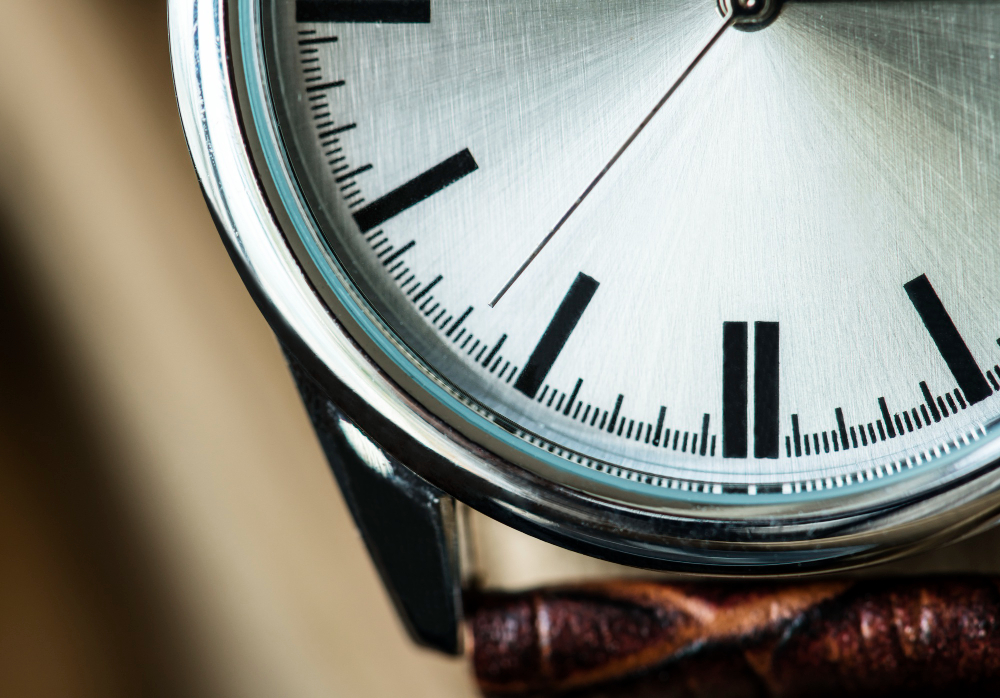
Water resistance 3 ATM – what does it mean and what can you do with it?
3 ATM water resistance means the watch is prepared above all for rain, accidental splashes and brief contact with water during everyday activities. It does not mean that you can swim with it, shower in it or submerge it to a depth of 30 metres. It is precisely the “30 m” marking that most often misleads. It is the result of a pressure test carried out under controlled conditions, not a declared working depth. So if you see 3 ATM, 3 bar or Water Resistant 30 m on the case back or in the specification, treat the watch as resistant to everyday moisture, but not as a watch for water activities.
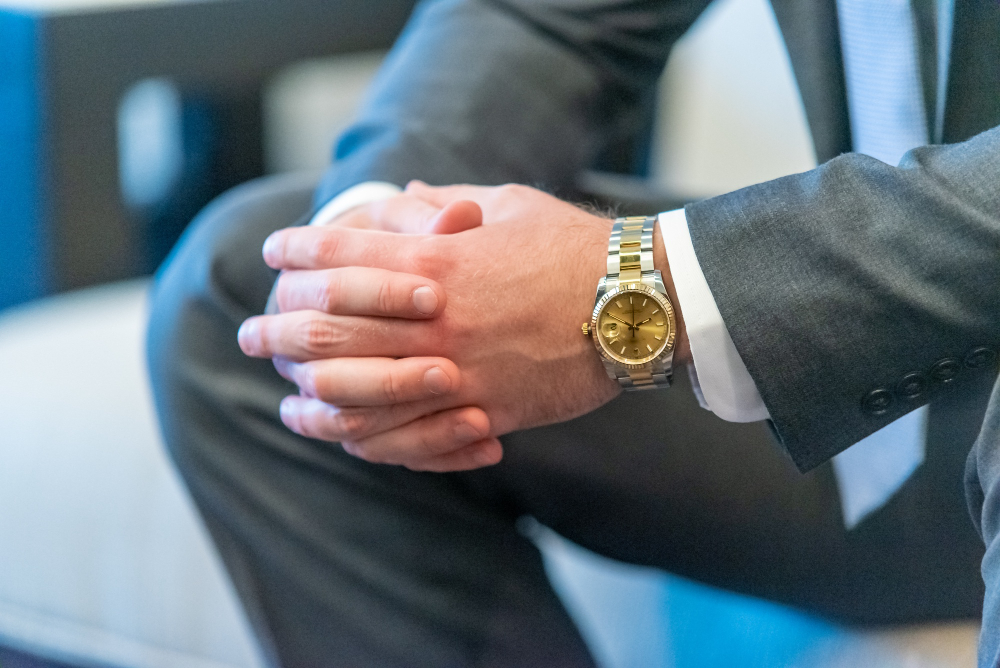
Rolex-style watches – the best alternatives to the Submariner, Explorer and Datejust
For years Rolex has been one of the most important style benchmarks in the watch world, but its price is not within everyone's reach. That is why it is worth looking at watches similar to Rolex and models inspired by its styling, which offer their own character, solid build quality and much more affordable prices. We are not talking about counterfeits here, but about legitimate watches from other brands that draw on similar solutions and design language. Check out watches inspired by Rolex's style and choose the model that suits your style and budget.
A bronze watch – why does each one change over time?
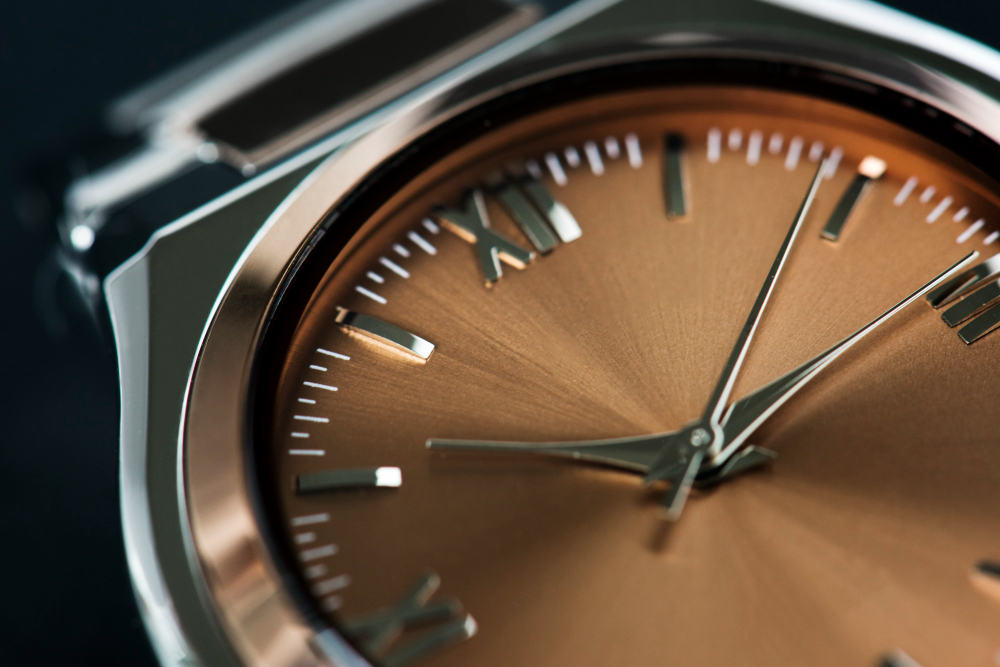
A bronze watch stands out because its appearance changes along with its owner. The case gradually darkens, turns matte and develops a patina, so two identical models can look completely different after just a few months. This is the greatest advantage of bronze, but also a trait you need to accept before buying. If you expect a watch that keeps its factory shine for years, steel may be a better direction. If, on the other hand, you like vintage looks, signs of use and the natural ageing of a material, bronze gives an effect that is hard to achieve in any other metal.