




The lifespan of a quartz watch – how long does it really last, and when is it no longer worth repairing?
We value quartz watches above all for their accuracy, convenience and modest day-to-day demands. That does not mean, however, that they can run indefinitely and need nothing more than a new battery once every few years. Over time, the components of the movement itself also wear out, and the moment a watch starts giving trouble can look completely different depending on the model, the way it is used and the availability of parts. So how long can a quartz watch last, what wears out in it most often and when does repair still make sense? Check what its lifespan really depends on.
How many years does a quartz watch last? The battery is not the same as the watch's lifespan!
There is no single figure for the lifespan of a quartz watch. The battery in a classic model usually lasts about 2–5 years, although the specific result depends on the calibre and its power consumption. Manufacturers' data show considerable differences: for various movements Seiko gives examples of about 2, 3 and 5 years, while in ETA specifications you can find ranges from about 22–34 months up to 68–94 months. A chronograph, alarm, backlight or additional indications can increase current draw. When a watch stops after several years, the first step should therefore be to check the cell.
It will also help to see an explanation of how to replace the battery in a watch and why it is not always worth doing it yourself. If needed, you can also check the available watch batteries, remembering that it is not only the size that matters, but also the right type of cell.
The watch itself does not “end its life” with the first, second or any subsequent battery. If the gear train, electronics and other components are in good order, after the cell is replaced the watch can keep running for further years. This applies to both men's quartz watches and women's quartz watches. The variety of the offer itself illustrates this well: the Seiko Sport Chronograph SSB427P1 has a quartz movement, a 41.5 mm case, 316L steel and 10 ATM water resistance, while among solar models there is, for example, the Orient Sports Mako Solar Chronograph RA-TX0208L10B with a diameter of 42 mm. Solar also belongs to the quartz family, but instead of the regular replacement of an ordinary battery it uses a cell charged by light. That cell, too, can lose part of its capacity over time – it is not an everlasting element.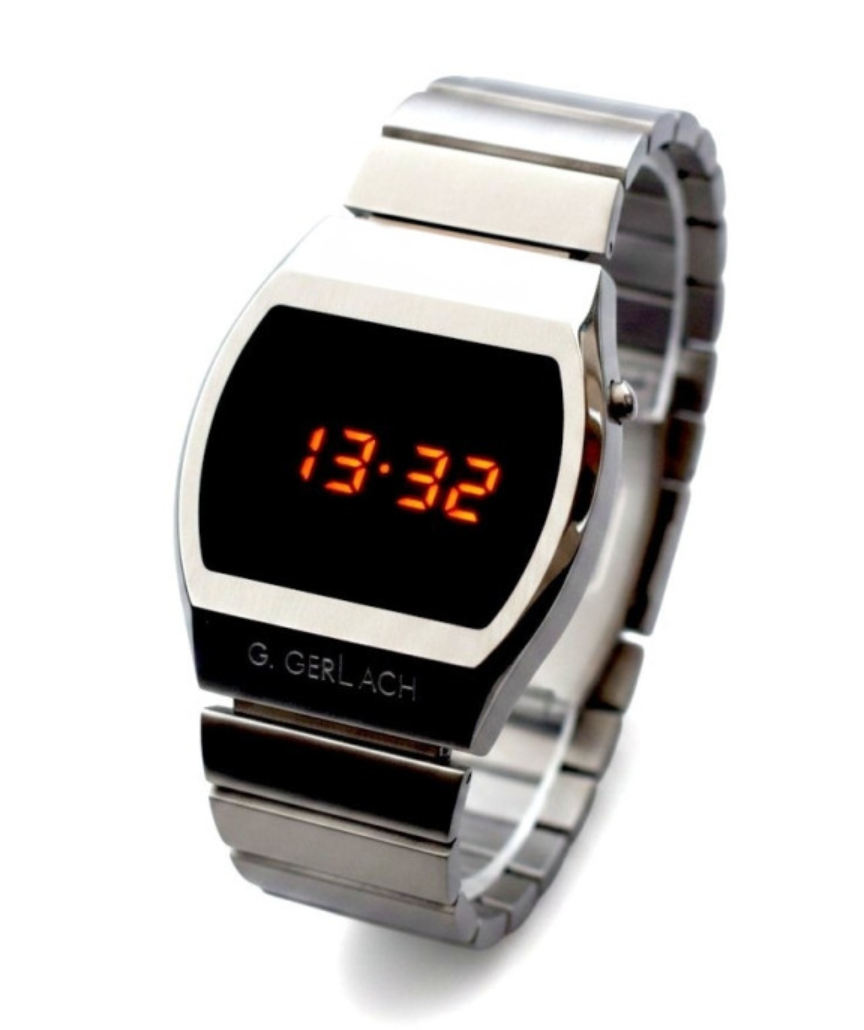
G.Gerlach Kosmonauta 40 mm shows that a quartz watch can have far more character than a simple battery-powered model. And its durability depends not only on the cell itself, but also on the electronics, components and the way it is used.
What wears out in a quartz movement and why doesn't the battery alone solve everything?
In a quartz movement more wears out than just the battery. Inside there are gears, arbors, a stepper motor, a coil and electrical contacts, and correct operation also depends on lubrication, tightness and the condition of the electronic circuit. The quartz crystal is merely one element of the whole system. That is why saying that for the whole life of such a watch you only need to replace the battery is too great a simplification. If you want to understand the principle of operation more closely, see the guide describing the quartz movement in a watch. After a dozen or so years the problem may be, for example, thickened or dried-out lubricant, a dirty gear train, corrosion or greater resistance of the moving parts. The watch may then draw more energy and drain a fresh battery much faster than before.
If a quartz watch does not work after a battery change, diagnostics are needed, not another cell. A technician will check the correct battery type and polarity, the contacts, signs of corrosion or moisture, the gear train, the coil, the stepper motor, the electronics and whether the hands are not mechanically jamming. In some calibres a reset procedure provided by the manufacturer is also required after a battery change. Particularly dangerous is leaving a discharged battery in an unused watch for a long time, because electrolyte leakage can turn a simple cell replacement into an expensive repair. Similarly, moisture can damage components that previously worked flawlessly. For this reason proper cleaning and care of your watch matters too, and with models exposed to contact with water – regular checks of the condition of the gaskets.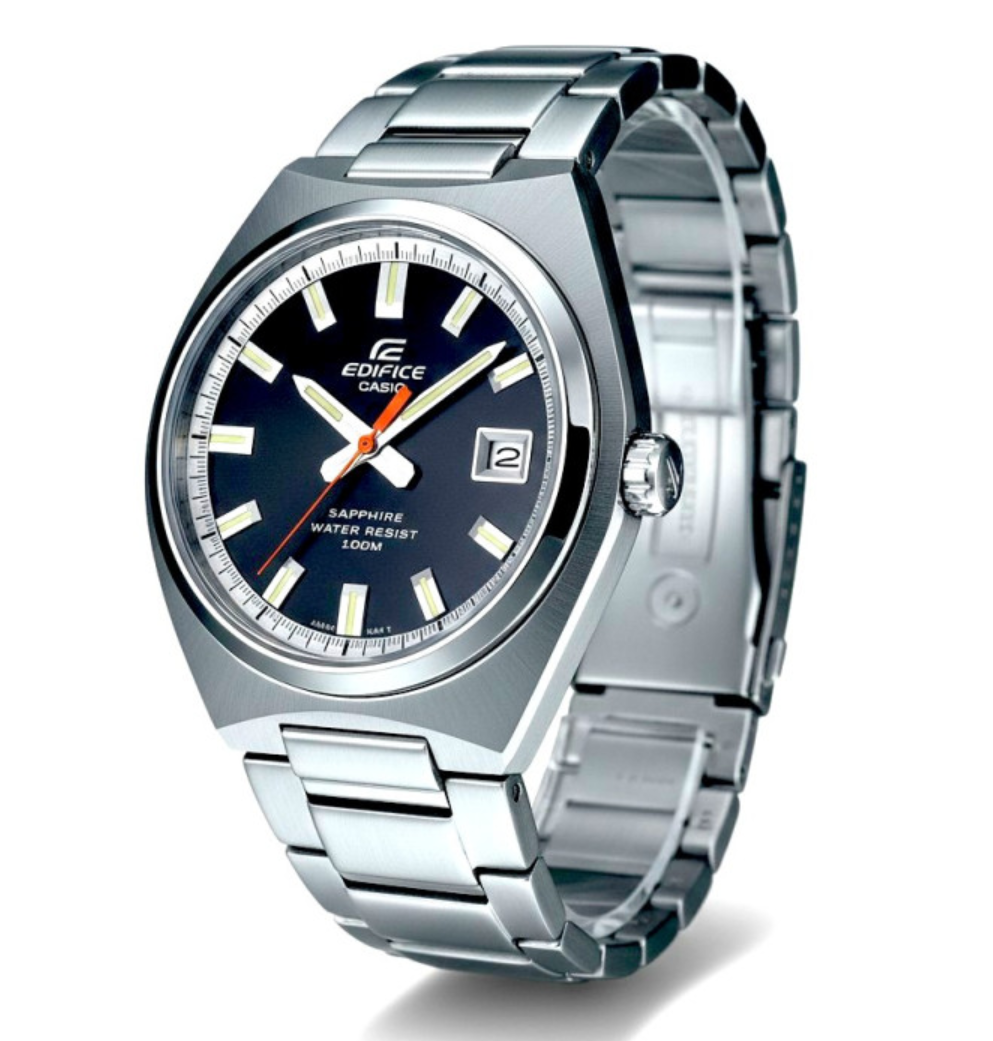
Casio Edifice Sport EFB-109D-1AVEF is an example of a classic quartz watch for everyday use. Its durability depends not only on the battery, but also on the condition of the movement, its tightness and regular maintenance.
Replacing the movement or repairing a quartz watch – when is which worthwhile?
Repairing a quartz watch pays off when its cost and the risk of further faults remain reasonable relative to the value and significance of the specific watch. There is no universal threshold of the kind “above 200 PLN, don't repair”. In a simple, inexpensive model, dismantling the whole calibre, looking for the damaged part and repairing it can cost more than fitting a complete new movement. That is precisely why replacing the whole calibre does not have to mean a makeshift repair – it is often technically and economically the most rational solution. When deciding, check the cost of diagnosis, the cost of parts, the availability of a suitable calibre, the condition of the case and crystal, and the likelihood of further faults. The source material cited, as a guide, about 25–29 PLN for a battery change, 49 PLN for diagnostics and about 99–149 PLN for the movement replacement service alone, before adding parts; the real bill always depends on the model and the service centre, however.
Profitability is calculated differently for a cheap watch and for an expensive, vintage, limited-edition or sentimental one. Even if the repair of a family watch from the 1990s exceeds its market value, it may still make complete sense for its owner. Conversely, in an inexpensive model that has been flooded with water, with a damaged movement, crown and crystal, the total of the work can quickly approach the cost of a comparable new watch. The availability of parts also matters. The older and less popular the calibre, the greater the risk that the problem will be not the fault itself, but the lack of a suitable coil, electronic module, stem or complete movement. This is one of the significant differences from mechanical constructions; you can read more about the specifics of servicing them in the guide to automatic watch servicing. In the case of quartz, it is the availability of electronics that after several decades can decide whether further repair is possible.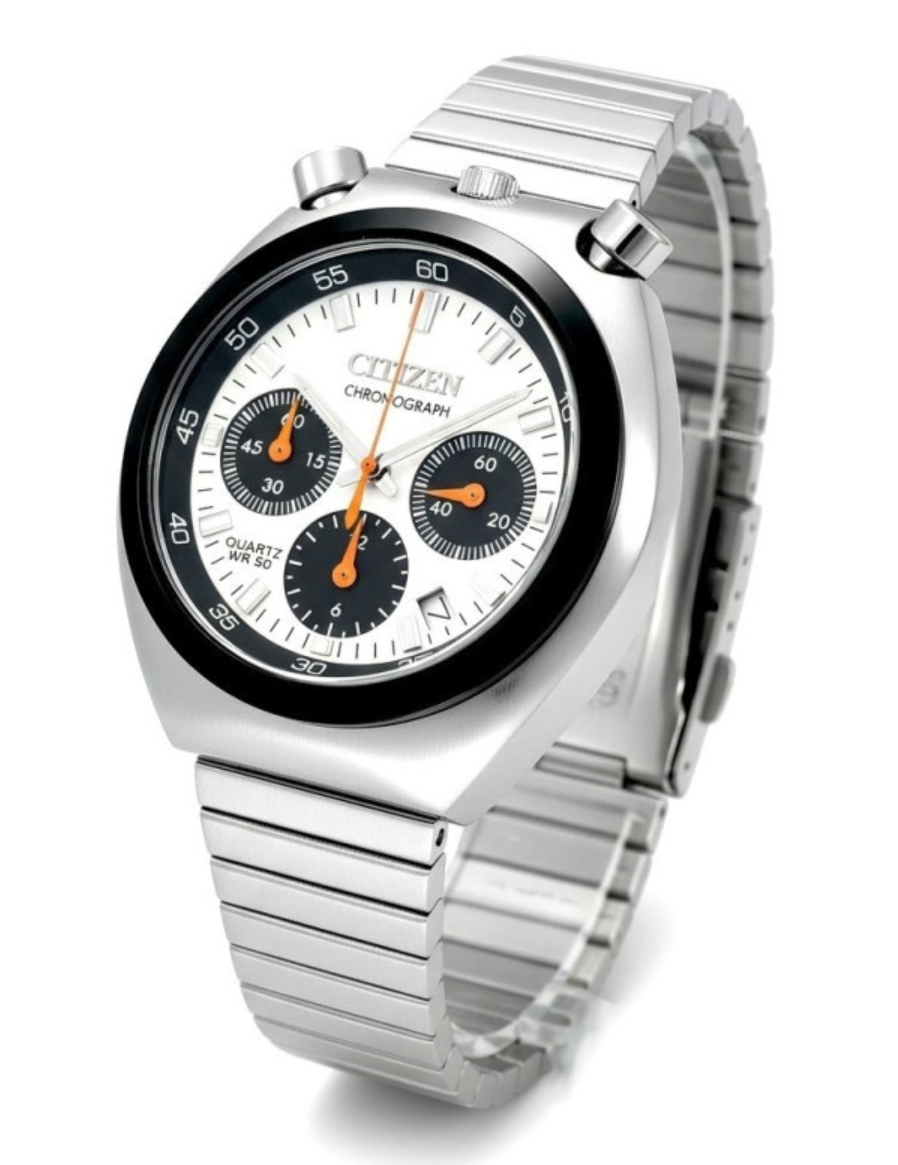
Citizen Tsuno Bullhead Chronograph 38 mm shows that quartz can combine precision with more elaborate functionality. In such a model the lifespan is affected not only by the battery, but also by the condition of the movement and how intensively the chronograph is used.
How to extend the life of a quartz watch and avoid an expensive failure?
You can do the most by keeping an eye on the battery, the tightness and reacting to the first symptoms of problems. Do not leave an exhausted cell in a drawer with the watch for several years. If the watch is water-resistant and regularly comes into contact with water, when replacing the battery it is sensible to check the gaskets and – where it matters for the way you use it – the tightness of the case. Also avoid hard knocks and opening the watch yourself without the proper tools. A new battery does not remove corrosion, dirt or gear-train problems. If a cell used to last three years and the next one lasts only a few months, do not treat this as normal battery ageing. It is a sign that the movement may be offering greater resistance or have an electrical problem.
Not every quartz watch needs an expensive full service at regular, identical intervals, but the condition of the movement is worth checking in line with the manufacturer's recommendations and the way the watch is used. Manufacturers' materials give, for example, periods of about 3 years for Seiko, 3–4 years for selected quartz Grand Seiko and 4–5 years in Tissot's recommendations, though this does not automatically mean the need for an expensive overhaul of a cheap watch every few years. In a simple model, a sensible minimum is a timely battery change, a check of the gaskets and a quick reaction to moisture or unusual operation. In a more expensive watch, a regular inspection helps protect a much greater value.
The lifespan of a quartz watch therefore does not end after 2–5 years. That is how long a battery can last. Whether the whole watch will work for 10, 20 or many more years is decided by its construction, conditions of use, servicing and the availability of parts. In the offer of the WestWatches watch store you will find many interesting quartz models – from classic everyday proposals to more elaborate chronographs and solar watches.

Krzysztof Szopa
Watch Expert
An expert associated with the WestWatches.pl brand, a place that has been supplying watches for every occasion for years. Thanks to many years of experience in the watchmaking and jewellery industry, he passionately shares his knowledge, offering professional advice both in the online and in the brick-and-mortar store. He specialises in selecting original watches, watch accessories and jewellery that combine exceptional quality with competitive prices. His goal is to help customers find the ideal product that meets their expectations and highlights their style.

See popular articles
316L, 904L and surgical steel – what is your watch made of?
Most steel watches, from affordable models to luxury constructions, are made of 316L steel. 904L steel contains more nickel, chromium and molybdenum, and therefore offers higher corrosion resistance, but in itself it does not mean greater scratch resistance. The term “surgical steel”, in turn, does not point to one strictly defined alloy. In watches it most often refers to 316L, but without a specific material designation it may simply be a marketing name. If you are choosing a watch for years, look therefore not only at the words “stainless steel”, but also at the grade of steel, which components are made of the given material and how they are finished.
Japanese or Swiss watches? We compare quality, movements and prices
If you are wondering whether Japanese or Swiss watches are better, the name of the country alone will not give you a good answer. In both cases you will find simple models for relatively little money, solid mid-range automatics and designs belonging to the world's watchmaking high end. Far more about quality will be told to you by the specific movement, the way the case and bracelet are made, the crystal, quality control, accuracy and price. Check how Japanese watches really differ from Swiss ones and what to pay attention to before you choose a model for yourself.

The lifespan of a quartz watch – how long does it really last, and when is it no longer worth repairing?
We value quartz watches above all for their accuracy, convenience and modest day-to-day demands. That does not mean, however, that they can run indefinitely and need nothing more than a new battery once every few years. Over time, the components of the movement itself also wear out, and the moment a watch starts giving trouble can look completely different depending on the model, the way it is used and the availability of parts. So how long can a quartz watch last, what wears out in it most often and when does repair still make sense? Check what its lifespan really depends on.
The second hand on a watch – why does it jump, move smoothly or stop?
The way the seconds hand moves can tell you a lot about a watch's movement, but it is not an infallible test. A single distinct jump per second most often points to quartz, several small movements per second are typical of a mechanical movement, and an almost continuous glide is associated with Spring Drive. There are exceptions, however: there is a quartz watch with a sweeping seconds hand, and a mechanical watch that makes exactly one jump per second. What is more, a stopped hand does not have to mean a fault. Check how to read these signals and when you really need a watchmaker's help.

How do you set an automatic watch? Date, time and time zone 21:00–3:00
An automatic watch does not need a battery, but it does require a little knowledge from its owner. Setting the time or date seems simple, yet the wrong moment or the wrong way of using the crown can affect how the movement works. Many questions concern changing the date at night, moving the hands backwards and restarting a watch after a longer break. Check how to set an automatic watch correctly, what to pay attention to with the crown and why people often talk about particular caution between 9:00 pm and 3:00 am.

Wodoszczelność 10 ATM i 20 ATM – czy możesz pływać i nurkować z takim zegarkiem?
Co naprawdę oznacza 10 ATM lub 20 ATM na zegarku i czy takie oznaczenie pozwala bez obaw wejść do basenu, morza albo nurkować? Same liczby mogą być mylące, dlatego sprawdź, jak czytać klasę wodoszczelności i dobrać zegarek do aktywności w wodzie.
Water resistance 3 ATM – what does it mean and what can you do with it?
3 ATM water resistance means the watch is prepared above all for rain, accidental splashes and brief contact with water during everyday activities. It does not mean that you can swim with it, shower in it or submerge it to a depth of 30 metres. It is precisely the “30 m” marking that most often misleads. It is the result of a pressure test carried out under controlled conditions, not a declared working depth. So if you see 3 ATM, 3 bar or Water Resistant 30 m on the case back or in the specification, treat the watch as resistant to everyday moisture, but not as a watch for water activities.

Rolex-style watches – the best alternatives to the Submariner, Explorer and Datejust
For years Rolex has been one of the most important style benchmarks in the watch world, but its price is not within everyone's reach. That is why it is worth looking at watches similar to Rolex and models inspired by its styling, which offer their own character, solid build quality and much more affordable prices. We are not talking about counterfeits here, but about legitimate watches from other brands that draw on similar solutions and design language. Check out watches inspired by Rolex's style and choose the model that suits your style and budget.
A bronze watch – why does each one change over time?
A bronze watch stands out because its appearance changes along with its owner. The case gradually darkens, turns matte and develops a patina, so two identical models can look completely different after just a few months. This is the greatest advantage of bronze, but also a trait you need to accept before buying. If you expect a watch that keeps its factory shine for years, steel may be a better direction. If, on the other hand, you like vintage looks, signs of use and the natural ageing of a material, bronze gives an effect that is hard to achieve in any other metal.