



Watch dial restoration – when is it worth it, and when is it better to give it a miss?
Not every watch dial restoration is a good idea – sometimes you improve the appearance, but lose something far more important. The line between refreshing and losing originality is thin, and a single decision can affect not only the aesthetics but also the entire watch's value. If you're wondering whether restoring watch dials makes sense in your case, it's worth looking at the topic more broadly – not just through the lens of "looks better," but above all "is it better."
Watch Dial Restoration – A Rescue or an Irreversible Mistake? Check Before You Hand It Over to a Workshop
Before you decide to restore a watch dial, it's worth pausing for a moment and honestly answering one question – what matters more to you: appearance or originality? This is not a trivial decision, because restoration is not a "light touch-up," but a real intervention in the watch's history. In practice, this means removing the old layer, recreating the prints, and often changing the surface finish. The result can be very aesthetically pleasing, but at the same time you lose something that cannot be recovered later – authenticity. And this is exactly where many people make a mistake, driven solely by first impressions.
On the other hand, not every watch needs to be treated like a museum exhibit. If you have a model that holds personal meaning for you – you received it from a loved one, inherited it, or simply enjoy wearing it – then watch dial restoration can make very good sense. In such a case, it's about restoring legibility, improving usability and aesthetics, rather than preserving collectible value. The problem arises when the decision is made without awareness of the consequences – because a watch after restoration may look "better," but for the collector's market it will become less interesting.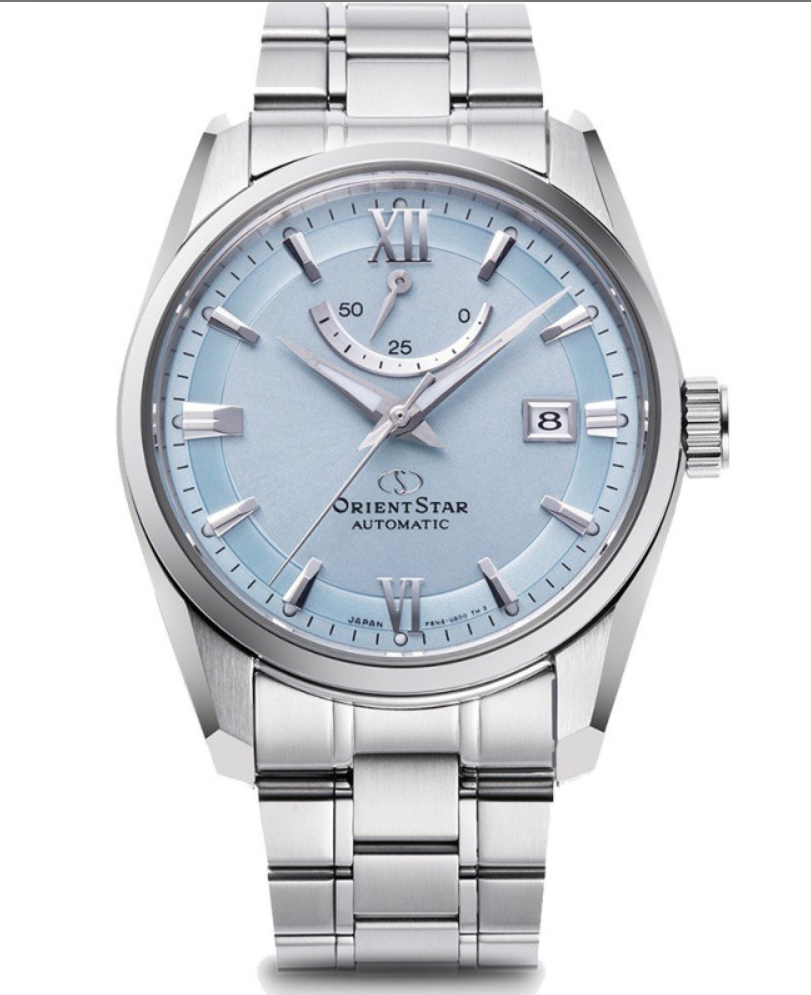
The Orient Star Contemporary Men's Watch captivates with its subtle, light-blue dial with an elegant satin finish that gently changes character depending on the light, adding exceptional depth to the whole. Also noteworthy is the precisely designed power reserve indicator and the refined indices and details that convey a sense of craftsmanship in every, even the smallest, element.
It's also worth knowing that not every restoration ends up as the owner expects. If you end up with an inexperienced workshop, you may lose details that were unique to a given model – fonts, index proportions, surface texture. Therefore, before handing over your watch, carefully review "before and after" examples, ask about the process, and don't be afraid to ask specific questions about the scope of the intervention. There is truly no room for chance here.
Is Watch Dial Restoration Always Worth It? See When You Improve the Look and When You Lose Value
At first glance, the answer seems simple – if the watch looks better after restoration, then it was worth it. However, in the world of watches, especially older ones, aesthetics is only one of several layers of value. Equally important, and often more so, is originality and period-correctness – what collectors refer to as "condition." And here comes the key moment – watch dial restoration can improve the appearance, but simultaneously reduce the market value.
If you have a rare, limited-edition watch, or simply a well-preserved one – even if it shows signs of age – it's often better to leave it alone. Natural patina, slight discolouration, or gentle wear are not flaws – they are part of history. In such cases, the market clearly rewards authenticity, and an overly "fresh" appearance after restoration can even raise suspicion. In practice, this means that a watch after intervention may be worth less than before, even if it looks better visually.
The situation looks different when the dial is in truly poor condition – illegible, heavily damaged, with missing sections or a destroyed print. Then watch dial restoration stops being a matter of aesthetics and becomes a real improvement of functionality. The watch can be read normally again, looks coherent, and can return to daily use. And it is precisely in such situations that watch dial restoration is justified – because it restores the purpose of wearing the watch, not just its appearance.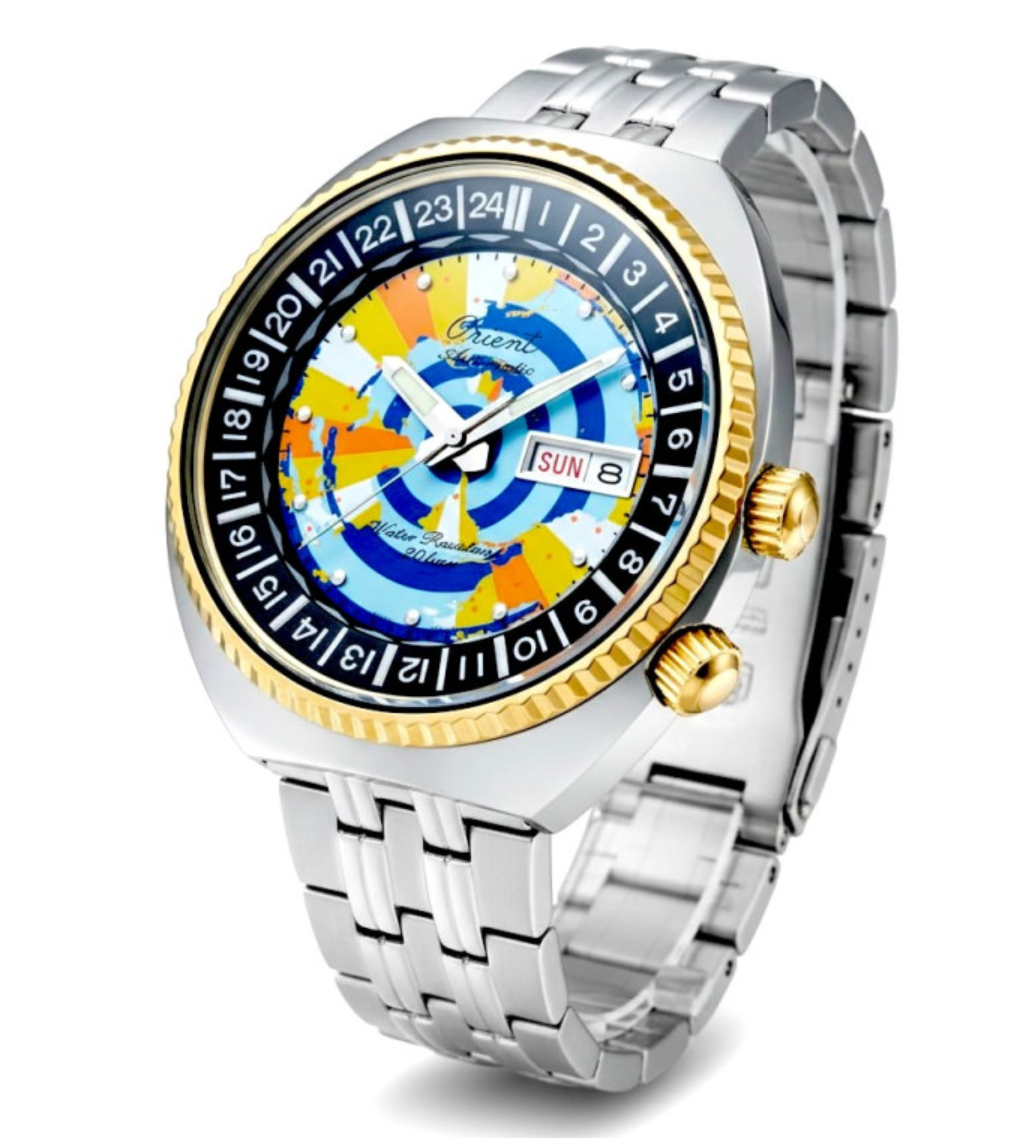
The Orient RA-AA0E08Y39B Revival World Map 75th Anniversary draws attention with its extraordinarily complex, multicoloured dial featuring a world map motif, where every detail – from the 24-hour scale to subtle markings – builds the unique character of the whole. Precisely because of the large number of intricate elements and prints, watch dial restoration on such models is exceptionally difficult, as even a minor intervention can disrupt the proportions and authentic appearance of the design.
Damaged or Just "Full of Character"? How to Assess the Condition of a Watch
Not every dial that looks "old" requires intervention. And this is the moment when it's easy to make a mistake. The line between wear and character can be genuinely thin, especially if you don't have experience with vintage watches. It often turns out that what looks like a problem at first glance will be an attribute that increases the watch's appeal to someone more knowledgeable. Before deciding on watch dial restoration, it's worth taking a close look at what actually needs improving.
Start with the basics – is the watch legible? Do the damages interfere with use? Are the prints preserved? If the answer is "yes, everything works, it just looks old," then really think twice. In such a case, gentle cleaning may be a better solution than a full intervention.
Moreover, many dials – especially those with subtle finishes – respond very poorly to any refreshing attempts, as it's easy to damage a surface that can no longer be reproduced. Particular caution should be taken with more demanding dials – enamelled, porcelain, or those with a sunburst finish. Here even a minor intervention can lead to irreversible changes, and the final result will be far from the original. If in doubt, it's best to consult someone with experience – not necessarily by commissioning a service right away, but simply by gathering opinions and comparing similar pieces. This will help avoid decisions you may later regret.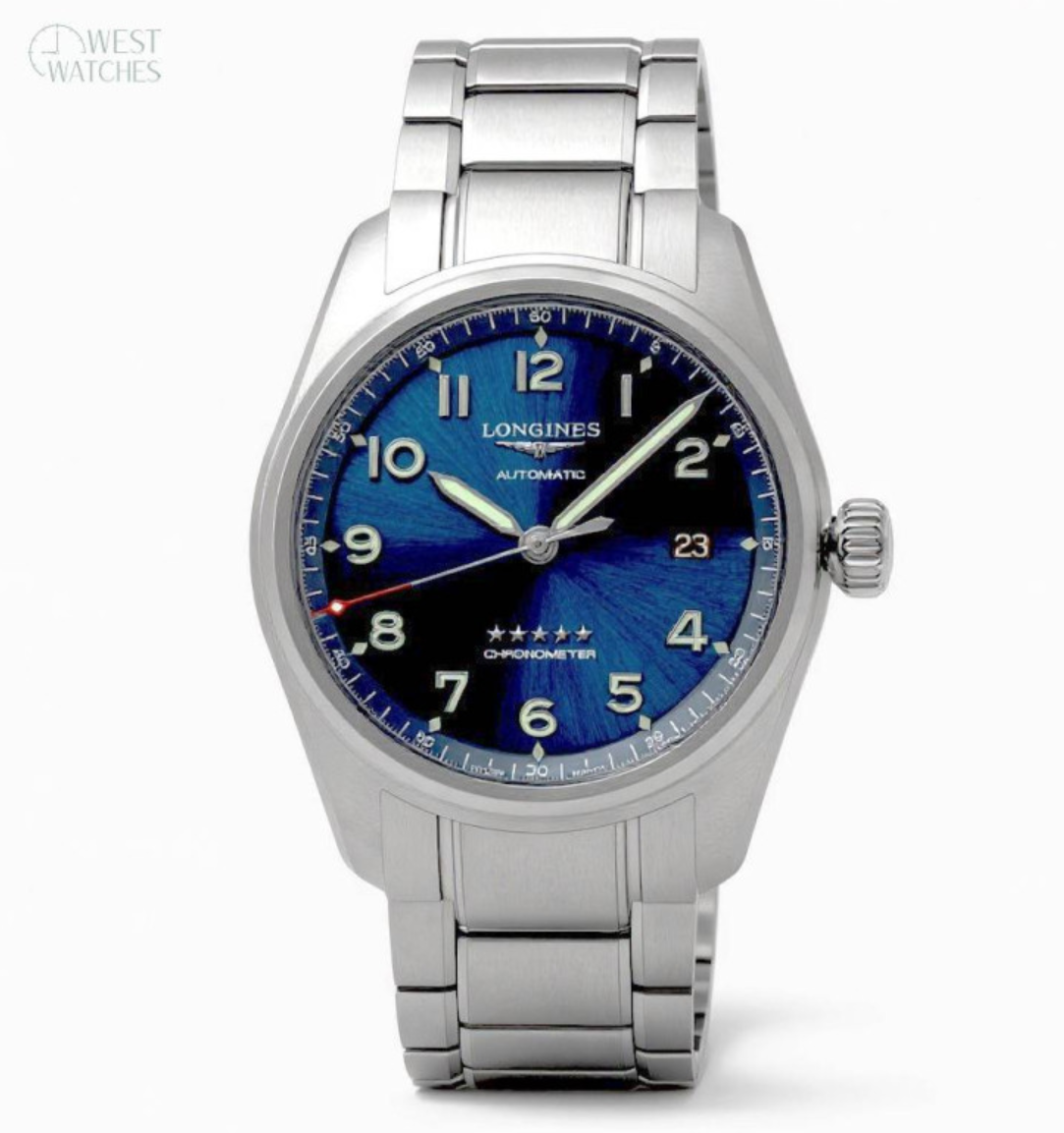
The Longines Spirit Chronometer 40mm Men's Watch stands out with its deep blue sunburst dial that plays beautifully with light and gives the whole piece a distinctive yet elegant character. Add to this the legible applied indices and refined details typical of COSC-certified models, which emphasise precision and high-quality craftsmanship.
Where to Have a Watch Dial Restored?
If watch dial restoration is being considered, the choice of where it is carried out is of key importance. Not every watchmaking workshop specialises in such precise services, so it's worth seeking those with documented experience working with dials – particularly vintage ones. Good signs include "before and after" examples, the ability to compare details, and a transparent approach to the process – meaning a clear explanation of what will be recreated and what will be preserved. Pay attention to whether the specialist is able to faithfully reproduce the prints, index proportions, and characteristic surface finish, as these are precisely the elements that determine the final result. In the case of more demanding models – such as those with a delicate finish or an unusual texture – a lack of experience can lead to irreversible changes that can no longer be corrected.
Before settling on a specific workshop, it's worth taking a moment for thorough research. Watch dial restoration is a service that requires precision, patience, and aesthetic sensibility, so it's not worth being guided solely by price or location. A good step is to compare several practitioners, ask specific questions about the scope of work, and establish whether a partial intervention is possible instead of a full restoration. It's also worth making sure the watchmaker uses materials and techniques appropriate to the watch's era – this is especially important for older models. If anything raises doubts or answers are vague, it's better to proceed with caution, because when it comes to watch dial restoration, a decision once made cannot be undone.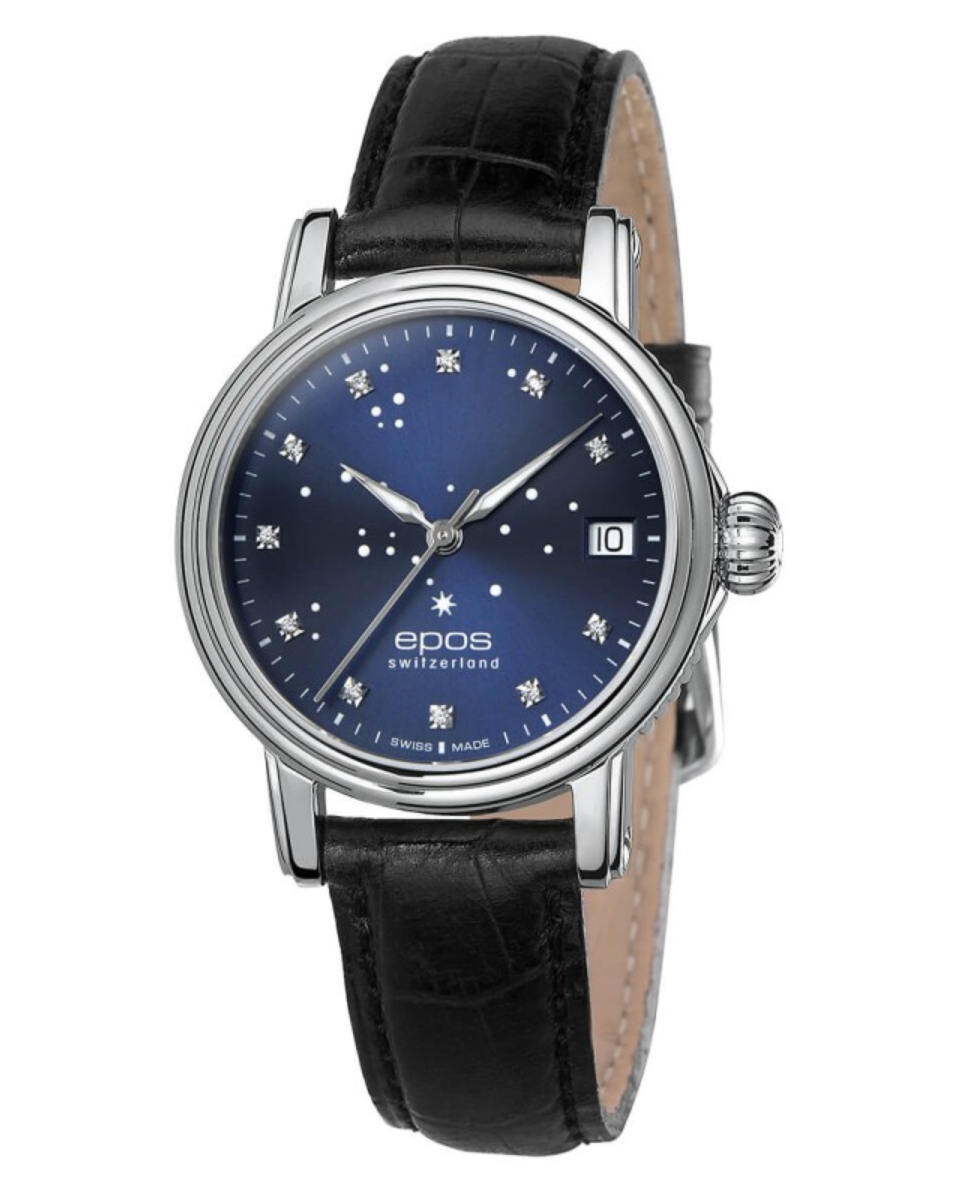
The EPOS North Star Automatic Women's Watch features a dial with a subtle sheen, enriched with small, precisely placed embellishments and diamond indices that lend the whole piece exceptional lightness and elegance. Precisely because of this attention to detail and the large number of delicate elements, watch dial restoration on such models is very demanding, as even a slight intervention can affect their original arrangement and character.
Finally, it's worth remembering one thing – watch dial restoration should stem from a conscious decision, not an impulse, because it is a choice between appearance and preserving the original character. If you assess the condition of the watch correctly and know what your goal is, it becomes easier to avoid costly mistakes. And if you're looking for inspiration or reliable models, visit the WestWatches online watch store, where you'll find both refined men's watches and stylish women's watches that captivate from the very first glance – with no intervention needed.

Krzysztof Szopa
Watch Expert
An expert associated with WestWatches.pl, a place that has been supplying watches for every occasion for years. With extensive experience in the watchmaking and jewellery industry, he passionately shares his knowledge, offering professional advice both in the online and brick-and-mortar store. He specialises in selecting original watches, watch accessories, and jewellery that combine exceptional quality with competitive prices. His goal is to help customers find the perfect product that meets their expectations and enhances their style.

See popular articles

316L, 904L and surgical steel – what is your watch made of?
Most steel watches, from affordable models to luxury constructions, are made of 316L steel. 904L steel contains more nickel, chromium and molybdenum, and therefore offers higher corrosion resistance, but in itself it does not mean greater scratch resistance. The term “surgical steel”, in turn, does not point to one strictly defined alloy. In watches it most often refers to 316L, but without a specific material designation it may simply be a marketing name. If you are choosing a watch for years, look therefore not only at the words “stainless steel”, but also at the grade of steel, which components are made of the given material and how they are finished.
Japanese or Swiss watches? We compare quality, movements and prices
If you are wondering whether Japanese or Swiss watches are better, the name of the country alone will not give you a good answer. In both cases you will find simple models for relatively little money, solid mid-range automatics and designs belonging to the world's watchmaking high end. Far more about quality will be told to you by the specific movement, the way the case and bracelet are made, the crystal, quality control, accuracy and price. Check how Japanese watches really differ from Swiss ones and what to pay attention to before you choose a model for yourself.

The lifespan of a quartz watch – how long does it really last, and when is it no longer worth repairing?
We value quartz watches above all for their accuracy, convenience and modest day-to-day demands. That does not mean, however, that they can run indefinitely and need nothing more than a new battery once every few years. Over time, the components of the movement itself also wear out, and the moment a watch starts giving trouble can look completely different depending on the model, the way it is used and the availability of parts. So how long can a quartz watch last, what wears out in it most often and when does repair still make sense? Check what its lifespan really depends on.

The second hand on a watch – why does it jump, move smoothly or stop?
The way the seconds hand moves can tell you a lot about a watch's movement, but it is not an infallible test. A single distinct jump per second most often points to quartz, several small movements per second are typical of a mechanical movement, and an almost continuous glide is associated with Spring Drive. There are exceptions, however: there is a quartz watch with a sweeping seconds hand, and a mechanical watch that makes exactly one jump per second. What is more, a stopped hand does not have to mean a fault. Check how to read these signals and when you really need a watchmaker's help.

How do you set an automatic watch? Date, time and time zone 21:00–3:00
An automatic watch does not need a battery, but it does require a little knowledge from its owner. Setting the time or date seems simple, yet the wrong moment or the wrong way of using the crown can affect how the movement works. Many questions concern changing the date at night, moving the hands backwards and restarting a watch after a longer break. Check how to set an automatic watch correctly, what to pay attention to with the crown and why people often talk about particular caution between 9:00 pm and 3:00 am.

Wodoszczelność 10 ATM i 20 ATM – czy możesz pływać i nurkować z takim zegarkiem?
Co naprawdę oznacza 10 ATM lub 20 ATM na zegarku i czy takie oznaczenie pozwala bez obaw wejść do basenu, morza albo nurkować? Same liczby mogą być mylące, dlatego sprawdź, jak czytać klasę wodoszczelności i dobrać zegarek do aktywności w wodzie.

Water resistance 3 ATM – what does it mean and what can you do with it?
3 ATM water resistance means the watch is prepared above all for rain, accidental splashes and brief contact with water during everyday activities. It does not mean that you can swim with it, shower in it or submerge it to a depth of 30 metres. It is precisely the “30 m” marking that most often misleads. It is the result of a pressure test carried out under controlled conditions, not a declared working depth. So if you see 3 ATM, 3 bar or Water Resistant 30 m on the case back or in the specification, treat the watch as resistant to everyday moisture, but not as a watch for water activities.

Rolex-style watches – the best alternatives to the Submariner, Explorer and Datejust
For years Rolex has been one of the most important style benchmarks in the watch world, but its price is not within everyone's reach. That is why it is worth looking at watches similar to Rolex and models inspired by its styling, which offer their own character, solid build quality and much more affordable prices. We are not talking about counterfeits here, but about legitimate watches from other brands that draw on similar solutions and design language. Check out watches inspired by Rolex's style and choose the model that suits your style and budget.
A bronze watch – why does each one change over time?
A bronze watch stands out because its appearance changes along with its owner. The case gradually darkens, turns matte and develops a patina, so two identical models can look completely different after just a few months. This is the greatest advantage of bronze, but also a trait you need to accept before buying. If you expect a watch that keeps its factory shine for years, steel may be a better direction. If, on the other hand, you like vintage looks, signs of use and the natural ageing of a material, bronze gives an effect that is hard to achieve in any other metal.