



Which battery for a wristwatch – how not to confuse SR, LR and CR?
Choosing a battery for a watch seems like a trivial matter… until you're standing in front of a shelf full of markings and have no idea what to pick. SR, LR, CR, numbers like 377 or 364 – everything looks similar, yet the differences are significant and have a real impact on how your watch performs. If you want to avoid buying the wrong battery and be confident your watch works exactly as it should, it's worth learning a few simple rules that clear up most doubts.
Why does a watch battery matter so much?
Contrary to appearances, choosing the right cell for a watch isn't a "I'll throw anything in and it'll work" situation. We usually only think about it when the watch suddenly stops and we're faced with a dozen nearly identical-looking markings at the store. That's when the most common mistakes happen – buying a battery "by eye", going by size alone, or worse, swapping types without understanding the differences. The result? The watch runs shorter, may start losing time, or stops working sooner than it should. It's worth taking a moment to understand what the symbols SR, LR, and CR mean, how to read designations like 377 or 364, and when you should absolutely not experiment with substitutes.
It's no coincidence that the topic of batteries always comes up with quartz watches – the cell is the heart of the entire mechanism in these timepieces. Whether it's women's quartz watches – which often have a slim construction and smaller batteries – or men's quartz watches with additional features, the principle is the same: stable power directly translates to timekeeping accuracy. If the battery doesn't maintain the right parameters, the watch may run, but not as precisely as the manufacturer intended. In practice, it's not just about whether it "fits," but whether it's precisely matched to the specific model and its energy requirements.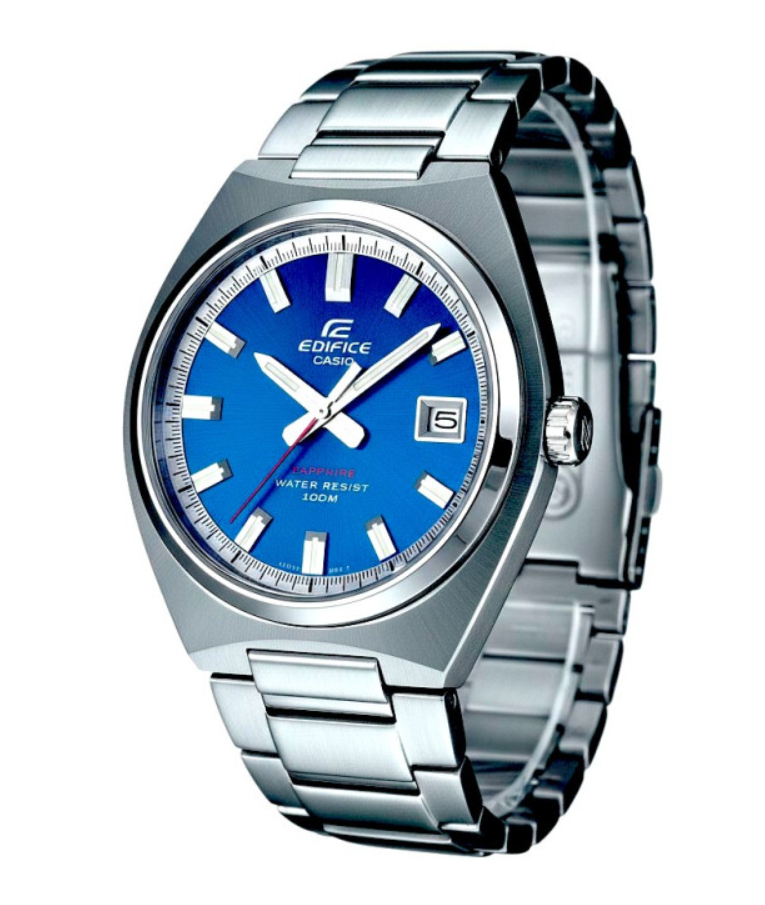
The elegant Casio Edifice EFB-109D-2AVEF is an example of a watch where not only design matters, but also precision. This model uses an SR626SW (377) battery, which provides stable power and long service life for the quartz mechanism. That's precisely why choosing the right cell is critical to maintaining accuracy.
Which watch battery to choose – SR, LR, or CR?
At first glance, watch batteries look similar, but their chemistry has a huge impact on how the mechanism performs. You'll most commonly encounter three types: SR (silver oxide), LR (alkaline), and CR (lithium). They differ not only in name, but above all in voltage stability and lifespan.
SR batteries are the standard in watches – and for good reason. They provide constant voltage for most of their working life, which is critical for precise quartz mechanisms. As a result, the watch doesn't start losing time as the battery nears the end of its life – it simply stops. It's a more expensive solution, but significantly more reliable. In practice, this means fewer problems and less frequent replacements.
LR (alkaline) batteries are tempting due to their price, but they have one major drawback – voltage drops gradually during use. The result? The watch may still run, but not as accurately as it should. This is especially important in models where precision matters. Furthermore, their lifespan is noticeably shorter, so the initial savings often end up meaning more frequent trips to the watchmaker.
CR (lithium) batteries are a completely different category – most commonly found in sports watches, smartwatches, and models with additional features. They are characterized by higher voltage (usually 3V) and long lifespan. They cannot be used interchangeably with SR or LR, as they are designed for different watch constructions.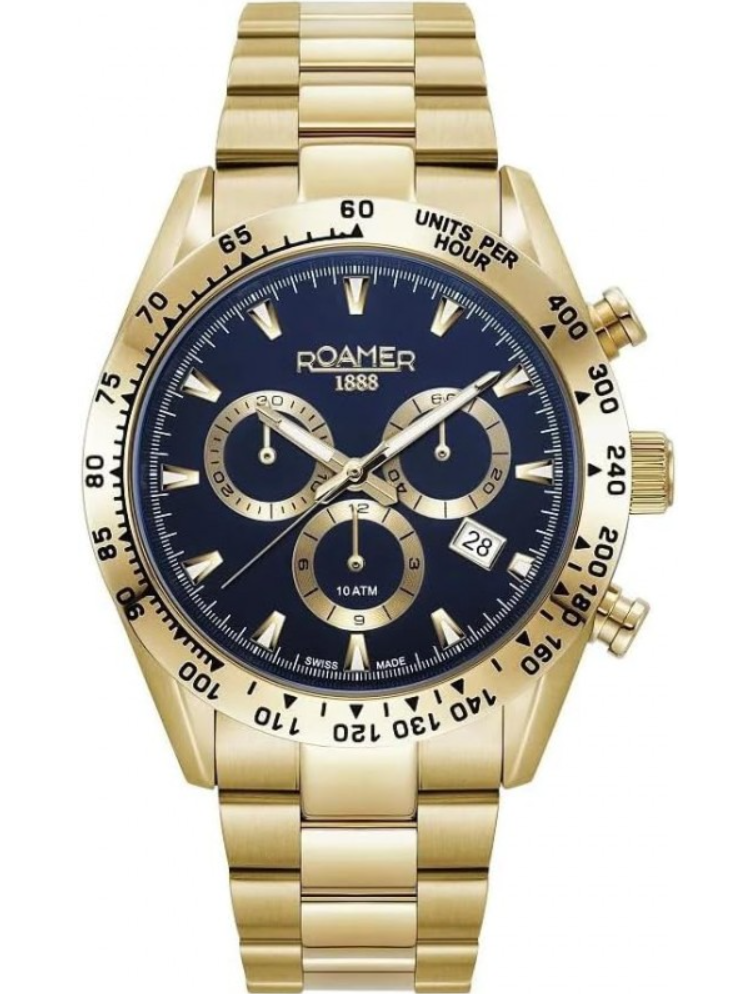
The golden Roamer Monza 100 Chronograph 850837 48 45 20 is an example of a watch where design goes hand in hand with precision. This model is powered by a quartz movement, meaning its heart is a properly matched battery – typically a high-quality SR type, providing stable voltage and accurate timekeeping.
How to read battery markings?
Battery designations may look mysterious, but they're actually quite logical – you just need to know what to look for. Symbols like 377, 364, or 395 are standard cell size and type designations that are compatible across different manufacturers. Importantly, the same size can come in both SR and LR versions, so the number alone isn't enough.
Take 377 as an example – it's one of the most common designations. The higher-quality version is SR626SW, while the cheaper equivalent is LR626. They appear to fit identically at first glance, but differ in what you already know – voltage stability and durability. The same logic applies to 364 (SR621SW) or 395 (SR927SW) – each number corresponds to a specific size, while the letters indicate the chemical type and characteristics.
An interesting case is the 370/371 designation – these are two versions of the same size, but with different intended uses. One is optimized for higher load, the other for long life under low power draw. That's why some watch manufacturers specify precisely which version to use.
With lithium batteries, things are simpler – for example, CR2032 denotes a specific type and size (20 mm diameter, 3.2 mm thickness). There are no SR/LR alternatives here, so if your watch requires CR, stick to that designation. The most important thing to remember – always check the full designation, not just the number. It's the letters that determine quality and compatibility with the mechanism.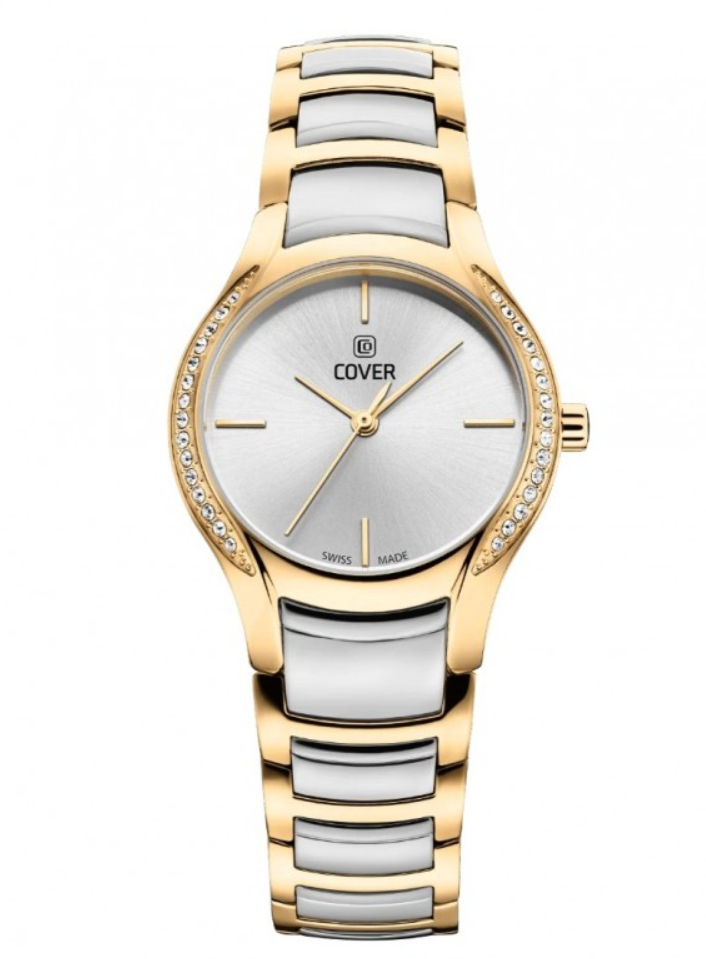
The subtle COVER Sandara 28mm CO203.03 is a proposition for those seeking elegance in a light, jewellery-like form. This model runs on a quartz movement and most commonly uses an SR-type battery, providing stable and precise timekeeping. It's a good example of how even in a delicate watch, choosing the right cell has a real impact on its performance.
How do you know which watch battery to choose?
The simplest and most reliable approach is to check the exact marking of the battery that was previously in the watch. When you open the caseback, you'll see a string of characters on it – digits and letters identifying the specific cell type, e.g. SR626SW or 377. This symbol is the most important piece of information, as it eliminates guesswork and allows you to find an identical model or its proper equivalent. If you don't want to open the watch yourself, it's worth checking the instruction manual or searching online for the exact watch model along with battery information – manufacturers often include this in the specifications.
The second step, which often resolves the matter in minutes, is checking the watch's reference number – its unique model designation. It's usually found on the caseback or case and allows you to very precisely determine which battery the manufacturer intended. Entering this number into a search engine yields concrete results – with no risk of error. If doubts remain, the most sensible course of action is to consult a watchmaker, because matching a battery is not just a matter of size, but also operating parameters and chemistry type – and these have a real impact on the watch's performance.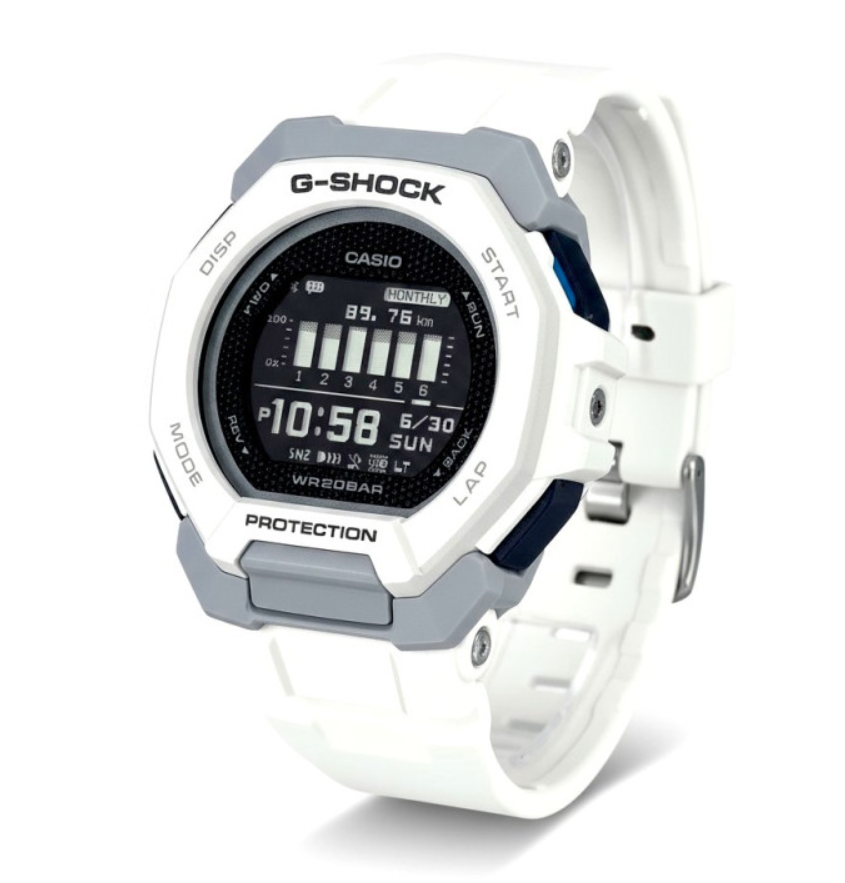
The Casio G-Shock G-Squad 46mm GBD-300-7ER is a watch designed for intensive use and daily activity. This digital model uses a lithium battery that ensures long operation even when using training functions and Bluetooth. This demonstrates that in sports watches, choosing the right battery type is crucial for functionality and reliability.
Which batteries are used in specific watch brands?
Contrary to what you might think, there is no single "universal" battery assigned to a specific brand – watch manufacturers use different types of cells depending on the model, features, and movement design. However, certain patterns can be observed. Casio very often uses lithium batteries (e.g. CR2025, CR2032) in digital and sports watches, especially in the G-Shock line, where high performance and resistance to intensive use are essential, though simpler models also use SR silver oxide batteries.
Seiko and Orient, on the other hand, most commonly use silver oxide (SR) batteries, which provide stable voltage and long service life – crucial for timekeeping accuracy. The same applies to Swiss Tissot, where high-quality SR batteries, precisely matched to specific movements, dominate their quartz models.
American Timex, meanwhile, uses a variety of solutions – from classic SR button cells to lithium models in watches with additional features, which is why checking the specific model is especially important here. In practice, this all comes down to one thing – the brand gives a certain hint, but ultimately it's always the specific watch model and its energy requirements that matter, so there's no point in guessing without checking the designation.

Krzysztof Szopa
Watch Expert
An expert associated with WestWatches.pl, a place that has been delivering watches for every occasion for years. With extensive experience in the watchmaking and jewellery industry, he passionately shares his knowledge, offering professional advice both in the online and brick-and-mortar store. He specializes in selecting original watches, watch accessories, and jewellery that combine exceptional quality with competitive prices. His goal is to help customers find the perfect product that meets their expectations and complements their style.

See popular articles

316L, 904L and surgical steel – what is your watch made of?
Most steel watches, from affordable models to luxury constructions, are made of 316L steel. 904L steel contains more nickel, chromium and molybdenum, and therefore offers higher corrosion resistance, but in itself it does not mean greater scratch resistance. The term “surgical steel”, in turn, does not point to one strictly defined alloy. In watches it most often refers to 316L, but without a specific material designation it may simply be a marketing name. If you are choosing a watch for years, look therefore not only at the words “stainless steel”, but also at the grade of steel, which components are made of the given material and how they are finished.
Japanese or Swiss watches? We compare quality, movements and prices
If you are wondering whether Japanese or Swiss watches are better, the name of the country alone will not give you a good answer. In both cases you will find simple models for relatively little money, solid mid-range automatics and designs belonging to the world's watchmaking high end. Far more about quality will be told to you by the specific movement, the way the case and bracelet are made, the crystal, quality control, accuracy and price. Check how Japanese watches really differ from Swiss ones and what to pay attention to before you choose a model for yourself.

The lifespan of a quartz watch – how long does it really last, and when is it no longer worth repairing?
We value quartz watches above all for their accuracy, convenience and modest day-to-day demands. That does not mean, however, that they can run indefinitely and need nothing more than a new battery once every few years. Over time, the components of the movement itself also wear out, and the moment a watch starts giving trouble can look completely different depending on the model, the way it is used and the availability of parts. So how long can a quartz watch last, what wears out in it most often and when does repair still make sense? Check what its lifespan really depends on.

The second hand on a watch – why does it jump, move smoothly or stop?
The way the seconds hand moves can tell you a lot about a watch's movement, but it is not an infallible test. A single distinct jump per second most often points to quartz, several small movements per second are typical of a mechanical movement, and an almost continuous glide is associated with Spring Drive. There are exceptions, however: there is a quartz watch with a sweeping seconds hand, and a mechanical watch that makes exactly one jump per second. What is more, a stopped hand does not have to mean a fault. Check how to read these signals and when you really need a watchmaker's help.

How do you set an automatic watch? Date, time and time zone 21:00–3:00
An automatic watch does not need a battery, but it does require a little knowledge from its owner. Setting the time or date seems simple, yet the wrong moment or the wrong way of using the crown can affect how the movement works. Many questions concern changing the date at night, moving the hands backwards and restarting a watch after a longer break. Check how to set an automatic watch correctly, what to pay attention to with the crown and why people often talk about particular caution between 9:00 pm and 3:00 am.

Wodoszczelność 10 ATM i 20 ATM – czy możesz pływać i nurkować z takim zegarkiem?
Co naprawdę oznacza 10 ATM lub 20 ATM na zegarku i czy takie oznaczenie pozwala bez obaw wejść do basenu, morza albo nurkować? Same liczby mogą być mylące, dlatego sprawdź, jak czytać klasę wodoszczelności i dobrać zegarek do aktywności w wodzie.

Water resistance 3 ATM – what does it mean and what can you do with it?
3 ATM water resistance means the watch is prepared above all for rain, accidental splashes and brief contact with water during everyday activities. It does not mean that you can swim with it, shower in it or submerge it to a depth of 30 metres. It is precisely the “30 m” marking that most often misleads. It is the result of a pressure test carried out under controlled conditions, not a declared working depth. So if you see 3 ATM, 3 bar or Water Resistant 30 m on the case back or in the specification, treat the watch as resistant to everyday moisture, but not as a watch for water activities.

Rolex-style watches – the best alternatives to the Submariner, Explorer and Datejust
For years Rolex has been one of the most important style benchmarks in the watch world, but its price is not within everyone's reach. That is why it is worth looking at watches similar to Rolex and models inspired by its styling, which offer their own character, solid build quality and much more affordable prices. We are not talking about counterfeits here, but about legitimate watches from other brands that draw on similar solutions and design language. Check out watches inspired by Rolex's style and choose the model that suits your style and budget.
A bronze watch – why does each one change over time?
A bronze watch stands out because its appearance changes along with its owner. The case gradually darkens, turns matte and develops a patina, so two identical models can look completely different after just a few months. This is the greatest advantage of bronze, but also a trait you need to accept before buying. If you expect a watch that keeps its factory shine for years, steel may be a better direction. If, on the other hand, you like vintage looks, signs of use and the natural ageing of a material, bronze gives an effect that is hard to achieve in any other metal.