



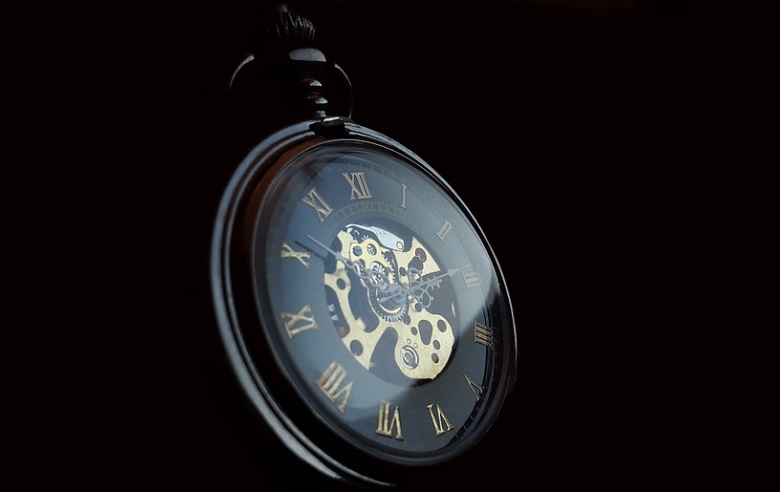
What Are the External Components of a Wristwatch?
A wristwatch consists of a movement and external components: the case with lugs, bezel, crystal, dial with hands, crown, caseback and strap or bracelet. The case protects the movement, the dial and hands show the time, and the crown is used to set the time and date. Below you will find a diagram and the names of the most important watch parts along with their functions.
What parts make up a wristwatch?
The construction of a wristwatch covers two main groups of elements: the movement responsible for measuring time and the external parts. The latter are divided into the case, the elements used to read the time, the control elements and the parts that hold the watch on the wrist.
The case includes the case body, lugs, bezel, crystal, caseback and gaskets. Time is read via the dial, indices, hands, date window and subdials. The crown and pushers handle operation, while the strap or bracelet, spring bars and clasp keep the watch on the wrist.
Wristwatch parts – names and functions
|
Part |
English name |
Function |
Typical variants |
What to pay attention to |
|
Case |
case |
protects the movement |
316L steel, titanium, ceramic, gold, PVD |
dimensions, material, water resistance |
|
Lugs |
lugs |
connect the case to the strap |
straight, curved |
lug width |
|
Bezel |
bezel |
surrounds the crystal |
fixed, unidirectional or bidirectional |
function and scale |
|
Crystal |
crystal |
protects the dial |
acrylic, mineral, sapphire |
scratch and impact resistance |
|
Dial |
dial |
forms the background for reading the time |
matte, sunburst, skeleton |
legibility |
|
Indices |
indices |
mark the hours |
applied, printed, numerals |
contrast, lume |
|
Hands |
hands |
indicate the time |
hour, minute, seconds, GMT |
contrast and lume |
|
Date window |
date window |
shows the date |
at 3, 4:30 or 6 o'clock |
legibility |
|
Crown |
crown |
used for setting and winding |
standard, screw-down |
water tightness and comfort |
|
Pushers |
pushers |
control additional functions |
chronograph pushers |
ergonomics |
|
Caseback |
caseback |
closes the case |
snap-on, screw-down, exhibition |
model markings |
|
Gaskets |
gaskets |
limit the ingress of water and dust |
O-rings |
condition and servicing |
|
Strap / bracelet |
strap / bracelet |
secures the watch on the wrist |
leather, steel, rubber, NATO, mesh |
material and width |
|
Spring bars |
spring bars |
connect the strap to the lugs |
standard, quick-release |
ease of replacement |
|
Clasp |
buckle / clasp |
fastens the strap or bracelet |
buckle, folding, butterfly |
comfort and adjustability |
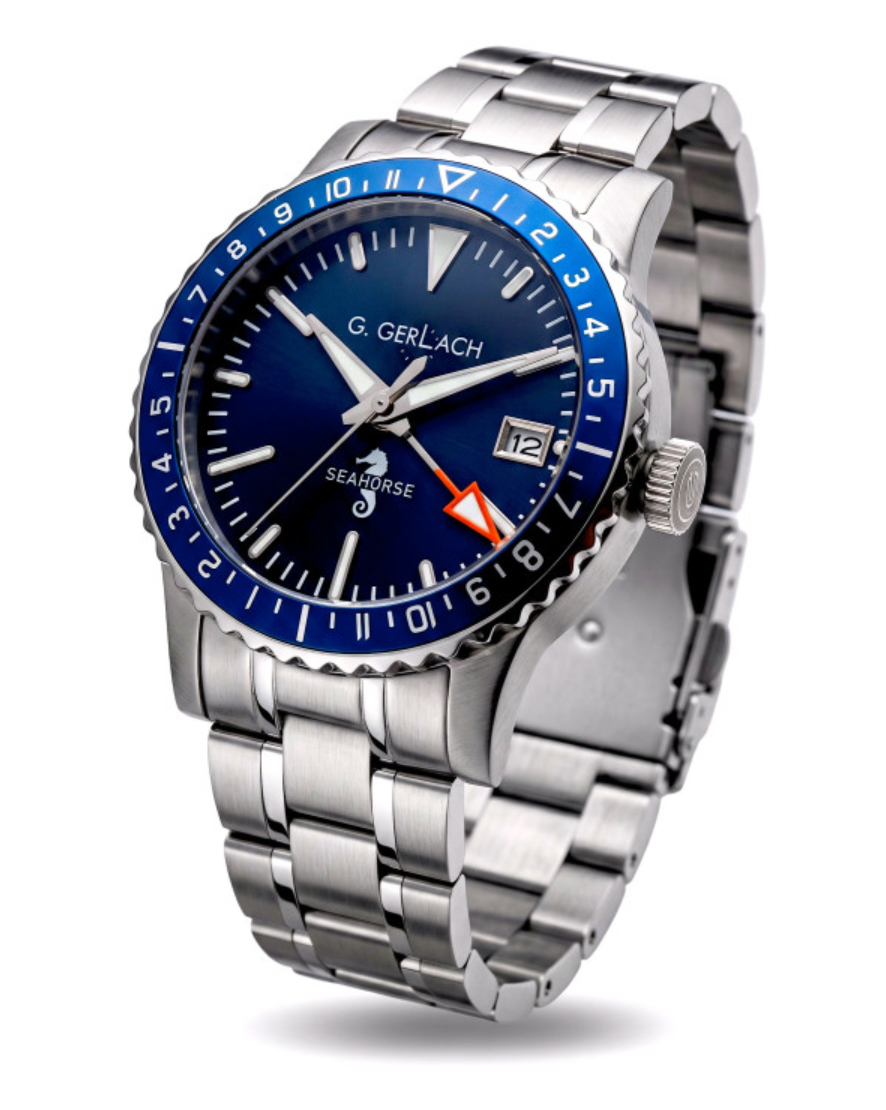
See what watch construction looks like in practice. The G.Gerlach Seahorse GMT 39.5 mm combines a steel case and bracelet, a distinctive bezel, a legible dial with indices, a date window and an additional GMT hand. It is a good example of a model in which the individual watch parts not only serve specific functions, but also together create its characteristic look.
Watch case – case body, lugs, bezel, crystal and caseback
The watch case protects the movement and joins together the most important elements of the construction. It is formed primarily by the case body, lugs, bezel, crystal, caseback and gaskets, and each of these elements affects the durability, water tightness and comfort of wearing the watch.
Case body – what does it protect and what is it made of?
The case (case) is the housing that contains the watch movement. It protects it from impacts, dust and contact with water, and forms the base for the crystal, caseback, bezel, crown and strap.
Cases are made of stainless steel, including 316L steel, as well as titanium, ceramic, gold, bronze and plastics. The surface of some models is additionally finished with a PVD coating. A separate guide explains in detail how a watch case is constructed and why its materials matter.
Watch lugs and strap width
Lugs, also called horns, are the protrusions of the case used to attach the strap or bracelet. A spring bar is placed between them and passes through the end of the strap.
The distance between the lugs determines the strap width. Common values are 18, 20, 22 and 24 mm. The second important parameter is lug-to-lug, which is the distance between the outermost tips of the lugs. The guide on how to measure a watch case shows how to read both dimensions correctly.
Bezel – how does it differ from the case?
The bezel, also called the lunette, is the ring surrounding the crystal. It is an external part mounted on the case, not the case itself.
A fixed bezel serves a structural or decorative function, or carries a scale, for example a tachymeter. A rotating bezel is used for additional measurements. In diving watches you will find unidirectional designs used to monitor dive time, and in GMT watches also bidirectional bezels.
Watch crystal – acrylic, mineral or sapphire?
The crystal is mounted above the dial, in the case or in the bezel. It protects the dial and hands from dirt, moisture and mechanical damage.
|
Crystal type |
Hardness |
Scratch resistance |
Crack resistance |
Use |
|
Acrylic |
see the separate entry on crystals |
low |
high |
vintage watches and utility models |
|
Mineral |
see the separate entry on crystals |
medium |
medium |
everyday watches |
|
Sapphire |
9 on the Mohs scale |
very high |
lower than acrylic |
higher-segment watches |
Acrylic crystal scratches easily, but minor scratches can be polished out. Mineral crystal is a compromise between scratch resistance and impact resistance. Sapphire crystal reaches 9 on the Mohs scale and stands out for its very high scratch resistance.
An anti-reflective coating also matters, as it reduces light reflections and improves dial legibility. A broader comparison can be found in the guide types of watch crystals.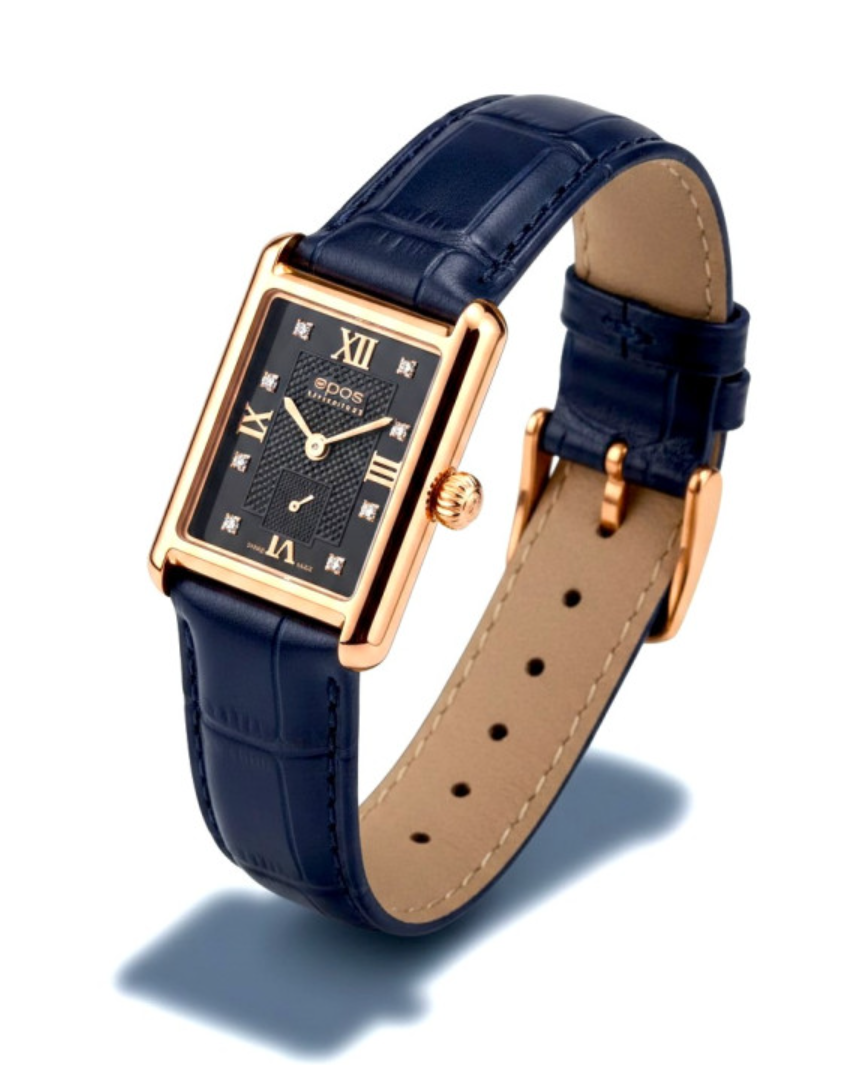
Different watch parts can create a completely different stylistic effect. Epos Quartz Lady 21 mm stands out with a rectangular case, a dark dial with Roman numerals and decorative indices, and a navy leather strap. It is a good example of how the shape of the case, the type of dial, the hands and the strap determine the character of the whole watch. Check out Epos Quartz Lady in the WestWatches offer.
Caseback – what is on the underside of the watch?
The caseback closes the case on the wrist side. Snap-on, screw-down, screwed-on and exhibition constructions are available.
An exhibition caseback reveals the watch movement through mineral or sapphire crystal. Manufacturers also place information on the caseback about the model, material, water resistance and identification markings. When identifying a specific piece, the watch reference number is helpful.
Gaskets – why do they determine water resistance?
Gaskets are rings placed between the elements of the case, among others at the caseback, crown and crystal. They limit the ingress of water and contaminants into the watch.
Their condition deteriorates over time, which is why water tightness is also checked during servicing. The ISO 22810:2010 standard defines the requirements and test methods used to verify the water resistance of watches. You will find more practical information in the guide on watch water resistance.
Dial and hands – how does a watch show the time?
The dial, indices and hands form the system responsible for reading the time. It is complemented by the date window and subdials, which show additional information and functions of the watch.
Dial and indices
The dial (dial) forms the background for all the elements used for reading. It carries the hour indices, the manufacturer's logo and markings relating to the watch's functions or parameters.
Indices (indices) take the form of applied markers, prints, or Arabic and Roman numerals. Some indices and hands are coated with a luminescent compound that emits previously absorbed light energy. The principle behind this solution is described in our guide on dial illumination.
Hands
Hands (hands) are not attached to the dial. They are mounted on the movement arbors that pass through the opening in its central part.
The basic set includes an hour hand, a minute hand and a seconds hand. A chronograph gets additional stopwatch hands, and a GMT watch a separate 24-hour hand. Legibility depends, among other things, on the contrast of the hands against the dial and on the use of luminescent compound.
Date window and subdials
The date window shows the current day of the month. It is often located at 3, 4:30 or 6 o'clock. Subdials, called counters, present additional readings. In a chronograph they are used to measure minutes and hours, but they can also show small seconds, power reserve or the moon phase.
Crown and pushers – how to operate a watch?
The crown (crown) is a knob located on the side of the case. It is used to set the time and date, and in mechanical watches also to manually wind the mainspring.
In many constructions the first pulled-out position of the crown handles the date, and the next one the setting of the time. A screw-down crown is fastened to a threaded tube in the case and is part of the system that protects the interior from water.
Pushers (pushers) are found, among others, in chronographs. A typical layout includes a start/stop pusher around 2 o'clock and a reset pusher around 4 o'clock. 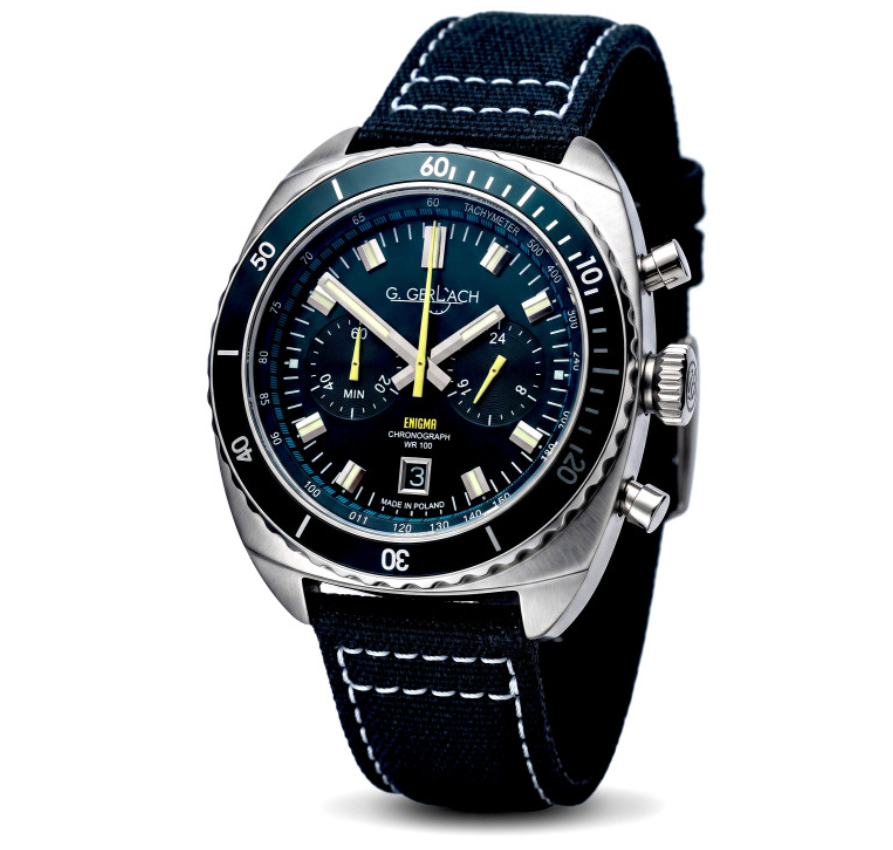
See how a chronograph works in practice. G.Gerlach Enigma Czarna 43 mm uses additional readings and pushers to operate the stopwatch function, which nicely shows how the elements of a watch's construction translate into its functionality. The sporty character is emphasized by the black dial, bold hands and massive case
Strap, bracelet, spring bars and clasp – how does a watch stay on the wrist?
A watch is secured on the wrist by means of a strap or bracelet. Straps are made of leather, rubber, silicone and fabrics, including the NATO construction. Bracelets are made primarily of steel and come as classic links or mesh.
A watch strap is connected to the lugs by means of spring bars (spring bars). These are spring-loaded pins whose ends fit into holes in the lugs. Quick-release spring bars simplify changing the strap without using a classic watchmaker's tool.
The clasp is responsible for closing it. A leather strap often uses a classic buckle, while bracelets use folding clasps. A separate construction is the butterfly clasp, whose two parts fold symmetrically.
What is inside a watch?
The heart of a watch is the movement responsible for measuring time and driving the indications. Watches use watch movements that are quartz, automatic, manually wound, solar and kinetic.
A mechanical movement consists, among other things, of a mainspring, a gear train, an escapement, a balance wheel and jewel bearings. The mainspring stores energy, which is then transmitted through the system of gears to the subsequent elements of the movement. The escapement together with the balance wheel is responsible for the controlled release of this energy and for maintaining the regular rate of the watch. Jewel bearings in a watch reduce friction at the most heavily loaded points of the movement, supporting the smooth and durable operation of its moving parts.
The type of movement affects how the watch is powered, how it is operated and the character of its work. In mechanical models the energy comes from the mainspring, while in quartz watches an electronic circuit powered by a battery is responsible for measuring time.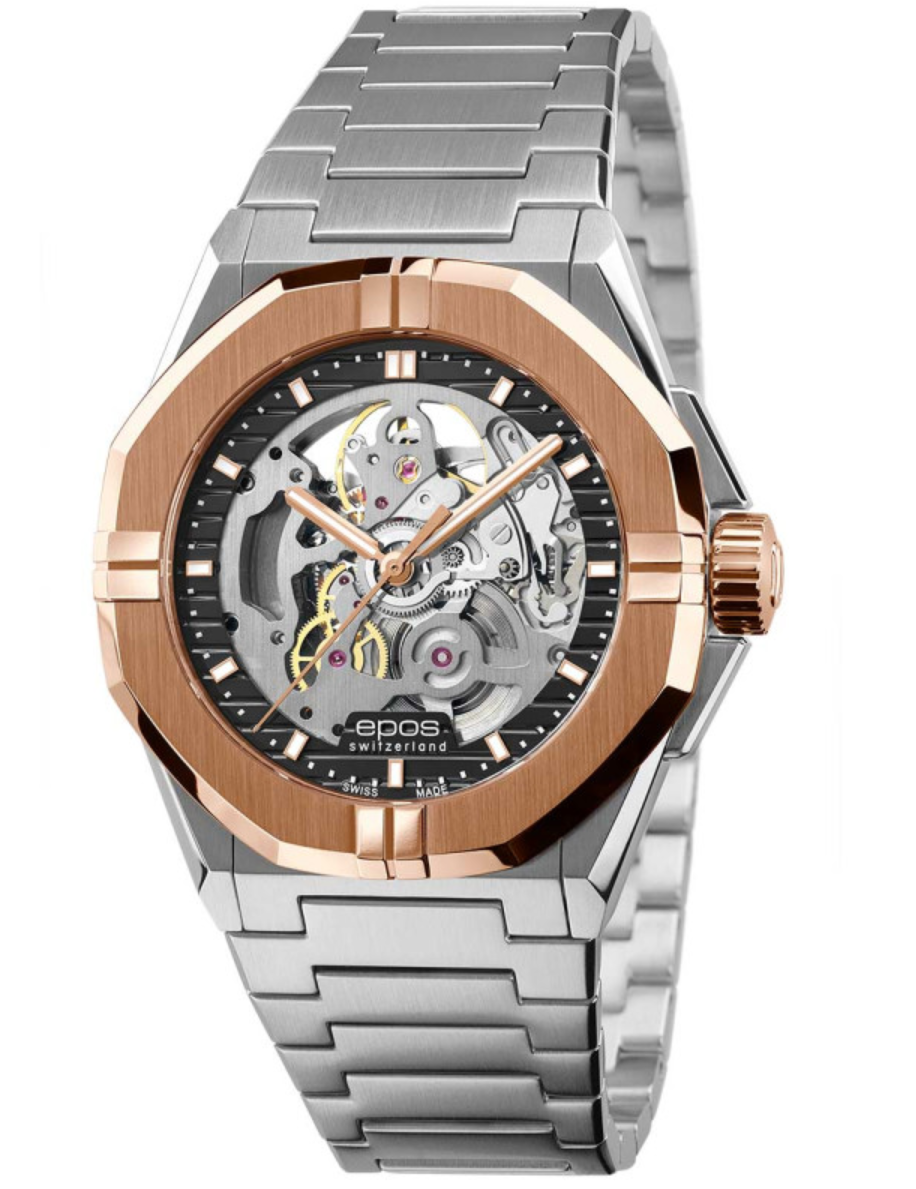
See the movement in action. Epos Sport Skeleton Automatic 41 mm shows what in most watches remains hidden beneath the dial – the working elements of a mechanical movement. The skeleton construction lets you observe its operation as it measures time, and the automatic winding uses the motion of the wrist to replenish the energy of the mainspring. Check out Epos Sport Skeleton Automatic in the WestWatches offer.
Which parts determine the durability of a watch?
The durability of a watch results from the combination of several elements. The crystal protects the dial, the case material affects the durability of the housing, and the gaskets and crown construction are responsible for water tightness.
In a watch intended for contact with water, you need to check the declared water resistance class and the intended use of the model. ISO 22810:2010 defines the requirements for watches marked as water resistant.
For diving watches, the ISO 6425:2018 standard applies. It applies to models intended for diving at a depth of at least 100 m and equipped with a secure dive-time measuring system that is visible in the dark. For magnetic resistance, ISO 764:2020 applies. The standard defines the minimum requirements and test methods for watches resistant to magnetic fields encountered in everyday use.
Although most watches consist of similar basic elements, individual models can differ greatly in appearance, proportions, materials and finish. It is precisely the details – the shape of the case, the colour of the dial, the type of indices, the bezel, the strap or the bracelet – that often decide which watch we like best. Check out the offer of the WestWatches online watch store and find a model to match your style.

Krzysztof Szopa
Watch expert
An expert associated with the WestWatches.pl brand, a place that has been supplying watches for every occasion for years. Thanks to many years of experience in the watchmaking and jewellery industry, he passionately shares his knowledge, offering professional advice both in the online store and in the brick-and-mortar shop. He specializes in selecting original watches, watch accessories and jewellery products that combine exceptional quality with competitive prices. His goal is to help customers find the perfect product that meets their expectations and highlights their style.

See popular articles
316L, 904L and surgical steel – what is your watch made of?
Most steel watches, from affordable models to luxury constructions, are made of 316L steel. 904L steel contains more nickel, chromium and molybdenum, and therefore offers higher corrosion resistance, but in itself it does not mean greater scratch resistance. The term “surgical steel”, in turn, does not point to one strictly defined alloy. In watches it most often refers to 316L, but without a specific material designation it may simply be a marketing name. If you are choosing a watch for years, look therefore not only at the words “stainless steel”, but also at the grade of steel, which components are made of the given material and how they are finished.
Japanese or Swiss watches? We compare quality, movements and prices
If you are wondering whether Japanese or Swiss watches are better, the name of the country alone will not give you a good answer. In both cases you will find simple models for relatively little money, solid mid-range automatics and designs belonging to the world's watchmaking high end. Far more about quality will be told to you by the specific movement, the way the case and bracelet are made, the crystal, quality control, accuracy and price. Check how Japanese watches really differ from Swiss ones and what to pay attention to before you choose a model for yourself.
The lifespan of a quartz watch – how long does it really last, and when is it no longer worth repairing?
We value quartz watches above all for their accuracy, convenience and modest day-to-day demands. That does not mean, however, that they can run indefinitely and need nothing more than a new battery once every few years. Over time, the components of the movement itself also wear out, and the moment a watch starts giving trouble can look completely different depending on the model, the way it is used and the availability of parts. So how long can a quartz watch last, what wears out in it most often and when does repair still make sense? Check what its lifespan really depends on.
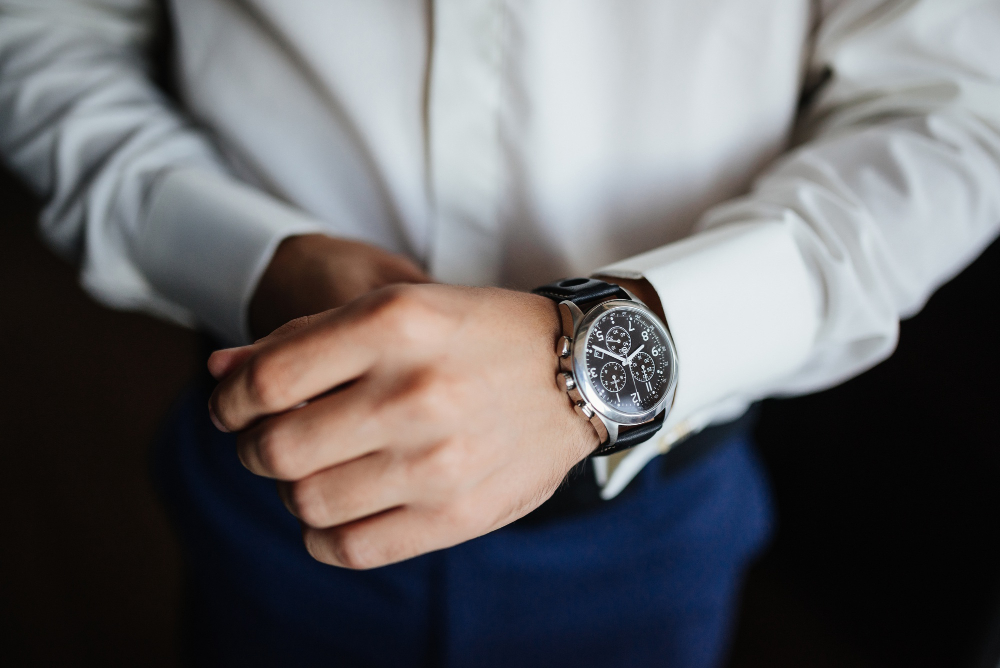
The second hand on a watch – why does it jump, move smoothly or stop?
The way the seconds hand moves can tell you a lot about a watch's movement, but it is not an infallible test. A single distinct jump per second most often points to quartz, several small movements per second are typical of a mechanical movement, and an almost continuous glide is associated with Spring Drive. There are exceptions, however: there is a quartz watch with a sweeping seconds hand, and a mechanical watch that makes exactly one jump per second. What is more, a stopped hand does not have to mean a fault. Check how to read these signals and when you really need a watchmaker's help.

How do you set an automatic watch? Date, time and time zone 21:00–3:00
An automatic watch does not need a battery, but it does require a little knowledge from its owner. Setting the time or date seems simple, yet the wrong moment or the wrong way of using the crown can affect how the movement works. Many questions concern changing the date at night, moving the hands backwards and restarting a watch after a longer break. Check how to set an automatic watch correctly, what to pay attention to with the crown and why people often talk about particular caution between 9:00 pm and 3:00 am.

Wodoszczelność 10 ATM i 20 ATM – czy możesz pływać i nurkować z takim zegarkiem?
Co naprawdę oznacza 10 ATM lub 20 ATM na zegarku i czy takie oznaczenie pozwala bez obaw wejść do basenu, morza albo nurkować? Same liczby mogą być mylące, dlatego sprawdź, jak czytać klasę wodoszczelności i dobrać zegarek do aktywności w wodzie.
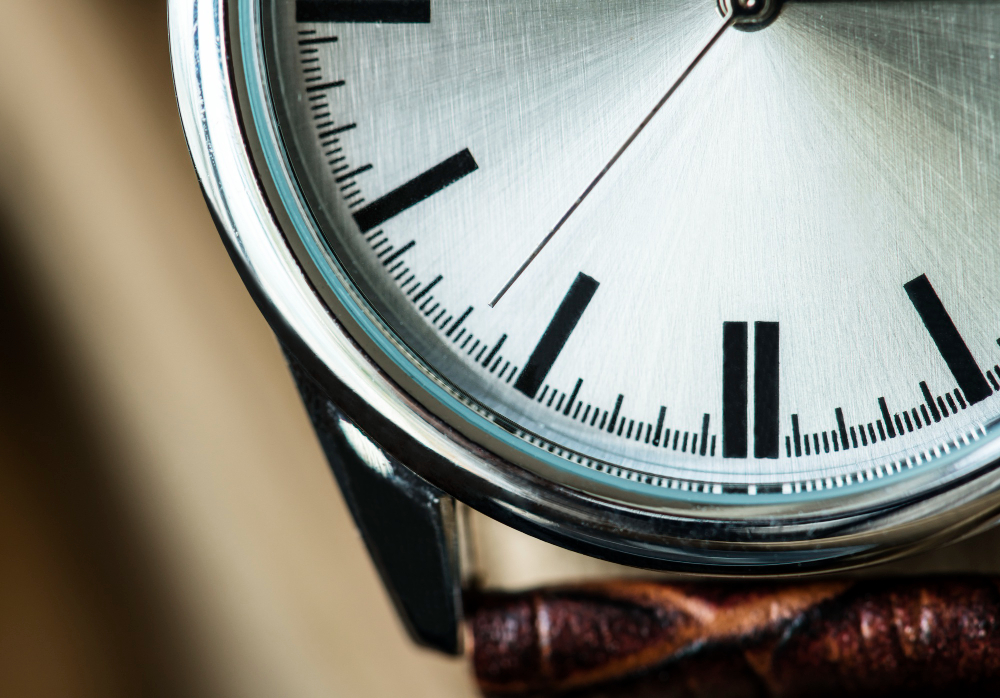
Water resistance 3 ATM – what does it mean and what can you do with it?
3 ATM water resistance means the watch is prepared above all for rain, accidental splashes and brief contact with water during everyday activities. It does not mean that you can swim with it, shower in it or submerge it to a depth of 30 metres. It is precisely the “30 m” marking that most often misleads. It is the result of a pressure test carried out under controlled conditions, not a declared working depth. So if you see 3 ATM, 3 bar or Water Resistant 30 m on the case back or in the specification, treat the watch as resistant to everyday moisture, but not as a watch for water activities.
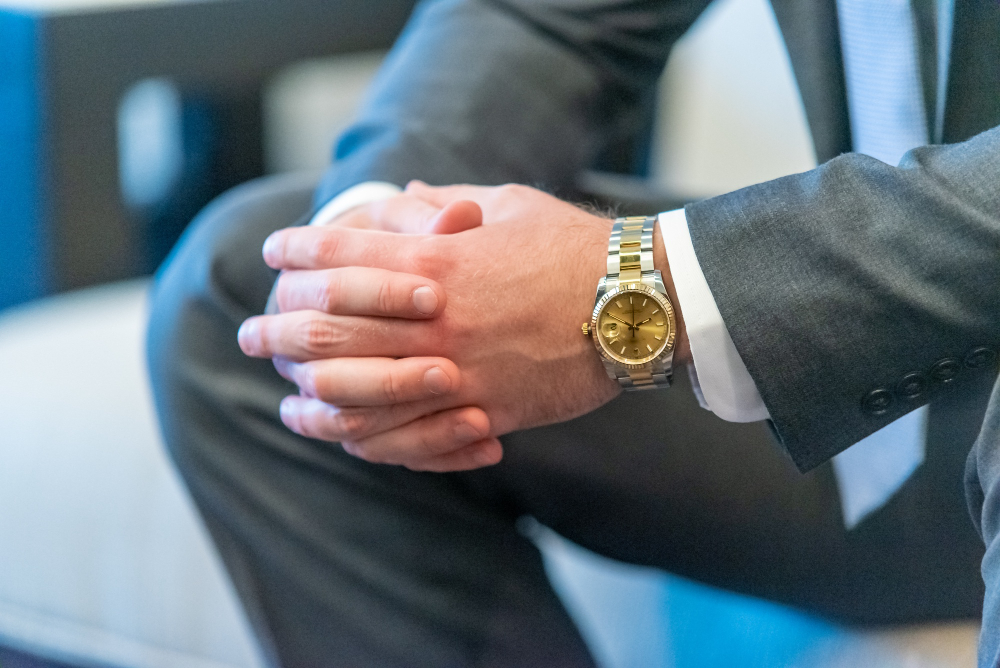
Rolex-style watches – the best alternatives to the Submariner, Explorer and Datejust
For years Rolex has been one of the most important style benchmarks in the watch world, but its price is not within everyone's reach. That is why it is worth looking at watches similar to Rolex and models inspired by its styling, which offer their own character, solid build quality and much more affordable prices. We are not talking about counterfeits here, but about legitimate watches from other brands that draw on similar solutions and design language. Check out watches inspired by Rolex's style and choose the model that suits your style and budget.
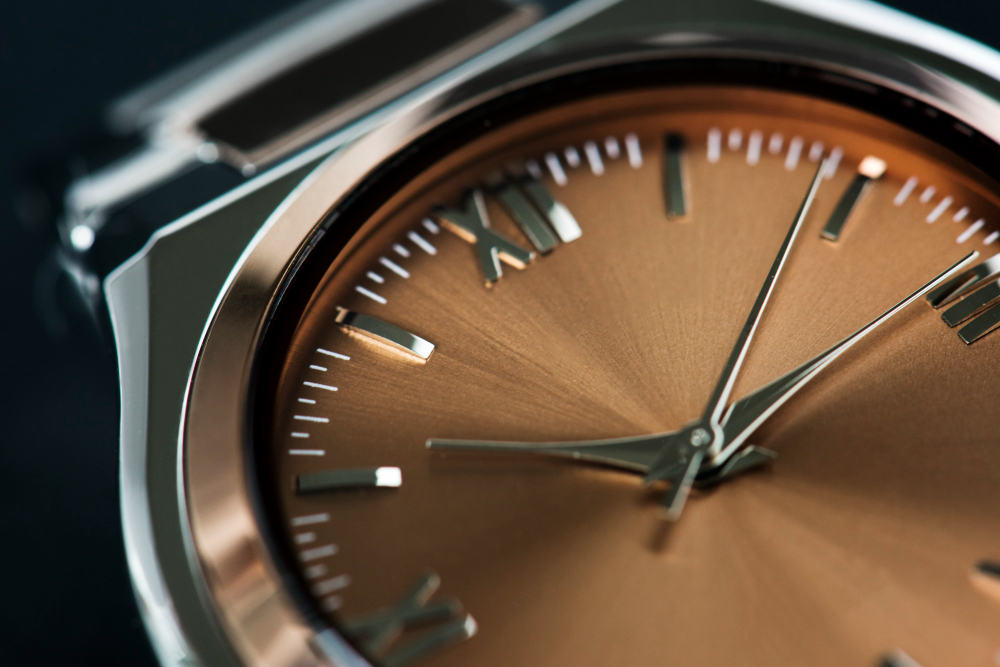
A bronze watch – why does each one change over time?
A bronze watch stands out because its appearance changes along with its owner. The case gradually darkens, turns matte and develops a patina, so two identical models can look completely different after just a few months. This is the greatest advantage of bronze, but also a trait you need to accept before buying. If you expect a watch that keeps its factory shine for years, steel may be a better direction. If, on the other hand, you like vintage looks, signs of use and the natural ageing of a material, bronze gives an effect that is hard to achieve in any other metal.