




What to do when your watch stops? Check this first.
Your watch has unexpectedly stopped and you have no idea what went wrong? Before you think about expensive repairs, check a few simple things that are often the cause of the problem. Whether you wear a quartz, mechanical, or automatic watch – many faults can be diagnosed by yourself. In this guide, we'll show you step by step what to check first and when it's actually worth going to a watchmaker.
Has your watch stopped? Check this before you rush to the watchmaker!
This doesn't have to mean a breakdown at all. Before you type "watch service nearby" into the search engine or pack your timepiece into a box, it's worth calmly analyzing the situation. Sometimes the reason why a watch stops is ridiculously simple – and you can handle it in a few seconds. Sounds unlikely? Well, actually. In the case of automatic and mechanical watches, very often a gentle tightening of the crown is enough to bring it back to life. It's a small detail, but if it's not properly pressed in, it interrupts the energy transmission to the movement. The result? The watch stops and appears dead.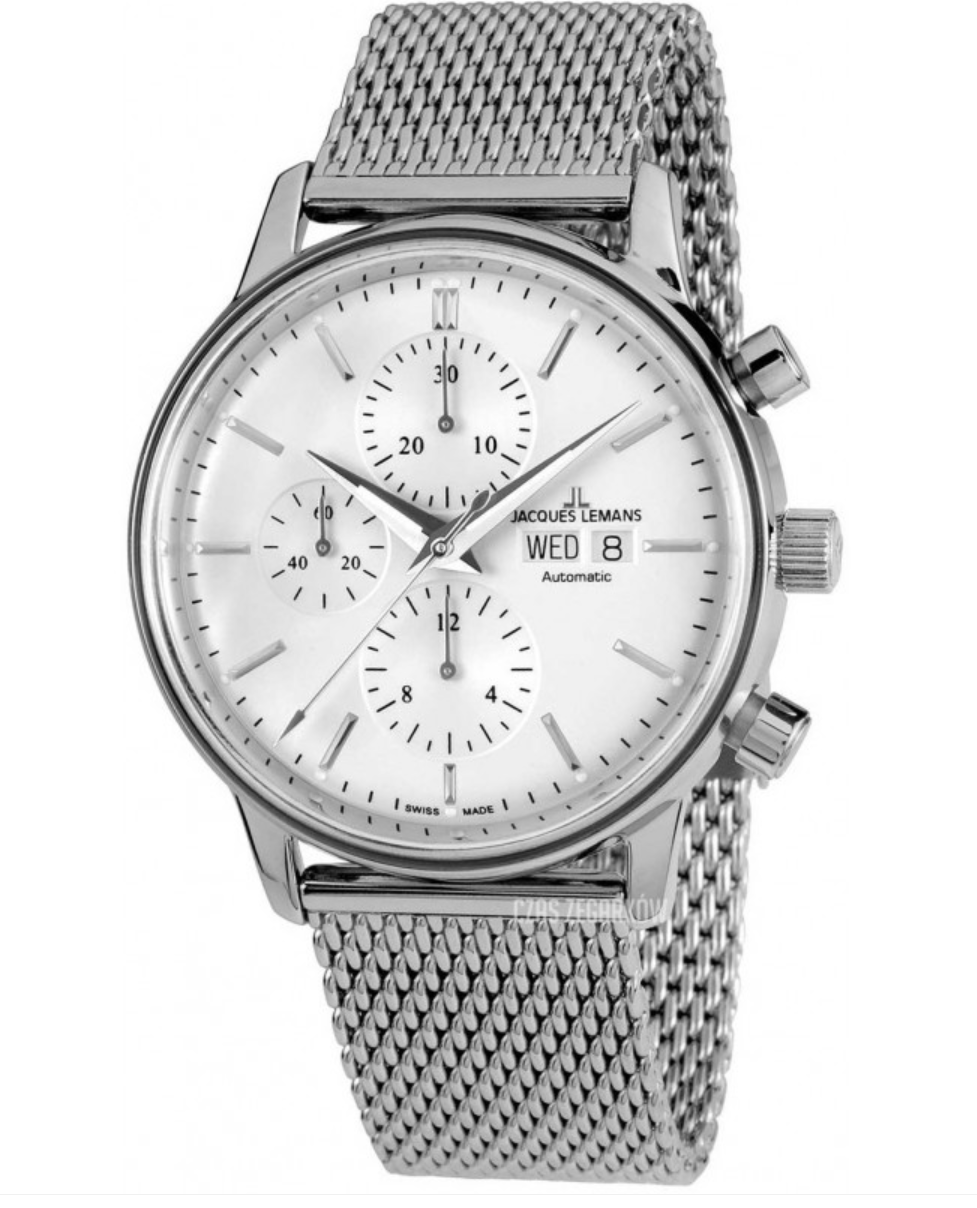
Jacques Lemans Retro Classic Chronograph Automatic Valjoux 7750 44mm N-208A is an elegant vintage-style watch powered by the legendary Swiss automatic movement Valjoux 7750. The combination of a minimalist dial with a mesh bracelet gives it a unique, timeless character.
In quartz watches, the most common culprit is obviously the battery – but before you start replacing it, take a look at the contacts. Even a thin layer of dirt or deposits can effectively cut off power supply. Interestingly, some people decide to open the case back and replace the battery themselves – but if you don't have the right tools or experience, you might break more than you fix. On the WestWatches blog, you'll find a text that shows why it's better not to do this on your own and when it's worth going to a professional. But before you do that – check yourself what you can do. You might avoid unnecessary costs.
Not working? Maybe it's just the crown! Learn the hidden trick that saves watches
Surprisingly many watch owners don't push the crown all the way in, either fearing damage or simply forgetting that it's movable. Meanwhile, a loose crown is like open doors to interrupting energy transmission – the movement stops working because it doesn't receive the impulse to operate. If your mechanical watch stops for no apparent reason, checking the crown position should be the first thing you do. Just push it all the way in – but of course with care. If the hands start moving after a moment, you already know what the cause was.
For automatic watches, the situation is similar, though slightly more complex. If you haven't worn your model for a long time – for example, it lay in a drawer for several days – the mainspring might have simply discharged. Then a few crown turns will help – preferably 8 to 10 smooth ones, clockwise. Don't be afraid of this – proper winding of a watch won't damage the movement, as confirmed by experts in our blog post about the safety of winding automatics. If the crown resists, don't force it – it might indeed need service. But before you go to a watchmaker, it's worth performing these simple actions. Sometimes the solution is right at hand – and literally at your fingertip.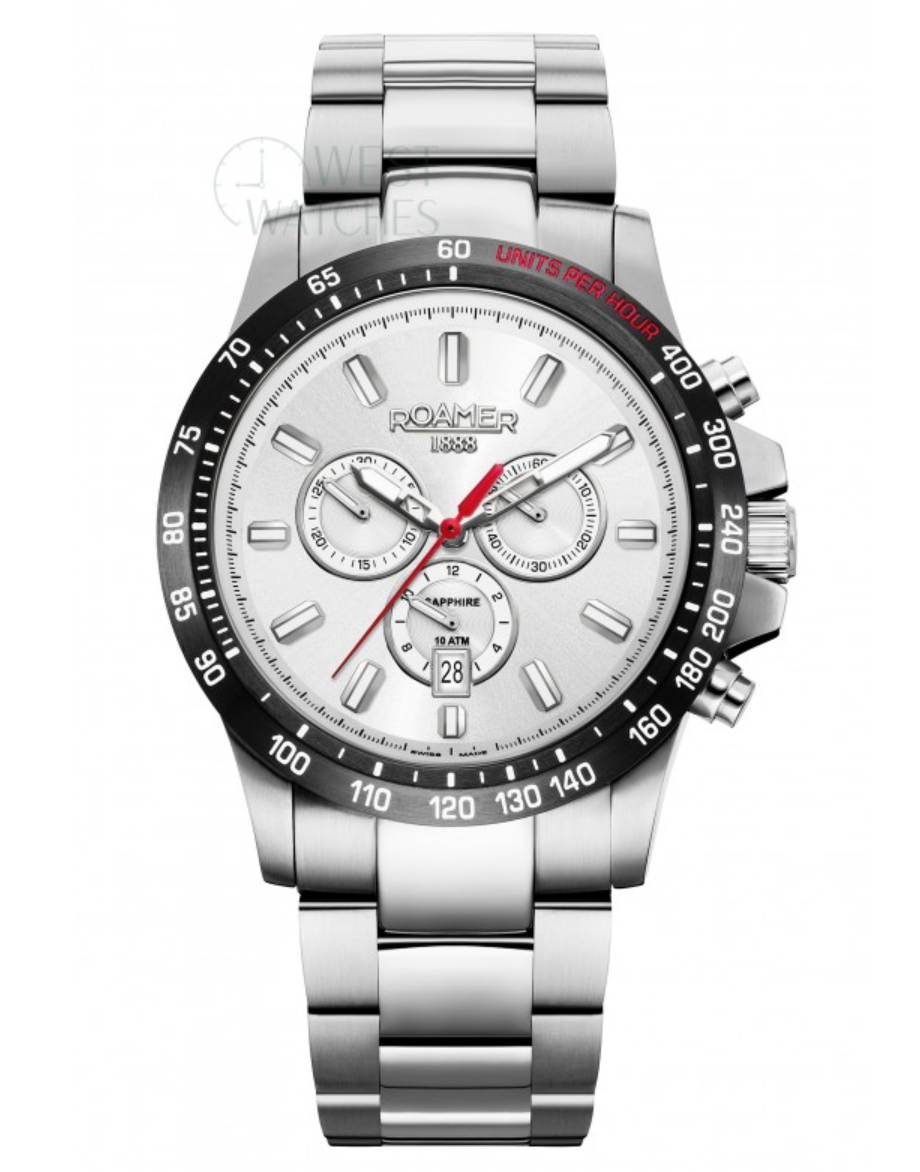
Roamer Rimini Chronograph 861837 41 15 20 is an elegant sports watch with chronograph, sapphire crystal, and water resistance up to 100m. The steel case and bracelet combined with a precise movement guarantee reliability and timeless style.
Does your watch not tolerate magnetic fields? Here are the symptoms of magnetization that you're ignoring
This is one of those problems that is easy to overlook, but can effectively disrupt watch operation – or stop it completely. Mechanical and automatic watches are particularly vulnerable to magnetic field effects, as they have sensitive components such as the balance spring or balance wheel. It's enough to leave your watch next to a powerful speaker, laptop with magnets in the case, or even... a phone case. The result? The watch stops or starts acting strangely – it runs slow, fast, and the hands move irregularly.
If you suspect this might be your case, try a simple test – move the watch to different positions, gently move it around. If it responds but quickly stops working again – it might be magnetized. The best thing you can do then is use a demagnetizer – if you have one – or take the watch to a specialist. It's worth adding that magnetization can produce similar symptoms to simple watch gaining or losing time, so if you want to better understand the differences, check out our post: "Watch is running slow or fast – what to do?". Thanks to this, you'll learn to distinguish when you're dealing with a minor problem and when it's worth acting quickly.
Quartz watch not ticking? It's not always about the battery – check these points before replacing it!
When your quartz watch suddenly stops and goes silent for good, one thing immediately comes to mind – the battery. And indeed, this is the most common cause of the problem, but not always the only one. Before you head to the store for a new battery or start tinkering with the case back, pay attention to something else – was the watch exposed to moisture? Sometimes under the influence of sweat or rain, condensation appears inside the case, and in extreme cases – rust. 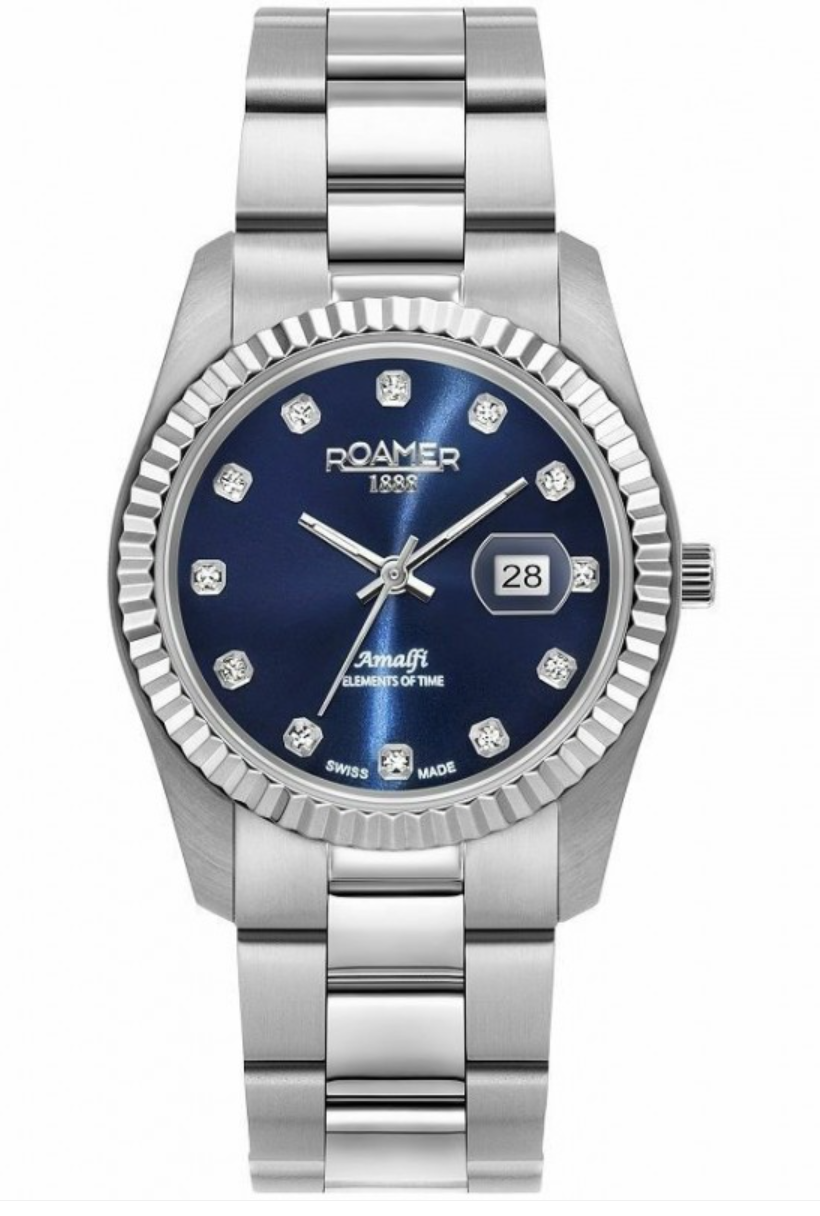
Roamer Amalfi 852844 41 49 20 is an elegant watch with a navy dial decorated with crystals that combines Swiss precision with luxurious style. The steel case and bracelet ensure durability, while the date display increases everyday functionality.
This is precisely why we published a guide on the WestWatches blog "Fogged watch crystal - what to do when condensation appears under the glass?", which will help recognize symptoms and prevent more serious damage.
Another underestimated issue is the battery contacts – if they're contaminated or slightly corroded, even a new battery won't work. In this case, gentle cleaning (e.g., with a cotton swab and isopropyl alcohol) and slight bending of the contact plate is enough to restore contact. But be careful – if you don't know exactly what you're doing, you might accidentally damage the movement. Battery replacement in a watch and manipulations inside the watch, despite looking simple, require precision and patience. If you have doubts, give up on DIY experiments – on our blog we explain why it's worth putting this in the hands of a professional. This way you'll save yourself stress – and often money too.
See popular articles

316L, 904L and surgical steel – what is your watch made of?
Most steel watches, from affordable models to luxury constructions, are made of 316L steel. 904L steel contains more nickel, chromium and molybdenum, and therefore offers higher corrosion resistance, but in itself it does not mean greater scratch resistance. The term “surgical steel”, in turn, does not point to one strictly defined alloy. In watches it most often refers to 316L, but without a specific material designation it may simply be a marketing name. If you are choosing a watch for years, look therefore not only at the words “stainless steel”, but also at the grade of steel, which components are made of the given material and how they are finished.
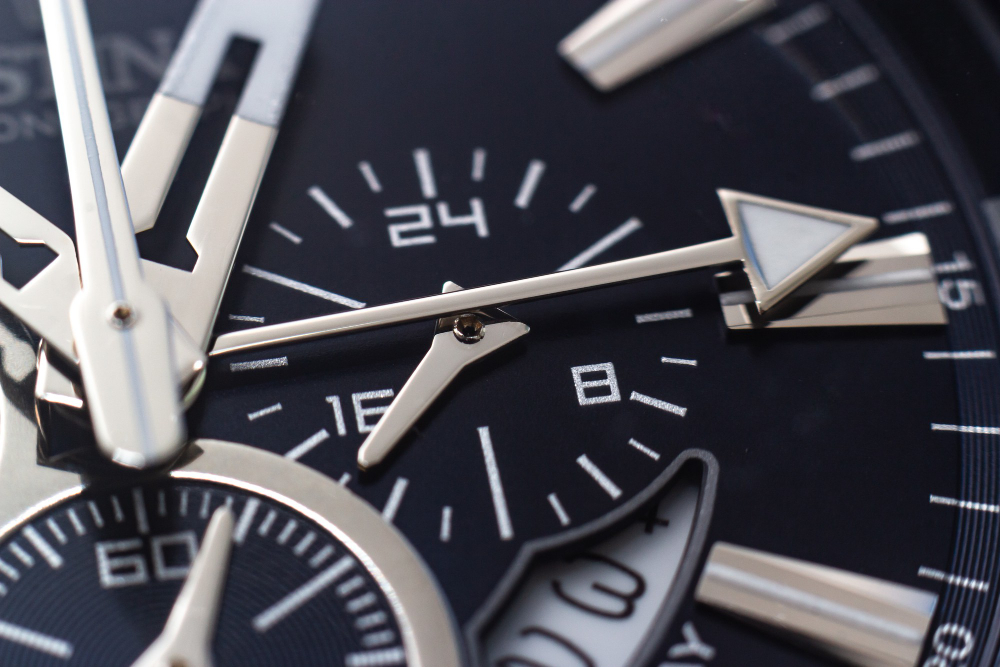
Japanese or Swiss watches? We compare quality, movements and prices
If you are wondering whether Japanese or Swiss watches are better, the name of the country alone will not give you a good answer. In both cases you will find simple models for relatively little money, solid mid-range automatics and designs belonging to the world's watchmaking high end. Far more about quality will be told to you by the specific movement, the way the case and bracelet are made, the crystal, quality control, accuracy and price. Check how Japanese watches really differ from Swiss ones and what to pay attention to before you choose a model for yourself.

The lifespan of a quartz watch – how long does it really last, and when is it no longer worth repairing?
We value quartz watches above all for their accuracy, convenience and modest day-to-day demands. That does not mean, however, that they can run indefinitely and need nothing more than a new battery once every few years. Over time, the components of the movement itself also wear out, and the moment a watch starts giving trouble can look completely different depending on the model, the way it is used and the availability of parts. So how long can a quartz watch last, what wears out in it most often and when does repair still make sense? Check what its lifespan really depends on.

The second hand on a watch – why does it jump, move smoothly or stop?
The way the seconds hand moves can tell you a lot about a watch's movement, but it is not an infallible test. A single distinct jump per second most often points to quartz, several small movements per second are typical of a mechanical movement, and an almost continuous glide is associated with Spring Drive. There are exceptions, however: there is a quartz watch with a sweeping seconds hand, and a mechanical watch that makes exactly one jump per second. What is more, a stopped hand does not have to mean a fault. Check how to read these signals and when you really need a watchmaker's help.

How do you set an automatic watch? Date, time and time zone 21:00–3:00
An automatic watch does not need a battery, but it does require a little knowledge from its owner. Setting the time or date seems simple, yet the wrong moment or the wrong way of using the crown can affect how the movement works. Many questions concern changing the date at night, moving the hands backwards and restarting a watch after a longer break. Check how to set an automatic watch correctly, what to pay attention to with the crown and why people often talk about particular caution between 9:00 pm and 3:00 am.

Wodoszczelność 10 ATM i 20 ATM – czy możesz pływać i nurkować z takim zegarkiem?
Co naprawdę oznacza 10 ATM lub 20 ATM na zegarku i czy takie oznaczenie pozwala bez obaw wejść do basenu, morza albo nurkować? Same liczby mogą być mylące, dlatego sprawdź, jak czytać klasę wodoszczelności i dobrać zegarek do aktywności w wodzie.
Water resistance 3 ATM – what does it mean and what can you do with it?
3 ATM water resistance means the watch is prepared above all for rain, accidental splashes and brief contact with water during everyday activities. It does not mean that you can swim with it, shower in it or submerge it to a depth of 30 metres. It is precisely the “30 m” marking that most often misleads. It is the result of a pressure test carried out under controlled conditions, not a declared working depth. So if you see 3 ATM, 3 bar or Water Resistant 30 m on the case back or in the specification, treat the watch as resistant to everyday moisture, but not as a watch for water activities.

Rolex-style watches – the best alternatives to the Submariner, Explorer and Datejust
For years Rolex has been one of the most important style benchmarks in the watch world, but its price is not within everyone's reach. That is why it is worth looking at watches similar to Rolex and models inspired by its styling, which offer their own character, solid build quality and much more affordable prices. We are not talking about counterfeits here, but about legitimate watches from other brands that draw on similar solutions and design language. Check out watches inspired by Rolex's style and choose the model that suits your style and budget.
A bronze watch – why does each one change over time?
A bronze watch stands out because its appearance changes along with its owner. The case gradually darkens, turns matte and develops a patina, so two identical models can look completely different after just a few months. This is the greatest advantage of bronze, but also a trait you need to accept before buying. If you expect a watch that keeps its factory shine for years, steel may be a better direction. If, on the other hand, you like vintage looks, signs of use and the natural ageing of a material, bronze gives an effect that is hard to achieve in any other metal.