



What is the best watch for travellers? Useful features when travelling
If you spend a lot of time camping and traveling, you know that a watch is more than just a way to check the time. It's a personal assistant that will help you find your way, pay for coffee on the other side of the world, and not get lost in time zone changes. If you're wondering what kind of watch would be really practical for a traveler, check out what to look for so you don't end up with a model that looks great but offers nothing else.
A traveler's watch – what must it have to not let you down at the end of the world?
When you venture into areas where coverage is a luxury and technology fails at the least opportune moment, you need equipment that will work regardless of the conditions. A traveler's watch cannot be just a decoration – it must be a tool. And one that, if necessary, will help you find your way, check the weather, determine your altitude above sea level, or the direction in which to go. This is not about bells and whistles – only about practical features that actually work.
Men's GPS watches offer much more than just basic location tracking today. Precise navigation, the ability to save routes, and find previously marked points are features that really come in handy in the field. Especially if you tend to change your route on the fly, explore unfamiliar places, or simply want to make sure you get back before dark. That's when the difference between a good watch and an average one becomes most noticeable.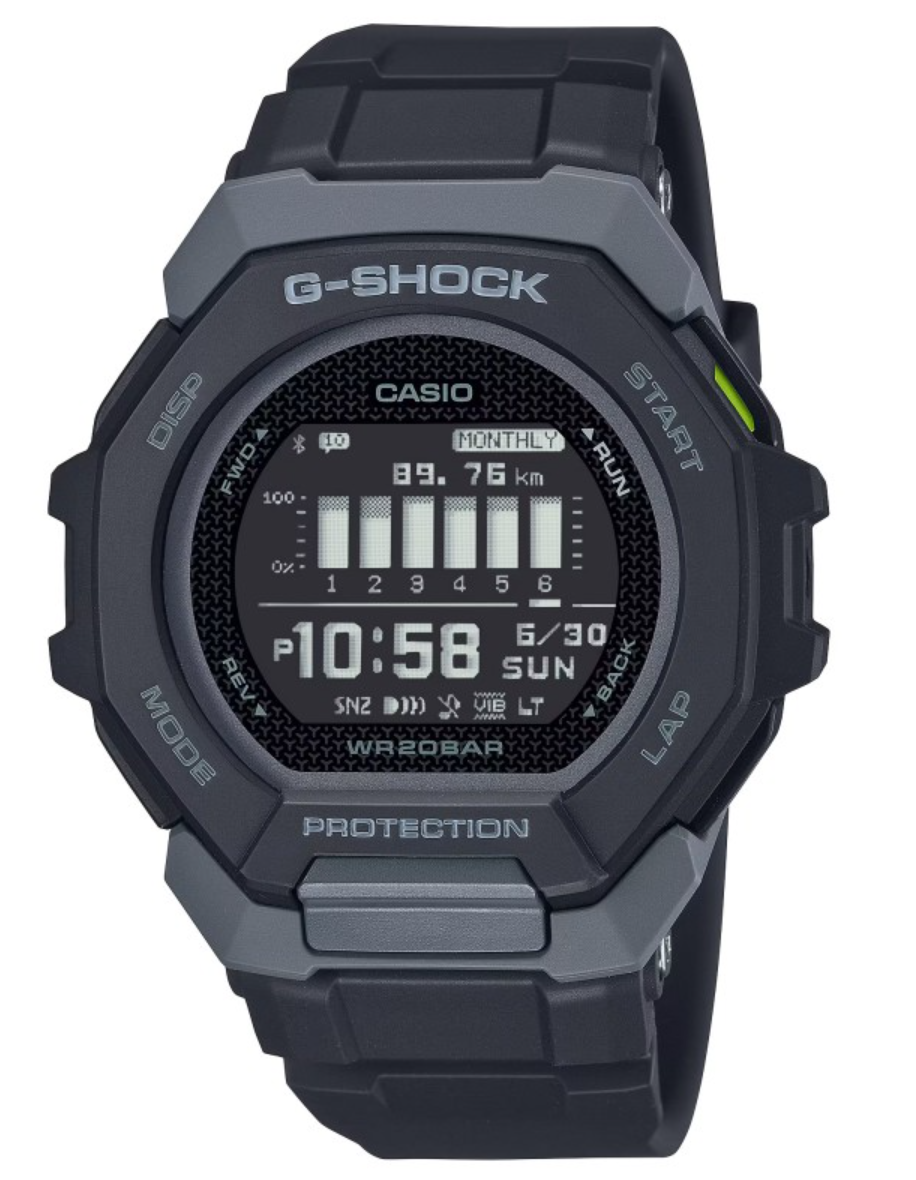
The Casio G-Shock G-Squad 46mm GBD-300-1ER is a sports watch with GPS functionality that accurately tracks your route and distance in real time. Designed for demanding workouts, it combines reliable durability with modern technology.
However, this does not mean that such watches cannot look great. The models of women's watches with GPS available on the market prove that functionality can go hand in hand with style – and with very good results.
No power, no signal, no problem – choose a travel watch that can handle anything
There are expeditions during which it is impossible to connect your equipment to a charger every other day. In such situations, it is men's solar watches that do the most work – they can operate for weeks or even months without needing to be recharged. Solar energy powers them automatically, daylight is enough, not necessarily the sun, and you can fully focus on the route, not the battery status.
Added to this is physical durability – titanium cases, scratch-resistant glass, water resistance, shock resistance tested in extreme conditions. These types of watches are designed for people who don't ask if something will hold up – they just assume that their equipment will always work. For travelers, this is much more than convenience – it's a guarantee that the watch won't fail when everything else might stop working.
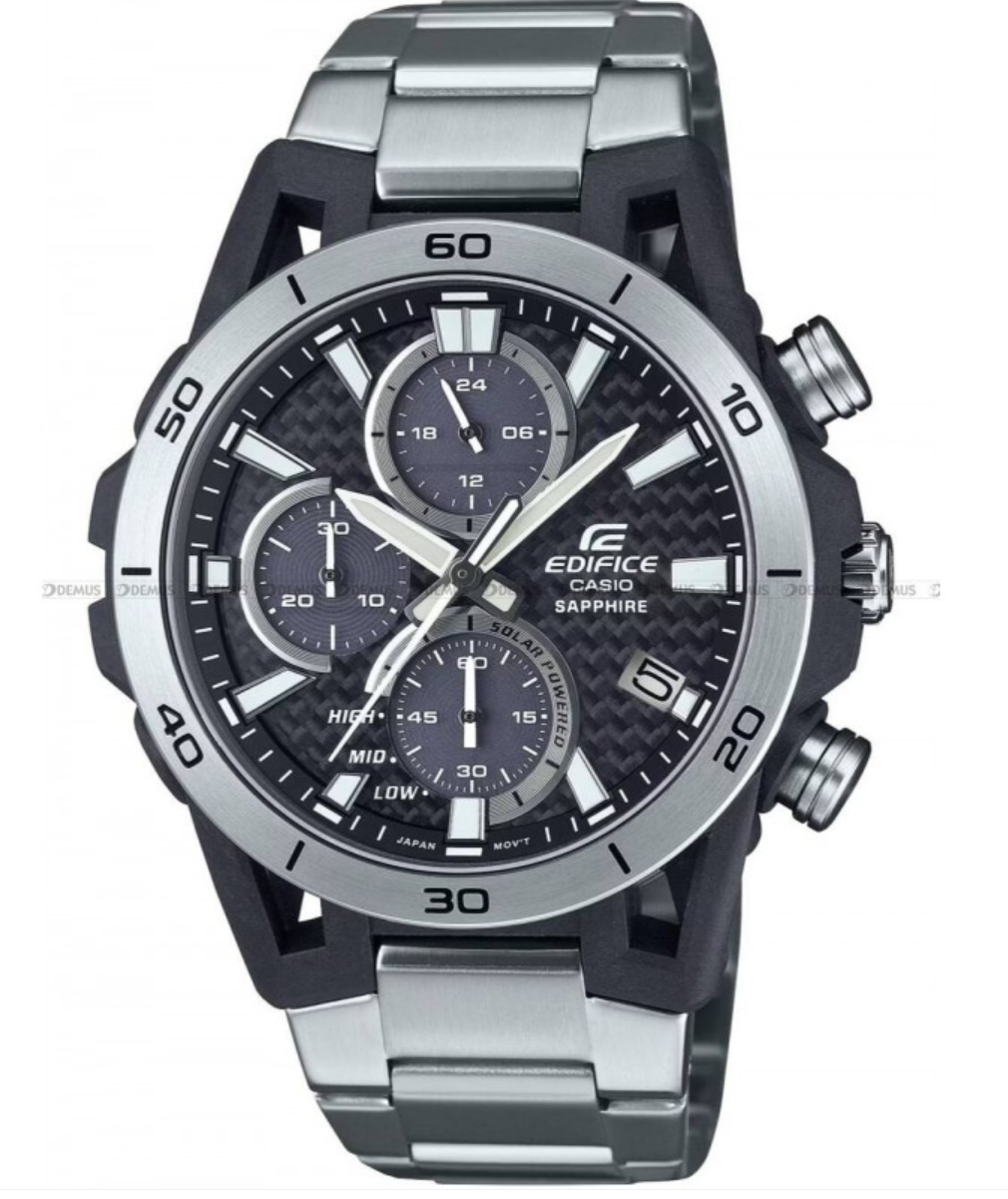
The Casio Edifice Sospensione Solar 45mm EFS-S640D-1AVUEF is a watch designed for travelers who value independence—including independence from electricity. Thanks to solar charging technology, it works without the need to connect to a charger, drawing energy from daylight and ensuring long operation even during multi-day trips.
One watch, multiple time zones – how not to get lost in time (and space)?
When traveling between countries and continents, it's easy to lose track of time. It's morning in one time zone and late afternoon in another. Travel watches with GMT or World Time functions solve this problem once and for all. You can track local time and home time simultaneously, and on many models, switch between them with a single click. You no longer have to count on your fingers or check what time it is "at home."
In men's sports watches equipped with GPS, the time automatically updates to your location. This is ideal if you often find yourself in new places and don't have the time to manually set the hands. What's more, these models are designed so that changing the time is not only quick, but also intuitive and as easy to read as possible, even in the middle of the night, in low light, or while driving.
Among the models adapted to changing travel conditions, it is also worth paying attention to men's watches with a compass, which increasingly also offer a World Time or GMT function. These are proposals designed for people who value accuracy, compact size, and practical functions, but do not want to compromise on aesthetics. The digital compass, present in many of these models, allows you to quickly determine the direction of travel—no matter where you are or whether you have access to a map or signal.
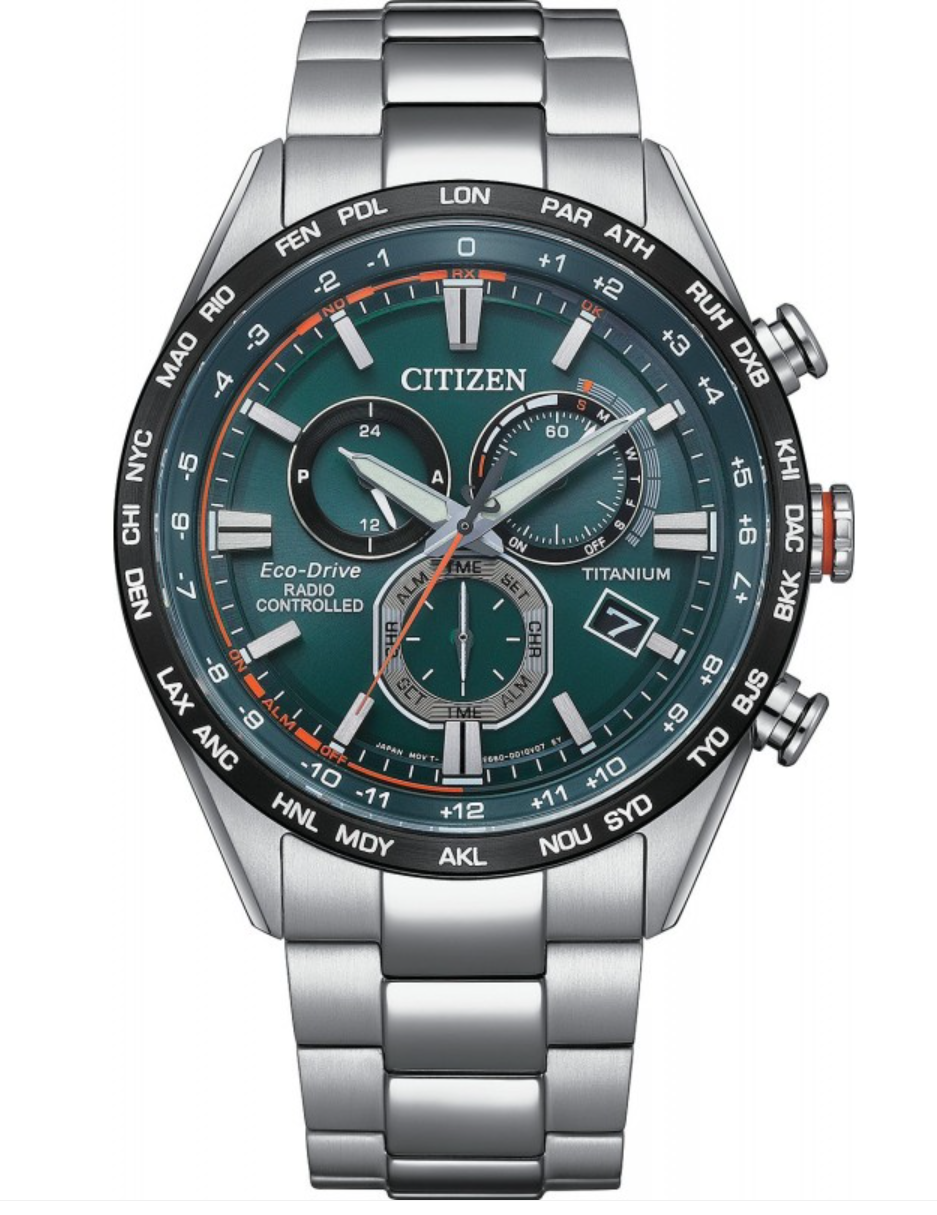
The Citizen Eco-Drive Radio Controlled Titanium Chronograph 43mm CB5946-82X is the perfect watch for travelers, automatically synchronizing the time with radio signals around the world. Its lightweight and durable titanium construction and light-powered movement make it a reliable companion on any journey.
Style and functionality in one – how to choose a travel watch that really suits you?
Today, travel watches are more than just technical gadgets for survival enthusiasts. They are smart, durable, and increasingly aesthetically refined devices that can accompany you on demanding expeditions as well as everyday activities. Whether you need GPS, a compass, solar power, GMT functionality, or contactless payment options, you will find models on the market that offer a full range of features and look exactly the way you like.
That's why you don't have to choose between looks and usability. A travel watch can be both a practical tool and an accessory that matches your style. It's worth taking a moment to choose a model that suits your needs – both visual and technical. This way, you can be sure that you have something on your wrist that will work in any situation – from trekking on an unknown trail to morning coffee in a new city.
See popular articles
316L, 904L and surgical steel – what is your watch made of?
Most steel watches, from affordable models to luxury constructions, are made of 316L steel. 904L steel contains more nickel, chromium and molybdenum, and therefore offers higher corrosion resistance, but in itself it does not mean greater scratch resistance. The term “surgical steel”, in turn, does not point to one strictly defined alloy. In watches it most often refers to 316L, but without a specific material designation it may simply be a marketing name. If you are choosing a watch for years, look therefore not only at the words “stainless steel”, but also at the grade of steel, which components are made of the given material and how they are finished.
Japanese or Swiss watches? We compare quality, movements and prices
If you are wondering whether Japanese or Swiss watches are better, the name of the country alone will not give you a good answer. In both cases you will find simple models for relatively little money, solid mid-range automatics and designs belonging to the world's watchmaking high end. Far more about quality will be told to you by the specific movement, the way the case and bracelet are made, the crystal, quality control, accuracy and price. Check how Japanese watches really differ from Swiss ones and what to pay attention to before you choose a model for yourself.
The lifespan of a quartz watch – how long does it really last, and when is it no longer worth repairing?
We value quartz watches above all for their accuracy, convenience and modest day-to-day demands. That does not mean, however, that they can run indefinitely and need nothing more than a new battery once every few years. Over time, the components of the movement itself also wear out, and the moment a watch starts giving trouble can look completely different depending on the model, the way it is used and the availability of parts. So how long can a quartz watch last, what wears out in it most often and when does repair still make sense? Check what its lifespan really depends on.
The second hand on a watch – why does it jump, move smoothly or stop?
The way the seconds hand moves can tell you a lot about a watch's movement, but it is not an infallible test. A single distinct jump per second most often points to quartz, several small movements per second are typical of a mechanical movement, and an almost continuous glide is associated with Spring Drive. There are exceptions, however: there is a quartz watch with a sweeping seconds hand, and a mechanical watch that makes exactly one jump per second. What is more, a stopped hand does not have to mean a fault. Check how to read these signals and when you really need a watchmaker's help.

How do you set an automatic watch? Date, time and time zone 21:00–3:00
An automatic watch does not need a battery, but it does require a little knowledge from its owner. Setting the time or date seems simple, yet the wrong moment or the wrong way of using the crown can affect how the movement works. Many questions concern changing the date at night, moving the hands backwards and restarting a watch after a longer break. Check how to set an automatic watch correctly, what to pay attention to with the crown and why people often talk about particular caution between 9:00 pm and 3:00 am.

Wodoszczelność 10 ATM i 20 ATM – czy możesz pływać i nurkować z takim zegarkiem?
Co naprawdę oznacza 10 ATM lub 20 ATM na zegarku i czy takie oznaczenie pozwala bez obaw wejść do basenu, morza albo nurkować? Same liczby mogą być mylące, dlatego sprawdź, jak czytać klasę wodoszczelności i dobrać zegarek do aktywności w wodzie.
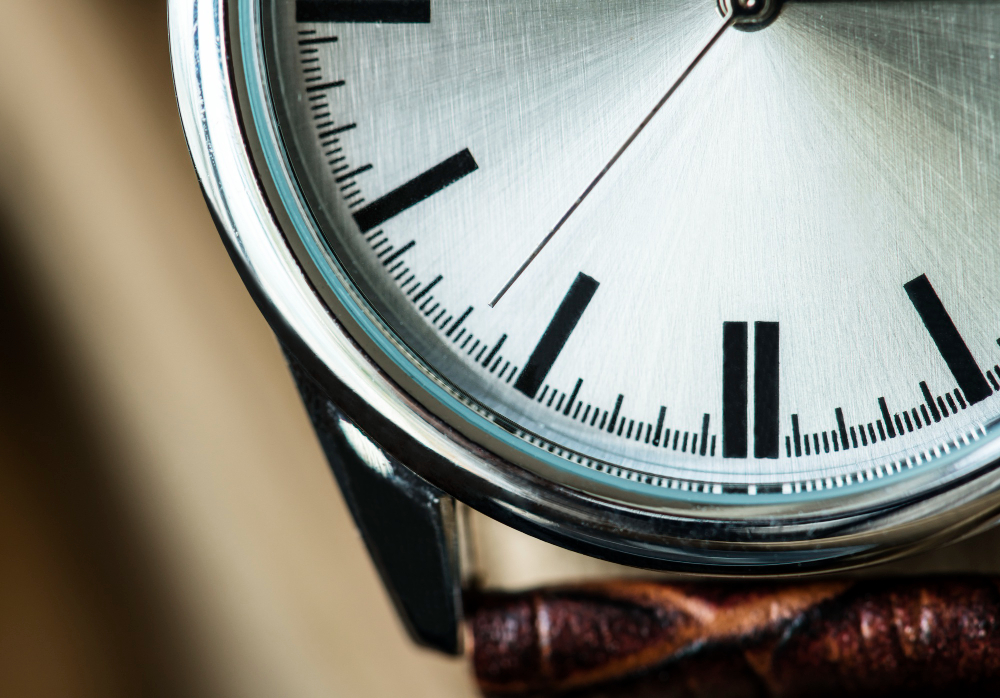
Water resistance 3 ATM – what does it mean and what can you do with it?
3 ATM water resistance means the watch is prepared above all for rain, accidental splashes and brief contact with water during everyday activities. It does not mean that you can swim with it, shower in it or submerge it to a depth of 30 metres. It is precisely the “30 m” marking that most often misleads. It is the result of a pressure test carried out under controlled conditions, not a declared working depth. So if you see 3 ATM, 3 bar or Water Resistant 30 m on the case back or in the specification, treat the watch as resistant to everyday moisture, but not as a watch for water activities.

Rolex-style watches – the best alternatives to the Submariner, Explorer and Datejust
For years Rolex has been one of the most important style benchmarks in the watch world, but its price is not within everyone's reach. That is why it is worth looking at watches similar to Rolex and models inspired by its styling, which offer their own character, solid build quality and much more affordable prices. We are not talking about counterfeits here, but about legitimate watches from other brands that draw on similar solutions and design language. Check out watches inspired by Rolex's style and choose the model that suits your style and budget.
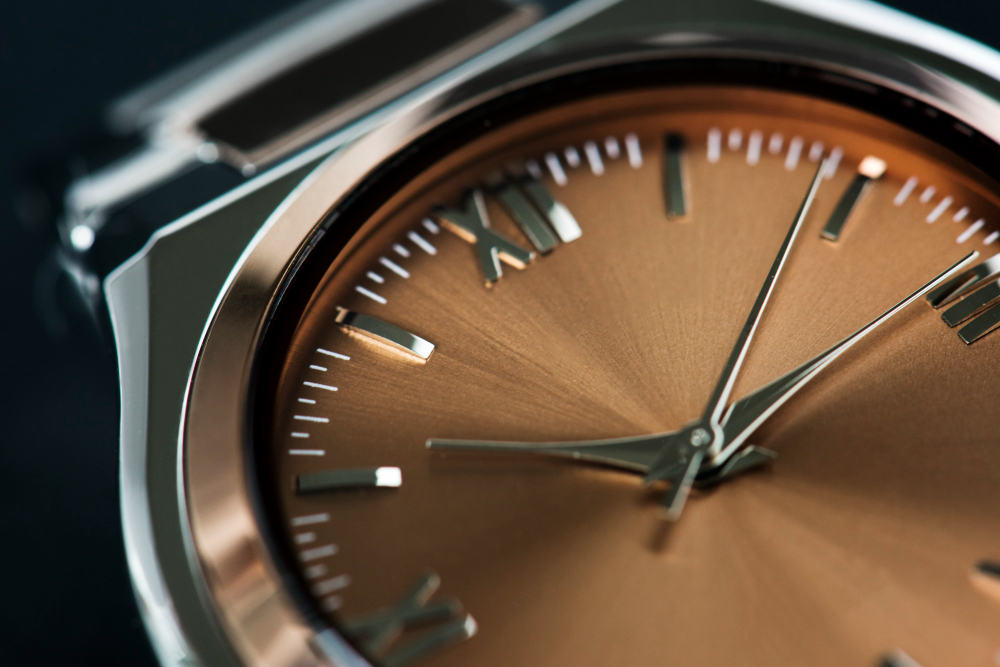
A bronze watch – why does each one change over time?
A bronze watch stands out because its appearance changes along with its owner. The case gradually darkens, turns matte and develops a patina, so two identical models can look completely different after just a few months. This is the greatest advantage of bronze, but also a trait you need to accept before buying. If you expect a watch that keeps its factory shine for years, steel may be a better direction. If, on the other hand, you like vintage looks, signs of use and the natural ageing of a material, bronze gives an effect that is hard to achieve in any other metal.