



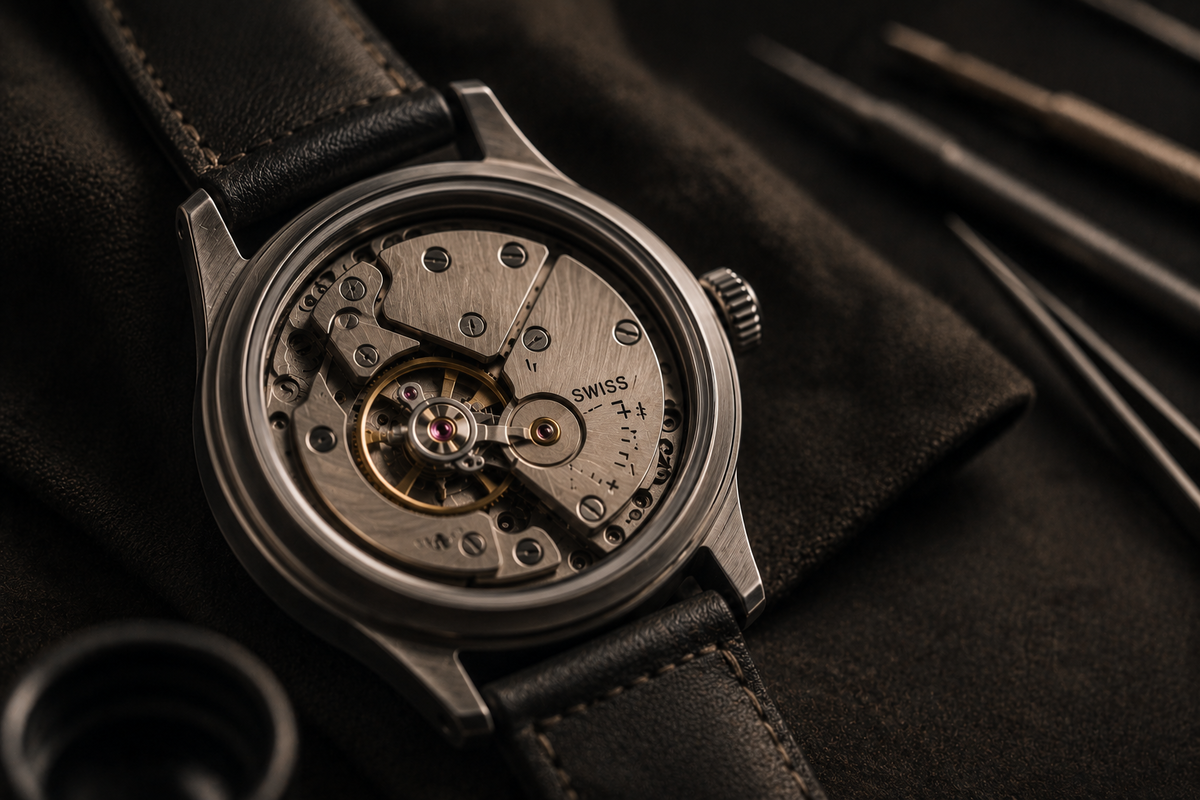
Amplitude in a mechanical watch – what is it and what does it tell us?
A watch can look perfect and still not run the way it should – which is exactly why watchmakers pay attention to balance amplitude. This parameter shows how widely and energetically the "heart" of the movement works, and therefore whether the watch properly receives and uses energy. Find out what watch amplitude actually means, which values are considered correct, and how to measure it properly.
What is amplitude in a mechanical watch?
Amplitude is the extent of the balance wheel's swing from its position of rest to its outermost point in one direction. The result is given in degrees. When a timegrapher shows, for example, 290°, it means that the balance performs a wide and energetic motion. However, it does not refer to the full range from one extreme position to the other. The device measures the swing in one direction, in line with the accepted way of describing an oscillator's operation.
Balance amplitude tells you about the energy efficiency of the movement. The less energy is lost to friction, dirt and worn parts, the more freely the balance can work. This does not mean, however, that the highest possible result is always the best. Correct amplitude must fall within the range specified for a given caliber. The degree of mainspring wind, the position of the watch, the operating frequency of the movement and the design of the escapement all matter as well.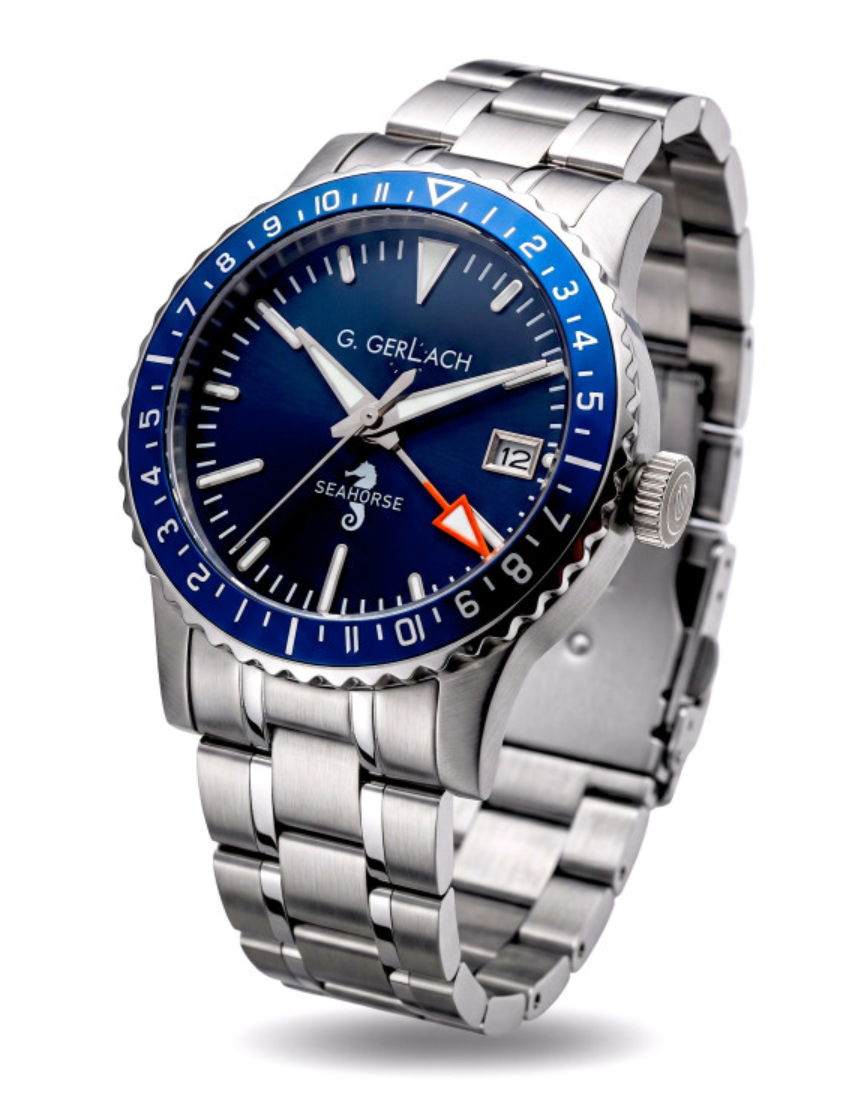
G.Gerlach Seahorse GMT Automatic 39,5 mm is a men's watch for those who value sporty elegance and functionality. The automatic movement, GMT function, deep blue dial and solid Premium bracelet create a striking model that works both for everyday wear and while travelling.
What does the amplitude of a watch tell you about the condition of the movement?
The amplitude of a watch tells you above all how efficiently the movement receives and uses energy. When the balance works widely, evenly and steadily, it usually means that the mainspring, the gear train and the escapement operate without excessive resistance. Too low a result may indicate dirt, old lubricants, worn bearings, a weakened spring, or problems with power transmission.
You should not, however, judge a watch's condition based on a single number. The position of the watch, the level of mainspring wind, the specific caliber and the set escapement angle all matter too. If the amplitude is clearly lower than the recommended value, drops quickly, or varies greatly between positions, it may be a sign that the movement requires more thorough diagnostics or servicing.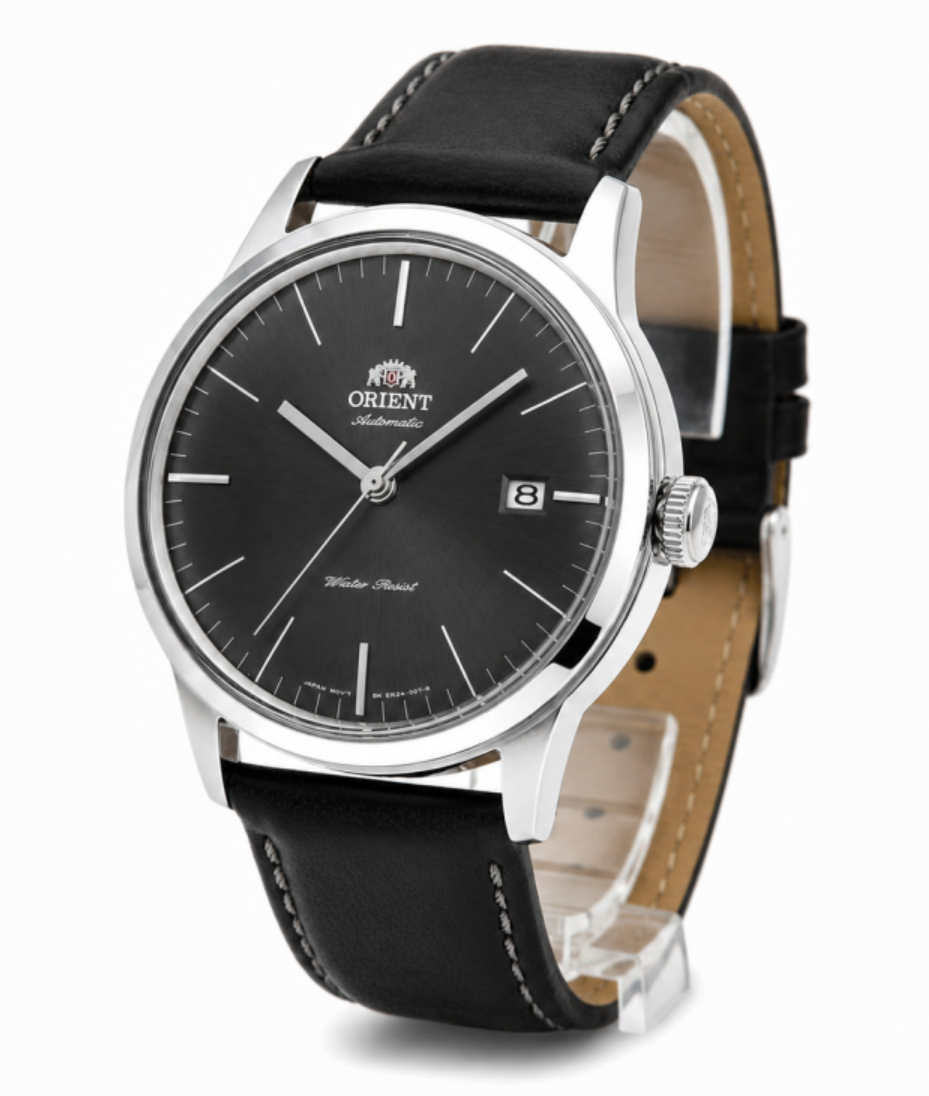
Orient Bambino Automatic 40,5 mm is an elegant men's watch driven by a mechanical automatic movement that harnesses the motion of the wrist. The slim case, black dial, date window and leather strap create a timeless model, perfect for a suit, a shirt and everyday outfits.
What should a watch's amplitude be?
In many modern mechanical watches, the correct amplitude at full wind is roughly around 270–310°. Horopedia indicates that the typical maximum range often lies close to 280–300°, although this depends, among other things, on the design of the movement and the escapement angle. There is no single value that can be safely applied to all watches. An older caliber may run correctly with a lower result than a modern movement, and a reading in a vertical position will usually be lower than in a horizontal one.
|
Amplitude reading |
What it may mean |
What to do |
|
Below about 200° |
clear loss of energy, high resistance, wear or incomplete wind |
repeat the measurement after full winding and consider service diagnostics |
|
About 220–260° |
a result that needs to be assessed in the context of caliber, age and position |
compare several positions and the manufacturer's data |
|
About 270–310° |
the typical range found in many modern movements |
check the stability of the result and the remaining rate parameters |
|
Above about 310° |
a possible error in setting the escapement angle or excessively high amplitude |
verify the lift angle and rule out knocking |
Do not assess watch movements based solely on a single measurement. Good amplitude should be not only suitably high, but also stable. Check the watch after full winding, and then in several positions: dial up, dial down and crown pointing in different directions. Also observe the daily deviation and beat error. Amplitude may look correct while other parameters point to a problem with regulation or the escapement. This rule applies to both the popular ETA movements and the reliable Miyota movements — each of them must be assessed according to the specification of the specific caliber.
How to measure balance amplitude?
Amplitude is most often measured using a timegrapher, which analyses the sounds of the escapement's operation. The watch is placed in the device's holder, the operating frequency of the movement is selected, and the correct escapement angle, i.e. the lift angle, is set. After a few or a dozen or so seconds, the timegrapher shows the basic results: amplitude, rate deviation and beat error. It is best to start the measurement after full winding of the spring, and then repeat it in several positions.
The greatest risk of error is associated with incorrectly setting the escapement angle. A wrong lift angle can significantly overstate or understate the displayed amplitude, even though the watch's operation has not changed. The value should therefore be checked in the documentation of the specific caliber. Do not set it "by eye" just because the device shows 52° by default. Many movements use this value, but it is not universal. Optical measurement can be more accurate, but in everyday diagnostics the quick and non-invasive acoustic measurement is used more often.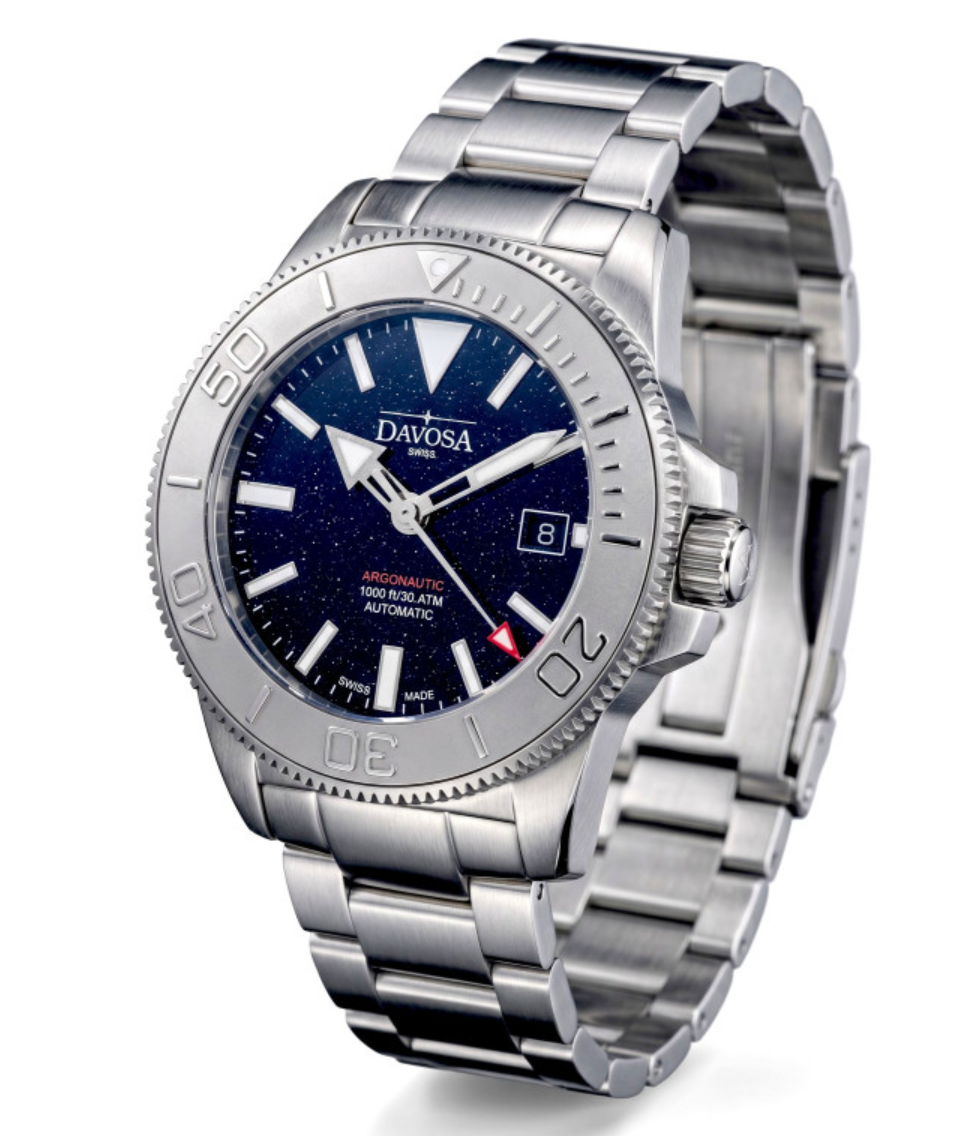
Davosa Argonautic Celeos Automatic 41,5 mm is a striking men's watch with a mechanical automatic movement that winds itself during the motion of the wrist. The steel bracelet, sturdy case and deep navy dial emphasise its sporty character, while the classic mechanical construction makes it a model for those who value true watchmaking.
Why does amplitude drop and what should you do then?
Amplitude drops when less energy reaches the balance or the movement loses too much of it overcoming resistance. The cause may be old or thickened oil, dirt in the gear train, worn bearings, a weakened mainspring or a problem with the escapement. The result also decreases as the power reserve runs down. That is why a measurement of a watch that has been running for several dozen hours and is close to stopping should not be directly compared with a reading taken right after full winding.
If the amplitude is consistently low, changes greatly between positions, or drops quickly after winding, do not try to improve the result by regulating rate accuracy alone. Regulation does not remove dirt, does not renew lubrication and does not repair worn parts. A watchmaker should assess the entire movement, check the energy transmission and compare the amplitude with the deviation and beat error. Too high a result also requires attention. It may indicate an incorrect lift angle or lead to the phenomenon of knocking, also called overbanking, which disrupts the operation of the escapement and worsens the accuracy of a mechanical watch.
At the online watch shop WestWatches you will find high-quality men's mechanical watches and women's automatic watches that combine precision of workmanship, timeless style and reliable movement performance. These are options for people who value classic watchmaking and want to choose a model tailored to their style.

Krzysztof Szopa
Watch expert
An expert associated with the WestWatches.pl brand, a place that has been supplying watches for every occasion for years. Thanks to many years of experience in the watchmaking and jewellery industry, he shares his knowledge with passion, offering professional advice both in the online and brick-and-mortar shop. He specialises in selecting original watches, watch accessories and jewellery products that combine exceptional quality with competitive prices. His goal is to help customers find the ideal product that meets their expectations and highlights their style.

See popular articles

316L, 904L and surgical steel – what is your watch made of?
Most steel watches, from affordable models to luxury constructions, are made of 316L steel. 904L steel contains more nickel, chromium and molybdenum, and therefore offers higher corrosion resistance, but in itself it does not mean greater scratch resistance. The term “surgical steel”, in turn, does not point to one strictly defined alloy. In watches it most often refers to 316L, but without a specific material designation it may simply be a marketing name. If you are choosing a watch for years, look therefore not only at the words “stainless steel”, but also at the grade of steel, which components are made of the given material and how they are finished.
Japanese or Swiss watches? We compare quality, movements and prices
If you are wondering whether Japanese or Swiss watches are better, the name of the country alone will not give you a good answer. In both cases you will find simple models for relatively little money, solid mid-range automatics and designs belonging to the world's watchmaking high end. Far more about quality will be told to you by the specific movement, the way the case and bracelet are made, the crystal, quality control, accuracy and price. Check how Japanese watches really differ from Swiss ones and what to pay attention to before you choose a model for yourself.

The lifespan of a quartz watch – how long does it really last, and when is it no longer worth repairing?
We value quartz watches above all for their accuracy, convenience and modest day-to-day demands. That does not mean, however, that they can run indefinitely and need nothing more than a new battery once every few years. Over time, the components of the movement itself also wear out, and the moment a watch starts giving trouble can look completely different depending on the model, the way it is used and the availability of parts. So how long can a quartz watch last, what wears out in it most often and when does repair still make sense? Check what its lifespan really depends on.
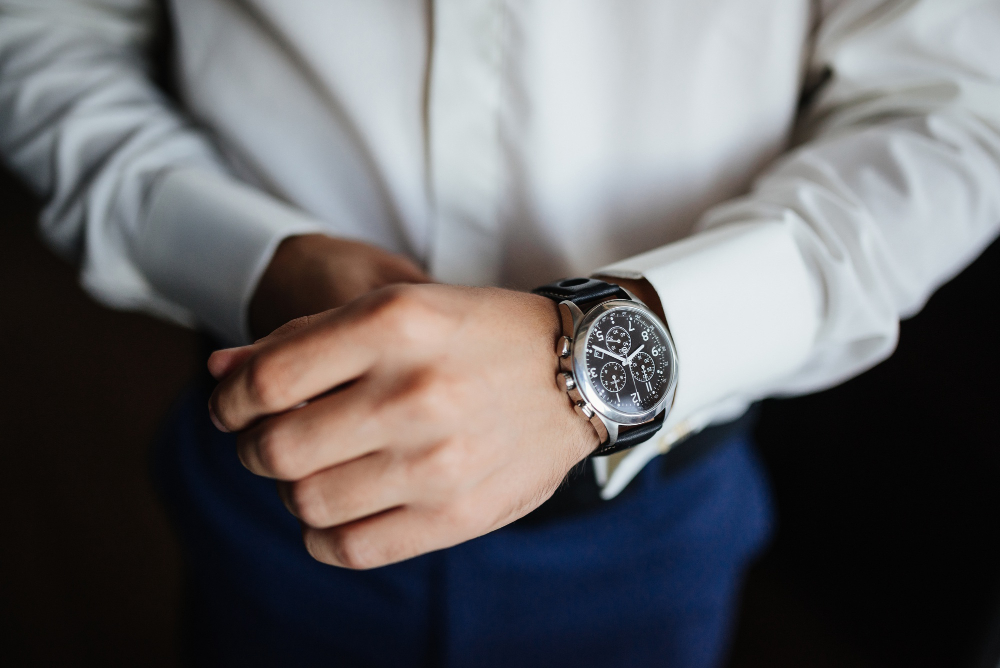
The second hand on a watch – why does it jump, move smoothly or stop?
The way the seconds hand moves can tell you a lot about a watch's movement, but it is not an infallible test. A single distinct jump per second most often points to quartz, several small movements per second are typical of a mechanical movement, and an almost continuous glide is associated with Spring Drive. There are exceptions, however: there is a quartz watch with a sweeping seconds hand, and a mechanical watch that makes exactly one jump per second. What is more, a stopped hand does not have to mean a fault. Check how to read these signals and when you really need a watchmaker's help.

How do you set an automatic watch? Date, time and time zone 21:00–3:00
An automatic watch does not need a battery, but it does require a little knowledge from its owner. Setting the time or date seems simple, yet the wrong moment or the wrong way of using the crown can affect how the movement works. Many questions concern changing the date at night, moving the hands backwards and restarting a watch after a longer break. Check how to set an automatic watch correctly, what to pay attention to with the crown and why people often talk about particular caution between 9:00 pm and 3:00 am.

Wodoszczelność 10 ATM i 20 ATM – czy możesz pływać i nurkować z takim zegarkiem?
Co naprawdę oznacza 10 ATM lub 20 ATM na zegarku i czy takie oznaczenie pozwala bez obaw wejść do basenu, morza albo nurkować? Same liczby mogą być mylące, dlatego sprawdź, jak czytać klasę wodoszczelności i dobrać zegarek do aktywności w wodzie.
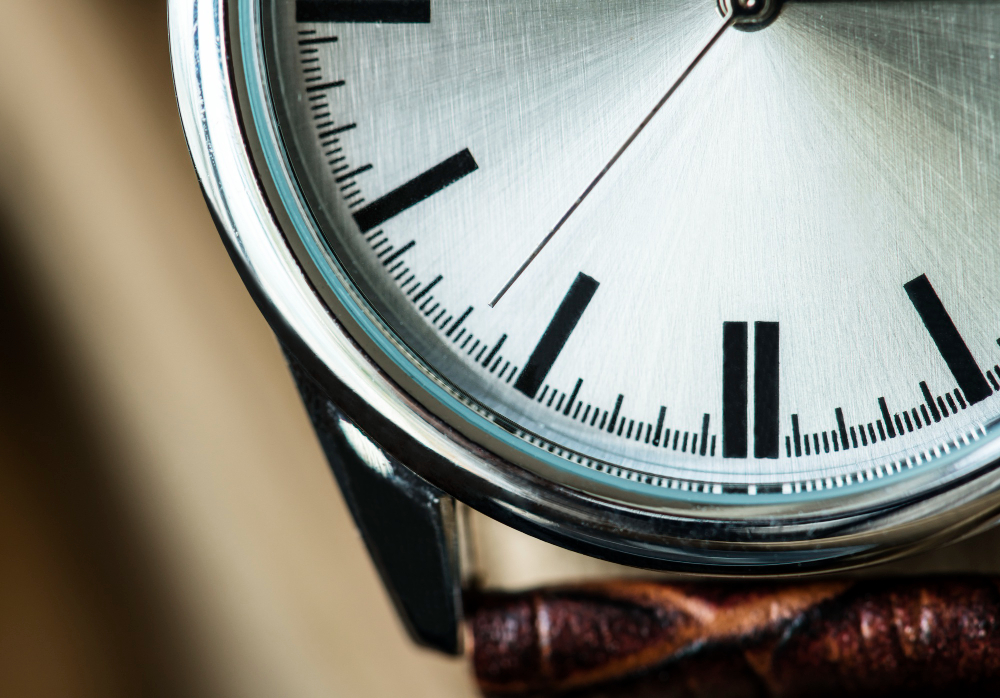
Water resistance 3 ATM – what does it mean and what can you do with it?
3 ATM water resistance means the watch is prepared above all for rain, accidental splashes and brief contact with water during everyday activities. It does not mean that you can swim with it, shower in it or submerge it to a depth of 30 metres. It is precisely the “30 m” marking that most often misleads. It is the result of a pressure test carried out under controlled conditions, not a declared working depth. So if you see 3 ATM, 3 bar or Water Resistant 30 m on the case back or in the specification, treat the watch as resistant to everyday moisture, but not as a watch for water activities.

Rolex-style watches – the best alternatives to the Submariner, Explorer and Datejust
For years Rolex has been one of the most important style benchmarks in the watch world, but its price is not within everyone's reach. That is why it is worth looking at watches similar to Rolex and models inspired by its styling, which offer their own character, solid build quality and much more affordable prices. We are not talking about counterfeits here, but about legitimate watches from other brands that draw on similar solutions and design language. Check out watches inspired by Rolex's style and choose the model that suits your style and budget.
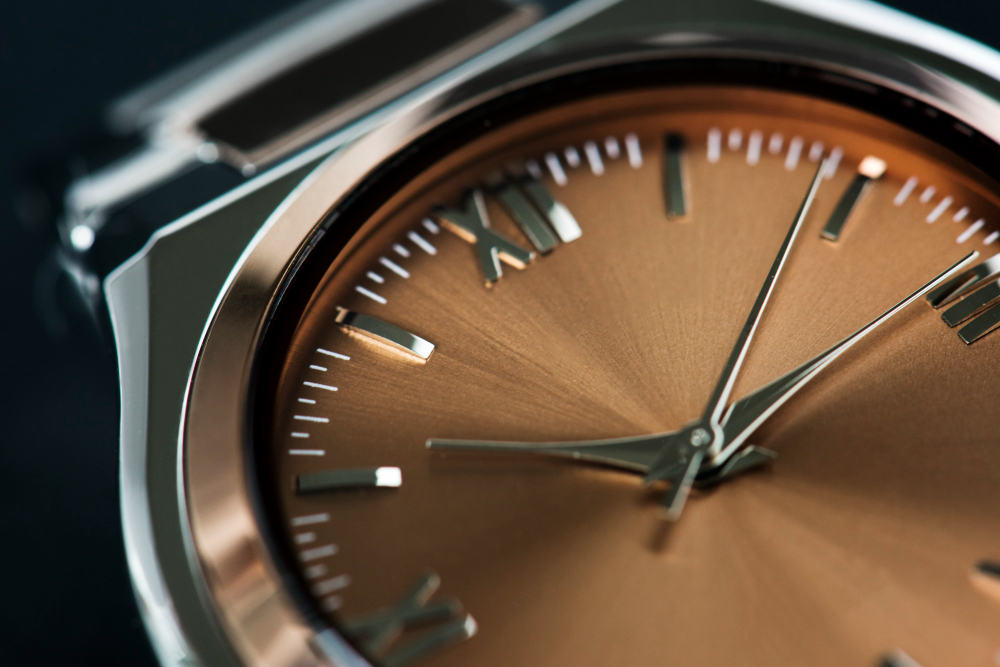
A bronze watch – why does each one change over time?
A bronze watch stands out because its appearance changes along with its owner. The case gradually darkens, turns matte and develops a patina, so two identical models can look completely different after just a few months. This is the greatest advantage of bronze, but also a trait you need to accept before buying. If you expect a watch that keeps its factory shine for years, steel may be a better direction. If, on the other hand, you like vintage looks, signs of use and the natural ageing of a material, bronze gives an effect that is hard to achieve in any other metal.