



Types of Watch Bracelets – Oyster, Jubilee, President and Mesh. Which One to Choose?
Oyster works for everyday wear, Jubilee adds elegance, President emphasises a luxury character, and mesh offers lightness and flexibility. Each of these constructions sits differently on the wrist and changes the look of the watch. The differences are not just about the number of links, but also about comfort, weight and the type of clasp. Discover the main types of watch bracelets and find out which one best suits your style and your watch case.
Oyster bracelet – a sporty classic for everyday wear
The Oyster bracelet has three rows of links and stands out for its solid, sporty construction, which suits both dive watches and everyday models. Its characteristic layout consists of wide central links and two narrower outer rows. The design was popularised by Rolex, which used it on models including the Submariner, Explorer and Daytona. Today you will find a similar style from other manufacturers too. One example is the Roamer Deep Sea 100 Chronograph 42 mm, whose Oyster-type bracelet is made of 316L steel and tapers from 20 to 18 mm. If you value durability and a versatile look, men's watches on a bracelet with an Oyster design are an excellent choice.
The biggest advantage of the Oyster? A simple construction, a stable fit and a look that works with both a T-shirt and a blazer. Depending on the model, the links may be brushed, polished or combine both finishes. On selected Rolex watches, the Easylink system, which lets you extend the bracelet by about 5 mm, and Glidelock, which allows tool-free adjustment, add extra comfort. However, if softness and lightness are your priorities, the Oyster may feel too chunky. Before you buy, also check how a watch on a strap differs from a watch on a bracelet.
Jubilee bracelet – five rows of links and more elegance
The Jubilee bracelet consists of five rows of smaller links, which makes it flexible and helps it conform to the wrist. It was created in 1945 to mark Rolex's 40th anniversary and was originally designed for the Datejust. Two wider outer rows surround three narrower central links, which often have a polished finish. This layout catches the light beautifully and gives the watch a more elegant character. You will also find a similar design on the Seiko 5 Sports GMT SSK033K1 and the Swiss Davosa Ternos Ceramic GMT 161.591.05 with a 40 mm case. The latter is an example of how Swiss men's watches on a bracelet combine sporty functionality with a classic look.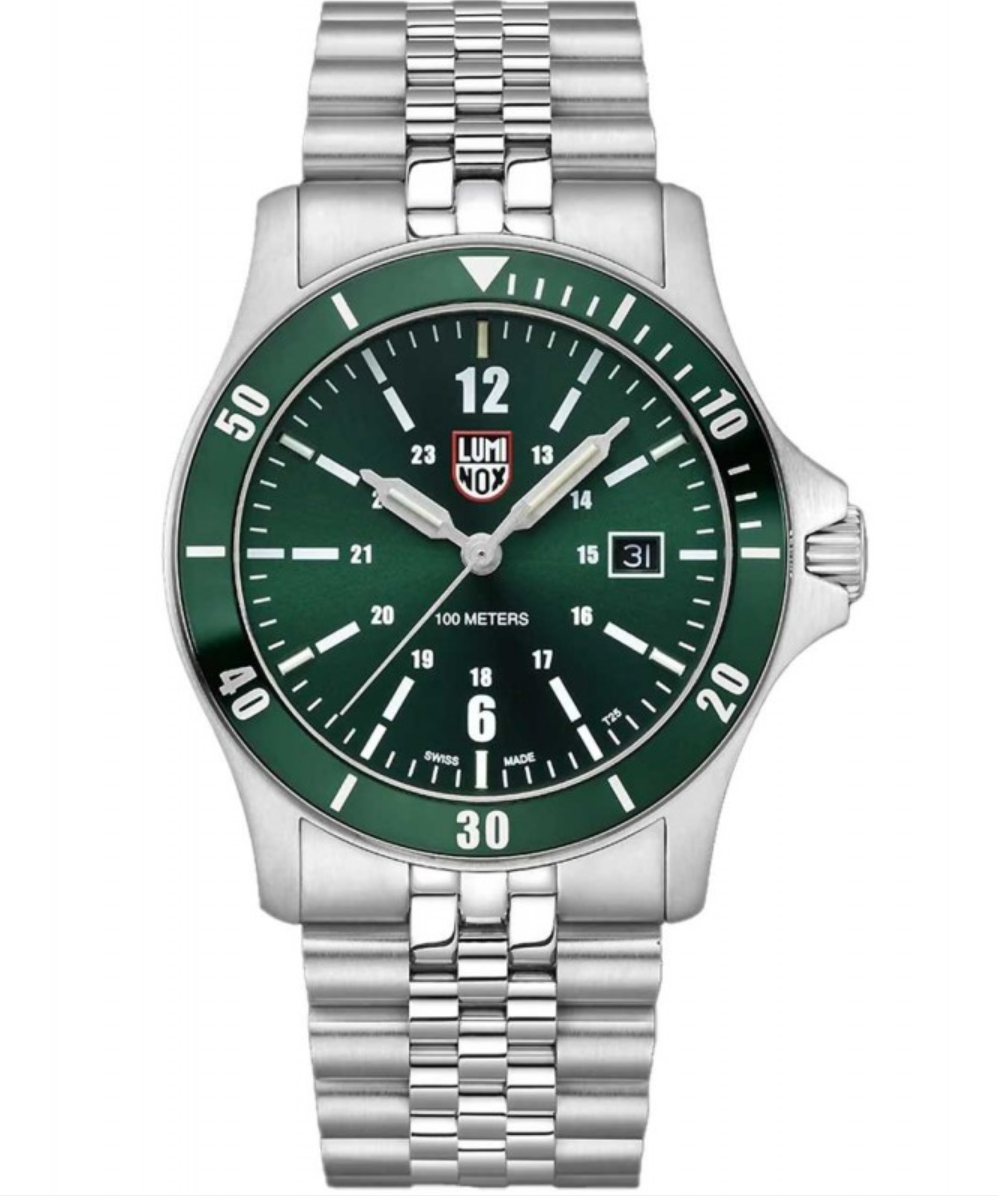
The Luminox Sport Timer 42 mm XS.0917 is a great example of a sporty character combined with the elegance of a Jubilee bracelet. The five-row 316L steel construction works beautifully with the green dial and the 42 mm case. The watch is fitted with a Swiss Ronda 515 quartz movement, sapphire crystal and Luminox Light Technology illumination. It is a choice for those who value a solid sports watch but don't want to give up a classic look.
Is the Jubilee more comfortable than the Oyster? Thanks to its greater number of moving joints, it often wraps around the wrist better, especially during long hours of wear. Its more subtle look suits shirts, suits and smart casual outfits, but that doesn't mean you can only wear it on special occasions. The five-row design also looks good on sports watches, particularly those with a GMT function. Keep in mind, however, that the polished central links can show minor scratches more clearly. If you prefer a more technical look and an easier-to-maintain uniform finish, consider a brushed Oyster.
President bracelet – a luxury construction for special occasions
The President bracelet stands out with three rows of rounded, semi-circular links and a prestigious character. Rolex introduced it in 1956 together with the Day-Date. Unlike the sporty Oyster, the President was designed with elegance in mind. Original Rolex President bracelets are made of 18-carat gold or 950 platinum, and their signature feature is the concealed Crownclasp. Thanks to it, the closing mechanism does not interrupt the uniform line of the links. It is precisely this combination of precious material, rounded shapes and a discreet clasp that creates the recognisable President style.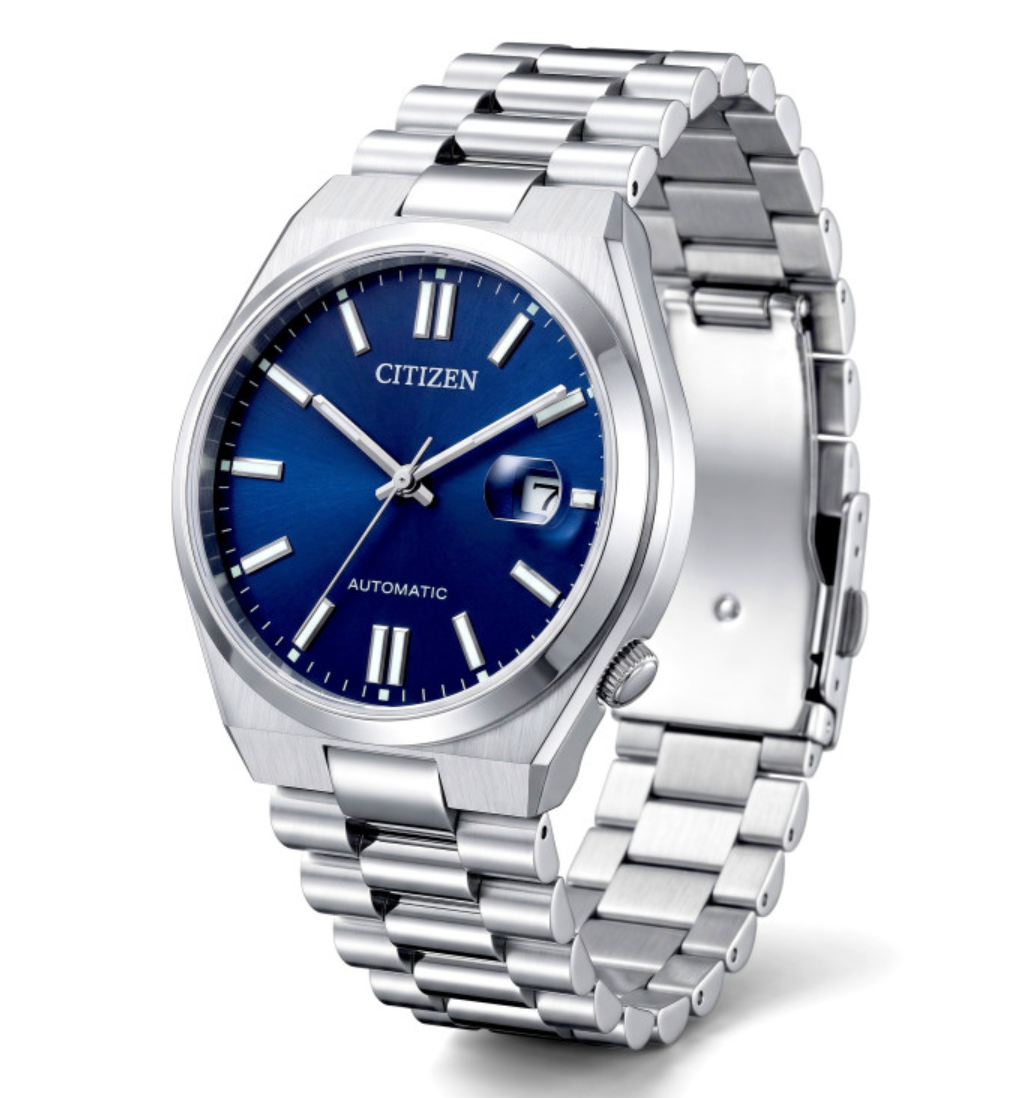
The Citizen Tsuyosa Blue Automatic 40 mm NJ0150-81L is an excellent example of a watch with a bracelet integrated into the case, creating a coherent, elegant whole. The rounded stainless steel links combine a sporty character with a classic style, while the vivid blue sunburst dial draws the eye. The model is fitted with an automatic Citizen 8210 movement, sapphire crystal and a 40 mm case. It is a choice for those who value the comfort of a steel bracelet and a modern look.
Is this kind of bracelet suitable for everyday wear? Yes, although its weight, cost and distinctly jewellery-like character mean it is more often chosen by people looking for a luxury watch. The rounded links allow the construction to move comfortably on the wrist, and the hidden clasp ensures a consistent look. The President, however, is not simply a gold version of the Oyster. If you prefer similar elegance in a more affordable form, take a look at stainless steel watch bracelets. Among the available models you will find both brushed and polished designs that can give a classic watch a more prestigious look.
Mesh, Engineer and integrated bracelets – what sets them apart?
A mesh bracelet, also known as a Milanese bracelet, is made from densely woven metal wires instead of classic links. This makes it flexible and breathable, and it sits on the wrist almost like fabric. It suits slim dress watches well, but also appears on some dive models. At WestWatches you will find, for example, the G. Gerlach Mesh Milanese, which is 20 mm wide and 1.8 mm thick, with a length adjusted by a sliding clasp. It is a choice for those who don't want to remove links when adjusting the length. See the available mesh bracelets and find out which outfits a Milanese bracelet goes with.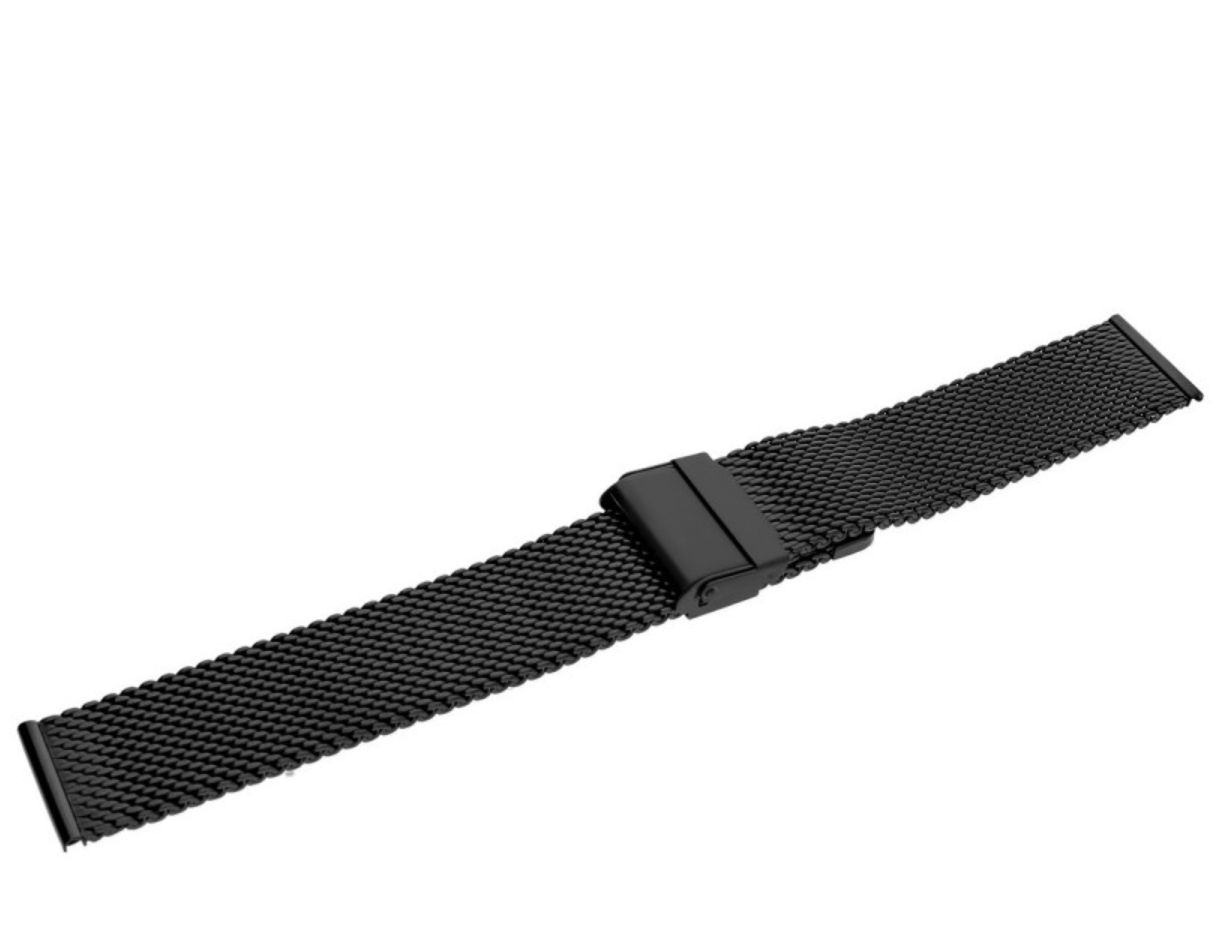
The Tekla 20 mm Black BM20C-1 stainless steel mesh bracelet is an excellent example of a Milanese bracelet that combines a minimalist look with wearing comfort. The dense, flexible stainless steel weave conforms well to the wrist, while the black finish gives the watch a modern character. The bracelet is 20 mm wide and 3 mm thick and has an adjustable clasp, making it a practical choice for everyday use. It is a simple way to change the look of your watch without replacing the whole timepiece.
And what makes the Engineer bracelet stand out? Its chunky, geometric links, usually arranged in five rows, which emphasise the technical character of the watch. It is a construction often chosen for large sports and dive models, although its considerable weight won't appeal to everyone. Yet another category is the integrated bracelet, whose ends form a visual whole with the case rather than a classic connection between protruding lugs. It looks coherent and modern, but replacing it usually requires parts made for that specific model. If you like to change the look of your watch often, a universal bracelet with a traditional attachment will be the more practical choice.
How to match a bracelet to the case and fit it comfortably to your wrist?
Before buying a bracelet, measure the lug width between the case lugs and check the shape of its ends. Popular sizes are 18, 20, 21 and 22 mm, but matching the width alone does not guarantee a correct fit. The spring bars and end pieces, known as endlinks, which connect the bracelet to the watch, also matter. A good example is the G. Gerlach Premium bracelet, made of 316L steel, 20 mm wide at the case and 18 mm at the clasp. It has dedicated end caps and is designed for specific models from the brand with a 39 mm case, including the Sanatio and Navigator. Before replacing a bracelet, always check its compatibility with your specific watch.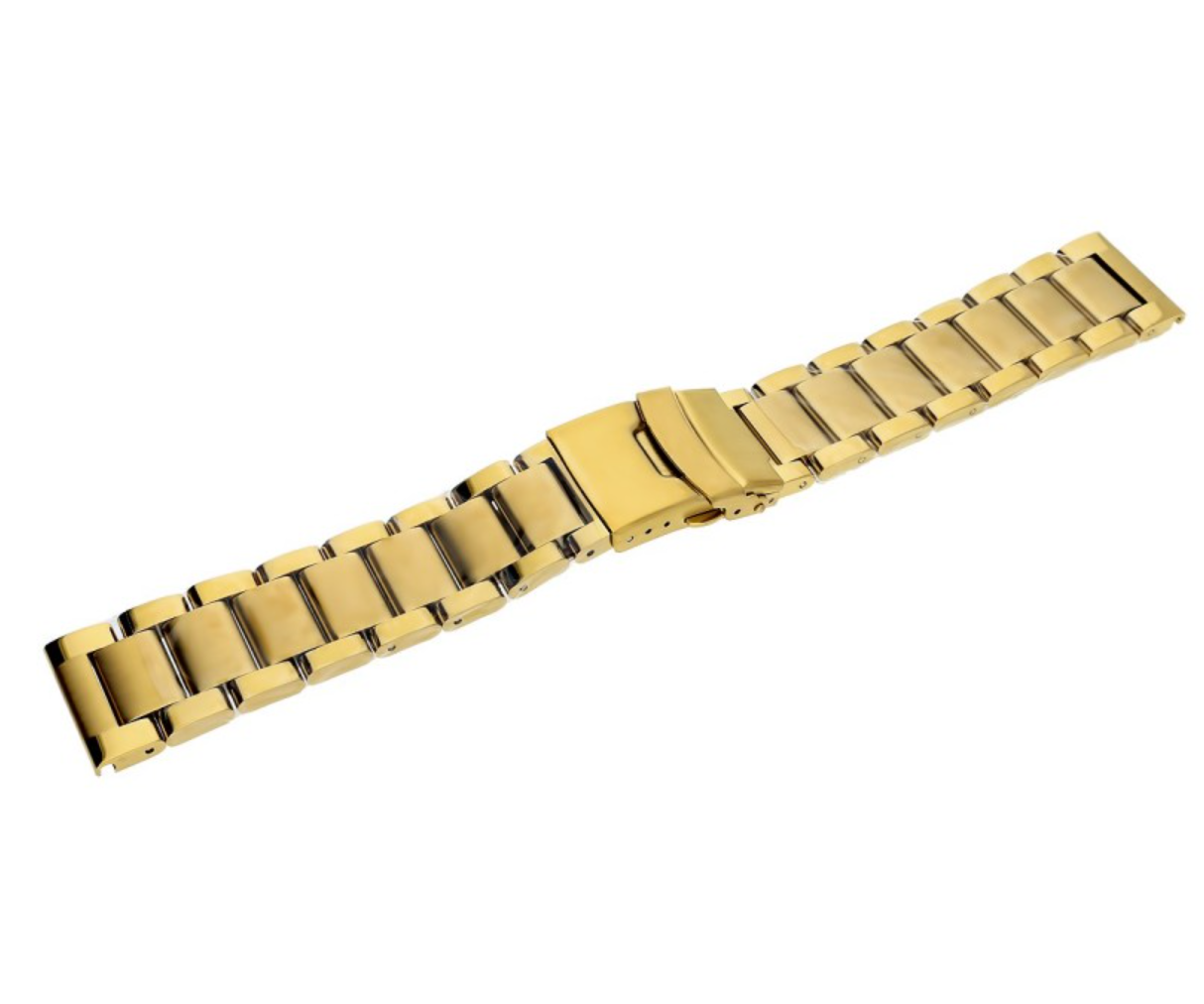
The Tekla 22 mm gold steel bracelet B22Z-3 is an example of a classic Oyster-type construction that combines sporty solidity with an elegant look. Three rows of wide links and a gold finish give the watch a more prestigious character, reminiscent of luxury models. The bracelet is made of 316L stainless steel and is 22 mm wide, 4 mm thick and 190 mm long. It is a choice for those who want to refresh the look of their watch and add an elegant accent without giving up the durability of a steel construction.
Also pay attention to the type of clasp, the micro-adjustment options and the weight of the whole construction. The bracelet should sit snugly on your wrist but not pinch it in hot weather, when your wrist may swell slightly. Link bracelets often require removing one or more segments. If you plan to do this yourself, read our guide how to shorten a watch bracelet. It is also worth learning how a butterfly clasp works, as it neatly hides the closing mechanism. A well-chosen bracelet should not only match the case, but above all provide comfort all day long.
Oyster, Jubilee, President or mesh? Each type of bracelet gives a watch a different character and affects how comfortable it is to wear. When choosing, pay attention to the link construction, the material and the fit with the case. If you're looking for a new bracelet or a watch that suits your style, visit WestWatches – an online watch store where you'll find a wide selection of models on steel bracelets and accessories that let you change the look of your timepiece.

Krzysztof Szopa
Watch Expert
An expert associated with WestWatches.pl, a store that has been supplying watches for every occasion for years. With many years of experience in the watchmaking and jewellery industry, he passionately shares his knowledge, offering professional advice both in the online store and in the brick-and-mortar shop. He specialises in selecting original watches, watch accessories and jewellery that combine exceptional quality with competitive prices. His goal is to help customers find the perfect product that meets their expectations and highlights their style.

See popular articles

How to Change a Watch Strap? A Simple Step-by-Step Guide
Changing a watch strap is easier than you think – all you need is the right tool, a few careful moves and a new strap that fits the case. On classic models you have to release the spring bars, while a quick-release system lets you do it without any extra tools. The whole process can take just a few minutes, and the result? Your watch gets a completely new look. Find out how to remove the old strap, fit a new one and avoid scratching the case.
Fabric Watch Straps – How Do Perlon, Canvas, Rally and Bund Differ?
A good strap can completely change the look of a watch – but which one should you choose? Perlon is light and breathable, canvas stands out with its woven texture, rally catches the eye with sporty perforations, and bund gives a watch an aviation character. Although they are often mentioned together, not all of them are fabric straps – a rally strap is usually perforated leather, and a bund is a design with an additional pad. Find out how these four styles differ and which one suits your watch best.
NATO Strap – How to Fit It and How Does It Differ from a Zulu? A Practical Guide
A NATO strap is a lightweight fabric watch strap that threads under the case instead of attaching separately on each side. You can fit it yourself in a few simple steps. Compared with a Zulu strap, it is usually thinner, has flatter hardware and an extra layer of material under the watch. Find out how to fit a NATO strap correctly, how the two designs differ and how to choose the right size.
Types of Watch Bracelets – Oyster, Jubilee, President and Mesh. Which One to Choose?
Oyster works for everyday wear, Jubilee adds elegance, President emphasises a luxury character, and mesh offers lightness and flexibility. Each of these constructions sits differently on the wrist and changes the look of the watch. The differences are not just about the number of links, but also about comfort, weight and the type of clasp. Discover the main types of watch bracelets and find out which one best suits your style and your watch case.
GADA – One Watch for Work, Weekends and Travel. How to Choose It?
One watch can go with a shirt, jeans, a blazer and even the swimming pool. That is the whole idea behind GADA (Go Anywhere, Do Anything). Instead of several models for different occasions, you choose one that combines comfort, durability and a timeless look. The safest choice is a steel case of 36–41 mm, 100 m water resistance and a legible dial in a neutral colour. Find out what to look for to choose a watch you will actually wear every day.
Tuxedo Watch – Black Tie and White Tie Rules
Zegarek do smokingu można nosić, ale nie każdy model pasuje do wieczorowej elegancji. Przy dress code black tie najlepiej sprawdzi się cienki zegarek na czarnym skórzanym pasku, schowany pod mankietem koszuli. White tie wymaga większej powściągliwości – do fraka tradycyjnie wybiera się zegarek kieszonkowy albo całkowicie rezygnuje z odmierzania czasu na nadgarstku. Sprawdź, jak dobrać zegarek, żeby zachować zasady etykiety i uniknąć modowego faux pas.
316L, 904L and surgical steel – what is your watch made of?
Most steel watches, from affordable models to luxury constructions, are made of 316L steel. 904L steel contains more nickel, chromium and molybdenum, and therefore offers higher corrosion resistance, but in itself it does not mean greater scratch resistance. The term “surgical steel”, in turn, does not point to one strictly defined alloy. In watches it most often refers to 316L, but without a specific material designation it may simply be a marketing name. If you are choosing a watch for years, look therefore not only at the words “stainless steel”, but also at the grade of steel, which components are made of the given material and how they are finished.
Japanese or Swiss watches? We compare quality, movements and prices
If you are wondering whether Japanese or Swiss watches are better, the name of the country alone will not give you a good answer. In both cases you will find simple models for relatively little money, solid mid-range automatics and designs belonging to the world's watchmaking high end. Far more about quality will be told to you by the specific movement, the way the case and bracelet are made, the crystal, quality control, accuracy and price. Check how Japanese watches really differ from Swiss ones and what to pay attention to before you choose a model for yourself.

The lifespan of a quartz watch – how long does it really last, and when is it no longer worth repairing?
We value quartz watches above all for their accuracy, convenience and modest day-to-day demands. That does not mean, however, that they can run indefinitely and need nothing more than a new battery once every few years. Over time, the components of the movement itself also wear out, and the moment a watch starts giving trouble can look completely different depending on the model, the way it is used and the availability of parts. So how long can a quartz watch last, what wears out in it most often and when does repair still make sense? Check what its lifespan really depends on.