



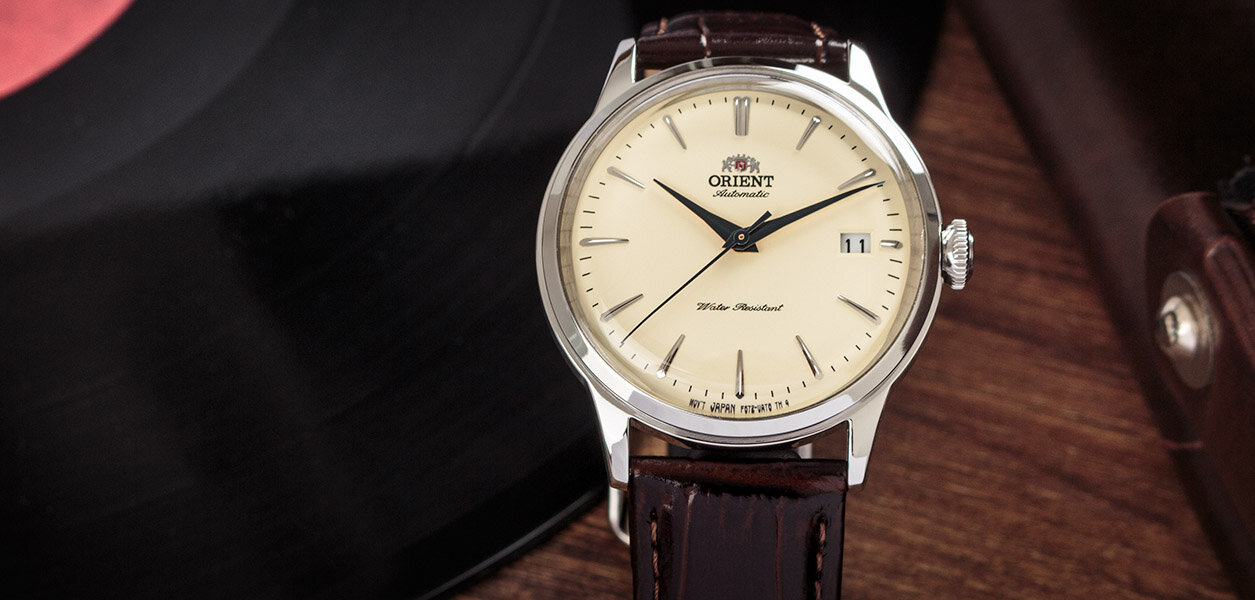
Can an automatic watch be left unused?
An automatic watch that has been sitting unused for a while can raise doubts – whether it's being harmed, whether the mechanism will "seize up," and whether you're making a mistake by putting it back in the box. A lot of myths have grown up around this topic that have little to do with reality. It's worth calmly explaining what actually happens to an automatic watch when it stops working, and when resting is completely safe versus when it's worth thinking about other solutions.
Can an automatic watch just sit there… and nothing bad will happen? We explain!
This question comes up regularly, especially when automatic watches aren't worn every day, but only on a rotation or "for special occasions." And right away it's worth saying plainly, without building suspense – yes, an automatic watch can sit unused and in the vast majority of cases absolutely nothing bad happens to it.
The mechanism stopping is not a malfunction, not a warning signal, and does not mean something is "breaking" inside. It is a normal, predictable moment in the life of an automatic watch, resulting solely from the depletion of the power reserve. That is exactly how it was designed. If you put a watch in a box because you're wearing another one for a few days or weeks, the mechanism will simply go into a state of rest. No stress, no damage, no consequences.
In practice, the most burdensome "consequence" of a watch sitting idle is the need to reset the time and date when it goes back on your wrist. And that's it. There are no hidden threats that appear after a week or a month. There is also no need to specially "revive" the watch every few days just because it's been sitting. The mechanism does not suffer, does not deteriorate, and does not lose its viability simply by being at rest. What's more – many watchmakers emphasize that periodic rest can actually be beneficial, as it eliminates wear resulting from continuous operation. So if you're wondering whether an automatic watch can just sit, the answer is – it can, it should, and there's no need to make a problem out of it, as long as we're not talking about extremely long periods without any check./Styczeń 2026/ZEGAREK MĘSKI TAG HEUER CARRERA CHRONOGRAPH AUTOMATIC 42mm CBN2011-BA0642.png)
TAG Heuer Carrera Chronograph Automatic is the quintessence of sporty elegance inspired by motorsport, combining the legendary Carrera line with the modern precision of a Swiss chronograph. The 42 mm case, Heuer 02 movement, and dynamic blue dial emphasize its performance character and prestigious style.
Sitting for a day, a week, a month – what actually happens to the mechanism when an automatic watch isn't working?
The key to understanding this topic is looking at time. A day, a week, or even a month of a watch sitting idle makes practically no difference when it comes to safety. For the first several dozen hours, the watch simply runs on its stored energy. When the power reserve runs out, the mechanism stops in a completely natural way. There is no "jerk," no abrupt stop, and no risk to the internal components. The lubricants stay in place, the gears are not subjected to friction, and the balance simply stops oscillating. It is a calm, neutral state in which the watch can remain for a very long time.
Only after several months of non-use might you notice minor changes when you put it back on. The watch may run slightly differently than usual for the first few days – a bit faster or slower, until the mechanism returns to its standard operation. This is not a sign of damage, only an effect of the fact that the oils inside were not being distributed by movement for a longer period. Normal wearing is enough for everything to return to normal. Only very long periods of sitting – half a year, a year, or more – are the point at which it's worth considering servicing an automatic watch, but not because something has broken. It is simply routine preventive maintenance, exactly the same as recommended every few years with regular use./Styczeń 2026/ZEGAREK DAMSKI ORIENT STAR SEMI SKELETON AUTOMATIC 31mm RE-ND0012L00B.png)
Orient Star Semi Skeleton is a subtle automatic watch for women that captivates with its delicate blue dial and elegant open heart revealing the movement at work. The compact 31 mm case and Japanese precision of craftsmanship make it a unique accessory that combines a jewelry-like style with watchmaking class.
A stopped watch is a problem, or… the best moment for the mechanism? We check the facts
Contrary to common opinion, a stopped automatic watch is not a watch "in a worse state". Quite the opposite – when the mechanism is not working, there is no friction, no wear, and no micro-loads that always accompany the operation of mechanical components. Modern watches use synthetic lubricants that are designed with long-term stability and resistance to time in mind. They do not disappear after a few weeks of rest and do not dry out suddenly just because the watch is sitting in a box. These are very slow processes, measured in years rather than months.
That is why it is so important to not panic when a watch stops. There is no need to manually "save" it, no need to move the crown every day, or start it up by force. In reality, unnecessary interference with the mechanism is often a greater risk than letting it sit peacefully. If an automatic watch is not currently being worn, the safest state is simply being at rest. This approach changes the perspective: instead of treating stopping as a problem, you begin to see it as a normal part of use. And that is exactly how it is viewed by manufacturers and watch service centers./Styczeń 2026/ZEGAREK MĘSKI EPOS PASSION DAY-DATE AUTOMATIC 41mm 3501-142-20-95-30.png)
Epos Passion Day-Date Automatic is classic Swiss elegance in a practical edition, distinguished by its clear day-of-the-week and date indication. The 41 mm case, automatic movement, and timeless black dial make it a versatile watch ideal both for work and everyday wear.
How to store an automatic watch so it returns to form after months of sitting? Practical rules that make a difference
Since a watch can sit, it's worth making sure it sits in good conditions. The foundation is stable temperature, lack of moisture, and protection from magnetism. A watch box is the simplest and very effective idea for storing watches, which protects them from dust, accidental impacts, and scratches. It's important that the interior is soft, and the watch doesn't rest with its glass against a hard surface. You don't need a safe or specialized solutions – just common sense and a place away from radiators, windows, or electronics.
However, if you have several watches and it matters to you that each one is always ready to wear, then watch rotators naturally come into play. This is a convenient solution, but not mandatory. A watch rotator gently moves the watch, simulating wearing, so the mechanism works and the lubricants remain in continuous circulation. It's a great option for collectors or people who frequently switch watches and don't want to set the time each time. However, if a watch sits in a box for a month or two, the lack of a rotator is not a mistake at all. What matters is something else: regular, sensible servicing of an automatic watch every few years, rather than constantly making sure the mechanism never stops. It is the service, not continuous movement, that determines the longevity of an automatic watch.
In the end, it's also worth emphasizing one more thing – the condition and stability of the mechanism's performance are largely determined by the quality of its construction. A well-designed automatic watch handles periods of rest without issue and quickly returns to full performance after being worn again. That is exactly why the choice of watch matters from the very start. In the range of our online watch store WestWatches, high-quality men's automatic watches and women's automatic watches are available, covering a wide selection of models that combine solid movements with the comfort of everyday use.

Krzysztof Szopa
Watch Expert
An expert associated with the WestWatches.pl brand, a place that has been supplying watches for every occasion for years. Thanks to many years of experience in the watchmaking and jewelry industry, he passionately shares his knowledge, offering professional advice both in the online and brick-and-mortar store. He specializes in selecting original watches, watch accessories, and jewelry items that combine exceptional quality with competitive prices. His goal is to help customers find the perfect product that meets their expectations and complements their style.

See popular articles

316L, 904L and surgical steel – what is your watch made of?
Most steel watches, from affordable models to luxury constructions, are made of 316L steel. 904L steel contains more nickel, chromium and molybdenum, and therefore offers higher corrosion resistance, but in itself it does not mean greater scratch resistance. The term “surgical steel”, in turn, does not point to one strictly defined alloy. In watches it most often refers to 316L, but without a specific material designation it may simply be a marketing name. If you are choosing a watch for years, look therefore not only at the words “stainless steel”, but also at the grade of steel, which components are made of the given material and how they are finished.
Japanese or Swiss watches? We compare quality, movements and prices
If you are wondering whether Japanese or Swiss watches are better, the name of the country alone will not give you a good answer. In both cases you will find simple models for relatively little money, solid mid-range automatics and designs belonging to the world's watchmaking high end. Far more about quality will be told to you by the specific movement, the way the case and bracelet are made, the crystal, quality control, accuracy and price. Check how Japanese watches really differ from Swiss ones and what to pay attention to before you choose a model for yourself.

The lifespan of a quartz watch – how long does it really last, and when is it no longer worth repairing?
We value quartz watches above all for their accuracy, convenience and modest day-to-day demands. That does not mean, however, that they can run indefinitely and need nothing more than a new battery once every few years. Over time, the components of the movement itself also wear out, and the moment a watch starts giving trouble can look completely different depending on the model, the way it is used and the availability of parts. So how long can a quartz watch last, what wears out in it most often and when does repair still make sense? Check what its lifespan really depends on.

The second hand on a watch – why does it jump, move smoothly or stop?
The way the seconds hand moves can tell you a lot about a watch's movement, but it is not an infallible test. A single distinct jump per second most often points to quartz, several small movements per second are typical of a mechanical movement, and an almost continuous glide is associated with Spring Drive. There are exceptions, however: there is a quartz watch with a sweeping seconds hand, and a mechanical watch that makes exactly one jump per second. What is more, a stopped hand does not have to mean a fault. Check how to read these signals and when you really need a watchmaker's help.

How do you set an automatic watch? Date, time and time zone 21:00–3:00
An automatic watch does not need a battery, but it does require a little knowledge from its owner. Setting the time or date seems simple, yet the wrong moment or the wrong way of using the crown can affect how the movement works. Many questions concern changing the date at night, moving the hands backwards and restarting a watch after a longer break. Check how to set an automatic watch correctly, what to pay attention to with the crown and why people often talk about particular caution between 9:00 pm and 3:00 am.

Wodoszczelność 10 ATM i 20 ATM – czy możesz pływać i nurkować z takim zegarkiem?
Co naprawdę oznacza 10 ATM lub 20 ATM na zegarku i czy takie oznaczenie pozwala bez obaw wejść do basenu, morza albo nurkować? Same liczby mogą być mylące, dlatego sprawdź, jak czytać klasę wodoszczelności i dobrać zegarek do aktywności w wodzie.
Water resistance 3 ATM – what does it mean and what can you do with it?
3 ATM water resistance means the watch is prepared above all for rain, accidental splashes and brief contact with water during everyday activities. It does not mean that you can swim with it, shower in it or submerge it to a depth of 30 metres. It is precisely the “30 m” marking that most often misleads. It is the result of a pressure test carried out under controlled conditions, not a declared working depth. So if you see 3 ATM, 3 bar or Water Resistant 30 m on the case back or in the specification, treat the watch as resistant to everyday moisture, but not as a watch for water activities.

Rolex-style watches – the best alternatives to the Submariner, Explorer and Datejust
For years Rolex has been one of the most important style benchmarks in the watch world, but its price is not within everyone's reach. That is why it is worth looking at watches similar to Rolex and models inspired by its styling, which offer their own character, solid build quality and much more affordable prices. We are not talking about counterfeits here, but about legitimate watches from other brands that draw on similar solutions and design language. Check out watches inspired by Rolex's style and choose the model that suits your style and budget.
A bronze watch – why does each one change over time?
A bronze watch stands out because its appearance changes along with its owner. The case gradually darkens, turns matte and develops a patina, so two identical models can look completely different after just a few months. This is the greatest advantage of bronze, but also a trait you need to accept before buying. If you expect a watch that keeps its factory shine for years, steel may be a better direction. If, on the other hand, you like vintage looks, signs of use and the natural ageing of a material, bronze gives an effect that is hard to achieve in any other metal.