



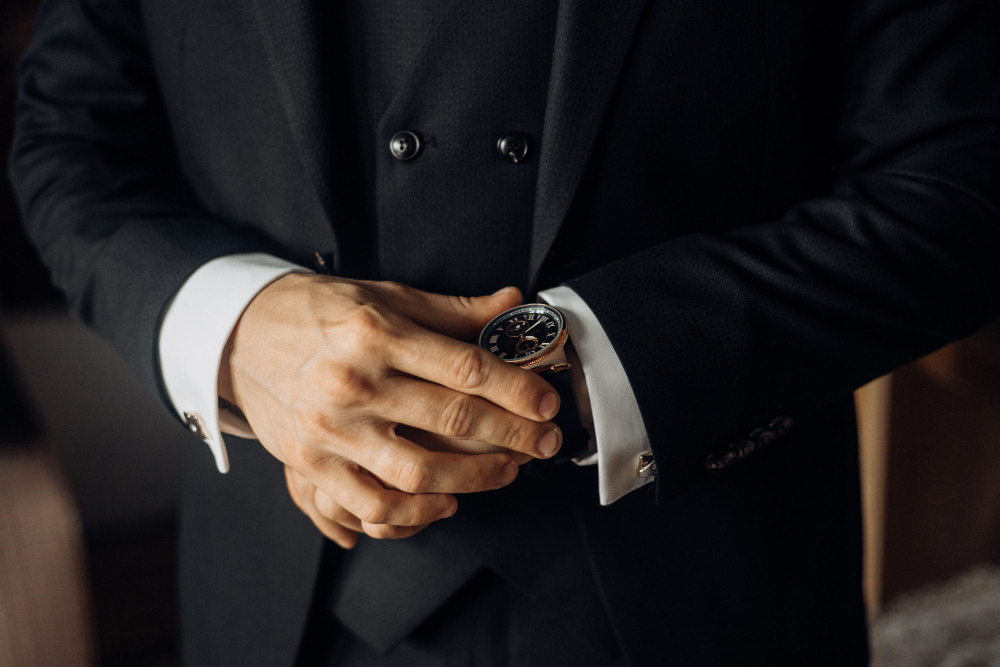
Dress watch – what is a dress watch and how do you choose a model that really goes with a suit?
A dress watch is a slim, elegant timepiece designed to subtly complement formal attire. The best choices have a diameter of 36–39 mm, a thickness under 10 mm, a simple dial and a thin leather strap. If you are looking for a watch to wear with a suit or for an important occasion, pay attention above all to proportions, comfort and calm styling.
What is a dress watch and how can you recognise one?
A dress watch is, above all, a simple, thin timepiece free of typically sporty elements. A classic model usually has three hands, possibly a discreet date window, a calm dial and a case that does not dominate the outfit. You will not find a bulky diver's bezel, a tachymeter scale or a complicated set of chronograph pushers here. That is exactly why such a watch works so well with a blazer, a dress shirt or a suit.
If you like this kind of styling, take a look at classic men's watches and classic women's watches, where clean design and good proportions matter far more than showiness. A good dress watch should only be noticed when someone actually looks at your wrist.
The safest case diameter is 36–39 mm, although on a narrower wrist models of 34–36 mm also look great. Around 40 mm can be treated as the upper limit, provided the watch remains slim. Thickness is even more important: under 10 mm is a good benchmark, because the watch should slip easily under a cuff. The lug-to-lug measurement matters too. 46 mm or less will be a safe choice for many wrists. The dial can be white, silver, black, cream or navy, but it should remain legible and calm.
If you prefer more traditional solutions, a thin leather strap is the natural complement to this form. You can easily pick out leather watch straps that will change the character of the same watch without having to replace it.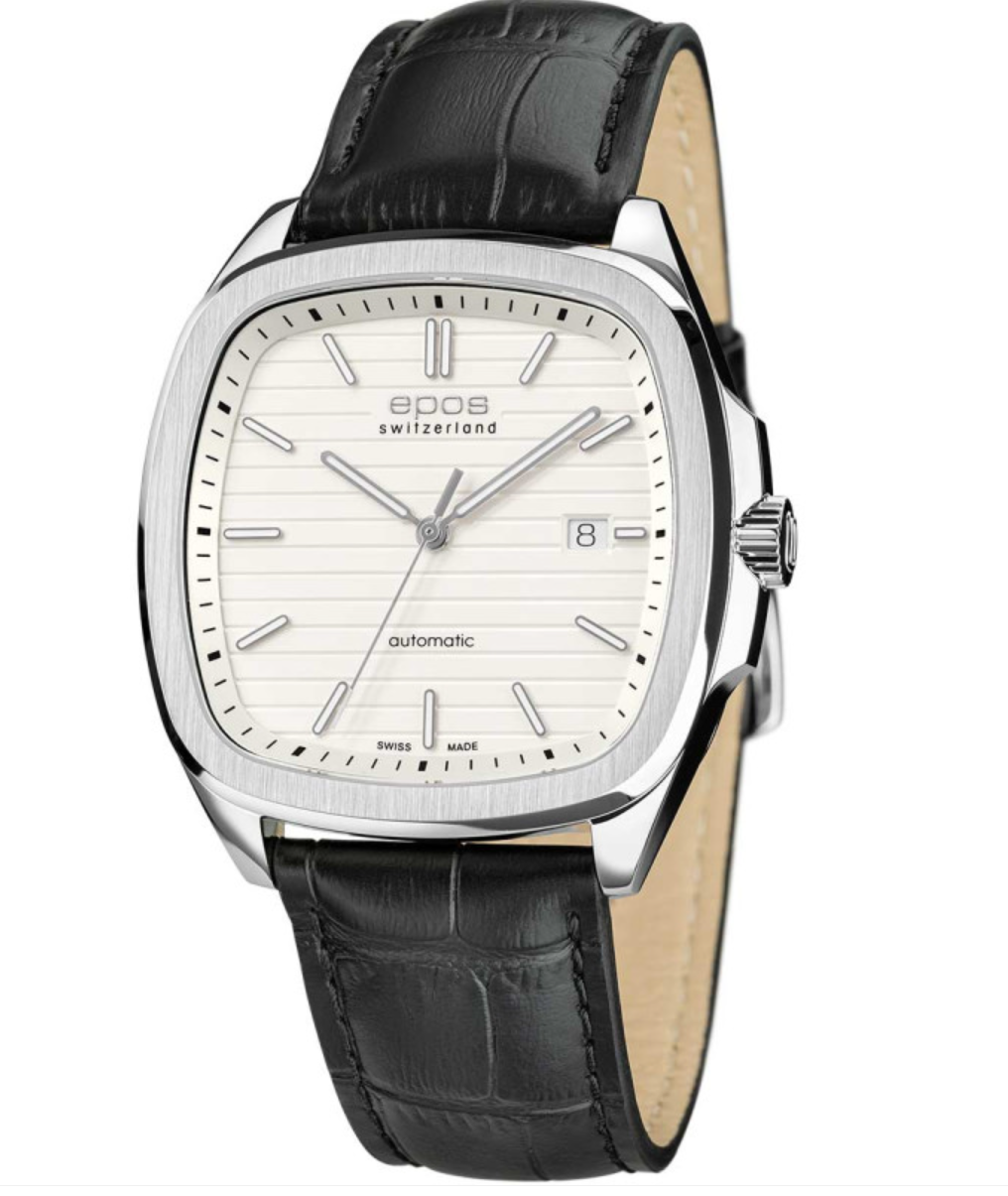
Epos Timeless Automatic 40 mm is an elegant watch with a modern, slightly retro form. The light dial, slim indices, date window and black leather strap make a versatile combination that suits both a suit and a smart casual look. The distinctive case sets the model apart without taking away its dressy character.
The Patek Philippe Calatrava shows what a classic dress watch looks like!
The Patek Philippe Calatrava is one of the most recognisable models of the classic dress watch. Its origins go back to 1932, when the Ref. 96 appeared, inspired by the functional simplicity of the Bauhaus. The original model had a round gold case about 31 mm in diameter and about 9 mm thick, a light dial, a small seconds subdial at 6 o'clock, manual winding and a leather strap. It impressed neither with its size nor with a multitude of complications – its strength lay in its proportions.
This approach still explains well why a dress watch needs no sporty extras. If you like the mechanical character of such designs, also take a look at hand-wound men's watches, which reference the most traditional way of living with a watch.
Good proof that the classic concept does not have to mean a small case is the modern Patek Philippe Calatrava Ref. 6119G. Its diameter is 39 mm and its thickness just 8.08 mm. The white gold case, Clous de Paris bezel and dark lacquered dial give it a more distinctive character, yet the whole watch remains elegant and slim. You can apply exactly this principle when choosing a much cheaper model: instead of looking for a copy of a specific watch, look at proportions, a simple dial, a thin case and the absence of sporty excess.
A similar direction, but in a more contemporary form, is represented by the Epos Passion Automatic 41 mm. It has a silver dial, a black leather strap and an automatic ETA 2824 movement, and its steel case measures 41 mm in diameter and 10.4 mm in height. It is an option for people who like classic elegance but prefer a slightly larger watch on the wrist.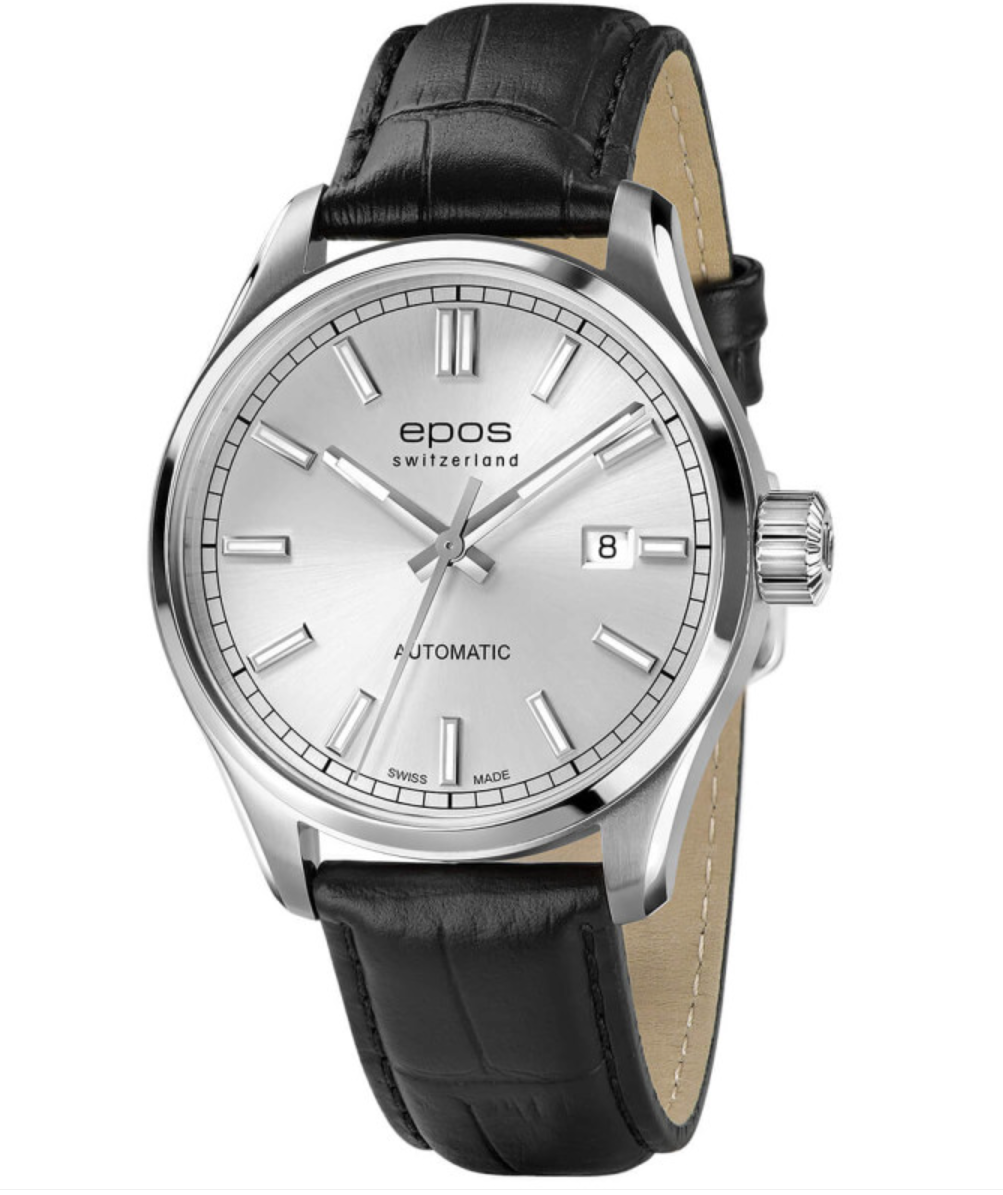
A more affordable example of classic design is the Orient Bambino Automatic 40 mm RA-AC0033Y30B. The beige dial and brown genuine leather strap give it a warm, elegant character, and inside works the automatic Orient F6724 movement with a power reserve of about 40 hours. The case is 40 mm in diameter, so the model nicely shows how the traditional dress watch style can look in contemporary proportions.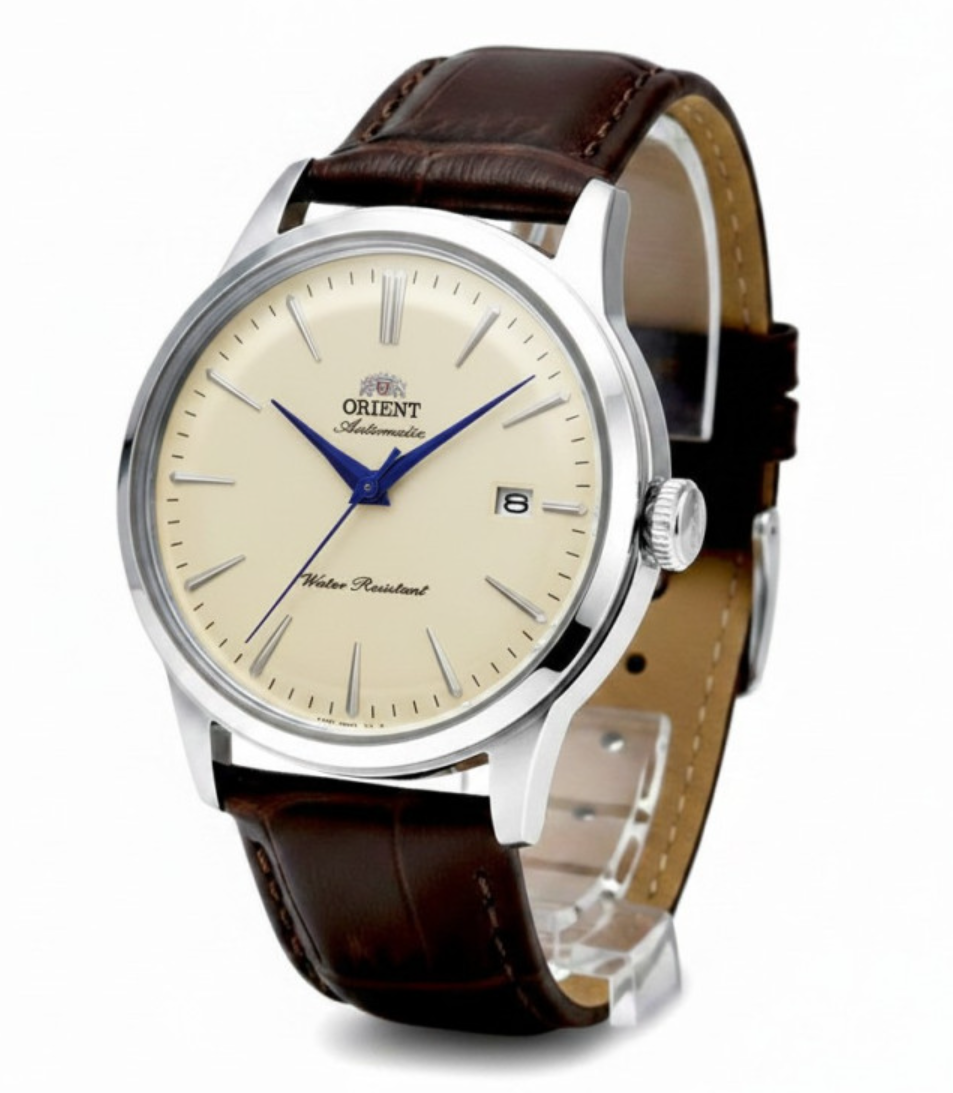
If you prefer more classic sizes, another interesting option is the Bulova Commodore Joseph Bulova 97B189. The model has a 38 mm case, a white dial, a brown leather strap and a sapphire crystal, and is powered by an automatic movement. This combination of colours and proportions fits the dress watch aesthetic well, especially when paired with a suit or blazer.
Which dress watch to choose depending on your budget and outfit?
A good dress watch can be found both in a budget of around 1500–2000 PLN and in the segment costing tens of thousands of zlotys. At the lower end you can start with directions such as Orient, Seiko, Citizen or Timex.
In the range of roughly 2000–6000 PLN you will find, among others, the Tissot Le Locle Powermatic 80, Hamilton Jazzmaster and Frederique Constant Classics, where you more often get an automatic movement, a sapphire crystal and more refined finishing. Between 6000 and 20,000 PLN you can look at models from Longines, Grand Seiko, NOMOS Glashütte or Junghans Meister. Above that amount begin the designs of brands such as Omega, Cartier, Jaeger-LeCoultre, Vacheron Constantin and Patek Philippe. Price changes the level of craftsmanship and prestige, but the principle of choice remains similar: a slim case, a calm dial and proportions suited to the wrist.
For a business suit, it is easiest to choose a 36–42 mm watch on a thin strap. Pair black leather primarily with black shoes, and brown with brown – especially with a navy or charcoal suit. With smart casual you can allow yourself more: a cream or navy dial, a brown strap or somewhat bolder indices. For a tuxedo, the safest option remains a very thin watch on a black strap, ideally with a simple dial and no date window.
If you want to organise the rules for pairing a watch with formal attire more broadly, also read the guide which watch to choose to go with a suit. For more relaxed elegance, a guide to old-money-style watches may also come in handy.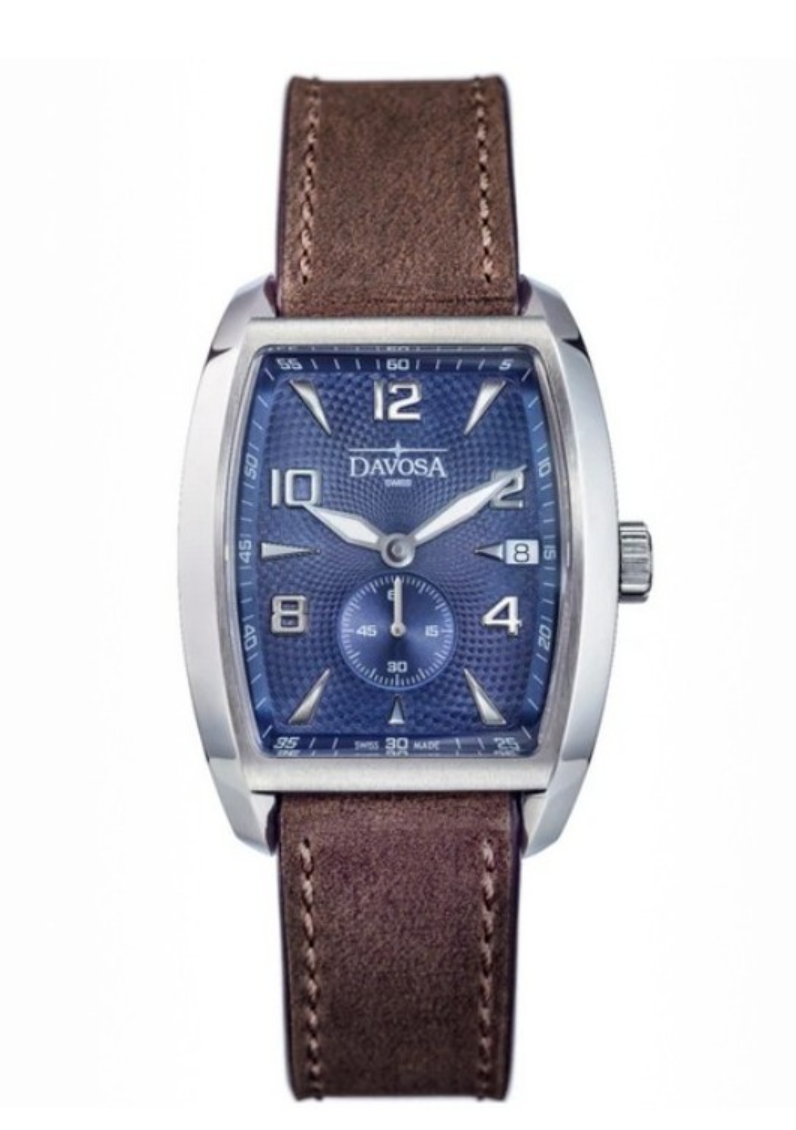
Davosa Evo 1908 Automatic 36 mm combines an elegant form with a more distinctive character. The navy dial, rectangular case and brown leather strap make a stylish set that will work well both with a suit and in smart casual outfits.
What size, strap and movement to choose – the most common questions about dress watches
The most versatile dress watch has a 36–39 mm diameter, is less than 10 mm thick and has a well-fitted leather strap, but you can deliberately depart from these rules. Can a dress watch have a bracelet? Yes – a delicate, thin bracelet in steel or a metal matching your other accessories can look elegant, especially in a business outfit. For black tie, however, a black leather strap remains more traditional. Does a dress watch have to be gold? No. Stainless steel can look just as formal if the case is slim and well finished. And a date window? It is acceptable if it stays small and discreet. The more formal the occasion, the better the rule works: fewer elements on the dial, more calm in the whole design.
A dress watch can also be quartz. An automatic or hand-wound movement gives more watchmaking excitement, but quartz has its practical advantages: it can be very thin, accurate and does not require regular wearing or winding. So do not choose a movement only because one type is considered more prestigious. First check whether the watch sits well on your wrist, whether the lugs do not extend beyond its outline, whether the case fits under your cuff and whether it suits, stylistically, the clothes you will actually wear it with. A good dress watch does not have to be the most complicated model in your collection. Its job is to do one thing exceptionally well: to elegantly complete your outfit instead of competing with it.
Today you will find a great many dress watches on the market – from simple, inexpensive models to luxury designs by renowned brands. There is, however, no single dress watch that is best for everyone. When choosing, pay attention to case proportions, thickness, type of strap and dial style, but ultimately go for the model you simply like and that suits the way you dress. That is the watch you will most enjoy wearing, regardless of price or the logo on the dial. In the Westwatches online watch store you will find a wide range of models in various styles and price ranges, making it easier to match a watch to your needs. That is the watch you will most enjoy wearing, regardless of price or the logo on the dial.

Krzysztof Szopa
Watch Expert
An expert associated with the WestWatches.pl brand, a place that has been supplying watches for every occasion for years. Thanks to many years of experience in the watchmaking and jewellery industry, he passionately shares his knowledge, offering professional advice both in the online and in the brick-and-mortar store. He specialises in selecting original watches, watch accessories and jewellery that combine exceptional quality with competitive prices. His goal is to help customers find the ideal product that meets their expectations and highlights their style.

See popular articles

How to Change a Watch Strap? A Simple Step-by-Step Guide
Changing a watch strap is easier than you think – all you need is the right tool, a few careful moves and a new strap that fits the case. On classic models you have to release the spring bars, while a quick-release system lets you do it without any extra tools. The whole process can take just a few minutes, and the result? Your watch gets a completely new look. Find out how to remove the old strap, fit a new one and avoid scratching the case.
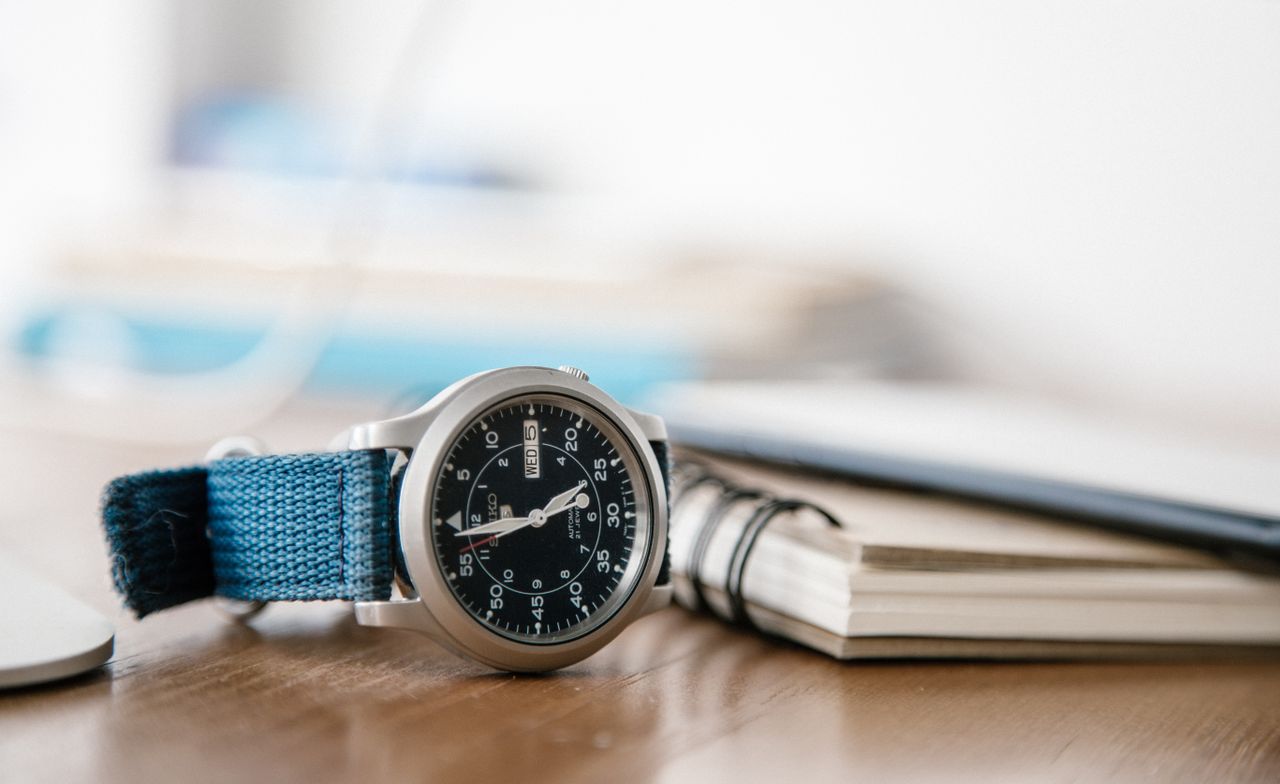
Fabric Watch Straps – How Do Perlon, Canvas, Rally and Bund Differ?
A good strap can completely change the look of a watch – but which one should you choose? Perlon is light and breathable, canvas stands out with its woven texture, rally catches the eye with sporty perforations, and bund gives a watch an aviation character. Although they are often mentioned together, not all of them are fabric straps – a rally strap is usually perforated leather, and a bund is a design with an additional pad. Find out how these four styles differ and which one suits your watch best.
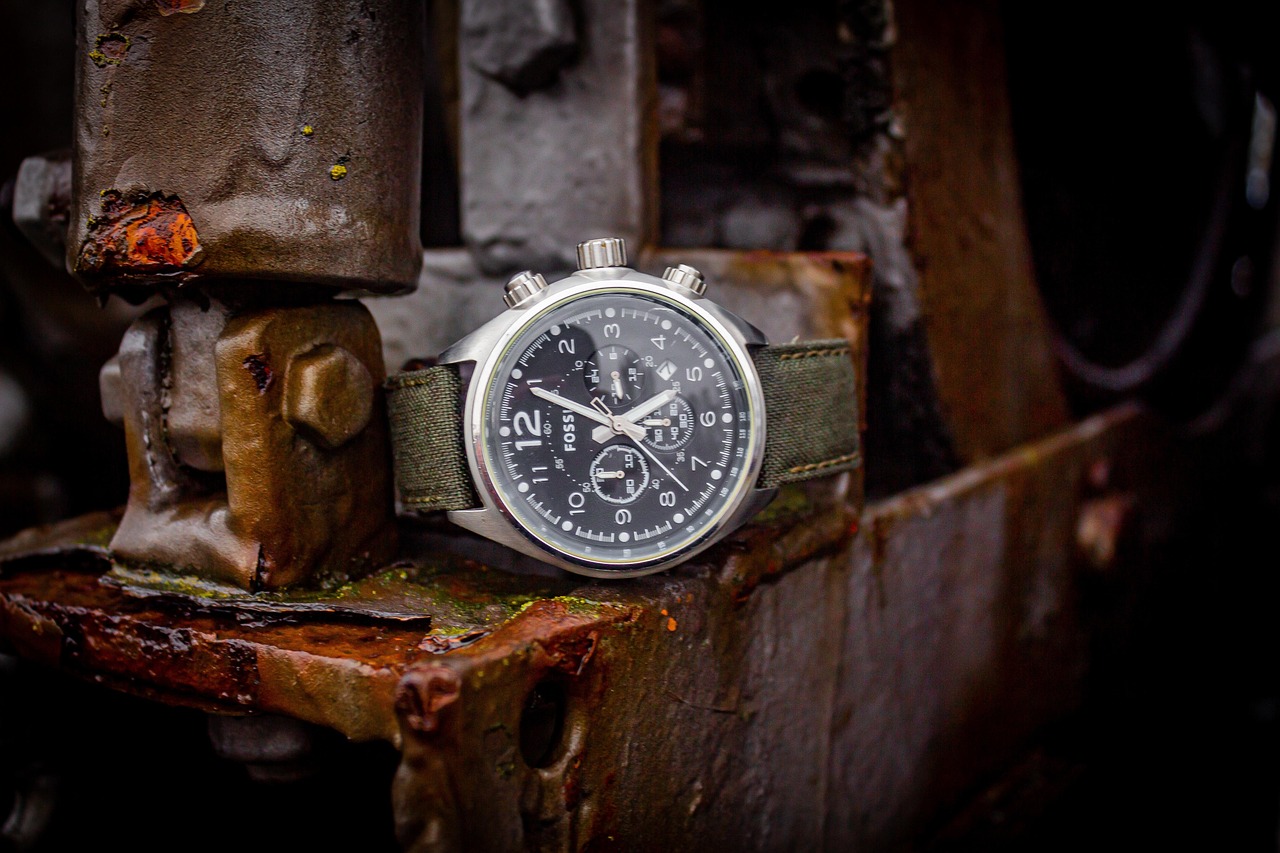
NATO Strap – How to Fit It and How Does It Differ from a Zulu? A Practical Guide
A NATO strap is a lightweight fabric watch strap that threads under the case instead of attaching separately on each side. You can fit it yourself in a few simple steps. Compared with a Zulu strap, it is usually thinner, has flatter hardware and an extra layer of material under the watch. Find out how to fit a NATO strap correctly, how the two designs differ and how to choose the right size.
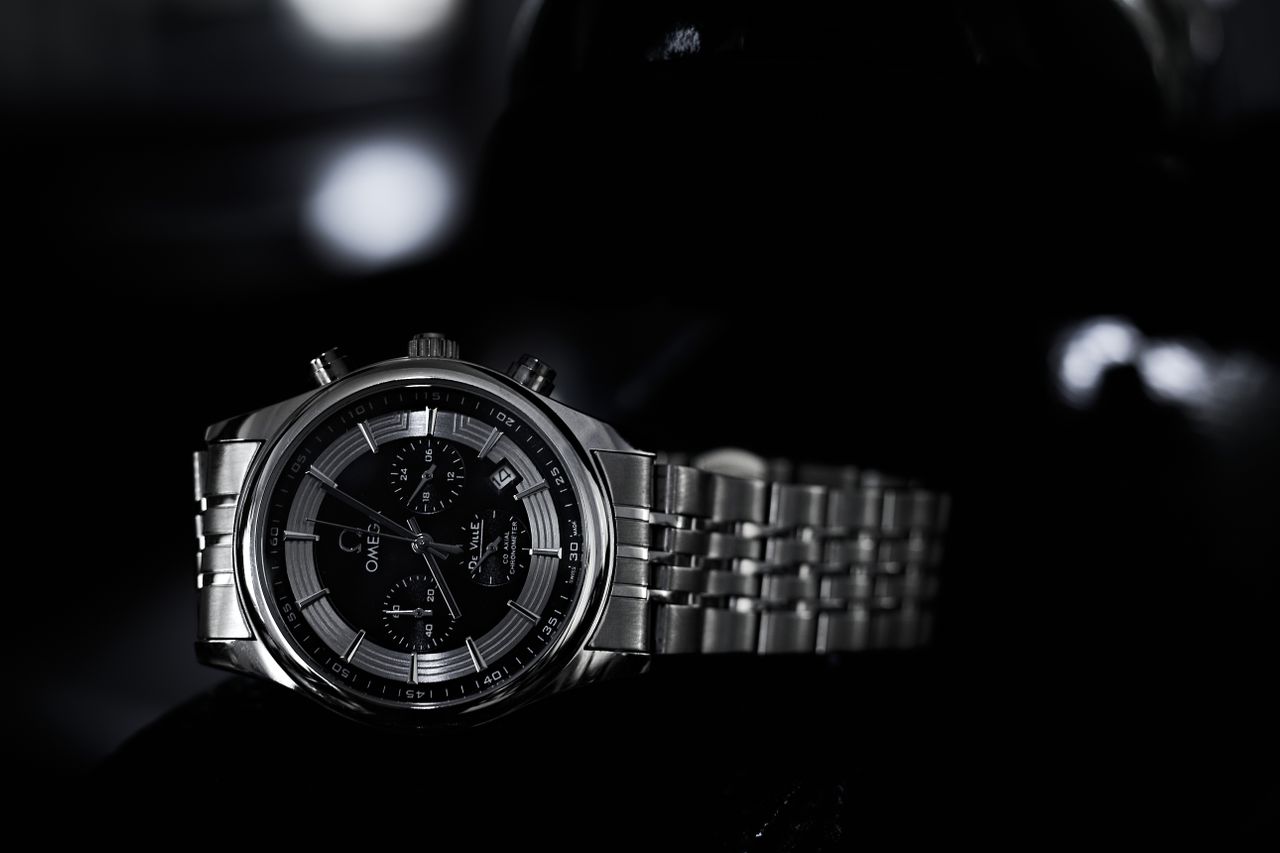
Types of Watch Bracelets – Oyster, Jubilee, President and Mesh. Which One to Choose?
Oyster works for everyday wear, Jubilee adds elegance, President emphasises a luxury character, and mesh offers lightness and flexibility. Each of these constructions sits differently on the wrist and changes the look of the watch. The differences are not just about the number of links, but also about comfort, weight and the type of clasp. Discover the main types of watch bracelets and find out which one best suits your style and your watch case.
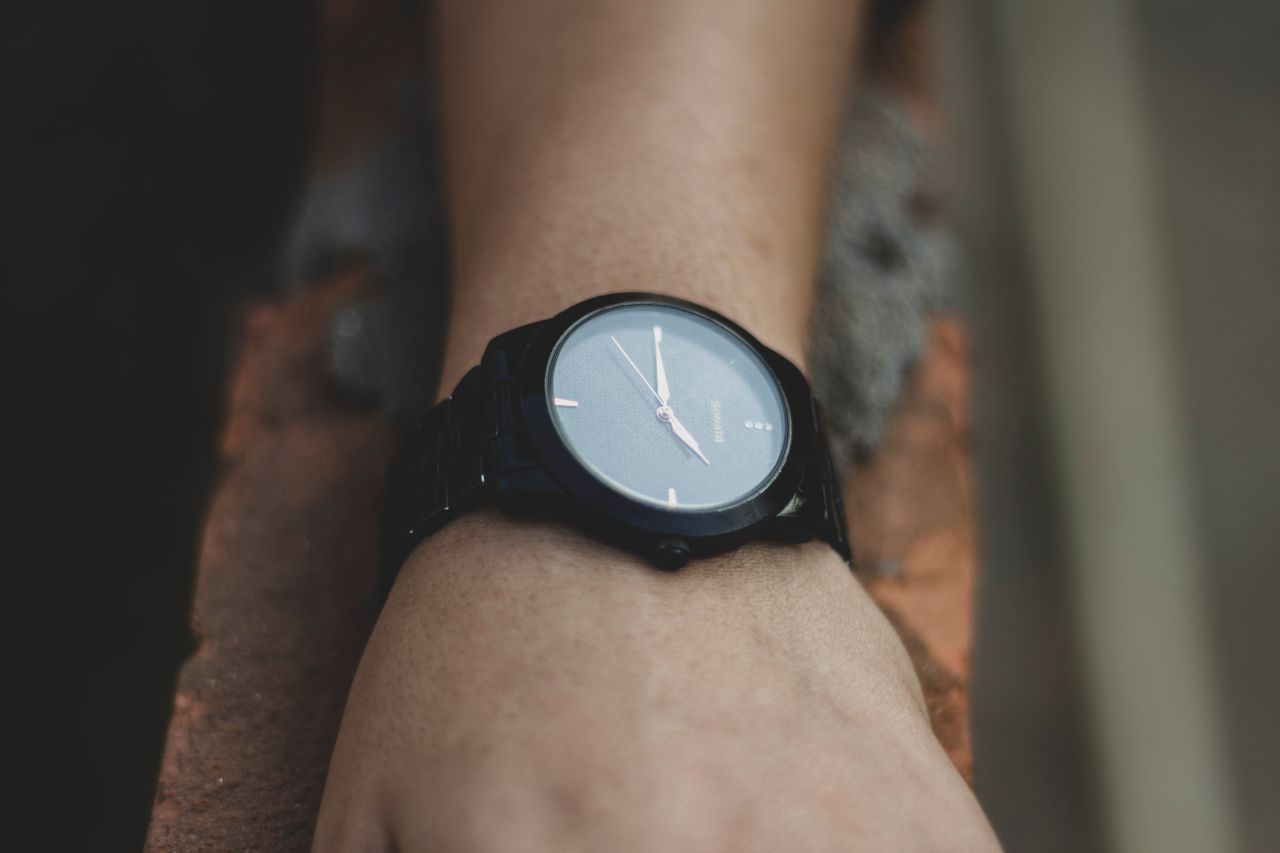
GADA – One Watch for Work, Weekends and Travel. How to Choose It?
One watch can go with a shirt, jeans, a blazer and even the swimming pool. That is the whole idea behind GADA (Go Anywhere, Do Anything). Instead of several models for different occasions, you choose one that combines comfort, durability and a timeless look. The safest choice is a steel case of 36–41 mm, 100 m water resistance and a legible dial in a neutral colour. Find out what to look for to choose a watch you will actually wear every day.
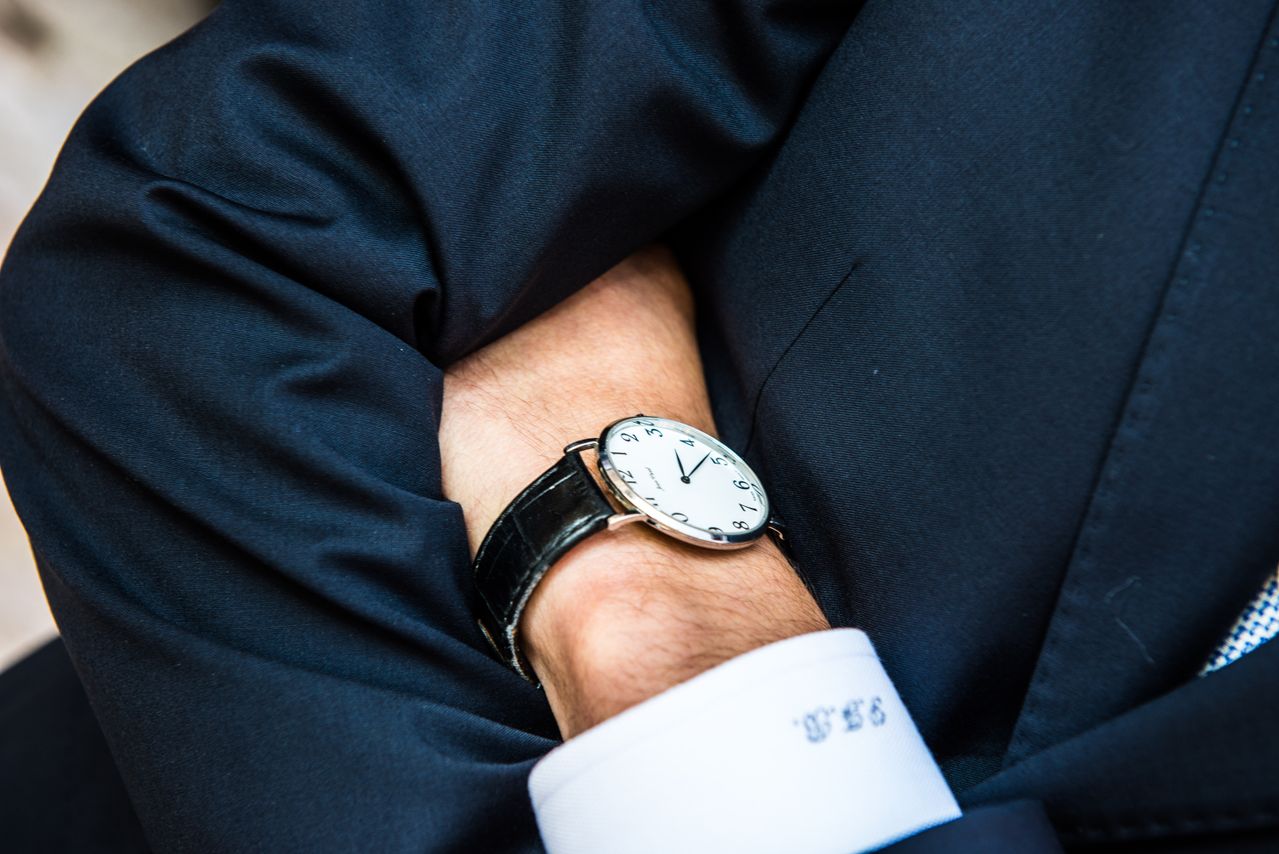
Tuxedo Watch – Black Tie and White Tie Rules
Zegarek do smokingu można nosić, ale nie każdy model pasuje do wieczorowej elegancji. Przy dress code black tie najlepiej sprawdzi się cienki zegarek na czarnym skórzanym pasku, schowany pod mankietem koszuli. White tie wymaga większej powściągliwości – do fraka tradycyjnie wybiera się zegarek kieszonkowy albo całkowicie rezygnuje z odmierzania czasu na nadgarstku. Sprawdź, jak dobrać zegarek, żeby zachować zasady etykiety i uniknąć modowego faux pas.
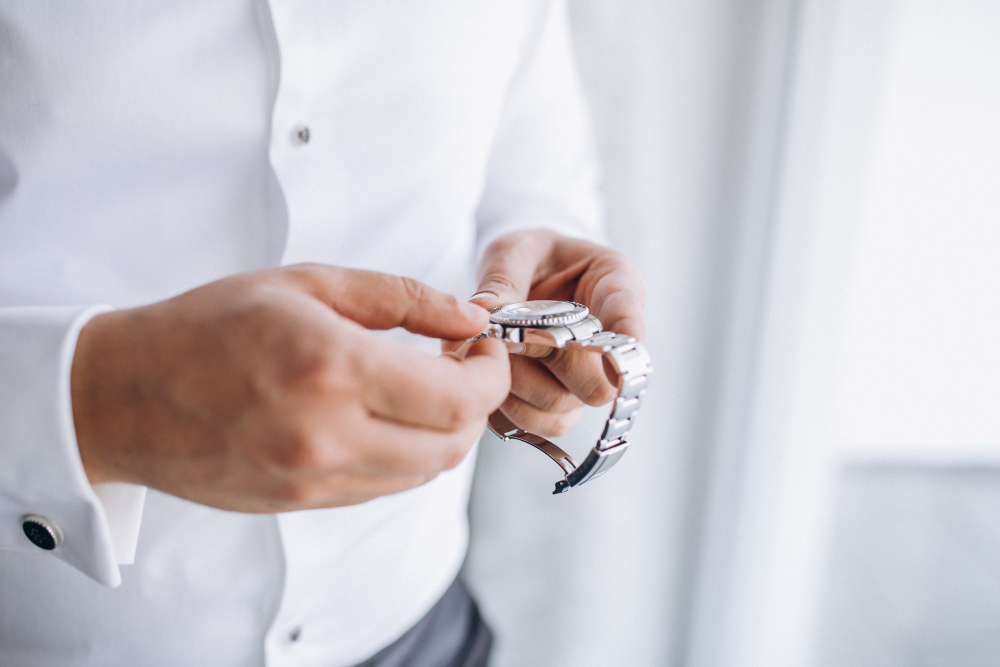
316L, 904L and surgical steel – what is your watch made of?
Most steel watches, from affordable models to luxury constructions, are made of 316L steel. 904L steel contains more nickel, chromium and molybdenum, and therefore offers higher corrosion resistance, but in itself it does not mean greater scratch resistance. The term “surgical steel”, in turn, does not point to one strictly defined alloy. In watches it most often refers to 316L, but without a specific material designation it may simply be a marketing name. If you are choosing a watch for years, look therefore not only at the words “stainless steel”, but also at the grade of steel, which components are made of the given material and how they are finished.
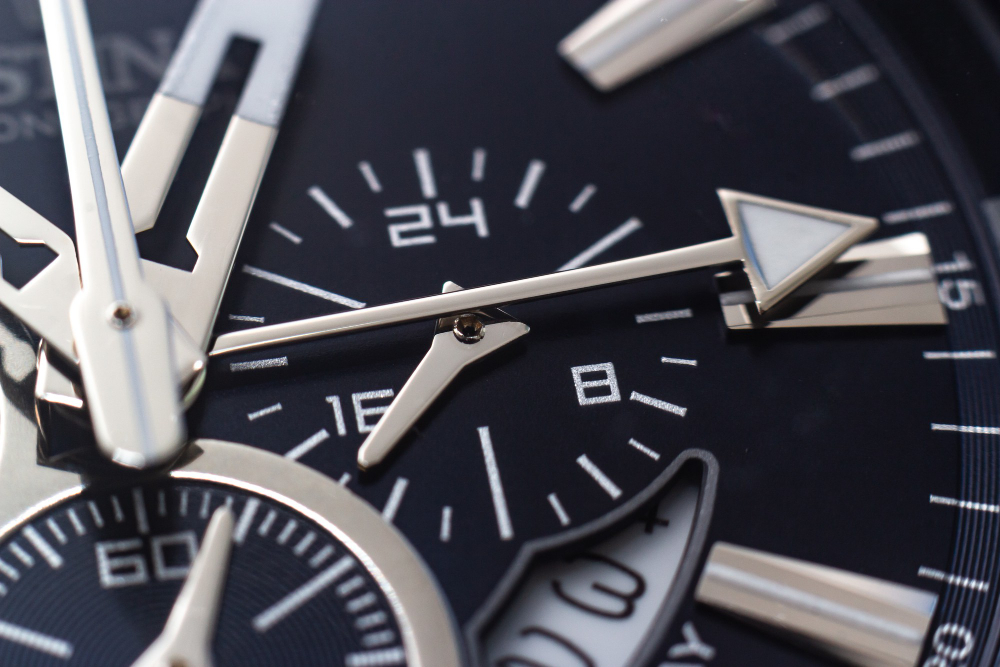
Japanese or Swiss watches? We compare quality, movements and prices
If you are wondering whether Japanese or Swiss watches are better, the name of the country alone will not give you a good answer. In both cases you will find simple models for relatively little money, solid mid-range automatics and designs belonging to the world's watchmaking high end. Far more about quality will be told to you by the specific movement, the way the case and bracelet are made, the crystal, quality control, accuracy and price. Check how Japanese watches really differ from Swiss ones and what to pay attention to before you choose a model for yourself.

The lifespan of a quartz watch – how long does it really last, and when is it no longer worth repairing?
We value quartz watches above all for their accuracy, convenience and modest day-to-day demands. That does not mean, however, that they can run indefinitely and need nothing more than a new battery once every few years. Over time, the components of the movement itself also wear out, and the moment a watch starts giving trouble can look completely different depending on the model, the way it is used and the availability of parts. So how long can a quartz watch last, what wears out in it most often and when does repair still make sense? Check what its lifespan really depends on.