



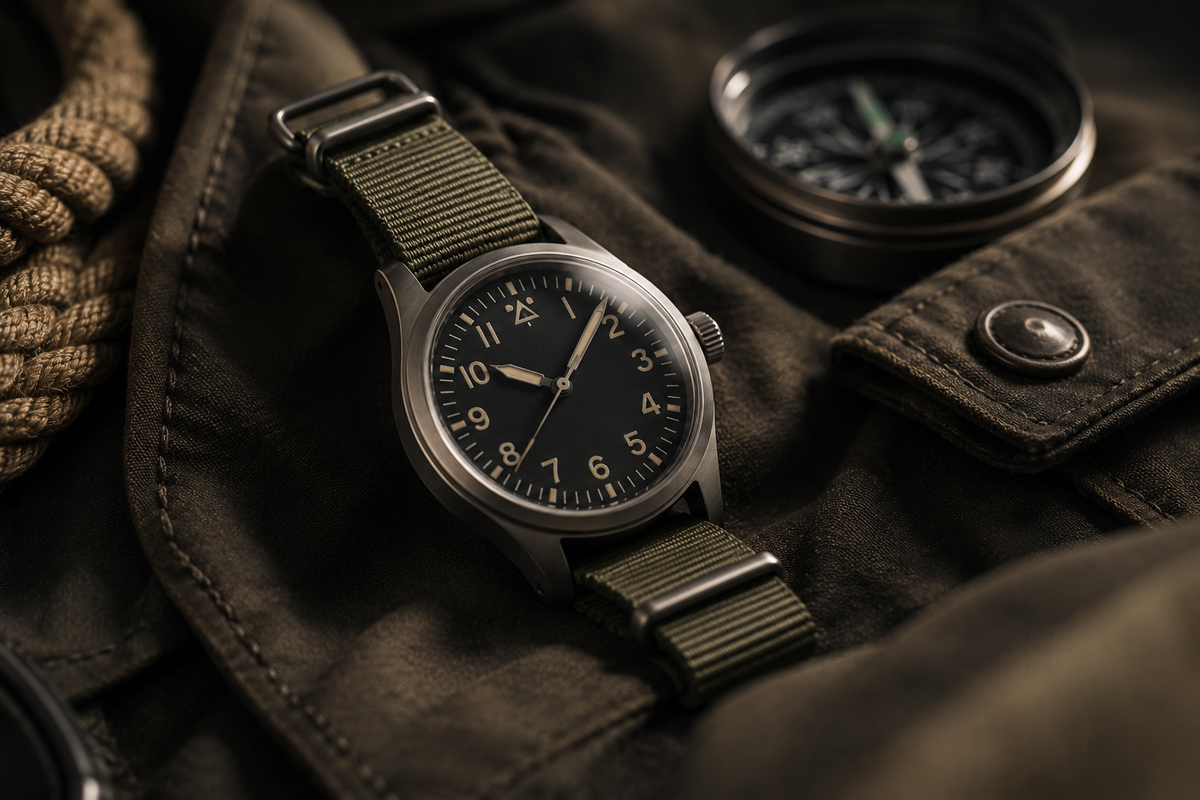
Field watch – what is a field watch and who is it best suited for?
A field watch is a simple, legible watch derived from military models. It works well when travelling, at work, on walks and in everyday life, because it prioritises comfort, durability and quick time reading. In this guide you'll learn what a field watch is, how it differs from a diver and which model best suits your lifestyle.
What is a field watch?
A field watch is a simple, legible and durable utility watch, designed to be worn in the field. In Polish it is called a "field" or "terrain" watch. Its job is not to perform complicated calculations, but to let you check the time instantly — even while marching, doing physical work or in poor light.
The roots of this category go back to the military watches used in the early 20th century. During World War I, being able to read the time without pulling out a pocket watch had practical significance, which is why wristwatches began to gain popularity among soldiers. Subsequent military standards cemented the simple construction, high-contrast dial and emphasis on functionality. During World War II, manufacturers such as Hamilton supplied the American armed forces with watches and precise measuring instruments.
The modern field watch retains this utilitarian character, although today it is chosen mainly as a versatile everyday watch. You'll most often recognise it by its large Arabic numerals, clear hands and a high-contrast dial, usually black, navy or cream. A typical field watch also has a legible seconds hand, a simple 12-hour scale, sometimes supplemented with 24-hour markings, a small or medium case and a NATO strap, canvas or leather. The whole is completed by a limited number of additional functions, which keeps the dial clear and easy to read.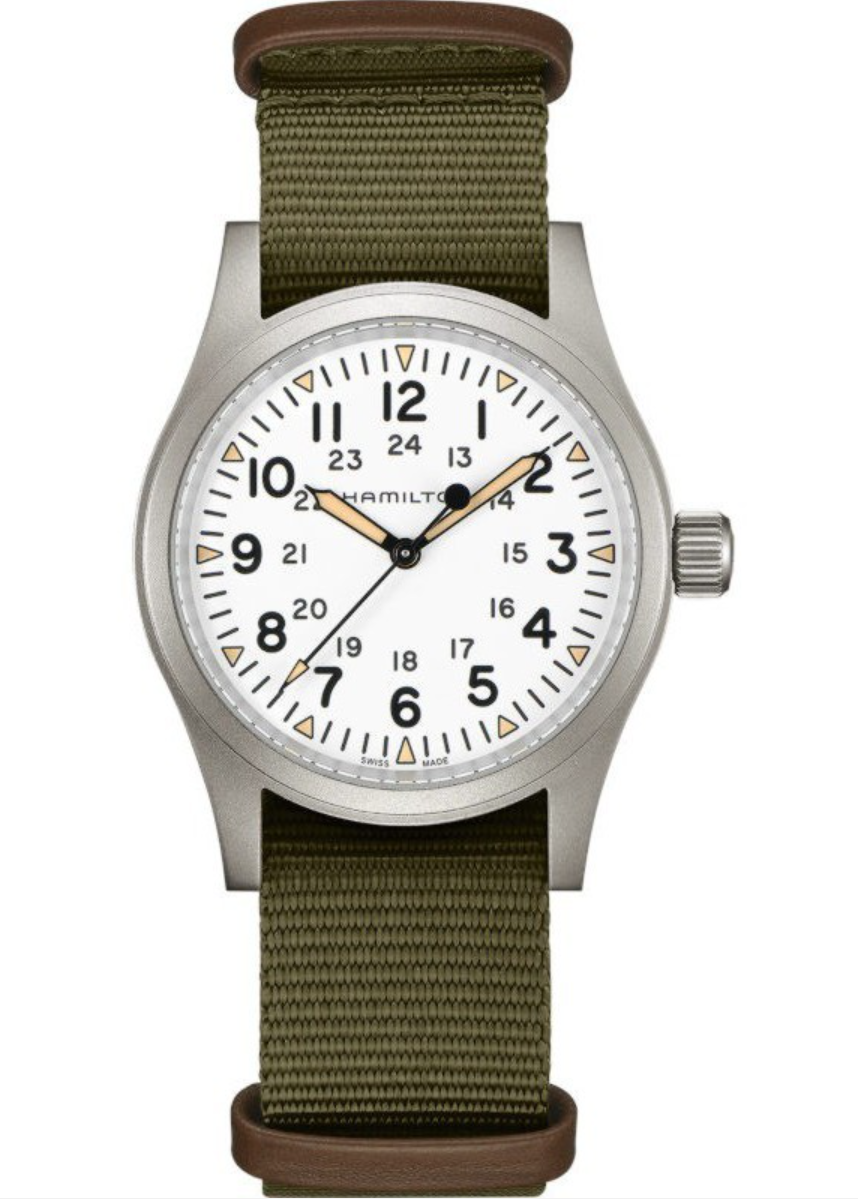
The Hamilton Khaki Field Mechanical 38 mm H69439411 shows what a field watch should be in its purest form: legible, visually light and free of unnecessary extras. The white dial with a 12- and 24-hour scale, clear hands and a military-style textile strap hark back to field watches from decades ago. It's a proposition for someone who wants to wear a piece of utilitarian history on their wrist, but in a form that also suits everyday attire.
The minimalism of a field watch stems from its purpose, not from a cheaply designed project. On the dial you'll find primarily what you need for a quick time reading, so fewer elements means less information competing for your attention. If you want to check which watches soldiers use and which model works best in the military, read also our practical ranking of military watches.
What features does a good field watch have?
A good field watch should be legible, comfortable and resistant enough not to require special treatment. There is no single mandatory case diameter or specific type of movement. What matters more is whether the parameters form a practical whole.
When browsing the offer, start with the dimensions. As a starting point you can assume a case with a diameter of 36 to 40 mm. Such a watch usually doesn't catch on the cuff and doesn't get in the way during movement. However, also check the lug-to-lug length of the case. This parameter often shows better how a model will sit on the wrist than the diameter alone.
Next, pay attention to the dial. Light markings on a dark background or dark markings on a light background make quick reading easier. Luminescent material on the hands and indices is also useful. It doesn't have to glow all night like in a diving watch, but it should let you check the time after entering a dark room.
|
Element |
What to look for in the offer? |
Why does it matter? |
|
Case |
around 36–40 mm, reasonable thickness |
the watch doesn't restrict movement and fits under the sleeve |
|
Dial |
strong contrast, large numerals |
you'll read the time without staring for long |
|
Glass |
hardened mineral or sapphire |
reduces the risk of scratches during everyday wear |
|
Water resistance |
preferably 100 m as a practical everyday level |
lets you use the watch more calmly in the rain and during activity |
|
Strap |
NATO, textile, canvas or leather |
easy to match the watch to the season and style |
|
Movement |
quartz, automatic or hand-wound |
the choice depends on whether you value convenience or traditional operation |
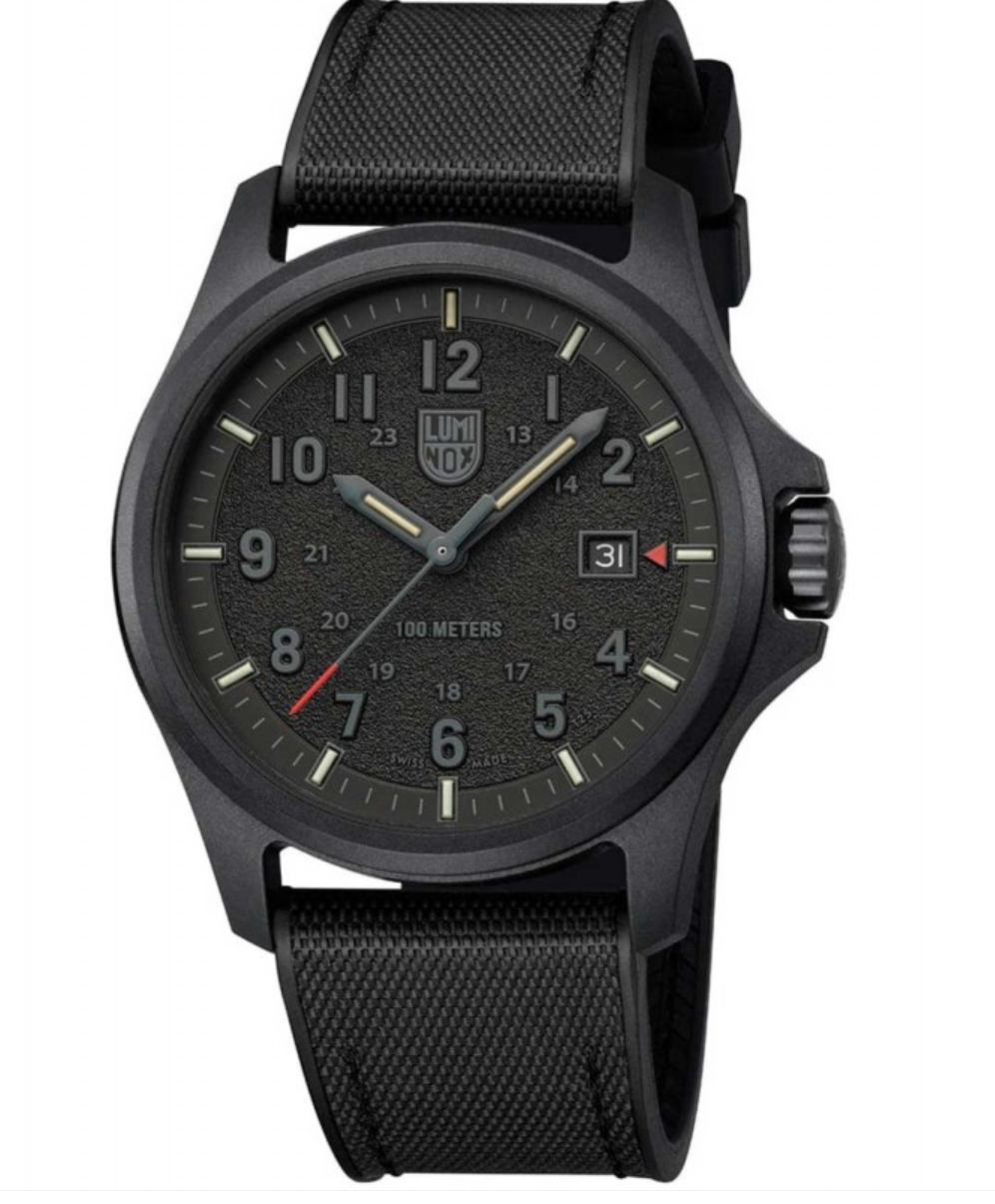
Luminox Atacama Field XL.1961 shows the modern, more tactical face of the field watch. The dark dial with a 12- and
24-hour scale, clear hands, a date window and a light, resistant construction mean the watch feels at home in the field, on travels and in an intense daily rhythm. It's a proposition for people who value legibility, functionality and a military character, but prefer a bolder design than in classic field watches.
How does a field watch differ from a diver?
A field watch is designed primarily for activities on land, whereas a diver is meant to safely measure time while underwater. The difference is therefore not limited to appearance. The two categories have different construction priorities.
A diving watch is given a rotating bezel, strong lume, high water resistance and a case prepared to work under increased pressure. The ISO 6425:2018 standard defines the requirements and testing methods for diving watches. It applies to models intended for diving at depths of at least 100 metres, equipped with a secured dive-time measurement system that remains visible in the dark.
A field watch is usually lighter, thinner and more understated than a diver, because it was designed for everyday wear, travel and activities on land. Instead of high water resistance and a one-way diving bezel, it emphasises a legible dial, a comfortable case and a simple construction. Nor should it be confused with an aviation watch: a classic flieger focuses on legibility in the cockpit, while more technical models may have a slide rule or a counting bezel for calculating speed, distance or fuel consumption. A diver will be better for people who swim or dive regularly, whereas a field watch works well when lower weight, a calmer look and all-day comfort matter.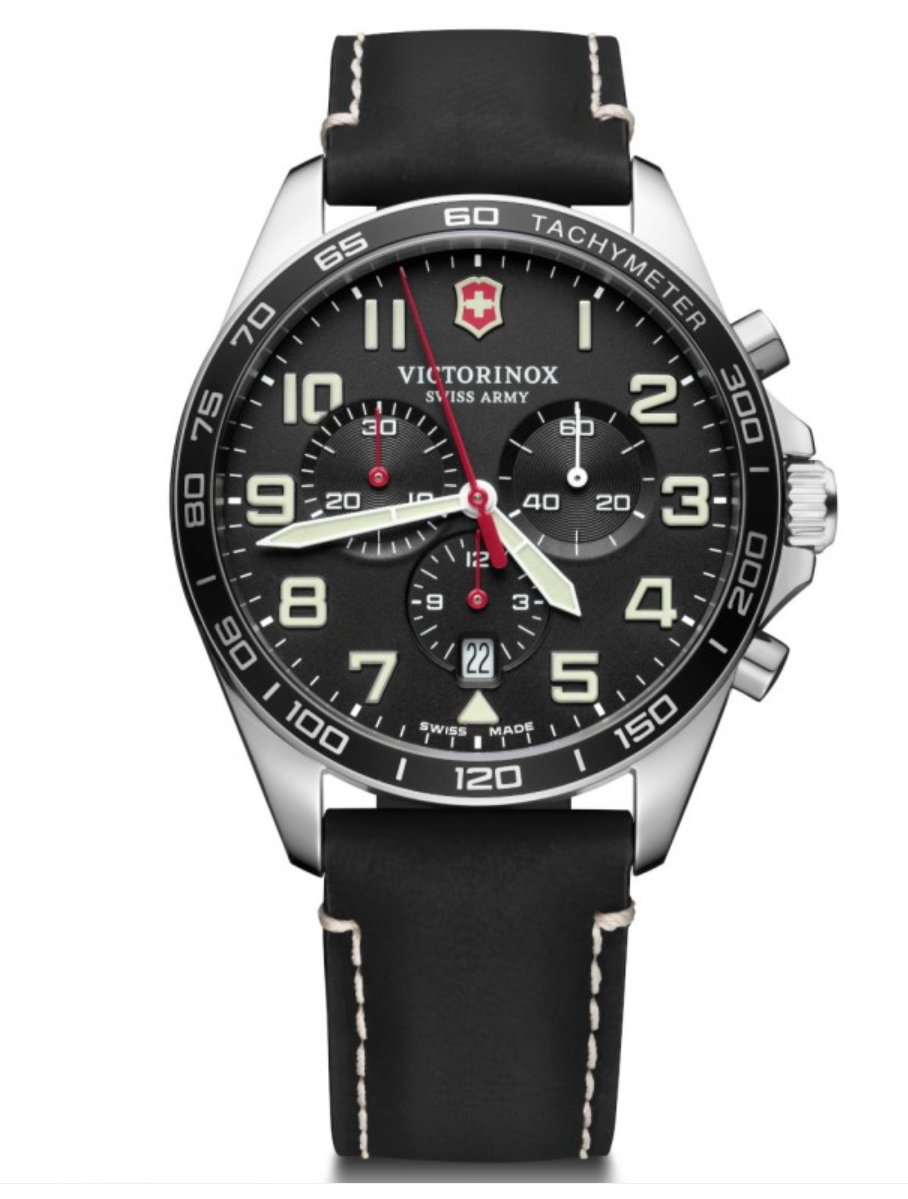
The Victorinox Fieldforce Chrono 241852 is a more sporty and urban interpretation of the field watch. It retains legible numerals, strong contrast and a utilitarian character, but adds a chronograph, a date window and a tachymeter scale, so it offers more functions than a classic field watch. It's a proposition for people who like the terrain aesthetic, but on a daily basis also expect a bold look from a watch and the ability to measure time precisely.
Who is a field watch a good choice for?
A field watch will be a good choice if you're looking for a simple, comfortable and versatile watch to wear often. It works well at work, when travelling and on weekend getaways, especially when you care about a legible dial, a light case and quick time reading. A field watch is easy to pair with jeans, chinos, a shirt, a sweater or an outdoor jacket, and swapping the textile strap for a leather one lets you give it a calmer, more elegant character.
Before buying, pay attention to the water resistance, type of movement and case thickness. For frequent trips, quartz with legible lume and 100 m water resistance works well, while an automatic or a hand-wound model will be better for lovers of traditional watchmaking. If you plan to wear the watch with a shirt too, choose a slim case, a neutral dial and a leather strap.
A field watch is a good choice for people looking for a legible, comfortable and versatile everyday watch. In the offer of the WestWatches online watch shop you'll find both classic men's watches by Hamilton, more tactical Luminox models, sporty propositions by Seiko and functional Victorinox watches. This makes it easy to match a model to your style, wrist and way of use – from a simple field watch to a more elaborate version with a chronograph.

Krzysztof Szopa
Watch expert
An expert associated with the WestWatches.pl brand, a place that has been supplying watches for every occasion for years. Thanks to many years of experience in the watchmaking and jewellery industry, he passionately shares his knowledge, offering professional advice both in the online shop and the brick-and-mortar store. He specialises in selecting original watches, watch accessories and jewellery products that combine exceptional quality with competitive prices. His goal is to help customers find the perfect product that will meet their expectations and highlight their style.

See popular articles
316L, 904L and surgical steel – what is your watch made of?
Most steel watches, from affordable models to luxury constructions, are made of 316L steel. 904L steel contains more nickel, chromium and molybdenum, and therefore offers higher corrosion resistance, but in itself it does not mean greater scratch resistance. The term “surgical steel”, in turn, does not point to one strictly defined alloy. In watches it most often refers to 316L, but without a specific material designation it may simply be a marketing name. If you are choosing a watch for years, look therefore not only at the words “stainless steel”, but also at the grade of steel, which components are made of the given material and how they are finished.
Japanese or Swiss watches? We compare quality, movements and prices
If you are wondering whether Japanese or Swiss watches are better, the name of the country alone will not give you a good answer. In both cases you will find simple models for relatively little money, solid mid-range automatics and designs belonging to the world's watchmaking high end. Far more about quality will be told to you by the specific movement, the way the case and bracelet are made, the crystal, quality control, accuracy and price. Check how Japanese watches really differ from Swiss ones and what to pay attention to before you choose a model for yourself.
The lifespan of a quartz watch – how long does it really last, and when is it no longer worth repairing?
We value quartz watches above all for their accuracy, convenience and modest day-to-day demands. That does not mean, however, that they can run indefinitely and need nothing more than a new battery once every few years. Over time, the components of the movement itself also wear out, and the moment a watch starts giving trouble can look completely different depending on the model, the way it is used and the availability of parts. So how long can a quartz watch last, what wears out in it most often and when does repair still make sense? Check what its lifespan really depends on.
The second hand on a watch – why does it jump, move smoothly or stop?
The way the seconds hand moves can tell you a lot about a watch's movement, but it is not an infallible test. A single distinct jump per second most often points to quartz, several small movements per second are typical of a mechanical movement, and an almost continuous glide is associated with Spring Drive. There are exceptions, however: there is a quartz watch with a sweeping seconds hand, and a mechanical watch that makes exactly one jump per second. What is more, a stopped hand does not have to mean a fault. Check how to read these signals and when you really need a watchmaker's help.

How do you set an automatic watch? Date, time and time zone 21:00–3:00
An automatic watch does not need a battery, but it does require a little knowledge from its owner. Setting the time or date seems simple, yet the wrong moment or the wrong way of using the crown can affect how the movement works. Many questions concern changing the date at night, moving the hands backwards and restarting a watch after a longer break. Check how to set an automatic watch correctly, what to pay attention to with the crown and why people often talk about particular caution between 9:00 pm and 3:00 am.

Wodoszczelność 10 ATM i 20 ATM – czy możesz pływać i nurkować z takim zegarkiem?
Co naprawdę oznacza 10 ATM lub 20 ATM na zegarku i czy takie oznaczenie pozwala bez obaw wejść do basenu, morza albo nurkować? Same liczby mogą być mylące, dlatego sprawdź, jak czytać klasę wodoszczelności i dobrać zegarek do aktywności w wodzie.
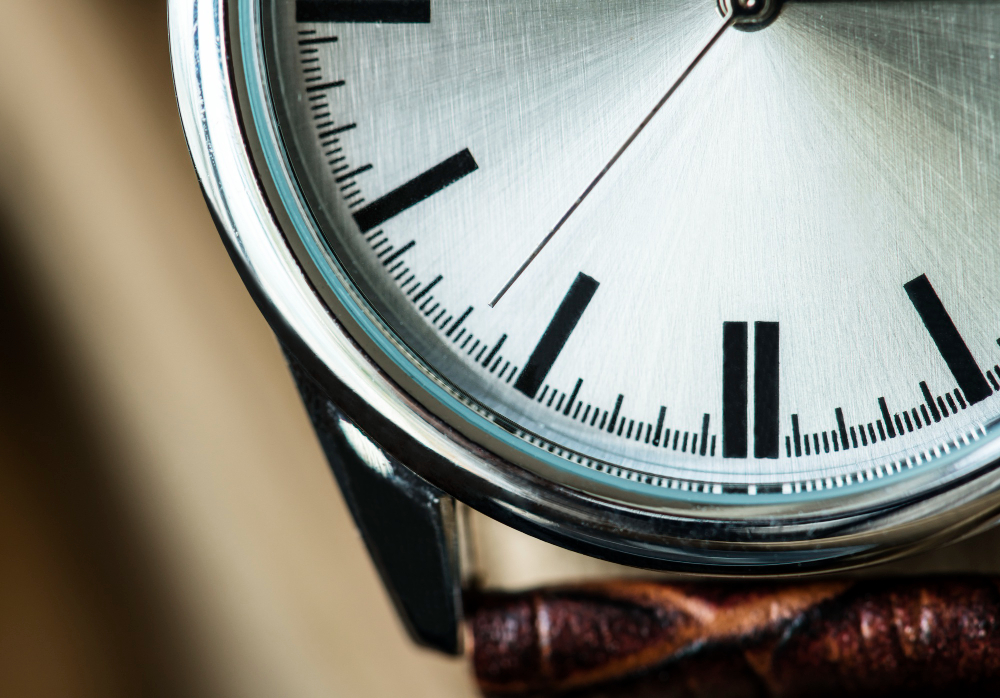
Water resistance 3 ATM – what does it mean and what can you do with it?
3 ATM water resistance means the watch is prepared above all for rain, accidental splashes and brief contact with water during everyday activities. It does not mean that you can swim with it, shower in it or submerge it to a depth of 30 metres. It is precisely the “30 m” marking that most often misleads. It is the result of a pressure test carried out under controlled conditions, not a declared working depth. So if you see 3 ATM, 3 bar or Water Resistant 30 m on the case back or in the specification, treat the watch as resistant to everyday moisture, but not as a watch for water activities.

Rolex-style watches – the best alternatives to the Submariner, Explorer and Datejust
For years Rolex has been one of the most important style benchmarks in the watch world, but its price is not within everyone's reach. That is why it is worth looking at watches similar to Rolex and models inspired by its styling, which offer their own character, solid build quality and much more affordable prices. We are not talking about counterfeits here, but about legitimate watches from other brands that draw on similar solutions and design language. Check out watches inspired by Rolex's style and choose the model that suits your style and budget.
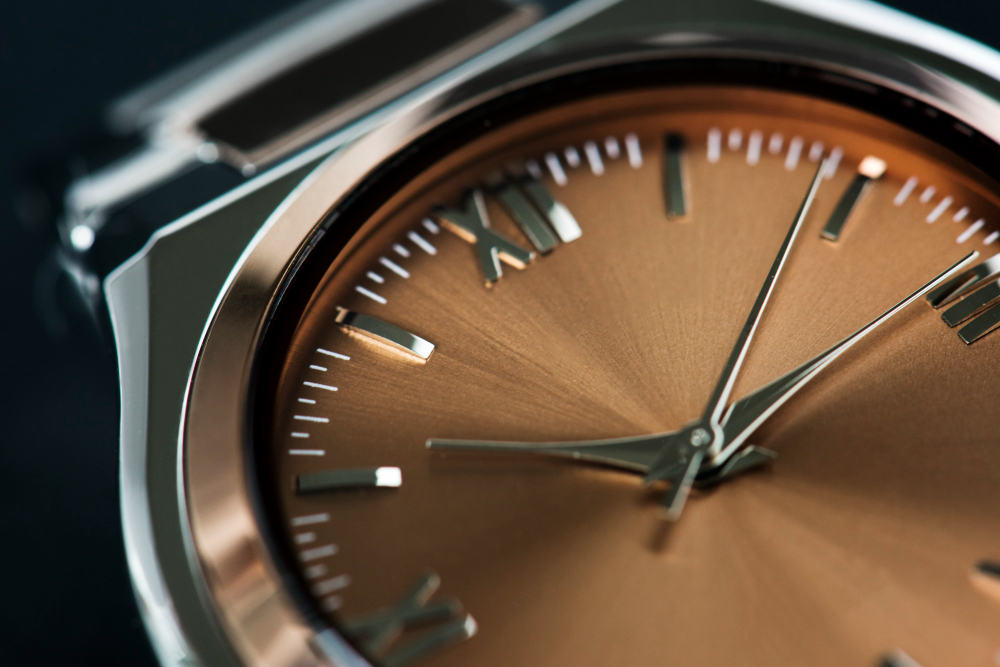
A bronze watch – why does each one change over time?
A bronze watch stands out because its appearance changes along with its owner. The case gradually darkens, turns matte and develops a patina, so two identical models can look completely different after just a few months. This is the greatest advantage of bronze, but also a trait you need to accept before buying. If you expect a watch that keeps its factory shine for years, steel may be a better direction. If, on the other hand, you like vintage looks, signs of use and the natural ageing of a material, bronze gives an effect that is hard to achieve in any other metal.