



How to connect your watch to your phone? Ways to pair your watch
Connecting a watch to a phone can be quick and problem-free if you know where to start and which settings actually matter. Just the right app, Bluetooth enabled, and a few simple steps for the smartwatch to display notifications, monitor activity, and work as you expect daily. In this guide, you'll find specific tips, practical pairing methods, and solutions to the most common problems – all in an accessible, human form, without unnecessary technical complications.
How to connect a smartwatch to a phone stress-free? Check this simple step-by-step scheme
The first connection of a watch to a phone usually takes a moment, but it's worth approaching it calmly – thanks to this you'll avoid problems and gain full access to all device functions. When you start the watch for the first time, pay attention to messages that appear on the screen, because many models suggest right from the start what app will be needed and what settings you need to enable in the smartphone. If you want pairing a phone with a watch to go smoothly, start with basics: Bluetooth must be active, and the watch should be close to the phone – literally within arm's reach. It's also worth making sure the battery isn't discharged, because some models refuse pairing at low energy levels.
When everything is ready, download the appropriate app and allow it several key permissions, such as access to contacts or notifications. It's precisely thanks to them that the watch will be able to work as you expect – display alerts, monitor activity, or make calls. In the app itself, find the option to add a new device, select the smartwatch model, and wait for the devices to find each other. It sometimes happens that a PIN or QR code appears on the dial, which just needs to be confirmed for the connection to be saved. When pairing the watch with the phone is complete, you can already enter settings and adapt the device to your needs: set alerts, choose a watch face, and even enable automatic data synchronization. Thanks to this, the watch will work from the first minutes as you expect.
Lightweight, modern PACIFIC 35-01 smartwatch is a great choice for people who want to conveniently receive notifications and conduct calls via Bluetooth. Round display, simple operation, and interchangeable straps make it work both daily and during activities.
App for connecting watch to phone – which one to choose so everything works immediately? Here are practical tips
Choosing the right app is often the most important moment of the entire configuration, because it's precisely this that's responsible for stable smartwatch connection with the phone. Each manufacturer offers its own solution and although all are similar to each other, they differ in details that later translate into comfort of using the watch. If you work on Apple devices, the only sensible option will be Apple Watch app, which provides the most refined integration. For Samsung watches you'll choose Galaxy Wearable, and Garmin Connect will work for Garmin models – these are apps that not only enable pairing but also provide access to extensive statistics and personalization.
In the case of brands like Huawei, Xiaomi, Amazfit, or Wear OS-based models, the situation is more varied, so it's worth downloading the app from an official source, namely Google Play or App Store. There you have certainty that you'll get the latest software version, without unnecessary modifications. In cheaper smartwatches that often don't have their own tools, you'll most often encounter apps like Da Fit, FitPro, or Google Fit – and although they're simpler, they handle basic functions well. After installing the app, don't skip the first configuration – often it's at this stage that you grant permissions on which proper notification operation, GPS, or health synchronization depend. A well-chosen app will make the watch connection with the phone stable, and you'll move on problem-free – to personalization and using full functionality.
How to pair a watch with a phone when "nothing works"? Learn hidden settings that usually save the situation
When pairing a watch with a phone doesn't succeed, usually trifles are to blame that are easy to overlook. Sometimes it's enough that the device was previously paired with another smartphone and refuses cooperation until you remove the old Bluetooth entry. In such a situation, enter phone settings, find the list of paired devices, and delete all old watch profiles. This is one of the most effective ways that allows you to "unlock" the device and start the process anew. If this doesn't work, restart both devices and check if the watch doesn't have power saving mode enabled – it can disable Bluetooth even if at first glance everything looks fine.
The phone can also have its limitations, especially if apps only work in the background. Some systems automatically disable them to save battery, and then pairing a phone with a watch has no right to work. Open power saving settings and add the app to exceptions so it works constantly. The next step is checking app permissions – access to location, Bluetooth, notifications, or background operation is often crucial. Also pay attention to updates. If the system in the phone or watch software is outdated, devices may not "see" each other. In extreme cases, it's worth restoring the smartwatch to factory settings. This is a simple but effective way to remove errors that appeared during previous configuration attempts.
Energetic Polar Ignite in yellow version is a smartwatch for people who expect precise measurements and great motivation for workouts every day. Lightweight, functional, and created with active people in mind – works great as a daily partner for health and sports monitoring.
How to connect a phone to a watch and use 100% of functions? See settings that most people skip
When the watch connection with the phone is already active, the real configuration just begins – the one that makes the device work fully, not just display time. In app settings you'll find quite a few functions that at first glance sound unimpressive but have enormous impact on smartwatch use comfort. One of the first elements to check is the notifications section – if you care about the watch informing about SMS, calls, or messages from communicators, you must mark each app separately. Often only this unlocks the model's full functionality and allows you to use it as you plan daily.
Other settings that many people skip concern health data synchronization and integration with other apps. If you practice sports, monitor sleep, or use GPS, enable background synchronization and decide how often data should be refreshed. Some smartwatches also require consent for location access so route tracking is more accurate – without this the function can work very unevenly. It's also worth checking watch face personalization options, brightness settings, gesture reactions, or music handling, because most people discover them only over time, although they're available from the first minutes. Thanks to such small modifications, the smartwatch works not only correctly but above all intuitively and comfortably, and you use the full possibilities that connection of both devices gives.
And if you're just looking for a smartwatch that you'll connect to your phone without problems and that will actually serve you for years, visit the WestWatches online watch store – you'll find proven models and professional advice there, making your choice really successful.

Krzysztof Szopa
Watch Expert
An expert associated with the WestWatches.pl brand, a place that has been providing watches for every occasion for years. Thanks to many years of experience in the watchmaking and jewelry industry, he passionately shares his knowledge, offering professional advice both in the online and physical store. He specializes in selecting original watches, watch accessories, and jewelry products that combine exceptional quality with competitive prices. His goal is to help customers find the ideal product that will meet their expectations and emphasize their style.

See popular articles
316L, 904L and surgical steel – what is your watch made of?
Most steel watches, from affordable models to luxury constructions, are made of 316L steel. 904L steel contains more nickel, chromium and molybdenum, and therefore offers higher corrosion resistance, but in itself it does not mean greater scratch resistance. The term “surgical steel”, in turn, does not point to one strictly defined alloy. In watches it most often refers to 316L, but without a specific material designation it may simply be a marketing name. If you are choosing a watch for years, look therefore not only at the words “stainless steel”, but also at the grade of steel, which components are made of the given material and how they are finished.
Japanese or Swiss watches? We compare quality, movements and prices
If you are wondering whether Japanese or Swiss watches are better, the name of the country alone will not give you a good answer. In both cases you will find simple models for relatively little money, solid mid-range automatics and designs belonging to the world's watchmaking high end. Far more about quality will be told to you by the specific movement, the way the case and bracelet are made, the crystal, quality control, accuracy and price. Check how Japanese watches really differ from Swiss ones and what to pay attention to before you choose a model for yourself.
The lifespan of a quartz watch – how long does it really last, and when is it no longer worth repairing?
We value quartz watches above all for their accuracy, convenience and modest day-to-day demands. That does not mean, however, that they can run indefinitely and need nothing more than a new battery once every few years. Over time, the components of the movement itself also wear out, and the moment a watch starts giving trouble can look completely different depending on the model, the way it is used and the availability of parts. So how long can a quartz watch last, what wears out in it most often and when does repair still make sense? Check what its lifespan really depends on.
The second hand on a watch – why does it jump, move smoothly or stop?
The way the seconds hand moves can tell you a lot about a watch's movement, but it is not an infallible test. A single distinct jump per second most often points to quartz, several small movements per second are typical of a mechanical movement, and an almost continuous glide is associated with Spring Drive. There are exceptions, however: there is a quartz watch with a sweeping seconds hand, and a mechanical watch that makes exactly one jump per second. What is more, a stopped hand does not have to mean a fault. Check how to read these signals and when you really need a watchmaker's help.

How do you set an automatic watch? Date, time and time zone 21:00–3:00
An automatic watch does not need a battery, but it does require a little knowledge from its owner. Setting the time or date seems simple, yet the wrong moment or the wrong way of using the crown can affect how the movement works. Many questions concern changing the date at night, moving the hands backwards and restarting a watch after a longer break. Check how to set an automatic watch correctly, what to pay attention to with the crown and why people often talk about particular caution between 9:00 pm and 3:00 am.
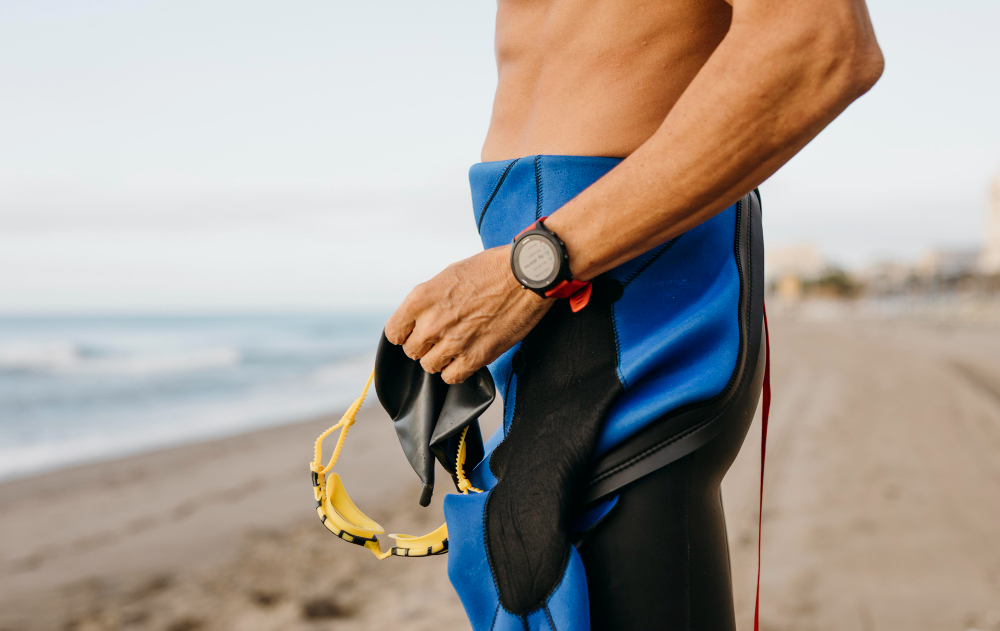
Wodoszczelność 10 ATM i 20 ATM – czy możesz pływać i nurkować z takim zegarkiem?
Co naprawdę oznacza 10 ATM lub 20 ATM na zegarku i czy takie oznaczenie pozwala bez obaw wejść do basenu, morza albo nurkować? Same liczby mogą być mylące, dlatego sprawdź, jak czytać klasę wodoszczelności i dobrać zegarek do aktywności w wodzie.
Water resistance 3 ATM – what does it mean and what can you do with it?
3 ATM water resistance means the watch is prepared above all for rain, accidental splashes and brief contact with water during everyday activities. It does not mean that you can swim with it, shower in it or submerge it to a depth of 30 metres. It is precisely the “30 m” marking that most often misleads. It is the result of a pressure test carried out under controlled conditions, not a declared working depth. So if you see 3 ATM, 3 bar or Water Resistant 30 m on the case back or in the specification, treat the watch as resistant to everyday moisture, but not as a watch for water activities.
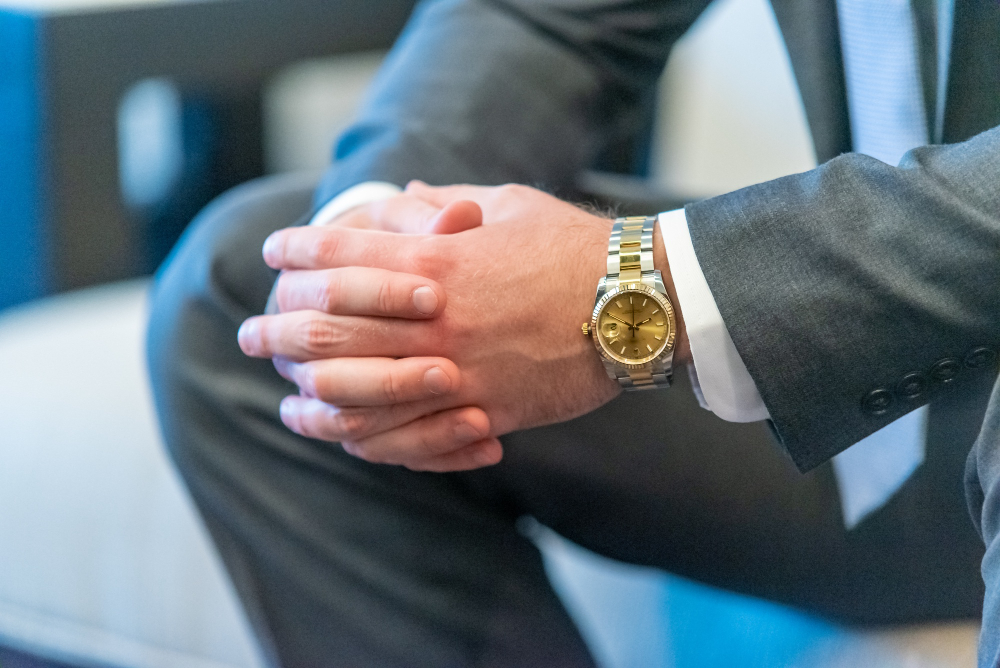
Rolex-style watches – the best alternatives to the Submariner, Explorer and Datejust
For years Rolex has been one of the most important style benchmarks in the watch world, but its price is not within everyone's reach. That is why it is worth looking at watches similar to Rolex and models inspired by its styling, which offer their own character, solid build quality and much more affordable prices. We are not talking about counterfeits here, but about legitimate watches from other brands that draw on similar solutions and design language. Check out watches inspired by Rolex's style and choose the model that suits your style and budget.
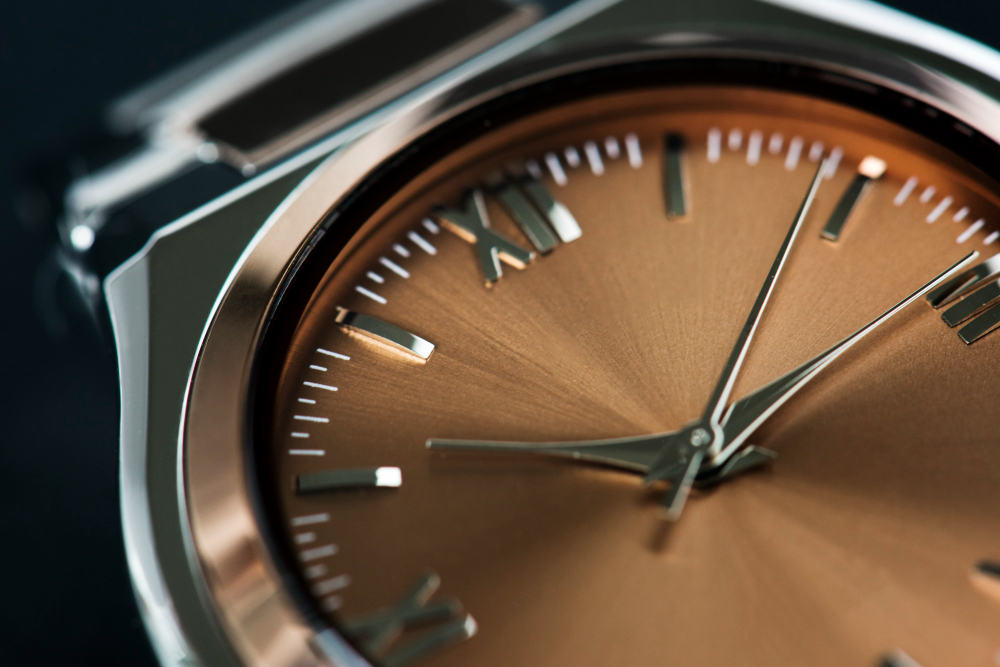
A bronze watch – why does each one change over time?
A bronze watch stands out because its appearance changes along with its owner. The case gradually darkens, turns matte and develops a patina, so two identical models can look completely different after just a few months. This is the greatest advantage of bronze, but also a trait you need to accept before buying. If you expect a watch that keeps its factory shine for years, steel may be a better direction. If, on the other hand, you like vintage looks, signs of use and the natural ageing of a material, bronze gives an effect that is hard to achieve in any other metal.