



Magnetised watch – what to do in such a situation?
Even the most accurate watch can suddenly start running fast or slow, with hands moving unpredictably. Often the culprit isn't a mechanism defect, but watch magnetization – a common phenomenon in a world full of electronics. Check how to recognize this problem, when a watch demagnetizer comes in handy, and how to safely demagnetize a watch to restore its precision.
Magnetized watch? Know the symptoms before it loses punctuality
Sometimes a watch that has worked flawlessly until now suddenly starts running fast or slow, with hands moving in a completely unpredictable way. This is precisely the moment when it's worth considering that the watch might be magnetized. It then works somewhat differently than it should because the steel elements of the mechanism have been affected by a magnetic field. This doesn't mean the watch is damaged, but its accuracy has been disrupted. Many people only notice the problem when the time difference becomes really visible – for example, several minutes during the day. Sometimes the cause is contact with a laptop, speaker, or case with a magnet. Interestingly, even brief proximity of the watch to a magnetic field source is enough for its hairspring to start working differently.
If you notice your watch starting to behave unstably, don't panic – it's a fairly common problem that can be solved quickly and safely. At home, you can perform a simple test with a compass – just bring the watch close to the needle. If the compass starts moving noticeably, it's a sign that watch demagnetization will be necessary. This phenomenon doesn't permanently affect the mechanism, but it's worth reacting as quickly as possible, because prolonged magnetization can introduce chaos in the work of individual wheels and springs. It's also worth paying attention to other symptoms – the watch may stop despite being fully wound or show variable accuracy from day to day. These are all signals you shouldn't ignore. So if you notice the watch is running slow or fast, it's worth checking if magnetization is the cause and reacting in time. How? More on that in the rest of the article!
Bulova Diamonds Automatic 98P170 is a combination of elegance and watchmaking artistry that captivates with subtle design and precision operation. The mother-of-pearl dial, adorned with diamonds and an exposed mechanism, makes this watch exceptional jewelry for women who value luxury, style, and perfection in every detail.
How to demagnetize a watch in a few minutes – effective methods step by step
You don't have to immediately take your watch to a service center, although that's certainly the safest solution. More and more people are deciding on independent watch demagnetization – it's a really simple process. The key is a device called a watch demagnetizer. It costs little and can effectively restore mechanism precision in a few seconds. Operating such equipment doesn't require specialized knowledge – just a bit of patience and precision. The most important thing is to remember that the watch should be above the device, not directly on it. Simply hold the button for a few seconds and gently move the watch in different directions.
After completing the process, it's worth giving the watch a moment to rest, then checking its accuracy – preferably over the next 24 hours. If you notice the hands working smoothly, the problem has been solved. Importantly, some watchmaking services offer watch demagnetization for free, so if you don't feel confident with home methods, you can simply drive to the nearest service point. In any case, the effect is the same – the watch regains stability and accuracy, and you can once again enjoy its precision. Don't ignore magnetization symptoms, because the longer the mechanism works in a disturbed magnetic field, the greater the risk of improper component operation.
Tag Heuer Carrera Chronograph Automatic 42mm CBN2011.BA0642 is a symbol of sporting elegance and Swiss precision, inspired by the world of racing. Its deep blue dial, powered by the Heuer 02 mechanism with up to 80 hours power reserve, makes it a watch for men who value dynamics, style, and excellence in execution.
Watch demagnetizer – gadget or must-have for every mechanical watch enthusiast?
Just a few years ago, mainly professionals had heard of watch demagnetizers; today this device increasingly appears in the homes of mechanical watch enthusiasts. The reason is simple – the modern environment is full of magnetic fields that can surprisingly easily affect delicate mechanism parts. It's enough to place a watch on a laptop or wear it next to a phone with a magnetic case to disrupt its precision. Such equipment allows quick and safe watch demagnetization without interfering with its construction. It works by generating an alternating magnetic field that "resets" the particle arrangement in the watch's steel parts.
Many users emphasize that it's one of the most practical purchases if watches are your passion. The device takes up little space, is cheap, and when needed can save even an expensive timepiece from having to be taken to a service center. However, it's worth remembering that watch demagnetizers aren't suitable for quartz models – in their case, magnetic field action can damage the electronics. On the other hand, men's automatic watches and women's automatic watches – with beautifully working balance and hairspring – suffer most from magnetization. That's why if you wear an automatic, it's worth having a simple watch demagnetizer at home that will restore its perfect rhythm in a few seconds. For mechanical watch lovers, it's no longer just a gadget, but real protection against loss of precision, and in the long run – also against costly service visits.
Orient Sports Diver Ray II Automatic 41mm TAA02005D9 is an iconic watch for diving and sporting elegance enthusiasts, combining functionality with timeless style. The blue dial, solid steel case, and water resistance to 200 meters make it a reliable companion both underwater and in everyday life.
How to prevent watch remagnetization? Learn simple habits that extend its life!
Many watch owners learn from experience that prevention is better than later dealing with consequences. In practice, just a few simple rules are enough to ensure a magnetized watch never appears in your collection again. First of all, avoid leaving it on electronic devices – laptops, speakers, induction cooktops, or smartphones. This is where the strongest magnetic fields arise that can disrupt mechanism operation. It's also worth being careful with magnetic closures in bags and covers – these are one of the most common culprits among people who wear watches daily.
For those just beginning their watch adventure, it's worth adding that not every watch requires the same care. Men's quartz watches and women's quartz watches are less sensitive to magnetic field effects because their operation is based on electronics, not a complicated system of springs and gears.
A good habit is also storing your watch in a box or case made of materials that don't conduct magnetic fields. If you frequently spend time around electronic devices, you can occasionally check your watch's operation with a simple compass test. Such small checks really make sense – they allow you to detect problems at an early stage. And if you want complete peace of mind, invest in watch demagnetization at a watchmaker's from time to time. It's a quick service that will allow you to maintain perfect operational precision and avoid unpleasant surprises. High-quality watches that will last in excellent condition for a very long time can be found in our WestWatches online watch store.

Krzysztof Szopa
Watch Expert
An expert associated with the WestWatches.pl brand, a place that has been providing watches for every occasion for years. Thanks to many years of experience in the watchmaking and jewelry industry, he passionately shares his knowledge, offering professional advice both in the online and physical store. He specializes in selecting original watches, watch accessories, and jewelry products that combine exceptional quality with competitive prices. His goal is to help customers find the ideal product that will meet their expectations and emphasize their style.

See popular articles

How to Change a Watch Strap? A Simple Step-by-Step Guide
Changing a watch strap is easier than you think – all you need is the right tool, a few careful moves and a new strap that fits the case. On classic models you have to release the spring bars, while a quick-release system lets you do it without any extra tools. The whole process can take just a few minutes, and the result? Your watch gets a completely new look. Find out how to remove the old strap, fit a new one and avoid scratching the case.
Fabric Watch Straps – How Do Perlon, Canvas, Rally and Bund Differ?
A good strap can completely change the look of a watch – but which one should you choose? Perlon is light and breathable, canvas stands out with its woven texture, rally catches the eye with sporty perforations, and bund gives a watch an aviation character. Although they are often mentioned together, not all of them are fabric straps – a rally strap is usually perforated leather, and a bund is a design with an additional pad. Find out how these four styles differ and which one suits your watch best.
NATO Strap – How to Fit It and How Does It Differ from a Zulu? A Practical Guide
A NATO strap is a lightweight fabric watch strap that threads under the case instead of attaching separately on each side. You can fit it yourself in a few simple steps. Compared with a Zulu strap, it is usually thinner, has flatter hardware and an extra layer of material under the watch. Find out how to fit a NATO strap correctly, how the two designs differ and how to choose the right size.
Types of Watch Bracelets – Oyster, Jubilee, President and Mesh. Which One to Choose?
Oyster works for everyday wear, Jubilee adds elegance, President emphasises a luxury character, and mesh offers lightness and flexibility. Each of these constructions sits differently on the wrist and changes the look of the watch. The differences are not just about the number of links, but also about comfort, weight and the type of clasp. Discover the main types of watch bracelets and find out which one best suits your style and your watch case.
GADA – One Watch for Work, Weekends and Travel. How to Choose It?
One watch can go with a shirt, jeans, a blazer and even the swimming pool. That is the whole idea behind GADA (Go Anywhere, Do Anything). Instead of several models for different occasions, you choose one that combines comfort, durability and a timeless look. The safest choice is a steel case of 36–41 mm, 100 m water resistance and a legible dial in a neutral colour. Find out what to look for to choose a watch you will actually wear every day.
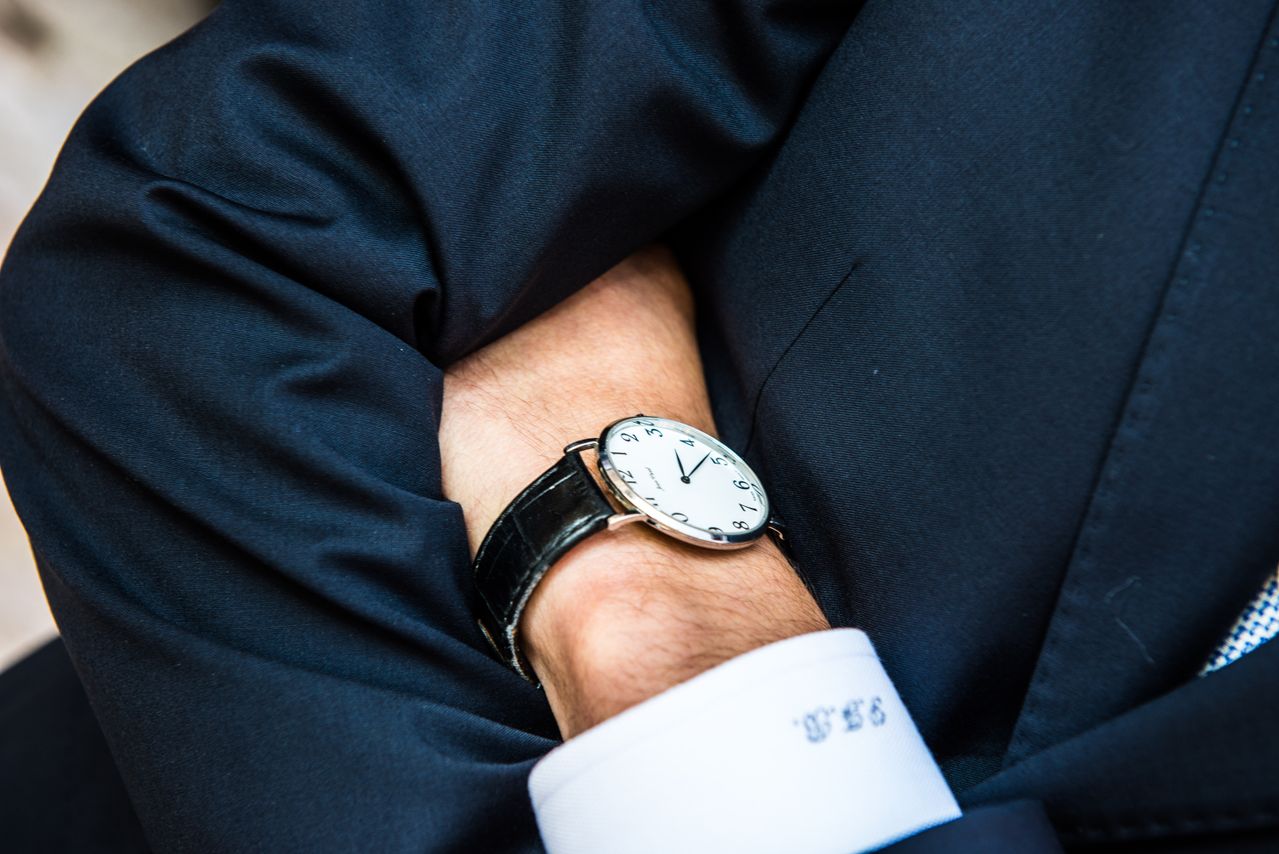
Tuxedo Watch – Black Tie and White Tie Rules
Zegarek do smokingu można nosić, ale nie każdy model pasuje do wieczorowej elegancji. Przy dress code black tie najlepiej sprawdzi się cienki zegarek na czarnym skórzanym pasku, schowany pod mankietem koszuli. White tie wymaga większej powściągliwości – do fraka tradycyjnie wybiera się zegarek kieszonkowy albo całkowicie rezygnuje z odmierzania czasu na nadgarstku. Sprawdź, jak dobrać zegarek, żeby zachować zasady etykiety i uniknąć modowego faux pas.

316L, 904L and surgical steel – what is your watch made of?
Most steel watches, from affordable models to luxury constructions, are made of 316L steel. 904L steel contains more nickel, chromium and molybdenum, and therefore offers higher corrosion resistance, but in itself it does not mean greater scratch resistance. The term “surgical steel”, in turn, does not point to one strictly defined alloy. In watches it most often refers to 316L, but without a specific material designation it may simply be a marketing name. If you are choosing a watch for years, look therefore not only at the words “stainless steel”, but also at the grade of steel, which components are made of the given material and how they are finished.
Japanese or Swiss watches? We compare quality, movements and prices
If you are wondering whether Japanese or Swiss watches are better, the name of the country alone will not give you a good answer. In both cases you will find simple models for relatively little money, solid mid-range automatics and designs belonging to the world's watchmaking high end. Far more about quality will be told to you by the specific movement, the way the case and bracelet are made, the crystal, quality control, accuracy and price. Check how Japanese watches really differ from Swiss ones and what to pay attention to before you choose a model for yourself.

The lifespan of a quartz watch – how long does it really last, and when is it no longer worth repairing?
We value quartz watches above all for their accuracy, convenience and modest day-to-day demands. That does not mean, however, that they can run indefinitely and need nothing more than a new battery once every few years. Over time, the components of the movement itself also wear out, and the moment a watch starts giving trouble can look completely different depending on the model, the way it is used and the availability of parts. So how long can a quartz watch last, what wears out in it most often and when does repair still make sense? Check what its lifespan really depends on.