



Quartz movement in a watch – what does it mean and how does it work?
Quartz watch – the magic of precision on your wrist. How does this technological marvel work?
If you've ever wondered why your watch is so rarely late, you're probably dealing with a quartz mechanism. It is the one responsible for the precision that even expensive mechanical models cannot guarantee. The quartz mechanism is based on a very simple, yet ingenious principle - it uses the vibrations of the quartz crystal, which are extremely regular. This makes a quartz watch measure time to within a few seconds on a monthly basis - and sometimes even better.
This solution is widely used for a reason. Thanks to the fact that quartz watches are powered by a battery, they do not need to be screwed on, do not stop with any prolonged downtime and are almost completely maintenance-free. What's more, they are relatively cheap to produce, so their prices are affordable even for models from reputable brands. For you, this means one thing - you can have a stylish watch that will not let you down during an important meeting or a morning run for the bus. Sound practical? Because that's exactly what quartz watches are.

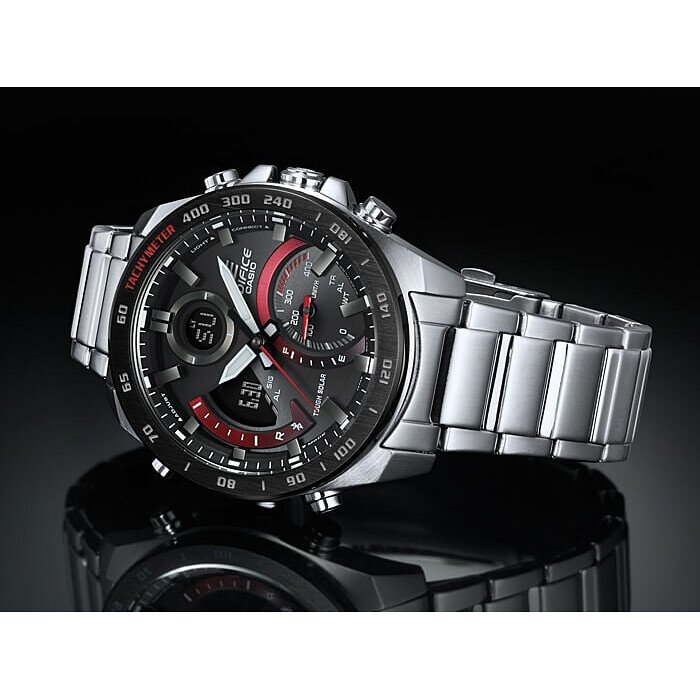
The Casio Edifice EFB-710D-1AVUEF is a sleek and precise chronograph with sapphire glass and a steel bracelet that combines sporty style with classic watchmaking class.
Quartz mechanism from the kitchen - what is really ticking under the dial?
On the surface, everything looks like the usual - a dial, hands, maybe a digital display. And yet what happens inside is radically different from classic mechanical watches. Quartz mechanism is a fascinating puzzle consisting of a battery, quartz crystal, capacitor and integrated circuit, which work together with great precision. When the battery powers the system, current flows through the crystal, making it vibrate - exactly 32,768 times per second. And this is not a random number, but a carefully chosen value that allows the digital circuit to generate equally one pulse per second.
This pulse goes to a miniature motor, which in turn moves the hands of the watch exactly once per second. This allows you to observe the characteristic "skip" of the seconds hand in analog models. If, on the other hand, you have a digital watch, the pulses are counted electronically and transformed into a digital display. Quartz watches for men and women are based on the same principle of operation, whether you wear a minimalist model or an advanced sports watch. Importantly - this whole process is not only accurate, but also extremely energy-efficient, so the batteries in such watches can last for years.
Why is 32,768 Hz the holy grail of quartz watches? You will be surprised by this explanation
You are probably wondering why exactly 32,768 Hz. Why this number and what does it mean in practice? Despite appearances, it's not a coincidence or the result of a marketing decision from decades ago. This is pure mathematics and electronics. 32, 768 is exactly 2 to the power of 15, a value that can be converted very easily by digital circuits. Thus, the frequency of vibration of the quartz crystal can be divided exactly fifteen times in half to get exactly 1 pulse per second. And it is this pulse that makes your watch work with such precision.

COVER Bracelet One CO219.02 is a minimalist Swiss Made watch that impresses with its subtle elegance, silver dial and perfect finish on a steel bracelet.
This choice also had another justification - quartz crystal at this frequency of vibration remains stable and resistant to temperature changes, which is of great importance in everyday use. You don't have to be an engineer to appreciate this solution. In practice, it means that a quartz watch works whether you are on a mountain trail or in a stuffy office. It was because of this one number that quartz technology proved groundbreaking - so much so that it dominated the watch market in the 1970s, sparking a real revolution in the industry.
Watches that don't need care - is a quartz mechanism your full-time watchmaker?
There are some things you just don't want to remember every day. One of them is undoubtedly the winding of the watch. And that's why the quartz mechanism has gained such popularity. It does not require your attention almost at all. All you have to do is replace the battery once every few years and you're done - the watch will work again for months without a stammer. What's more, compared to automatic watches, you don't have to wear it every day for it to remain punctual - it can lie in a drawer even for a few weeks and still show the correct time.
This is an ideal option for the busy, for the forgetful, for those who like technology, but do not necessarily want to service it. Men's quartz watches are often chosen by people who need a reliable timepiece for work or sports, where accuracy and simplicity are important. Women's quartz watches, on the other hand, combine precision with fashionable design and delicacy - so you can enjoy a functional accessory that simply works. The quartz mechanism has thus become not only an alternative to mechanics, but even an everyday savior for many wearers.

The Casio G-Shock DW-5600RL-1ER is an iconic watch with a legendary design that combines extreme durability, 200M water resistance and a full set of digital functions in a classic form.
Quartz vs. mechanical - a battle of hearts and seconds. Which watch will win your wrist?
Choosing between a quartz watch and a mechanical watch is not just a technical decision - it's also a matter of lifestyle, approach to detail and what you expect from a timepiece. Mechanical watches are a tribute to tradition, precision craftsmanship and the artistry of watchmakers, which has lasted for centuries. They can be beautiful, complex, and for many even have a soul. But their precision - well, they can be capricious at times. And it requires attention - regular winding, servicing, using with care.
On the other hand, you have a quartz watch that simply does its job - reliably, accurately and without complaint. For someone who appreciates functionality, minimalism in operation and simply wants to know what time it is without dithering - this will be the obvious choice. Especially when it comes to quartz watches for men and women in sporty, elegant and casual versions, which are not at all inferior in style to mechanical classics. Ultimately, it's up to you to decide what wins: the technical soul of quartz or the emotional depth of mechanicals. But if you are looking for accuracy, tranquility and convenience - the quartz mechanism certainly has a chance to win this duel. You can find a wide selection of quartz watches - both men's and women's - at our online watch store WestWatches.
See popular articles

316L, 904L and surgical steel – what is your watch made of?
Most steel watches, from affordable models to luxury constructions, are made of 316L steel. 904L steel contains more nickel, chromium and molybdenum, and therefore offers higher corrosion resistance, but in itself it does not mean greater scratch resistance. The term “surgical steel”, in turn, does not point to one strictly defined alloy. In watches it most often refers to 316L, but without a specific material designation it may simply be a marketing name. If you are choosing a watch for years, look therefore not only at the words “stainless steel”, but also at the grade of steel, which components are made of the given material and how they are finished.
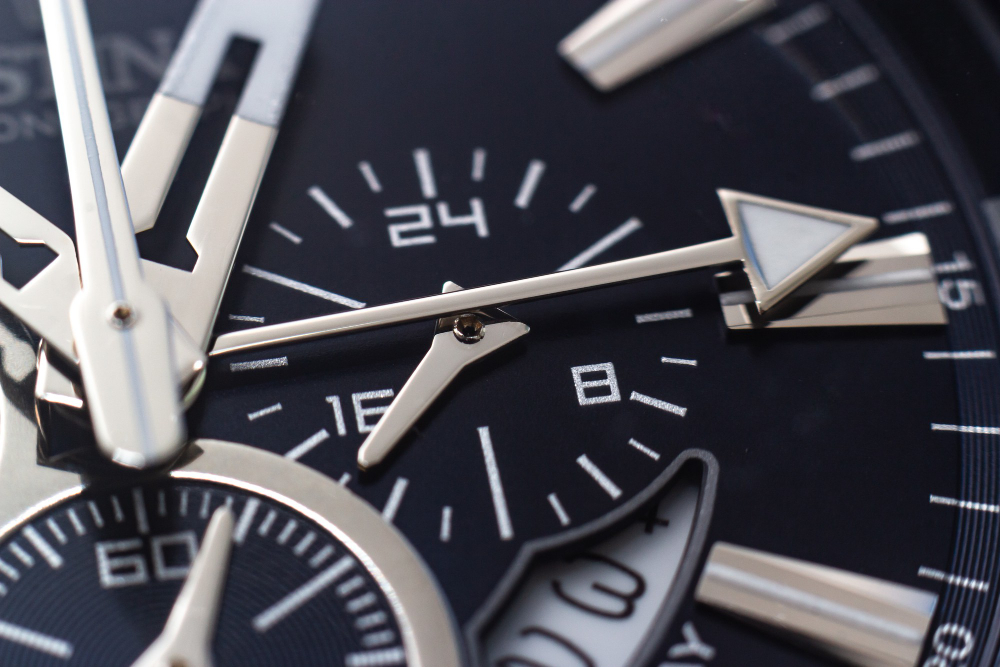
Japanese or Swiss watches? We compare quality, movements and prices
If you are wondering whether Japanese or Swiss watches are better, the name of the country alone will not give you a good answer. In both cases you will find simple models for relatively little money, solid mid-range automatics and designs belonging to the world's watchmaking high end. Far more about quality will be told to you by the specific movement, the way the case and bracelet are made, the crystal, quality control, accuracy and price. Check how Japanese watches really differ from Swiss ones and what to pay attention to before you choose a model for yourself.

The lifespan of a quartz watch – how long does it really last, and when is it no longer worth repairing?
We value quartz watches above all for their accuracy, convenience and modest day-to-day demands. That does not mean, however, that they can run indefinitely and need nothing more than a new battery once every few years. Over time, the components of the movement itself also wear out, and the moment a watch starts giving trouble can look completely different depending on the model, the way it is used and the availability of parts. So how long can a quartz watch last, what wears out in it most often and when does repair still make sense? Check what its lifespan really depends on.

The second hand on a watch – why does it jump, move smoothly or stop?
The way the seconds hand moves can tell you a lot about a watch's movement, but it is not an infallible test. A single distinct jump per second most often points to quartz, several small movements per second are typical of a mechanical movement, and an almost continuous glide is associated with Spring Drive. There are exceptions, however: there is a quartz watch with a sweeping seconds hand, and a mechanical watch that makes exactly one jump per second. What is more, a stopped hand does not have to mean a fault. Check how to read these signals and when you really need a watchmaker's help.

How do you set an automatic watch? Date, time and time zone 21:00–3:00
An automatic watch does not need a battery, but it does require a little knowledge from its owner. Setting the time or date seems simple, yet the wrong moment or the wrong way of using the crown can affect how the movement works. Many questions concern changing the date at night, moving the hands backwards and restarting a watch after a longer break. Check how to set an automatic watch correctly, what to pay attention to with the crown and why people often talk about particular caution between 9:00 pm and 3:00 am.

Wodoszczelność 10 ATM i 20 ATM – czy możesz pływać i nurkować z takim zegarkiem?
Co naprawdę oznacza 10 ATM lub 20 ATM na zegarku i czy takie oznaczenie pozwala bez obaw wejść do basenu, morza albo nurkować? Same liczby mogą być mylące, dlatego sprawdź, jak czytać klasę wodoszczelności i dobrać zegarek do aktywności w wodzie.
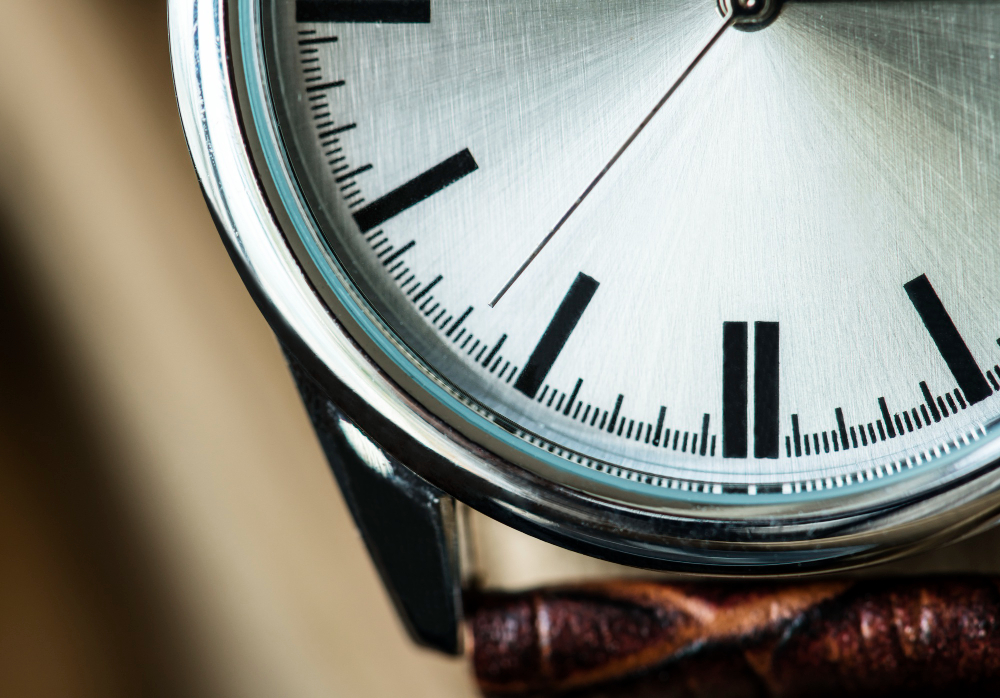
Water resistance 3 ATM – what does it mean and what can you do with it?
3 ATM water resistance means the watch is prepared above all for rain, accidental splashes and brief contact with water during everyday activities. It does not mean that you can swim with it, shower in it or submerge it to a depth of 30 metres. It is precisely the “30 m” marking that most often misleads. It is the result of a pressure test carried out under controlled conditions, not a declared working depth. So if you see 3 ATM, 3 bar or Water Resistant 30 m on the case back or in the specification, treat the watch as resistant to everyday moisture, but not as a watch for water activities.

Rolex-style watches – the best alternatives to the Submariner, Explorer and Datejust
For years Rolex has been one of the most important style benchmarks in the watch world, but its price is not within everyone's reach. That is why it is worth looking at watches similar to Rolex and models inspired by its styling, which offer their own character, solid build quality and much more affordable prices. We are not talking about counterfeits here, but about legitimate watches from other brands that draw on similar solutions and design language. Check out watches inspired by Rolex's style and choose the model that suits your style and budget.
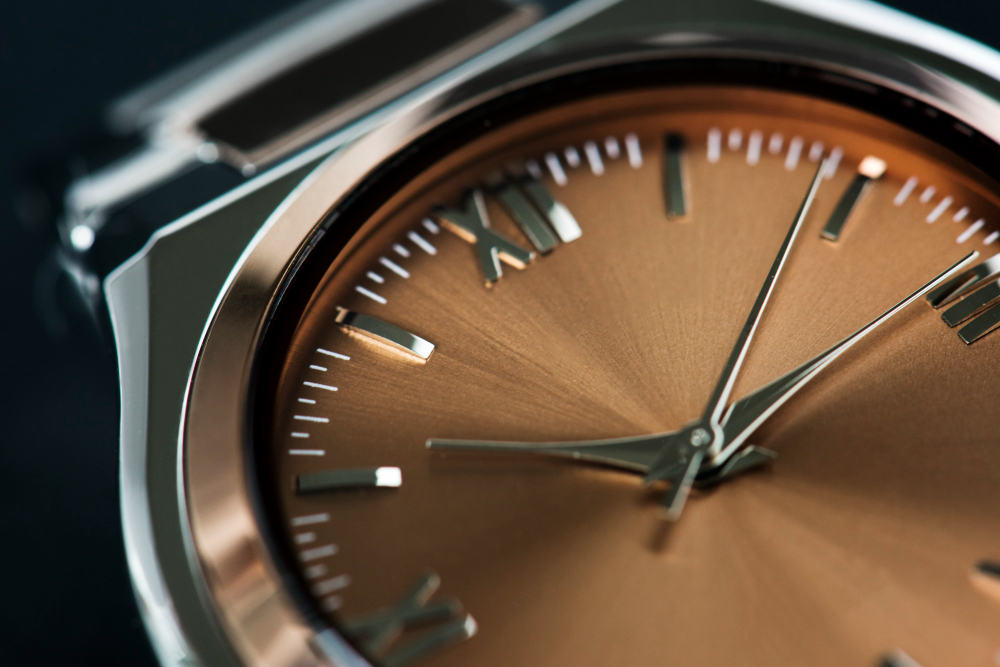
A bronze watch – why does each one change over time?
A bronze watch stands out because its appearance changes along with its owner. The case gradually darkens, turns matte and develops a patina, so two identical models can look completely different after just a few months. This is the greatest advantage of bronze, but also a trait you need to accept before buying. If you expect a watch that keeps its factory shine for years, steel may be a better direction. If, on the other hand, you like vintage looks, signs of use and the natural ageing of a material, bronze gives an effect that is hard to achieve in any other metal.