



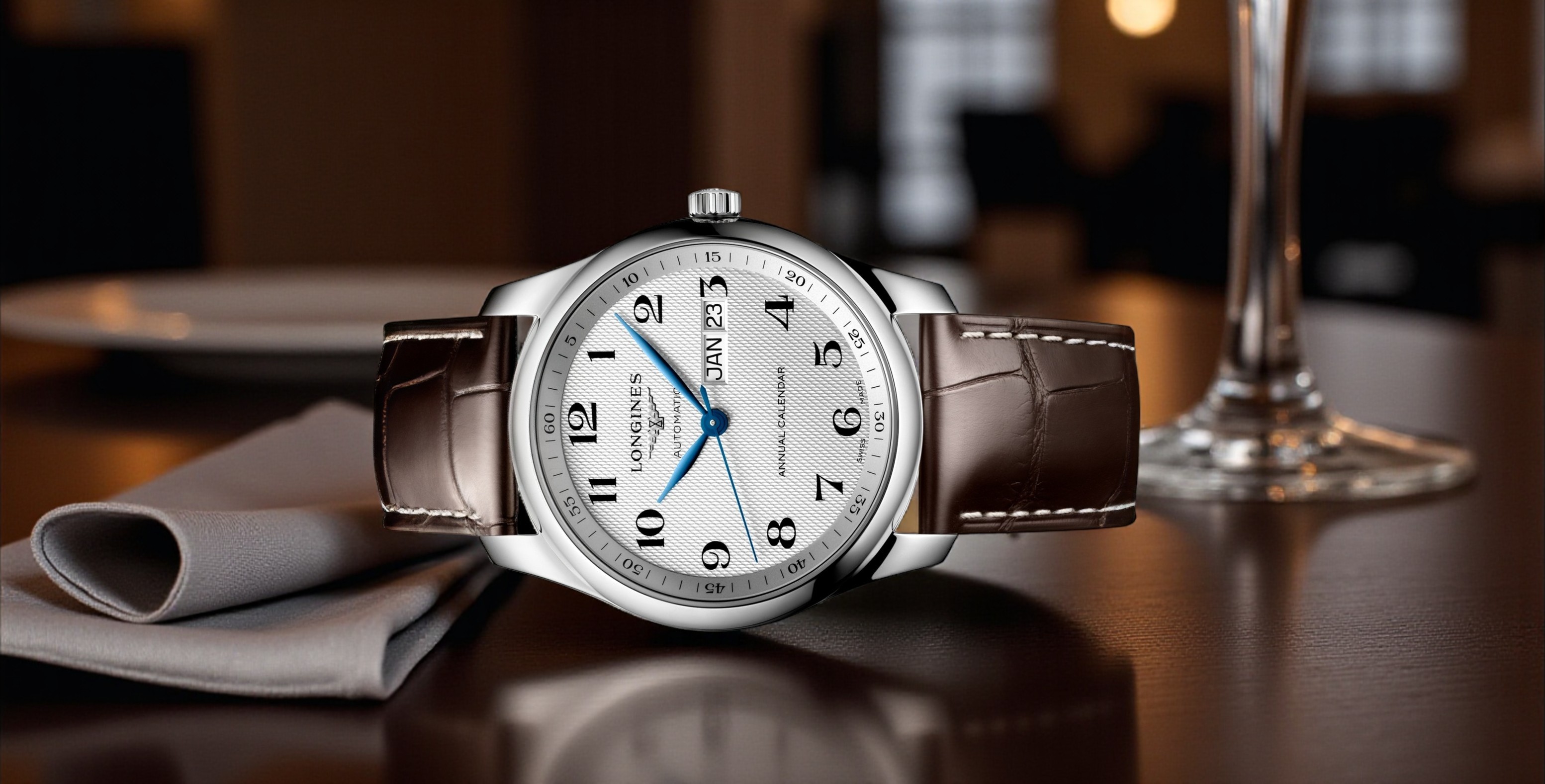
Should you take off your watch at night? Facts, myths and best practices
Some people never take their watch off, even at night, while others put it aside out of habit before turning off the light. Sleeping with a watch is a comfortable routine for some, and something that "can't possibly be healthy" for others – neither for the wrist nor for the mechanism itself. A lot of conflicting opinions have grown up around this topic: that an automatic watch wears out faster, that the rotor works too hard, that the watch "needs to rest." But the truth, as usual, is much simpler and far less dramatic. If you're wondering whether sleeping with a watch is a mistake, a necessity, or simply a matter of habit, it's worth looking at the topic calmly – through the lens of facts, comfort, and health, not watch myths.
Sleeping with a watch – are you really doing it harm, or just repeating a myth? Check the facts
If the thought has ever crossed your mind that sleeping with a watch might damage it, don't worry – you're not alone. This topic comes up regularly, because a lot of half-truths, oversimplifications, and common opinions have grown up around mechanical watches. In practice, the watch itself is completely indifferent to nighttime. Modern automatics are designed to be worn throughout the day, often for many hours without a break, in various conditions and at different levels of activity. A night's rest is no challenge for them at all. A power reserve of several dozen hours means that even if the watch lies still all night, the movement remains fully stable and ready to work. There is no way it can "run out of energy," become irregular, or become overloaded.
It's also worth debunking the myth that sleeping with a watch causes faster wear of the movement. It's simply not true. Wear on an automatic watch is mainly the result of the natural aging of lubricants, not whether you wear it for 16 or 24 hours a day. What really matters is regular servicing of the automatic watch, carried out every few years, not whether you take it off before bed. Falls, dirt, moisture, and magnetization are far more dangerous to the movement than a peaceful night on your wrist or on the bedside table. So if you wear a watch to bed out of fear that it "needs to be working," you can stop worrying about it with a clear conscience – the watch doesn't need your sleep to function properly./Styczeń 2026/ZEGAREK MĘSKI ORIENT STAR CONTEMPORARY SEMI SKELETON AUTOMATIC 39mm RE-AT0021L00B KESHIKI LIMITED EDITION.png)
Orient Star Contemporary Semi Skeleton Keshiki is a limited-edition automatic watch that combines Japanese precision with modern elegance – the open dial subtly reveals the workings of the movement, catching the eye at first glance. The compact 39 mm case, deep navy dial, and steel bracelet make it an ideal choice for men who value class, detail, and a unique character.
Wearing a watch at night and wrist health – when comfort beats habit
Although from a technical standpoint the watch has no objection to being worn all day and night, your body might have a completely different opinion. And it's here that the real conversation about the sensibility of taking your watch off at night begins. During sleep, the wrist works differently than during the day – the position of the hand, the pressure, and even blood circulation change. If the watch is heavy, stiff, or worn too tightly, discomfort can appear sooner than you expect. People who sleep on their side are especially sensitive, as the watch can press against nerves or blood vessels, leading to tingling, numbness in the fingers, or a feeling of a "stiff" hand after waking up.
Skin is also a factor. Wearing a watch to bed for extended periods, especially in high temperatures or with increased sweating, can promote irritation. A strap that causes no trouble during the day can make itself known at night – itching, redness, or a feeling of discomfort that's hard to ignore may appear. In such cases, there's no point in forcing yourself. Taking your watch off at night is not a sign of neglecting the mechanism, but a conscious decision about your own comfort. If you feel your wrist needs a break, that should take priority – not habit or watch rituals./Styczeń 2026/EDOX LA PASSION AUTOMATIC 33mm 85025 37RM ARR.png)
Edox La Passion Automatic is an elegant automatic watch with a classic character, in which the gold-toned case and Roman indices emphasise a timeless style inspired by Swiss tradition. The subtle 33 mm diameter and open movement window make it a refined choice for lovers of luxurious details and mechanical precision.
An automatic in bed? How the watch works at night and why you don't need to worry about it
Many people wonder what actually happens to an automatic watch at night – especially when it stays on the wrist. Contrary to appearances, the movement does not go through any "extreme working mode". Wrist movements during sleep are limited and irregular, and the rotor in an automatic has a designed range of operation that prevents excessive loading. There is no scenario in which nighttime hand movement will "overwind" the watch or wear it out faster. It's a construction refined over decades, adapted to very different usage styles – from physically active people to those who spend most of their day at a desk.
If you take your watch off at night, nothing bad happens either. Storing an automatic watch for several or even a dozen hours in one position is completely neutral for it. You don't need any complicated solutions, and you certainly don't need to invest in a watch winder if you wear your watch regularly. These types of devices mainly make sense with complex complications or larger collections. In everyday use, it's enough to put the watch down on a soft surface, in a calm place, away from moisture and strong magnetic fields. If you want a full power reserve, a dozen or so turns of the crown before bed will be more than enough. Simple, stress-free, and without overanalyzing the topic./Styczeń 2026/ORIENT SPORTS MAKO DIVER AUTOMATIC 40mm RA-AC0Q03S10B.png)
Orient Sports Mako Diver Automatic is a classic diver's watch that combines sporty functionality with timeless design – the 40 mm steel case and legible dial will perform well in any conditions. The automatic movement, water resistance to 20 bar, and rotating bezel make it a solid choice for men who value reliability and an active lifestyle.
Should you take your watch off at night or not? A simple checklist to clear up any doubts
The final decision always comes down to one question – how do you feel about it. If the watch is light, well-fitted, and sleeping in it causes no discomfort, there's no reason to take it off just because "you should." An automatic watch doesn't need a night's rest, won't be offended by a lack of movement, and won't lose its durability because of it. For many people, wearing a watch around the clock is simply convenient and natural – no need to remember to put it away, wind it, or put it back on in the morning. And that's perfectly fine.
On the other hand, if pressure, numbness, skin irritation appears, or you simply feel relief after taking it off, that's a sufficient signal to give your wrist a break. Taking your watch off at night requires no guilt or technical justification. Just make sure you store it sensibly, and the movement will "wake up" the moment you put it back on. The best practice is not to blindly stick to one rule, but to take a flexible approach, tailored to your lifestyle, sleep, and comfort. Because when it comes to watches – just as with many other everyday choices – the most important thing is that they work for you, not the other way around.
Whether you take your watch off at night or wear it non-stop, a good movement will always do its job. That's exactly why in our online watch store WestWatches you'll find high-quality men's automatic watches and women's automatic watches, based on proven, precise movements designed for everyday use – without stress and without unnecessary rules. You can be guided solely by your own comfort, because the best automatics work reliably regardless of your decision. If you're looking for a watch that adapts to your lifestyle, and not the other way around, WestWatches is the place to start.

Krzysztof Szopa
Watch Expert
An expert associated with WestWatches.pl, a place that has been providing watches for every occasion for years. Thanks to many years of experience in the watchmaking and jewellery industry, he passionately shares his knowledge, offering professional advice both in the online and stationary store. He specialises in selecting original watches, watch accessories, and jewellery pieces that combine exceptional quality with competitive prices. His goal is to help customers find the perfect product that meets their expectations and complements their style.

See popular articles
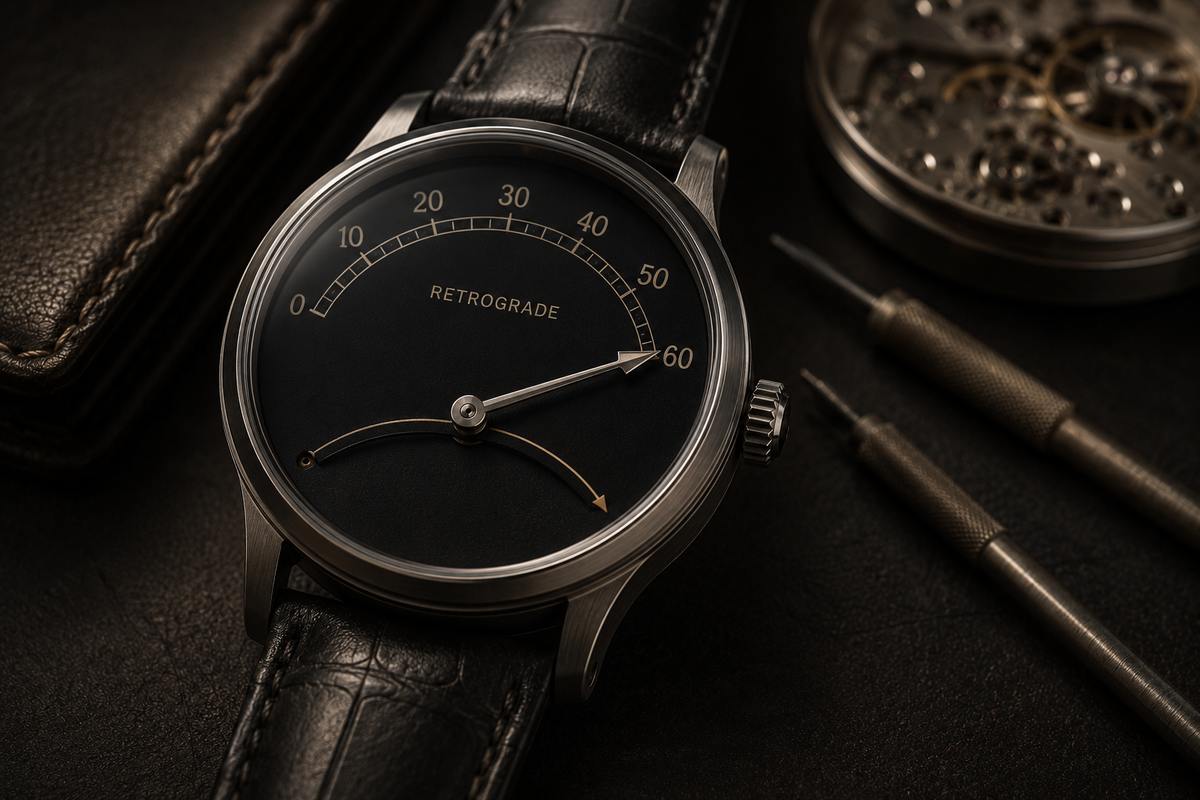
Retrograde hand — how does a retrograde hand work?
Retrograde is a watch complication that immediately catches the eye. Instead of making a full rotation around the dial, the hand moves along a designated arc, and upon reaching the end of the scale, it instantly returns to the start and begins the countdown anew. It can be used to display the date, the day of the week, minutes, seconds, power reserve or a second time zone. This striking movement is therefore not merely decorative, but part of a precisely engineered mechanism. Find out how the retrograde display works and in which watches you can see it in action.
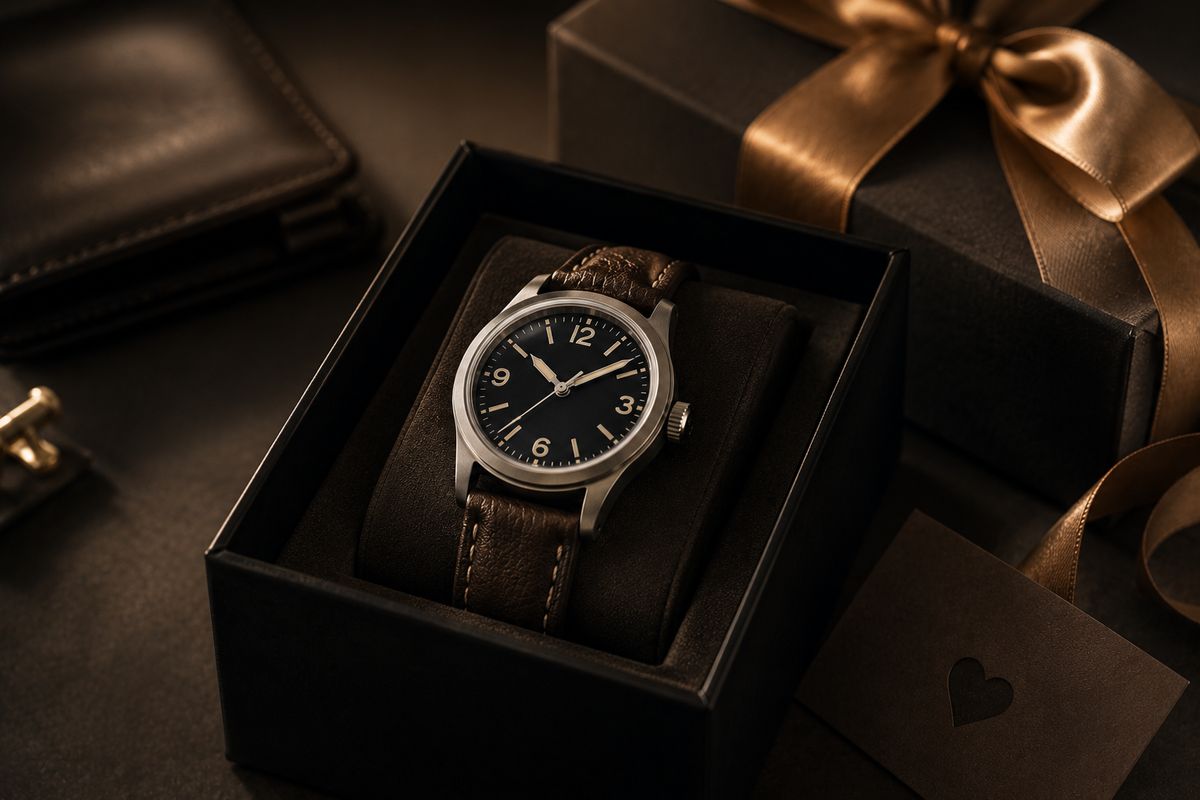
A watch as a gift for your husband – ideas that will suit his taste
Are you looking for a gift for your husband that’s elegant, practical and suits his style? A watch is always a good choice, whatever the occasion, but choosing one can be tricky given the sheer number of models available. Find out how sports, dress, military and luxury watches differ, and how to choose the right movement, features and case size to ensure the gift really suits the recipient’s taste.
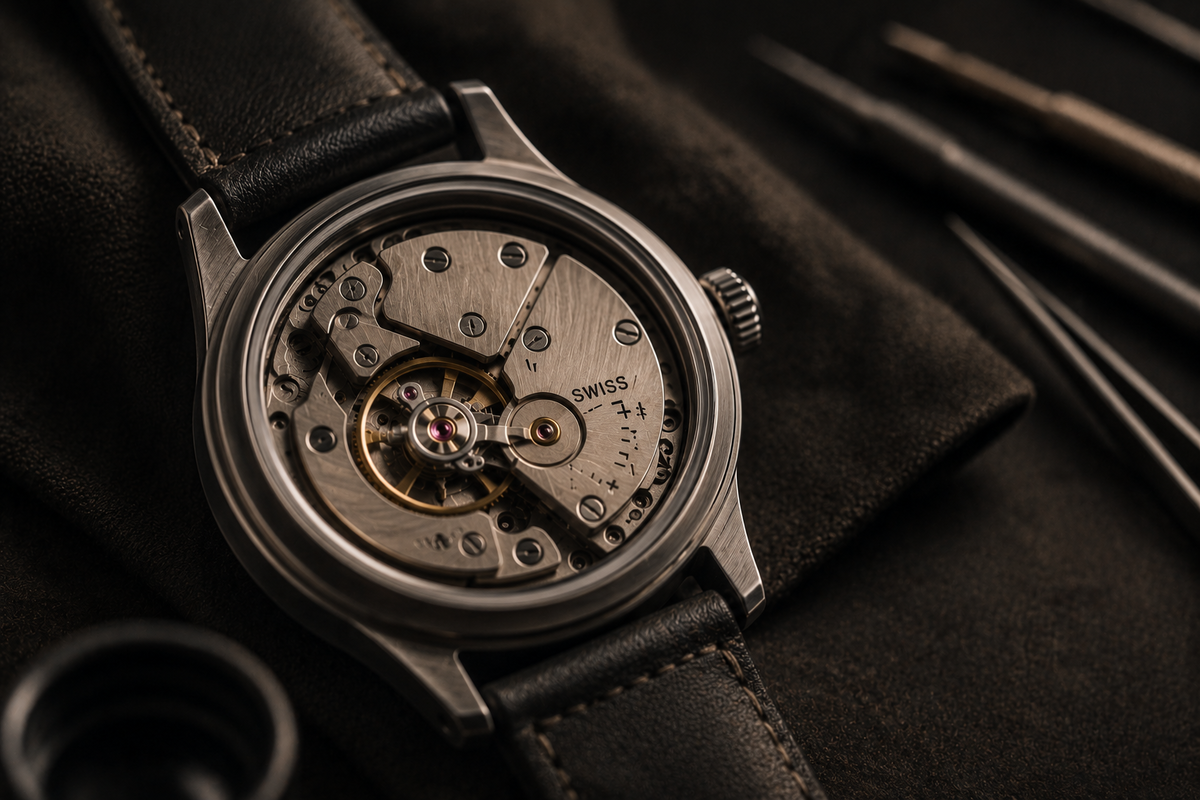
Amplitude in a mechanical watch – what is it and what does it tell us?
A watch may look perfect and still not work as it should – which is precisely why watchmakers pay attention to the balance wheel’s amplitude. This parameter indicates how widely and vigorously the ‘heart’ of the movement operates, and thus whether the watch is receiving and utilising energy correctly. Find out exactly what a watch’s amplitude means, what values are considered normal, and how to measure it correctly.
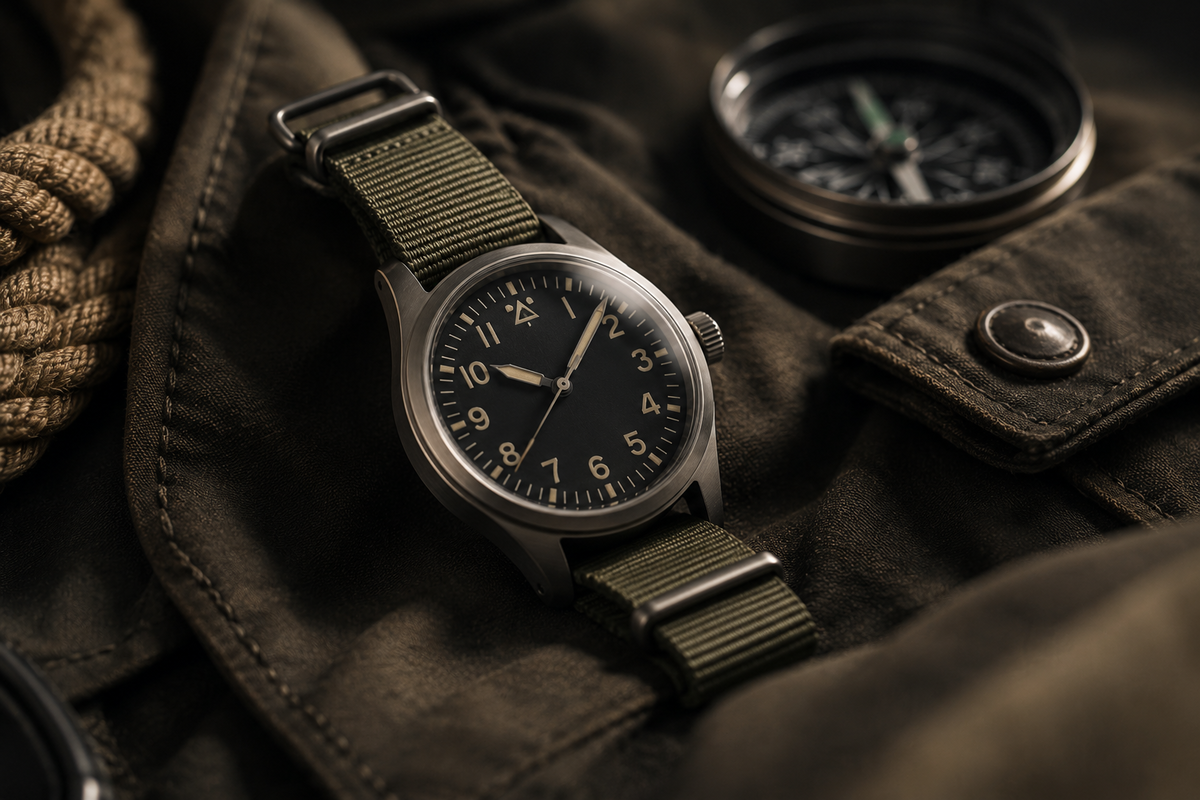
Field watch – what is a field watch and who is it best suited for?
A field watch is a simple and easy-to-read watch with its roots in military models. It’s ideal for travelling, work, walks and everyday use, as it prioritises comfort, durability and quick time-reading. In this guide, you’ll find out what a field watch is, how it differs from a diver’s watch, and which model best suits your lifestyle.
The logarithmic slide rule on an aviator’s watch – how do you use it?
A logarithmic slide rule in a watch is a mechanical calculator that allows you to multiply, divide and convert time, distance, speed and fuel consumption. Although the dense scale on the dial may look like decoration, in pilot’s watches it serves a practical purpose. Find out how a slide rule bezel works and how to use it for everyday calculations.

Celebrity watches – we take a look at what the stars are wearing!
Rolex, Omega, IWC, Casio or Timex – the watches worn by celebrities can be more surprising than you might think. Some opt for luxury models costing hundreds of thousands of zlotys, whilst others go for iconic, affordable classics. In this post, we take a look at what stars from the worlds of cinema, sport, music and television are wearing – and which models from the WestWatches range might complement their style.

A watch for an 18th birthday – find a unique gift for your boyfriend or girlfriend from the WestWatches range!
Are you looking for a gift that’s elegant, practical and truly memorable? A watch for an 18th birthday is a choice with special significance – a symbol of adulthood, good taste and an important milestone in life. Take a look at our selection from the WestWatches range and see which model best suits a young man or woman stepping into adulthood.

How to wrap a watch as a gift? Simple, stylish and safe ways
A watch is an elegant and personal gift, which is why its packaging should make a good first impression even before the box is opened. It’s not just about pretty wrapping paper or a ribbon; it’s also about ensuring the watch is securely positioned so that the dial, case and strap do not shift around inside or rub against any hard parts. A well-chosen box, soft padding or a carefully folded gift bag make the present look more premium and immediately show that it has been prepared with a specific person in mind.

What does ‘Swiss Made’ mean, and what legal requirements must a watch meet?
‘Swiss Made’ is not merely a decorative inscription on the dial or a simple marketing slogan, but a legally protected designation of origin for a watch, confirming that it meets specific Swiss requirements regarding the movement, assembly, quality control and production costs. That is why Swiss Made watches are chosen not only for their prestige, but also for their association with precision, durability and high standards of craftsmanship. Before you compare the available models and choose a watch for yourself or as a gift, find out what ‘Swiss Made’ really means and why this detail can make a big difference when making a purchase.