



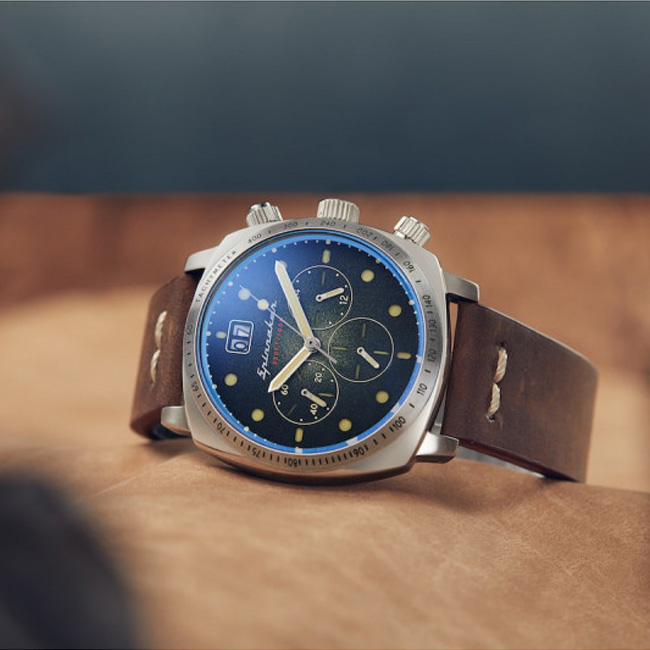
The chronometer in a watch. What is it for? And how does it differ from a chronograph?
At first glance, they sound similar, often appear side by side in manufacturer descriptions, and are regularly confused even by people who have been interested in watches for years. A chronometer and a chronograph in a watch, however, are two completely different concepts that answer different questions and serve entirely different roles. One speaks about precision and mechanism quality, the other about functionality and time measurement. If you have ever wondered what a chronometer in a watch actually is, what it does, and whether it has any real significance in everyday use, this topic is right up your alley. In this article, we explain step by step how a chronometer works, where its reputation comes from, and why it should not be confused with a chronograph – especially when choosing a watch that is meant to serve you for years to come.
A Chronometer in a Watch – What It Really Is and Why It Is Not a "Feature"
At first glance, the inscription on the dial looks innocent, almost marketing-driven. In practice, a chronometer does not add any new option to a watch, does not activate an additional hand, and does not change the way it is operated. A chronometer is a designation of quality, not capability. It means that the mechanism has been independently verified and its accuracy confirmed under very strict laboratory conditions. It is not a manufacturer's declaration "on their word of honour," but rather an official certification, most commonly issued by the Swiss organisation COSC. And it is precisely here that many people make a mistake – equating a chronometer with something that can be "turned on" or "used." In reality, it is proof that the watch meets specific, measurable precision standards, not an unfulfilled promise.
A chronometer is therefore a watch of exceptionally high precision, whose accuracy has been verified through rigorous laboratory tests conducted under various conditions – at changing temperatures, in different positions, and under the influence of shocks. Obtaining chronometer status requires official certification, most commonly issued by the Swiss institute COSC (Contrôle Officiel Suisse des Chronomètres), which independently confirms that the strictly defined accuracy standards have been met.
In practice, a chronometer certificate does not change the appearance or construction of the watch, but it changes the way you should look at it. It is a signal that the mechanism was tested over the course of several days, in various positions and temperatures, and that its deviations fall within a clearly defined range. Each mechanism has its own certification number, which can be verified – there is no room for subjectivity here. So if you are wondering whether the inscription "Chronometer" is just decoration, the answer is: no, it is specific technical information, aimed at the conscious user. Someone who wants to know what they are really wearing on their wrist, not just how it looks in a product photo./Styczeń 2026/EDOX HYDRO-SUB CHRONOMETR AUTOMATIC 43mm 80128 3NBM NIB.png)
Edox Hydro-Sub Chronometer Automatic is a professional diving watch with a chronometer certificate, designed for maximum precision and reliability in extreme conditions. A 43 mm case, an automatic movement, and an expressive dial with high legibility make it an uncompromising choice for fans of premium sports watches.
Why the Question "What Is a Chronometer in a Watch Used For" Is Flawed – and Where This Misunderstanding Comes From
The question "what is a chronometer in a watch used for" is misleading already at the level of its very construction, because it implies the existence of a feature or tool that can be actively used. In reality, a chronometer is not used for anything in a functional sense – you do not activate it with a button, it does not measure intervals of time, and it does not offer any additional complication. It is a designation of an accuracy standard, not an element of the watch's equipment. In practice, a chronometer informs you that the mechanism has been independently tested and confirmed as exceptionally precise – not about what the watch can "do." It is precisely here that the problem arises – the question concerns an application that, by definition, a chronometer does not have.
The source of this misunderstanding is primarily the phonetic similarity of concepts that coexist in the world of watches. A chronograph in a watch is indeed a feature – it measures time, has buttons and sub-dials, and its operation can be directly felt during use. A chronometer, on the other hand, operates on an entirely different level – it describes the quality of the mechanism's work, not its functional capabilities. Additionally, manufacturers often prominently display the inscription "Chronometer" on the dial, which for many people looks like the name of yet another complication. As a result, a false belief arises that if something is named, it must "serve a purpose", whereas in reality a chronometer plays the role of a certificate, not a tool. The same applies to the question "how does a chronometer in a watch work," which also frequently comes up in relation to this term./Styczeń 2026/ATLANTIC WORLDMASTER AUTOMATIC CHRONOMETER COSC 52781-41-61.png)
Atlantic Worldmaster Automatic Chronometer is a timeless classic of Swiss watchmaking, distinguished by a COSC certificate confirming the highest precision of movement. An elegant black dial, an automatic movement, and a subdued, luxurious style make it an ideal choice for men who value discreet quality and watches with tradition.
Chronometer vs. Chronograph – One Question, Two Completely Different Answers. Do Not Confuse Them When Buying
The similarity of the names means that a chronometer and a chronograph in a watch are sometimes confused even by people who have been interested in the subject for years. Yet the difference between them is fundamental. A chronometer in a watch refers to accuracy, while a chronograph refers to a function. A chronograph in a watch is simply a stopwatch – a mechanism that enables the measurement of time intervals, operated by buttons and most often presented on sub-dials. It may look impressive, offer additional scales and complications, but it says nothing about how accurately the watch measures time on a daily basis. A chronometer, on the other hand, does not offer any additional "bells and whistles," but it answers one specific question – does this mechanism work precisely and stably.
What is important is that these two worlds can meet in a single watch, but they do not have to. You can have a watch that is a certified chronometer and at the same time does not have any stopwatch function. You can also wear an elaborate chronograph that has not undergone any independent accuracy certification. The most interesting situation arises when a watch combines both solutions – it has a chronograph function and at the same time meets chronometer standards. When purchasing, it is therefore worth clearly defining what you expect. If precision and mechanism quality matter to you, look for the chronometer designation. If you want to measure time intervals, a chronograph is what interests you. Confusing these two concepts is one of the most common mistakes that is easy to make – and even easier to avoid, if you know what they really mean.
What Determines Whether a Watch Is a Chronometer?
What determines that a watch is designated a chronometer is not its appearance, price, or the reputation of the brand, but rather specific, measurable accuracy test results obtained by an independent certifying body. The key significance lies in the watch mechanism, which must undergo a series of rigorous trials under controlled laboratory conditions. The tests include, among other things, various working positions, varying ambient temperatures, and an assessment of movement stability over time. Only when the average daily deviation falls within strictly defined limits can the mechanism receive a certificate – most commonly issued by the Swiss institute COSC. It is this document, not marketing slogans, that formally grants a watch the status of chronometer.
Equally important is the fact that the certification applies to each mechanism individually, not to an entire production series. This means that a given specimen has actually been checked and confirmed as exceptionally precise. A watch marked as a chronometer must also meet requirements regarding repeatability of results, resistance to the influence of temperature, and the ability to maintain a stable rate over a longer period of time. In practice, chronometer status speaks to a high level of regulation, quality of execution, and control of the production process, and for the user it constitutes a clear signal that the mechanism has been prepared with reliable, long-term operation in mind.
If you care about a watch that combines quality of execution, verified precision, and reliable provenance, the offering of the online watch store WestWatches will be a natural choice. We offer carefully selected models from renowned brands, including watches certified as chronometers, with clear descriptions and expert support. It is a good place to choose a timepiece consciously – with long-term use in mind, not just a momentary effect.

Krzysztof Szopa
Watch Expert
An expert associated with WestWatches.pl, a place that has been supplying watches for every occasion for years. Thanks to years of experience in the watchmaking and jewellery industry, he passionately shares his knowledge, offering professional advice both in the online and stationary store. He specialises in selecting original watches, watch accessories, and jewellery pieces that combine exceptional quality with competitive prices. His goal is to help customers find the perfect product that will meet their expectations and complement their style.

See popular articles
316L, 904L and surgical steel – what is your watch made of?
Most steel watches, from affordable models to luxury constructions, are made of 316L steel. 904L steel contains more nickel, chromium and molybdenum, and therefore offers higher corrosion resistance, but in itself it does not mean greater scratch resistance. The term “surgical steel”, in turn, does not point to one strictly defined alloy. In watches it most often refers to 316L, but without a specific material designation it may simply be a marketing name. If you are choosing a watch for years, look therefore not only at the words “stainless steel”, but also at the grade of steel, which components are made of the given material and how they are finished.
Japanese or Swiss watches? We compare quality, movements and prices
If you are wondering whether Japanese or Swiss watches are better, the name of the country alone will not give you a good answer. In both cases you will find simple models for relatively little money, solid mid-range automatics and designs belonging to the world's watchmaking high end. Far more about quality will be told to you by the specific movement, the way the case and bracelet are made, the crystal, quality control, accuracy and price. Check how Japanese watches really differ from Swiss ones and what to pay attention to before you choose a model for yourself.
The lifespan of a quartz watch – how long does it really last, and when is it no longer worth repairing?
We value quartz watches above all for their accuracy, convenience and modest day-to-day demands. That does not mean, however, that they can run indefinitely and need nothing more than a new battery once every few years. Over time, the components of the movement itself also wear out, and the moment a watch starts giving trouble can look completely different depending on the model, the way it is used and the availability of parts. So how long can a quartz watch last, what wears out in it most often and when does repair still make sense? Check what its lifespan really depends on.
The second hand on a watch – why does it jump, move smoothly or stop?
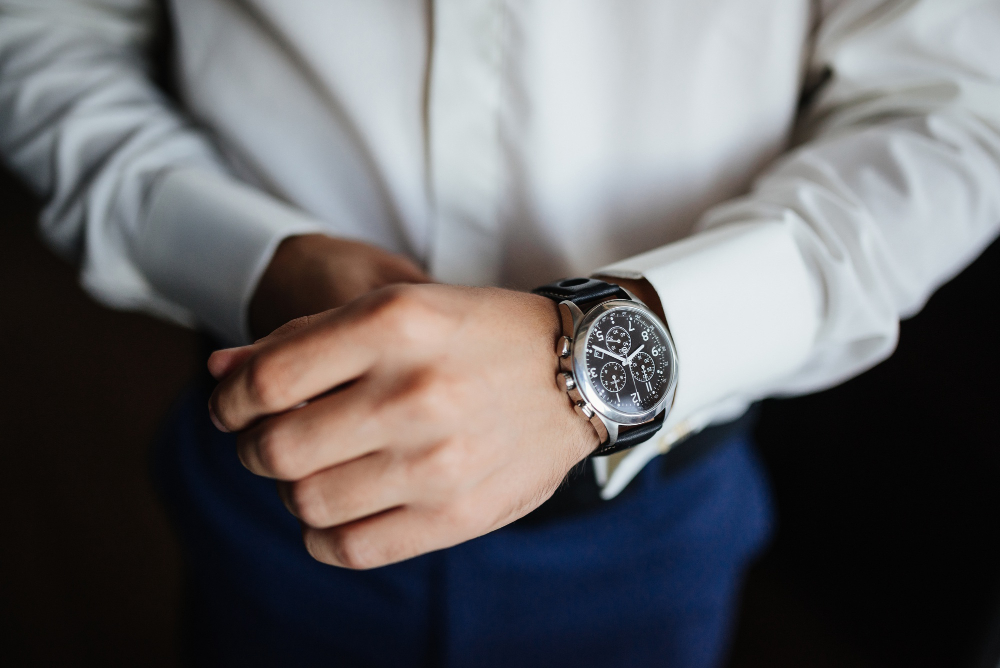
The way the seconds hand moves can tell you a lot about a watch's movement, but it is not an infallible test. A single distinct jump per second most often points to quartz, several small movements per second are typical of a mechanical movement, and an almost continuous glide is associated with Spring Drive. There are exceptions, however: there is a quartz watch with a sweeping seconds hand, and a mechanical watch that makes exactly one jump per second. What is more, a stopped hand does not have to mean a fault. Check how to read these signals and when you really need a watchmaker's help.

How do you set an automatic watch? Date, time and time zone 21:00–3:00
An automatic watch does not need a battery, but it does require a little knowledge from its owner. Setting the time or date seems simple, yet the wrong moment or the wrong way of using the crown can affect how the movement works. Many questions concern changing the date at night, moving the hands backwards and restarting a watch after a longer break. Check how to set an automatic watch correctly, what to pay attention to with the crown and why people often talk about particular caution between 9:00 pm and 3:00 am.

Wodoszczelność 10 ATM i 20 ATM – czy możesz pływać i nurkować z takim zegarkiem?
Co naprawdę oznacza 10 ATM lub 20 ATM na zegarku i czy takie oznaczenie pozwala bez obaw wejść do basenu, morza albo nurkować? Same liczby mogą być mylące, dlatego sprawdź, jak czytać klasę wodoszczelności i dobrać zegarek do aktywności w wodzie.
Water resistance 3 ATM – what does it mean and what can you do with it?
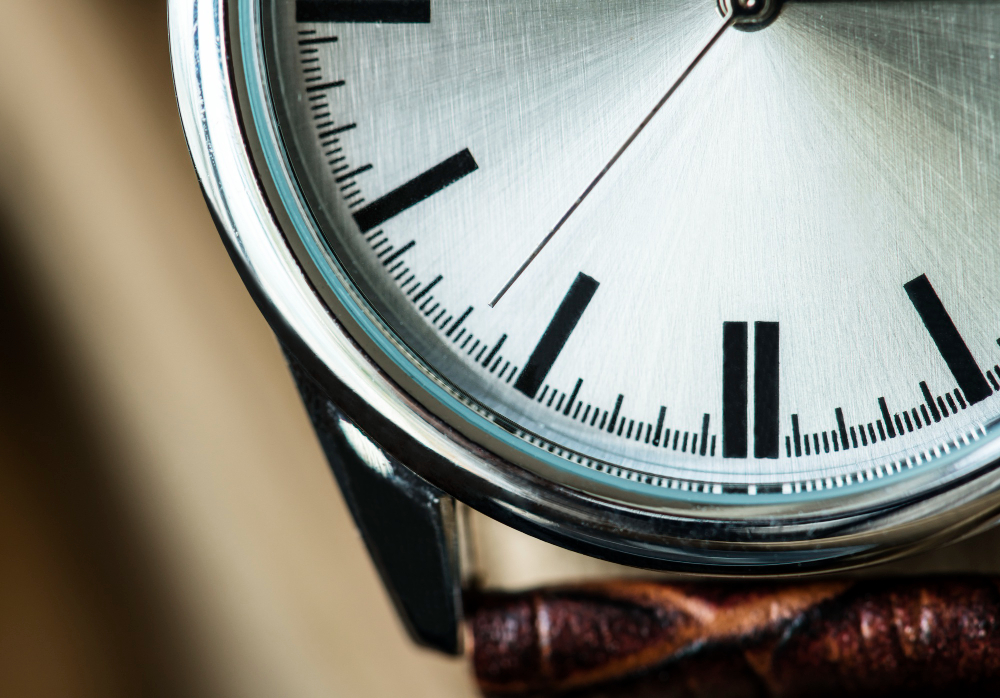
3 ATM water resistance means the watch is prepared above all for rain, accidental splashes and brief contact with water during everyday activities. It does not mean that you can swim with it, shower in it or submerge it to a depth of 30 metres. It is precisely the “30 m” marking that most often misleads. It is the result of a pressure test carried out under controlled conditions, not a declared working depth. So if you see 3 ATM, 3 bar or Water Resistant 30 m on the case back or in the specification, treat the watch as resistant to everyday moisture, but not as a watch for water activities.

Rolex-style watches – the best alternatives to the Submariner, Explorer and Datejust
For years Rolex has been one of the most important style benchmarks in the watch world, but its price is not within everyone's reach. That is why it is worth looking at watches similar to Rolex and models inspired by its styling, which offer their own character, solid build quality and much more affordable prices. We are not talking about counterfeits here, but about legitimate watches from other brands that draw on similar solutions and design language. Check out watches inspired by Rolex's style and choose the model that suits your style and budget.
A bronze watch – why does each one change over time?
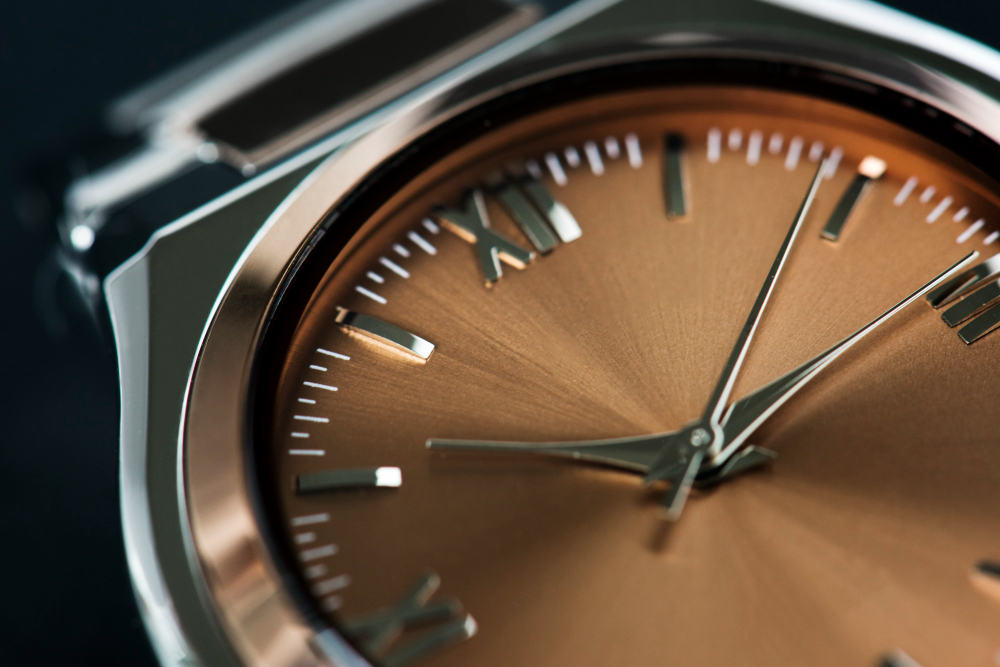
A bronze watch stands out because its appearance changes along with its owner. The case gradually darkens, turns matte and develops a patina, so two identical models can look completely different after just a few months. This is the greatest advantage of bronze, but also a trait you need to accept before buying. If you expect a watch that keeps its factory shine for years, steel may be a better direction. If, on the other hand, you like vintage looks, signs of use and the natural ageing of a material, bronze gives an effect that is hard to achieve in any other metal.