



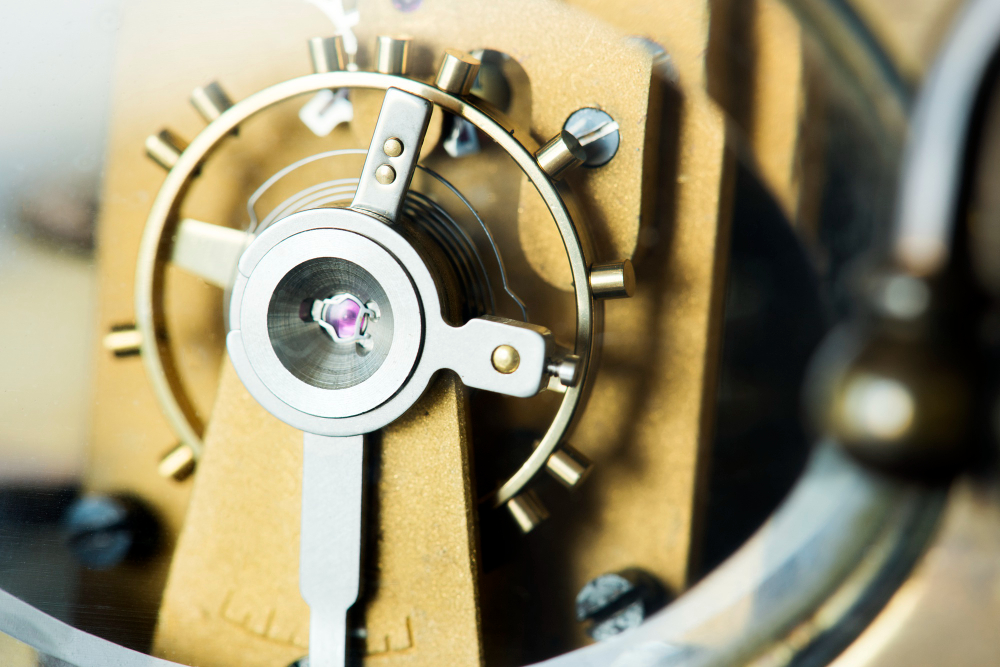
The rotor in an automatic watch – how does the rotor wind the movement whilst the watch is being worn?
An automatic watch can function without a battery by harnessing wrist movement. How is this possible? The answer lies in a small but crucial mechanism element – the rotor, also called the oscillating weight. Discover how it works and why it's so important for automatic operation.
The rotor in a watch – what exactly is it and what does it do?
The rotor in a watch is a moving, asymmetrically weighted element of automatic winding that rotates in response to wrist movement. It typically resembles a semi-circular metal weight positioned above the mechanism. Most of its mass is located at the outer edge, making it easier to set in motion when the watch changes position. In many modern constructions, the rotor can perform a complete 360-degree rotation. It's mounted on an axis or bearing and connected to the gear train responsible for winding the spring. If the watch has a transparent caseback, the rotor is often the first element you notice when you flip the case over.
You can read more about how different watch mechanisms differ in the WestWatches guide.
The operating principle is simple: arm movement sets the rotor in motion, the gear train captures this movement, and the mainspring is gradually wound. The energy stored in it then travels to the escapement, gear train, and balance, ultimately allowing the hands to move. This is an important distinction: the automatic rotor doesn't "drive the hands" directly. Its primary task is replenishing the energy stored in the mainspring. If you want to see how this principle works in finished timepieces, you can compare available men's automatic watches and check models with different constructions, case diameters, and styling.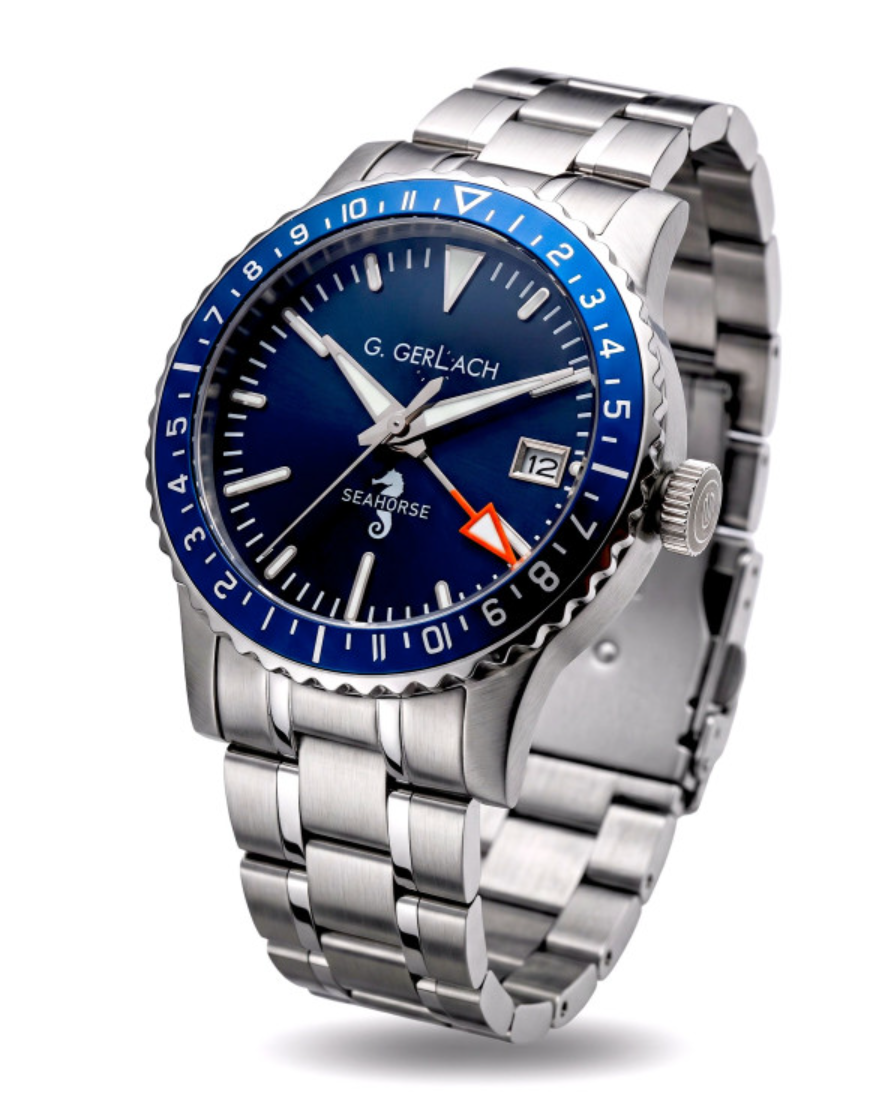
G.Gerlach Seahorse GMT is a proposition for those who value classical watchmaking in a modern version. The automatic mechanism uses wrist movement to wind the spring, allowing the watch to function without a battery. It's a practical everyday solution and simultaneously one of the elements that gives this model a truly mechanical character.
How does automatic winding convert arm movement into energy?
Automatic winding operates in stages – the rotor's rotation is just the beginning of the entire process. When you move your arm, the case changes position, accelerates, and slows down. The rotor, due to its mass and inertia, doesn't move identically to the rest of the watch, so it rotates relative to the mechanism. Its movement is captured by successive gear train elements: the rotor pinion, reduction wheels, and depending on construction, also reversers or other systems that reverse the direction of motion. The energy then travels to the winding wheel and the ratchet wheel, which is responsible for tensioning the spring located in the barrel.
Not every automatic uses rotor motion in the same way. In unidirectional winding, one direction of rotation effectively winds the spring, while movement in the other direction remains idle. In bidirectional systems, the mechanism can utilize rotations in both directions thanks to reversers, one-way clutches, or ratchet systems. This doesn't automatically mean one system is better than the other – what matters is also the gear ratios, friction, rotor mass, and the entire caliber construction.
The same principle applies to women's models – in the segment of women's automatic watches you'll find both more classical constructions and models where the mechanical operation of the movement is an important character element.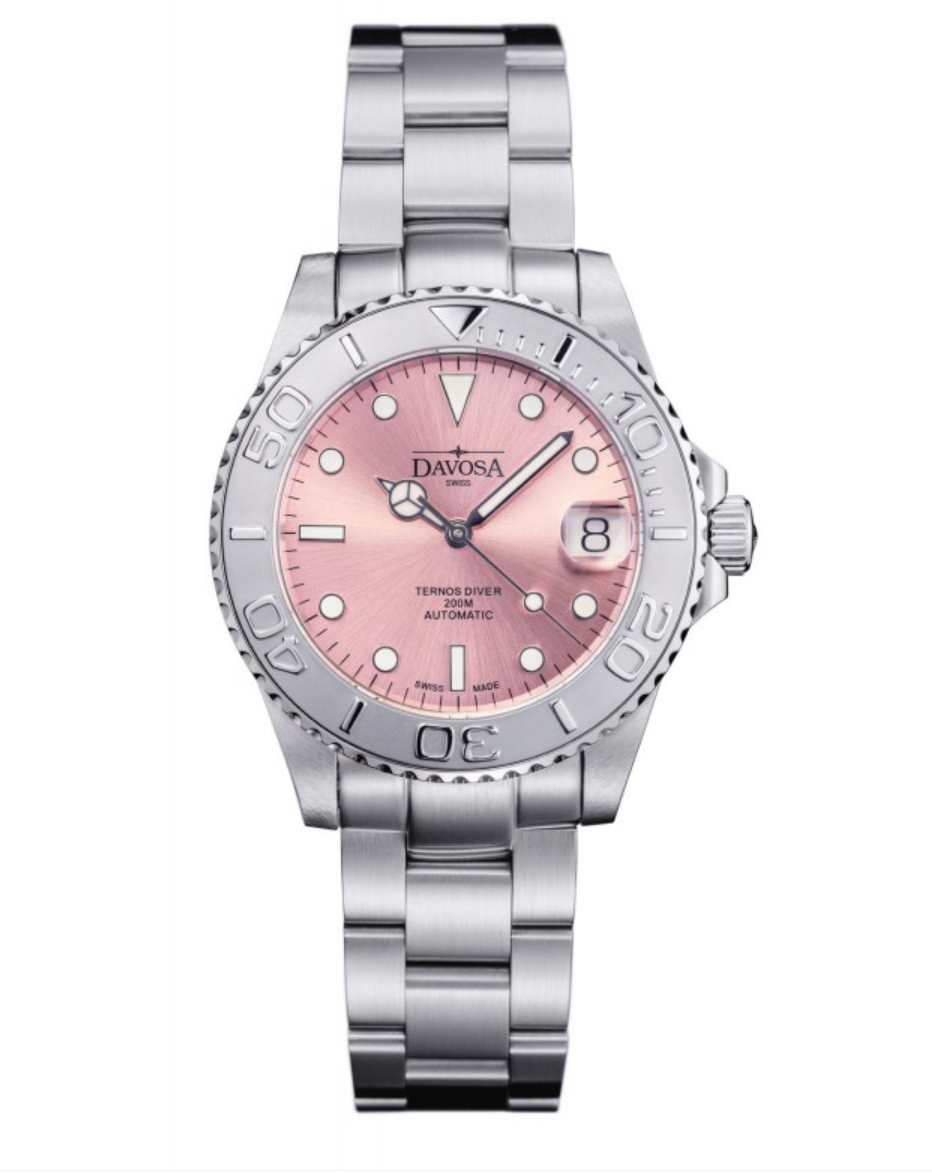
Davosa Ternos Medium Automatic California 36 mm combines an elegant, feminine character with a mechanical heart powered by wrist movement. The automatic mechanism winds the spring while being worn, so the watch doesn't require a battery. It's a proposition for women who value traditional watchmaking and everyday convenience.
Can an automatic watch's rotor wind the spring too tightly?
In most modern automatics, normal watch wear doesn't cause unlimited mainspring winding. The mechanism must be prepared for situations where the watch remains on the wrist even after achieving full winding. A solution is employed that allows the outer part of the spring to slip inside the barrel once appropriate tension is reached. The rotor can continue to move, but the spring isn't tightened endlessly. This means daily arm movement doesn't require you to monitor whether the automatic is already "full."
However, this doesn't mean vigorous shaking is the best way to start a stopped watch. The automatic was designed primarily to work with natural arm movements. If a given caliber supports manual winding, after a longer period of inactivity, it's more reasonable to perform the appropriate number of gentle crown rotations according to the manufacturer's instructions, set the time, and only then put the watch on. Constructions also differ in rotor operation characteristics.
A good example is Japanese watches, so if you're interested in their construction, series, and use, also check the guide describing the Miyota mechanism.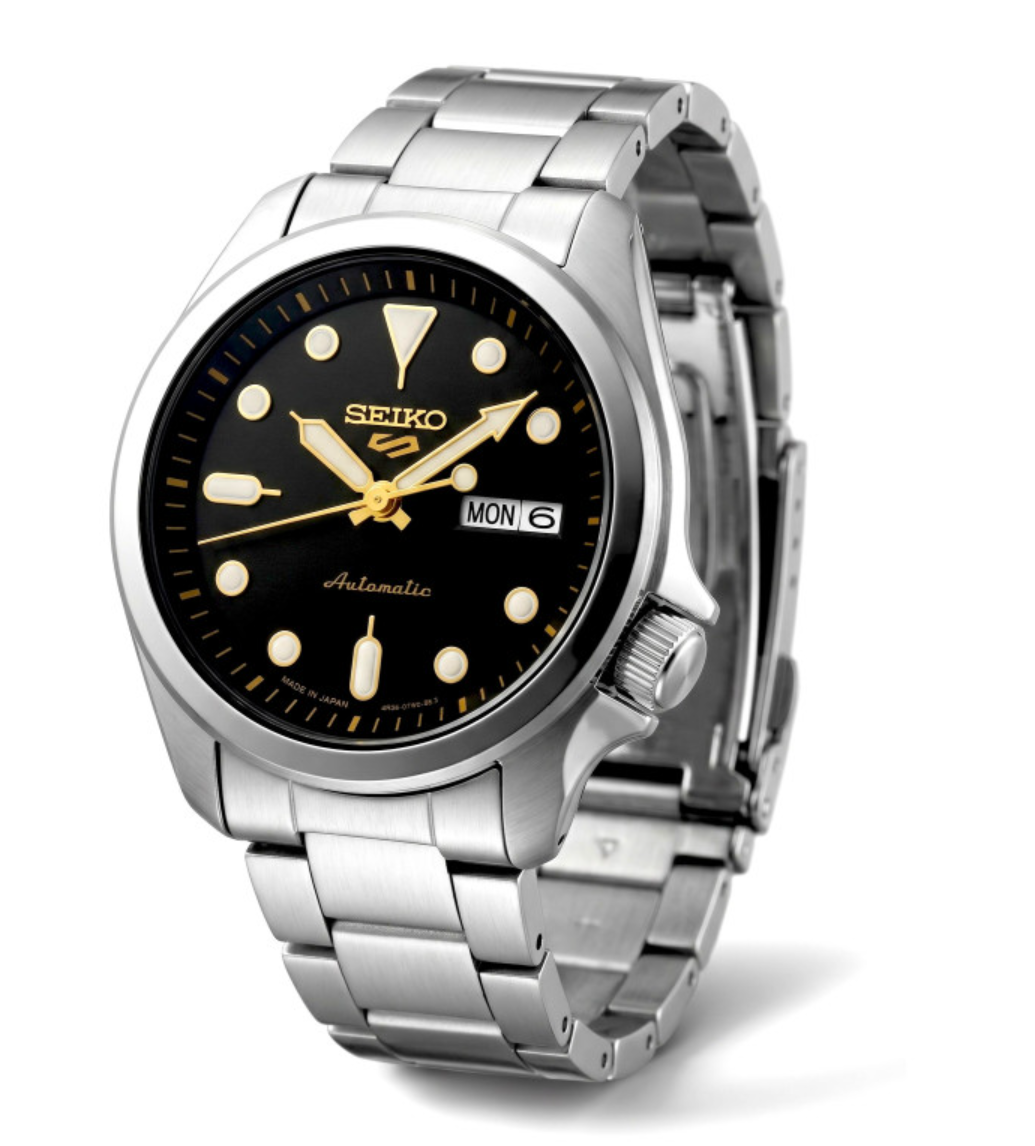
Seiko 5 Sports Automatic SRPE57K1 is for those who want to feel the character of a true mechanical watch. The automatic mechanism uses wrist movement to wind the spring, so with regular wear the watch replenishes its energy reserve on its own. It's a convenient combination of traditional construction with everyday functionality.
The watch rotor can be loud – when is this normal and when should you be concerned?
Humming, gentle spinning, or a noticeable rotor movement don't necessarily indicate an automatic watch malfunction. The nature of operation depends on caliber construction, bearing type, rotor mass, and whether the mechanism uses unidirectional or bidirectional winding. In some movements, the rotor can spin quite freely in the direction in which it doesn't transmit energy to the spring. The user may then hear characteristic spinning or feel a brief vibration of the case. With a transparent caseback, it's also easy to see that the rotor can perform several quick rotations from a single decisive arm movement.
A warning signal is rather a sudden change in watch behavior: loud metallic rattling, rotor friction, noticeable play, difficulty maintaining power reserve, or the mechanism stopping despite regular wear. In such a situation, it's not about typical rotor characteristics but rather about a possible problem with the axis, bearing, or another part of the automatic winding system. Don't try to compensate by shaking more vigorously. The mechanism should be checked by a watchmaker, especially if concerning symptoms appeared after the watch was struck or dropped.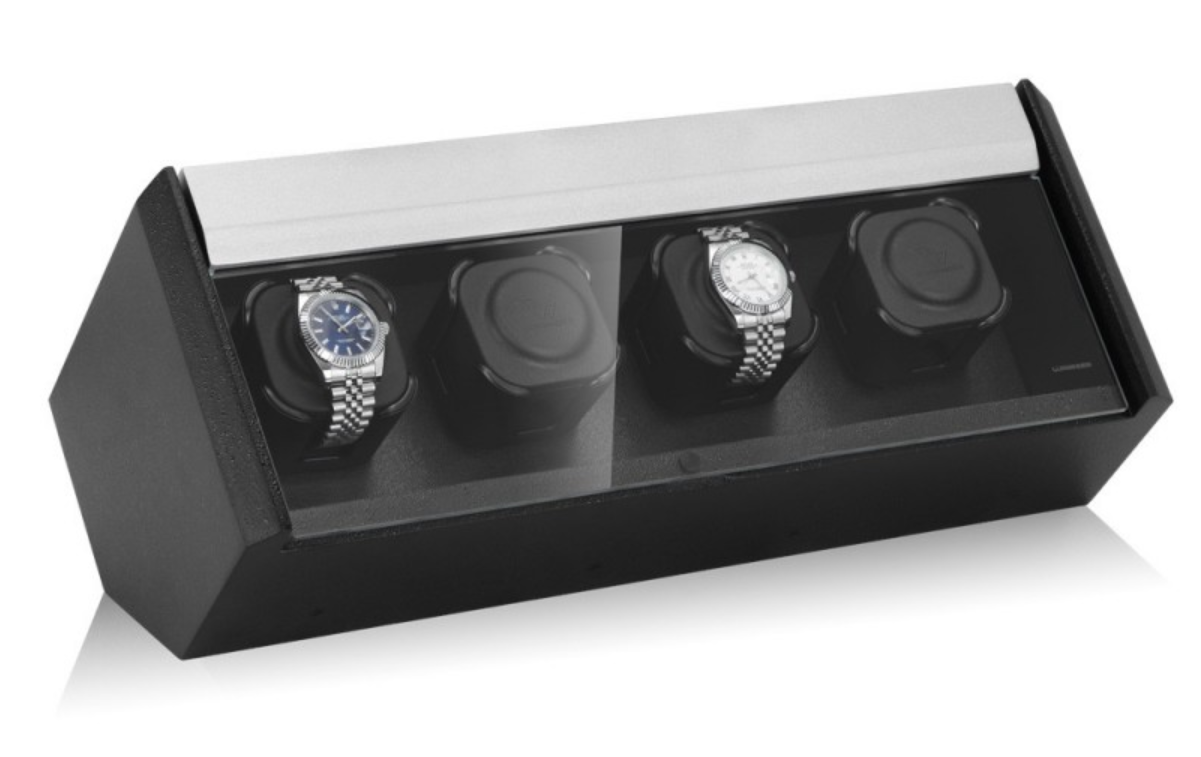
Rotomat Modalo Carat for 4 watches is a practical addition to an automatic watch collection. The device sets watches in regular motion, allowing the rotor to work similarly to when worn on the wrist and maintain the mechanism's winding. It's a convenient solution especially when you use several automatic watches in rotation and want to minimize the need to restart and set them.
Rotor, micro-rotor, or solar mechanism – what matters when choosing a watch?
The classical central rotor is the most popular solution, but automatic winding can also be constructed differently. A standard rotor sits above the mechanism and rotates around its axis. A micro-rotor is significantly smaller and can be positioned at the bridge level, allowing for slimmer calibers and revealing more of the movement. Yet another approach uses a peripheral rotor positioned at the outer edge of the mechanism. Such construction leaves the center of the caliber almost unobstructed, but is more technically complicated. The rotor's mere size or mass doesn't determine watch quality – what matters is geometry, gear ratios, friction, bearing, and the efficiency of the entire winding system.
If convenience is your priority, remember that an automatic isn't the only way to reduce daily watch handling. An automatic mechanism stores mechanical energy in a spring, while solar-powered watches use light to generate electrical energy. These are two completely different solutions. In an automatic you see and often feel the rotor's physical work, and after putting the watch down, the mechanism operates until the power reserve is depleted. If you value traditional watchmaking, moving elements, and mechanics working without a classical battery, the rotor in your watch is one of the most interesting elements of the entire construction – and exactly what allows an automatic to wind itself during normal wear.

Krzysztof Szopa
Watch Expert
Expert associated with the WestWatches.pl brand, a place that has been supplying watches for every occasion for years. Thanks to many years of experience in the watchmaking and jewelry industry, he passionately shares his knowledge, offering professional advice both in the online store and in the physical location. He specializes in selecting original watches, watch accessories, and jewelry items that combine exceptional quality with competitive prices. His goal is to help customers find the perfect product that meets their expectations and highlights their style.

See popular articles

316L, 904L and surgical steel – what is your watch made of?
Most steel watches, from affordable models to luxury constructions, are made of 316L steel. 904L steel contains more nickel, chromium and molybdenum, and therefore offers higher corrosion resistance, but in itself it does not mean greater scratch resistance. The term “surgical steel”, in turn, does not point to one strictly defined alloy. In watches it most often refers to 316L, but without a specific material designation it may simply be a marketing name. If you are choosing a watch for years, look therefore not only at the words “stainless steel”, but also at the grade of steel, which components are made of the given material and how they are finished.
Japanese or Swiss watches? We compare quality, movements and prices
If you are wondering whether Japanese or Swiss watches are better, the name of the country alone will not give you a good answer. In both cases you will find simple models for relatively little money, solid mid-range automatics and designs belonging to the world's watchmaking high end. Far more about quality will be told to you by the specific movement, the way the case and bracelet are made, the crystal, quality control, accuracy and price. Check how Japanese watches really differ from Swiss ones and what to pay attention to before you choose a model for yourself.

The lifespan of a quartz watch – how long does it really last, and when is it no longer worth repairing?
We value quartz watches above all for their accuracy, convenience and modest day-to-day demands. That does not mean, however, that they can run indefinitely and need nothing more than a new battery once every few years. Over time, the components of the movement itself also wear out, and the moment a watch starts giving trouble can look completely different depending on the model, the way it is used and the availability of parts. So how long can a quartz watch last, what wears out in it most often and when does repair still make sense? Check what its lifespan really depends on.

The second hand on a watch – why does it jump, move smoothly or stop?
The way the seconds hand moves can tell you a lot about a watch's movement, but it is not an infallible test. A single distinct jump per second most often points to quartz, several small movements per second are typical of a mechanical movement, and an almost continuous glide is associated with Spring Drive. There are exceptions, however: there is a quartz watch with a sweeping seconds hand, and a mechanical watch that makes exactly one jump per second. What is more, a stopped hand does not have to mean a fault. Check how to read these signals and when you really need a watchmaker's help.

How do you set an automatic watch? Date, time and time zone 21:00–3:00
An automatic watch does not need a battery, but it does require a little knowledge from its owner. Setting the time or date seems simple, yet the wrong moment or the wrong way of using the crown can affect how the movement works. Many questions concern changing the date at night, moving the hands backwards and restarting a watch after a longer break. Check how to set an automatic watch correctly, what to pay attention to with the crown and why people often talk about particular caution between 9:00 pm and 3:00 am.

Wodoszczelność 10 ATM i 20 ATM – czy możesz pływać i nurkować z takim zegarkiem?
Co naprawdę oznacza 10 ATM lub 20 ATM na zegarku i czy takie oznaczenie pozwala bez obaw wejść do basenu, morza albo nurkować? Same liczby mogą być mylące, dlatego sprawdź, jak czytać klasę wodoszczelności i dobrać zegarek do aktywności w wodzie.

Water resistance 3 ATM – what does it mean and what can you do with it?
3 ATM water resistance means the watch is prepared above all for rain, accidental splashes and brief contact with water during everyday activities. It does not mean that you can swim with it, shower in it or submerge it to a depth of 30 metres. It is precisely the “30 m” marking that most often misleads. It is the result of a pressure test carried out under controlled conditions, not a declared working depth. So if you see 3 ATM, 3 bar or Water Resistant 30 m on the case back or in the specification, treat the watch as resistant to everyday moisture, but not as a watch for water activities.

Rolex-style watches – the best alternatives to the Submariner, Explorer and Datejust
For years Rolex has been one of the most important style benchmarks in the watch world, but its price is not within everyone's reach. That is why it is worth looking at watches similar to Rolex and models inspired by its styling, which offer their own character, solid build quality and much more affordable prices. We are not talking about counterfeits here, but about legitimate watches from other brands that draw on similar solutions and design language. Check out watches inspired by Rolex's style and choose the model that suits your style and budget.
A bronze watch – why does each one change over time?
A bronze watch stands out because its appearance changes along with its owner. The case gradually darkens, turns matte and develops a patina, so two identical models can look completely different after just a few months. This is the greatest advantage of bronze, but also a trait you need to accept before buying. If you expect a watch that keeps its factory shine for years, steel may be a better direction. If, on the other hand, you like vintage looks, signs of use and the natural ageing of a material, bronze gives an effect that is hard to achieve in any other metal.