



Water-resistant and waterproof watches – how do they differ?
Choosing the right watch can be surprisingly difficult, especially when terms "water-resistant" and "waterproof" come into play, which many manufacturers use interchangeably. Meanwhile, the difference between them is hugely significant in everyday use – from simple hand washing to diving at greater depths. Before deciding on a specific model, it's worth understanding what water resist really means, how to interpret watch water resistance classes, and which parameters will really protect the mechanism from water. Thanks to this, you'll avoid costly mistakes and choose a watch that will work for your activities.
Water-resistant vs waterproof – learn the difference before you flood your watch
When you start looking for the right timepiece, it very quickly turns out that terms used by manufacturers can be confusing, and the difference between a "water-resistant" and "waterproof" watch isn't always immediately obvious. In practice, these two pieces of information carry completely different messages, although many people assume they mean the same thing. Water resistance is only a minimal level of protection, allowing the watch to survive a brief encounter with moisture.
Waterproofness means, on the other hand, that the construction was designed much more solidly – and that the watch will not only withstand splashing but also be submerged in water at a specific level determined by the manufacturer. This is important because watch waterproofness is a measurable feature that you can really match to your lifestyle. If you often use the pool, practice water sports, or simply want peace of mind that the watch will handle tougher conditions, proper reading of technical information is crucial. When you start understanding the difference between these concepts, it's much easier to choose a model that not only looks good but will also work without surprises.
Orient Sports Diver Solar Chronograph RA-TX0201L10B is a dynamic watch created for active men, combining solar energy with powerful diver-type design. Its characteristic "Pepsi" bezel, high water resistance, and sporty functionality make it a model ready for any adventure — both underwater and on land.
Water resist – what does it really mean? Check before believing markings on the dial and risking a bath in the wrong model
Although at first glance the "water resist" marking may sound reassuring, in reality it's often very misleading. Manufacturers use it to communicate that the watch has any level of water resistance, but without additional data (e.g., ATM) you won't conclude anything specific from it. In practice, water resist may only mean the watch will survive accidental splashing during hand washing, not full submersion. Many people make the same mistake – they assume that since the dial suggests "resistance," you can enter the pool with it. Meanwhile, such marking says nothing about how the watch will behave under pressure when water starts affecting seals and crowns.
Therefore, before making a purchase decision, make sure you have complete information at your disposal. Only then can you consciously assess whether the model will be suitable for daily activities or better left on dry land. This is especially important if you move around a lot daily or want your watch to simply withstand more than one accidental splash.
Mido Ocean Star Automatic M026.907.11.041.00 is a Swiss diver with exceptional aesthetics, captivating with deep blue dial with wavy texture inspired by the ocean. Its precise Caliber 72 movement, solid steel construction, and refined design make it an ideal choice for lovers of luxury sporty style.
Watch waterproofness without secrets – see how manufacturers test timepieces and when you can trust their declarations
When manufacturers declare their model is waterproof, this isn't a loose statement – such data results from specific laboratory tests. Watch waterproofness is tested in controlled conditions where the timepiece is subjected to water pressure of specific pressure value. This process allows assessing how construction will behave in submersion situation and whether internal elements such as seals, crown, or caseback can keep water outside. However, it's worth knowing that laboratory tests are static, and in real life water acts differently – especially when you make hand movements underwater or submerge suddenly.
So if you want to be certain a given model will meet your activities, focus on detailed ATM markings, not vague declarations. Watch waterproofness is a real parameter that helps choose a model matched to how you use the timepiece in everyday situations. Over time you'll notice that technical data isn't just formality but something that really translates into your watch's durability and safety. A good example are Diver-type watches, whose high water resistance – often reaching 20 ATM or more – guarantees safe use during swimming, diving, and intensive water activities.
Bulova Precisionist Diver 98B212 is an impressive chronograph with extreme 262 kHz accuracy, created for lovers of maximum precision and sporty character. Its massive construction, dynamic red-black styling, and professional diving functions make this model immediately attract attention and inspire respect.
Watch water resistance classes in practice – check which ATM level to choose for shower, swimming, and diving
Information about water resistance classes may seem complicated, but it's precisely they that tell most about the watch's real capabilities. Differences between 3 ATM, 5 ATM, or 20 ATM are enormous because with each successive level, construction resistance to pressure and depth you can descend to grows. If you want to swim worry-free, you must aim for a watch with minimum 10 ATM, while people actively diving should look for 20 ATM models or higher. For example, 5 ATM water resistance in a watch means resistance to splashing and short-term submersion, but not swimming or diving.
The most structurally advanced are professional diving watches, which maintain tightness even with intensive pressure changes and can accompany you underwater for a really long time. Each of these values carries specific capabilities, and this allows consciously matching the watch to your lifestyle – without guessing whether it will withstand water encounter. Remember that watch water resistance classes aren't just a marketing addition. It's a set of precise data created so you know whether a given model will work where you really intend to use it. Thanks to this, you'll avoid disappointments, and your timepiece will survive water contact without damage risk.
If after reading you already know how significant proper watch waterproofness is, it's easier to choose a model matched to your daily activities. In the well-marked offer of our online watch store, you'll quickly find a timepiece that meets specific requirements – regardless of whether you need something splash-resistant or aim for a solid diving watch. Clear information about water resistance classes will allow you to buy exactly what you need, without guessing and without disappointment risk.

Krzysztof Szopa
Watch Expert
An expert associated with the WestWatches.pl brand, a place that has been providing watches for every occasion for years. Thanks to many years of experience in the watchmaking and jewelry industry, he passionately shares his knowledge, offering professional advice both in the online and physical store. He specializes in selecting original watches, watch accessories, and jewelry products that combine exceptional quality with competitive prices. His goal is to help customers find the ideal product that will meet their expectations and emphasize their style.

See popular articles
316L, 904L and surgical steel – what is your watch made of?
Most steel watches, from affordable models to luxury constructions, are made of 316L steel. 904L steel contains more nickel, chromium and molybdenum, and therefore offers higher corrosion resistance, but in itself it does not mean greater scratch resistance. The term “surgical steel”, in turn, does not point to one strictly defined alloy. In watches it most often refers to 316L, but without a specific material designation it may simply be a marketing name. If you are choosing a watch for years, look therefore not only at the words “stainless steel”, but also at the grade of steel, which components are made of the given material and how they are finished.
Japanese or Swiss watches? We compare quality, movements and prices
If you are wondering whether Japanese or Swiss watches are better, the name of the country alone will not give you a good answer. In both cases you will find simple models for relatively little money, solid mid-range automatics and designs belonging to the world's watchmaking high end. Far more about quality will be told to you by the specific movement, the way the case and bracelet are made, the crystal, quality control, accuracy and price. Check how Japanese watches really differ from Swiss ones and what to pay attention to before you choose a model for yourself.

The lifespan of a quartz watch – how long does it really last, and when is it no longer worth repairing?
We value quartz watches above all for their accuracy, convenience and modest day-to-day demands. That does not mean, however, that they can run indefinitely and need nothing more than a new battery once every few years. Over time, the components of the movement itself also wear out, and the moment a watch starts giving trouble can look completely different depending on the model, the way it is used and the availability of parts. So how long can a quartz watch last, what wears out in it most often and when does repair still make sense? Check what its lifespan really depends on.
The second hand on a watch – why does it jump, move smoothly or stop?
The way the seconds hand moves can tell you a lot about a watch's movement, but it is not an infallible test. A single distinct jump per second most often points to quartz, several small movements per second are typical of a mechanical movement, and an almost continuous glide is associated with Spring Drive. There are exceptions, however: there is a quartz watch with a sweeping seconds hand, and a mechanical watch that makes exactly one jump per second. What is more, a stopped hand does not have to mean a fault. Check how to read these signals and when you really need a watchmaker's help.

How do you set an automatic watch? Date, time and time zone 21:00–3:00
An automatic watch does not need a battery, but it does require a little knowledge from its owner. Setting the time or date seems simple, yet the wrong moment or the wrong way of using the crown can affect how the movement works. Many questions concern changing the date at night, moving the hands backwards and restarting a watch after a longer break. Check how to set an automatic watch correctly, what to pay attention to with the crown and why people often talk about particular caution between 9:00 pm and 3:00 am.

Wodoszczelność 10 ATM i 20 ATM – czy możesz pływać i nurkować z takim zegarkiem?
Co naprawdę oznacza 10 ATM lub 20 ATM na zegarku i czy takie oznaczenie pozwala bez obaw wejść do basenu, morza albo nurkować? Same liczby mogą być mylące, dlatego sprawdź, jak czytać klasę wodoszczelności i dobrać zegarek do aktywności w wodzie.
Water resistance 3 ATM – what does it mean and what can you do with it?
3 ATM water resistance means the watch is prepared above all for rain, accidental splashes and brief contact with water during everyday activities. It does not mean that you can swim with it, shower in it or submerge it to a depth of 30 metres. It is precisely the “30 m” marking that most often misleads. It is the result of a pressure test carried out under controlled conditions, not a declared working depth. So if you see 3 ATM, 3 bar or Water Resistant 30 m on the case back or in the specification, treat the watch as resistant to everyday moisture, but not as a watch for water activities.

Rolex-style watches – the best alternatives to the Submariner, Explorer and Datejust
For years Rolex has been one of the most important style benchmarks in the watch world, but its price is not within everyone's reach. That is why it is worth looking at watches similar to Rolex and models inspired by its styling, which offer their own character, solid build quality and much more affordable prices. We are not talking about counterfeits here, but about legitimate watches from other brands that draw on similar solutions and design language. Check out watches inspired by Rolex's style and choose the model that suits your style and budget.
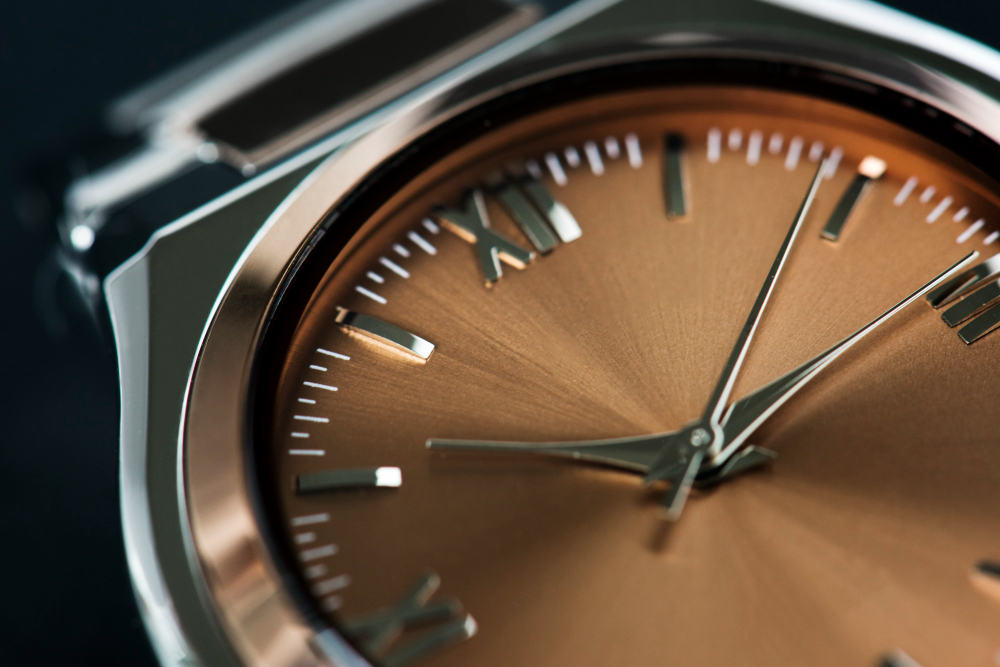
A bronze watch – why does each one change over time?
A bronze watch stands out because its appearance changes along with its owner. The case gradually darkens, turns matte and develops a patina, so two identical models can look completely different after just a few months. This is the greatest advantage of bronze, but also a trait you need to accept before buying. If you expect a watch that keeps its factory shine for years, steel may be a better direction. If, on the other hand, you like vintage looks, signs of use and the natural ageing of a material, bronze gives an effect that is hard to achieve in any other metal.