



Why do some watches cause allergies and how to deal with it?
Wearing a watch is a daily habit that for many people ends with an unpleasant surprise – itching, redness, and burning skin. Although it may seem like a minor problem, watch allergy can effectively discourage wearing favorite models. The cause is usually metals, plastics, or chemical additives in straps that trigger an allergic reaction upon contact with skin. Fortunately, there are ways to wear a watch without risk and discomfort – you just need to know materials that don't cause allergies and implement a few simple care rules.
Itching, burning, leaving marks? Check if it's really a watch allergy!
Have you noticed redness, itching, or burning skin on your wrist after wearing a watch for a few hours? This doesn't have to be a coincidence. Many people confuse simple irritation with a skin allergic reaction, which often appears after contact with metals containing nickel, chromium, or cobalt. Such symptoms as rash, small blisters, or flaking skin may indicate contact allergy – and its cause may not be a new cosmetic at all, but precisely the watch. Wrist allergy from a watch usually appears where skin contacts the metal case, bracelet, or strap clasp. Interestingly, even watches described as "stainless steel" can trigger a reaction if they contain nickel additives.
Sometimes the culprit isn't metal at all, but the material from which the strap is made. Allergy to a watch strap can give similar symptoms, especially if the strap is made of rubber, silicone, or plastics containing chemical additives. If after removing the watch you notice a distinct redness shape where it touched the skin, you're probably dealing with an allergic reaction. In such a situation, it's not worth waiting for it to pass on its own – it's best to remove the watch and let the skin rest for a few days. If the irritation doesn't subside, use soothing dermatological creams or visit a dermatologist who can order a patch test. Thanks to this, you'll find out what exactly triggers the reaction and what materials you should avoid in the future.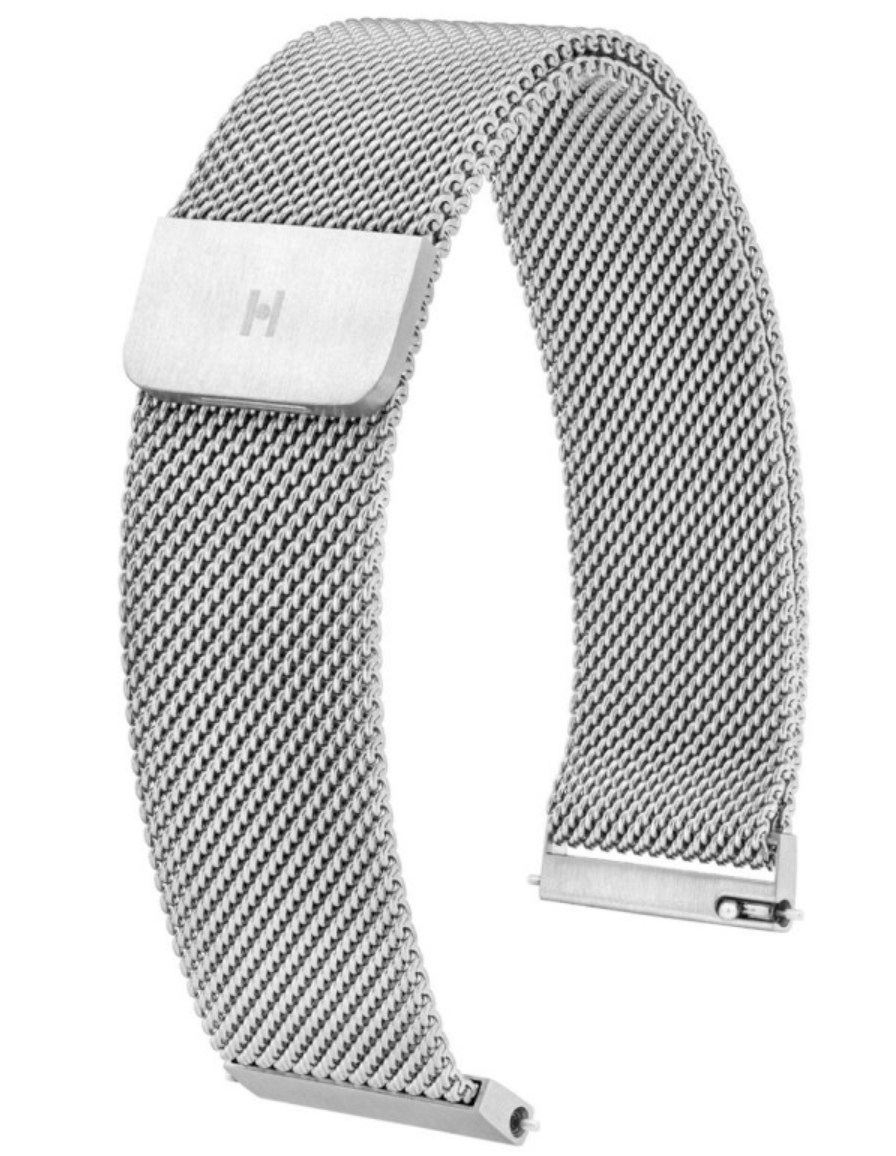
Hirsch Milanese L 20mm 30161434-2-20 steel bracelet is a classic in a modern edition. Made of high-quality stainless steel, it captivates with an elegant mesh-type weave that ensures wearing comfort and excellent wrist fit. Subtle satin finish adds universal character, matching both classic and modern watches.
Not every shine is golden – discover materials that most commonly cause allergies!
In the world of watches, appearance matters, but often what shines can be a source of problems. The most common allergy culprit is nickel – a metal responsible for shine and corrosion resistance. Although present in small amounts even in stainless steel, it's responsible for most cases of watch allergy. Nickel ions, released under the influence of sweat and moisture, penetrate the epidermis and trigger an immune response. The result? Red spots, itching, burning, and an unpleasant feeling of warmth that appears exactly where the watch contacts the skin. Not without reason do allergists warn that even small elements such as a buckle or case can trigger a strong reaction in sensitive people.
The second commonly encountered problem is allergy to rubber or silicone, which increasingly appears among smartwatch and sports watch users. Allergy to a silicone strap usually manifests as itchy bumps or rash with a characteristic strap shape.
On the other hand, allergy to a rubber watch strap may be caused by chemical additives used in the production process. If you notice symptoms intensifying during heat or training, the reason may be precisely increased sweating and lack of air circulation. That's why it's so important to choose a watch consciously, paying attention not only to design but above all to material composition – watch straps and bracelets determine whether it will be decoration or a cause of discomfort.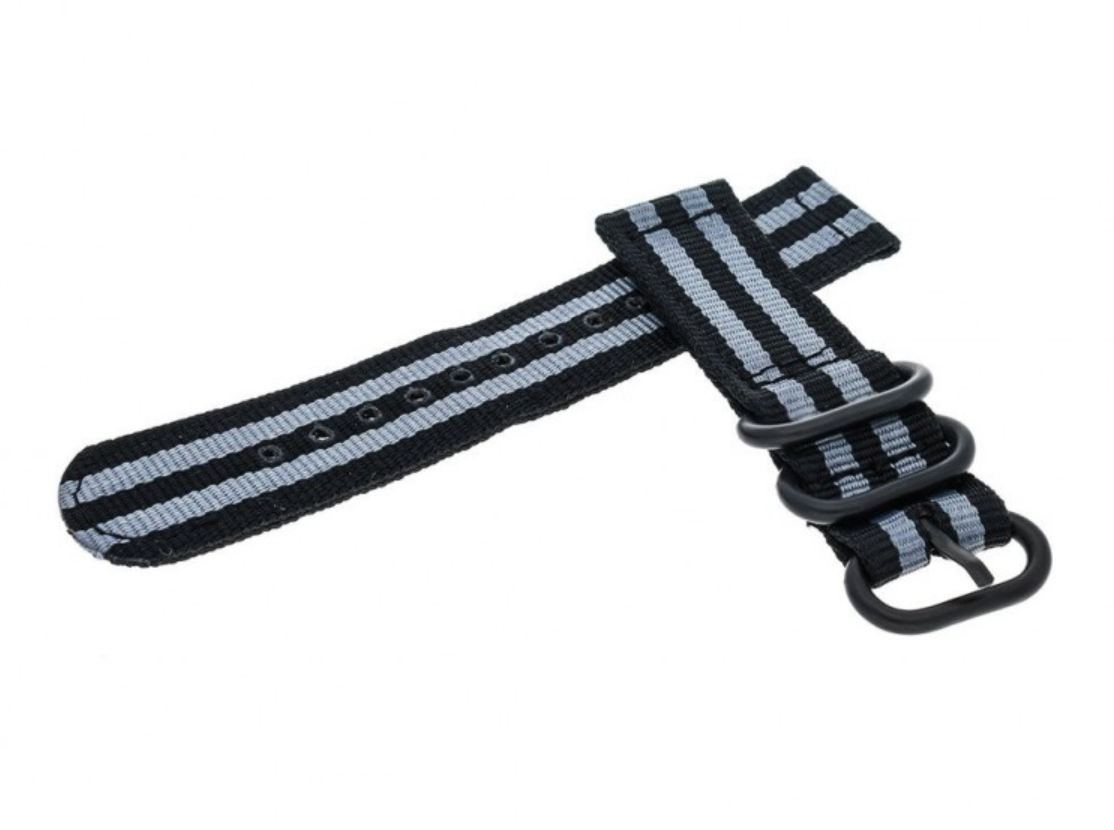
Canvas strap KZ0880 1/2 Bond 20mm is a solid and stylish accessory inspired by military design. Made of durable nylon with dense weave, it guarantees durability and wearing comfort in all conditions. The black-gray pattern with metal fittings in matte finish adds character, making it an ideal choice for people who value sporty, casual style and functionality.
Do you have sensitive skin? Here are watches for allergy sufferers you can wear without worry
If you've had unpleasant experiences with rash or burning after wearing a watch, you don't have to give it up at all. You just need to choose a watch for allergy sufferers, made of hypoallergenic materials that don't react with skin. The best choice will be titanium, which contains neither nickel nor chromium. It's lightweight, durable, and completely safe even for people with strong contact allergies. More and more brands are introducing titanium or ceramic lines – the latter are durable, smooth, and don't cause irritation, so they work great for people with very sensitive skin.
If you prefer classic solutions, choose mesh bracelets made of 316L stainless steel, which is also used in medicine. It's a material resistant to corrosion with very low nickel content, making it safe for most allergy sufferers.
If you value natural materials, an excellent choice will be leather watch straps. Natural leather rarely causes allergies by itself, so it works great for people with delicate, irritation-prone skin. Just pay attention to workmanship quality – it's best to choose handmade watch straps, created from vegetable-tanned leather without synthetic dyes and glues. Such straps are not only safe for allergy sufferers but also age beautifully over time, gaining individual character. It's a solution for those who want to combine wearing comfort, elegance, and naturalness in one detail.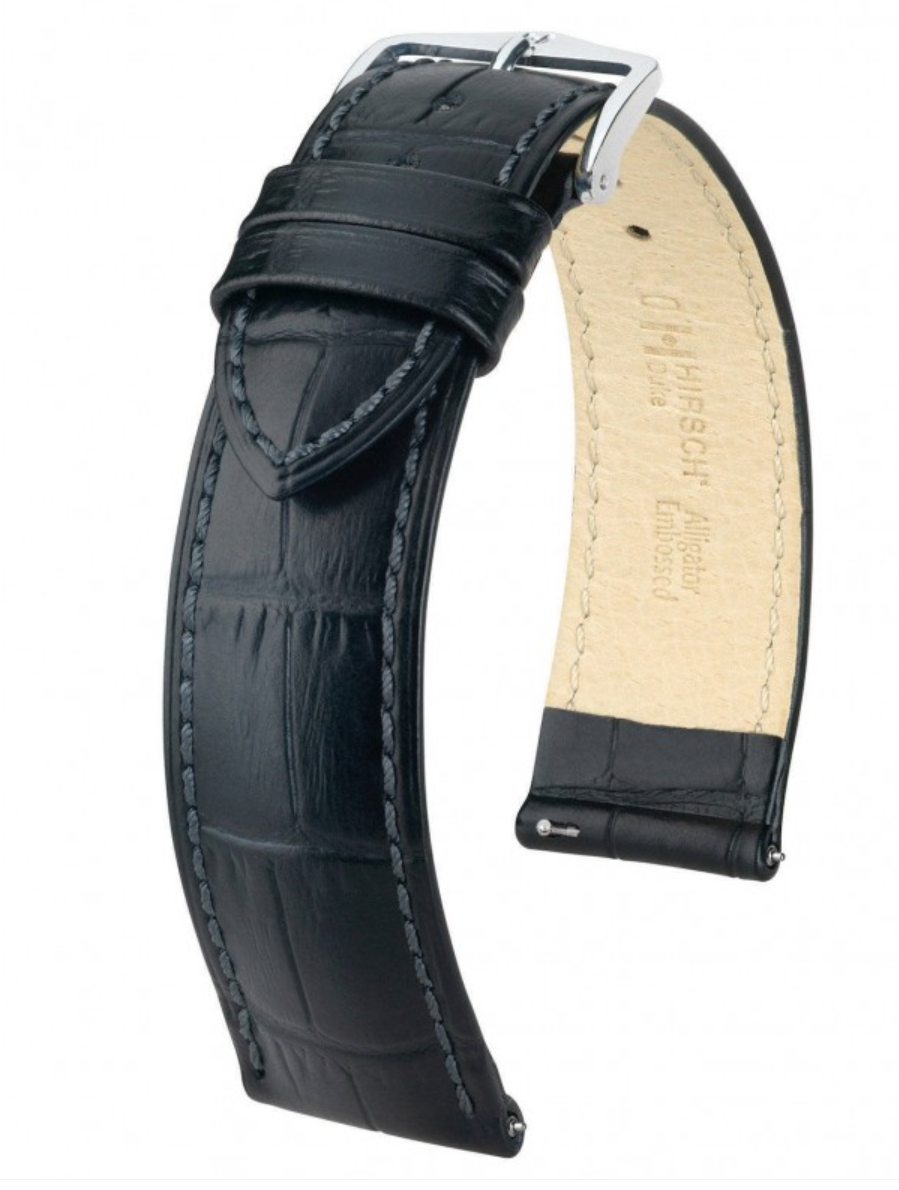
Hirsch Duke black leather strap is a classic of elegance and highest quality workmanship. Made of natural calfskin with texture resembling alligator leather, it captivates with subtle shine and careful stitching. Thanks to the extended XL version, it fits perfectly to larger wrists, ensuring comfort and durability. It's an ideal choice for people who value timeless style and Swiss precision of the Hirsch brand.
Does your watch cause allergies? Do this before going to a dermatologist
Not every case of redness requires an immediate visit to a specialist. If you suspect it's a watch allergy, start with simple steps that often bring relief after just a few days. First of all, remove the watch and thoroughly wash the skin with lukewarm water and gentle soap to remove sweat and metal residues. Let the skin rest – for two or three days avoid wearing anything in that spot. During this time, you can use soothing creams with panthenol or aloe, which will help rebuild the epidermis's natural barrier. If itching is bothersome, antihistamine ointments available without prescription also work well.
Pay attention to daily habits. Sometimes the problem isn't the material itself but lack of watch hygiene – accumulated sweat, soap, or cosmetics can act as irritants. Regular cleaning and thorough strap drying significantly reduce allergy recurrence risk. When symptoms don't subside after a few days or intensify, it's worth considering changing the watch bracelet or strap. It's also worth visiting a dermatologist who will perform allergy tests and determine the cause. Thanks to this, you'll find out what material to avoid and what products to use.
If you're looking for a watch tailored to your style and needs, it's worth visiting our online watch store, where you'll find a wide selection of models – from classic to modern, sporty and elegant. The offer also includes accessories that will allow you to personalize any timepiece, for example stylish NATO watch straps, ideal for both everyday styling and more formal occasions. Thanks to them, you can easily change your watch's appearance, giving it a fresh character, adapting it to your mood or outfit and avoiding allergenic substances.

Krzysztof Szopa
Watch Expert
An expert associated with the WestWatches.pl brand, a place that has been providing watches for every occasion for years. Thanks to many years of experience in the watchmaking and jewelry industry, he passionately shares his knowledge, offering professional advice both in the online and physical store. He specializes in selecting original watches, watch accessories, and jewelry products that combine exceptional quality with competitive prices. His goal is to help customers find the ideal product that will meet their expectations and emphasize their style.

See popular articles
316L, 904L and surgical steel – what is your watch made of?
Most steel watches, from affordable models to luxury constructions, are made of 316L steel. 904L steel contains more nickel, chromium and molybdenum, and therefore offers higher corrosion resistance, but in itself it does not mean greater scratch resistance. The term “surgical steel”, in turn, does not point to one strictly defined alloy. In watches it most often refers to 316L, but without a specific material designation it may simply be a marketing name. If you are choosing a watch for years, look therefore not only at the words “stainless steel”, but also at the grade of steel, which components are made of the given material and how they are finished.
Japanese or Swiss watches? We compare quality, movements and prices
If you are wondering whether Japanese or Swiss watches are better, the name of the country alone will not give you a good answer. In both cases you will find simple models for relatively little money, solid mid-range automatics and designs belonging to the world's watchmaking high end. Far more about quality will be told to you by the specific movement, the way the case and bracelet are made, the crystal, quality control, accuracy and price. Check how Japanese watches really differ from Swiss ones and what to pay attention to before you choose a model for yourself.
The lifespan of a quartz watch – how long does it really last, and when is it no longer worth repairing?
We value quartz watches above all for their accuracy, convenience and modest day-to-day demands. That does not mean, however, that they can run indefinitely and need nothing more than a new battery once every few years. Over time, the components of the movement itself also wear out, and the moment a watch starts giving trouble can look completely different depending on the model, the way it is used and the availability of parts. So how long can a quartz watch last, what wears out in it most often and when does repair still make sense? Check what its lifespan really depends on.
The second hand on a watch – why does it jump, move smoothly or stop?
The way the seconds hand moves can tell you a lot about a watch's movement, but it is not an infallible test. A single distinct jump per second most often points to quartz, several small movements per second are typical of a mechanical movement, and an almost continuous glide is associated with Spring Drive. There are exceptions, however: there is a quartz watch with a sweeping seconds hand, and a mechanical watch that makes exactly one jump per second. What is more, a stopped hand does not have to mean a fault. Check how to read these signals and when you really need a watchmaker's help.

How do you set an automatic watch? Date, time and time zone 21:00–3:00
An automatic watch does not need a battery, but it does require a little knowledge from its owner. Setting the time or date seems simple, yet the wrong moment or the wrong way of using the crown can affect how the movement works. Many questions concern changing the date at night, moving the hands backwards and restarting a watch after a longer break. Check how to set an automatic watch correctly, what to pay attention to with the crown and why people often talk about particular caution between 9:00 pm and 3:00 am.

Wodoszczelność 10 ATM i 20 ATM – czy możesz pływać i nurkować z takim zegarkiem?
Co naprawdę oznacza 10 ATM lub 20 ATM na zegarku i czy takie oznaczenie pozwala bez obaw wejść do basenu, morza albo nurkować? Same liczby mogą być mylące, dlatego sprawdź, jak czytać klasę wodoszczelności i dobrać zegarek do aktywności w wodzie.
Water resistance 3 ATM – what does it mean and what can you do with it?
3 ATM water resistance means the watch is prepared above all for rain, accidental splashes and brief contact with water during everyday activities. It does not mean that you can swim with it, shower in it or submerge it to a depth of 30 metres. It is precisely the “30 m” marking that most often misleads. It is the result of a pressure test carried out under controlled conditions, not a declared working depth. So if you see 3 ATM, 3 bar or Water Resistant 30 m on the case back or in the specification, treat the watch as resistant to everyday moisture, but not as a watch for water activities.

Rolex-style watches – the best alternatives to the Submariner, Explorer and Datejust
For years Rolex has been one of the most important style benchmarks in the watch world, but its price is not within everyone's reach. That is why it is worth looking at watches similar to Rolex and models inspired by its styling, which offer their own character, solid build quality and much more affordable prices. We are not talking about counterfeits here, but about legitimate watches from other brands that draw on similar solutions and design language. Check out watches inspired by Rolex's style and choose the model that suits your style and budget.
A bronze watch – why does each one change over time?
A bronze watch stands out because its appearance changes along with its owner. The case gradually darkens, turns matte and develops a patina, so two identical models can look completely different after just a few months. This is the greatest advantage of bronze, but also a trait you need to accept before buying. If you expect a watch that keeps its factory shine for years, steel may be a better direction. If, on the other hand, you like vintage looks, signs of use and the natural ageing of a material, bronze gives an effect that is hard to achieve in any other metal.