



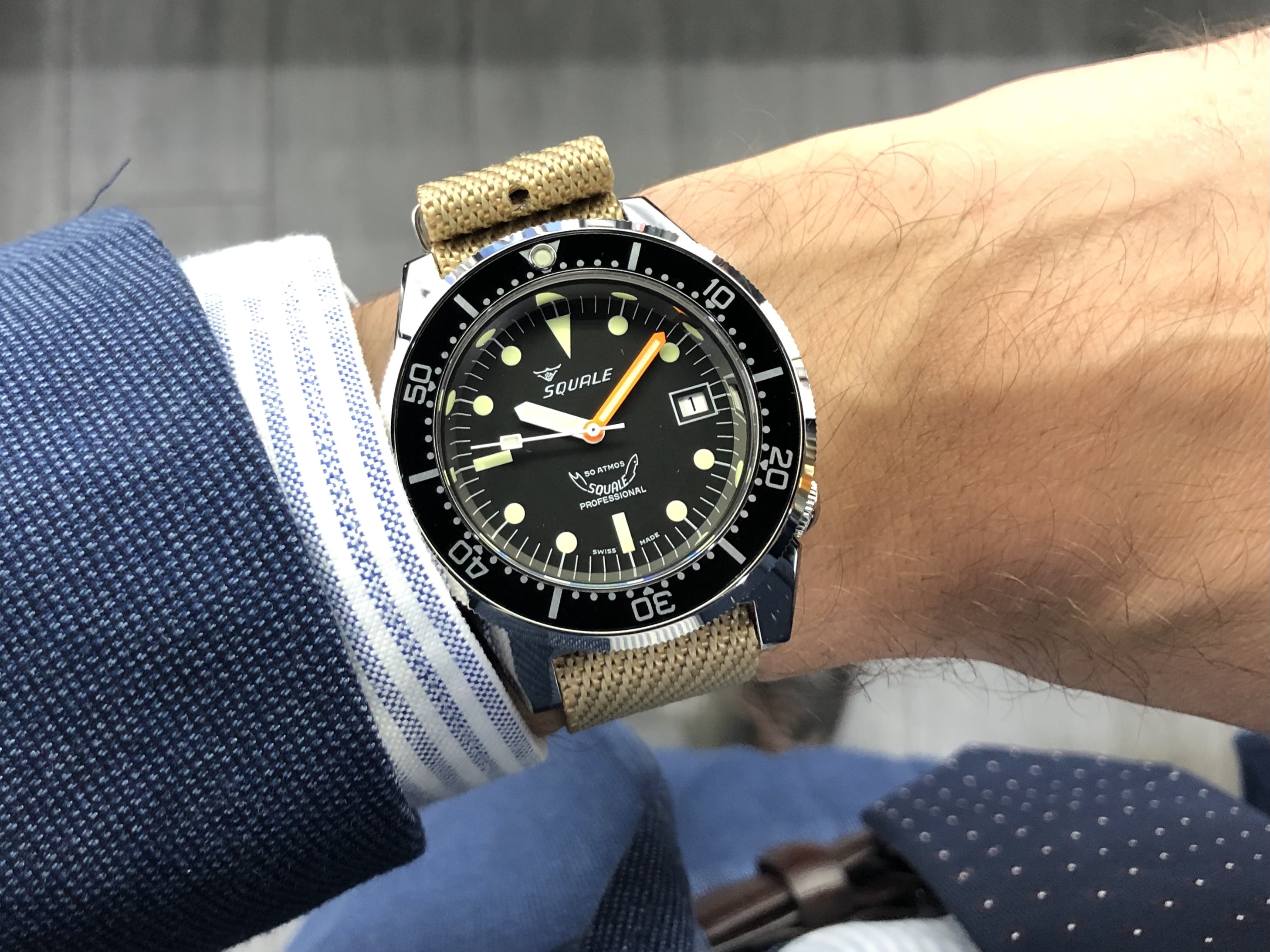
A watch on the right hand – style, convenience or breaking the rules?
A watch is one of those accessories that seem obvious at first glance, yet they can spark a surprisingly large number of questions. At some point, the thought occurs to you – does it really have to be on the left wrist? Maybe wearing a watch on the right hand isn't a mistake at all, but a more comfortable choice, a conscious style, or a small break from the usual rule. For some, it's a matter of ergonomics, for others a sign of independence, and for a growing number of people, simply part of a modern approach to fashion and everyday life. In this article, you'll find out where the tradition came from, what wearing a watch on the right wrist means, and why today it's increasingly up to you – not rigid rules – to decide.
Watch on the right wrist – a mistake, a rebellion, or a conscious choice? Find out before someone calls it "bad form"
For years, one seemingly obvious rule has been ingrained in us – you wear a watch on your left wrist. Full stop. Few people ever questioned where that even came from, because rules – especially social ones – are rarely challenged. Yet their origin was purely practical and historical, not aesthetic or "better." The dominance of right-handedness, the classic placement of the crown, and the realities of everyday life several decades ago made the left wrist the norm. Over time, this norm began to function like an unwritten rule of good manners, even though the circumstances that created it had long since disappeared. As a result, a watch on the right wrist was judged for years not through the lens of functionality, but through the social filter of "that's just not done."
Today, that filter is breaking down more and more often. Wearing a watch on the right wrist is no longer a mistake, let alone a social blunder. It's more of a signal that you consciously approach your own choices and don't treat rules as dogma. Modern etiquette is flexible, and its foundation is becoming comfort, context, and intention. If the watch doesn't interfere with conversation, doesn't dominate the outfit, and is suited to the situation, no reasonable person will consider it bad form. What's more, the right wrist is increasingly ceasing to seem strange and is being perceived as a natural alternative, not a manifesto. And it's exactly at this point that it's worth asking yourself – does sticking to the old rule have any real justification today, or is it simply a habit adopted without reflection./Styczeń 2026/ZEGAREK MĘSKI EPOS OEUVRE D_ART NORTH STAR AUTOMATIC 42mm 3439-322-20-16-25.png)
EPOS Oeuvre d'Art North Star Automatic is an exceptional men's watch with a 42 mm diameter, captivating with its elegant dial featuring a star motif and the prestigious moonphase complication. It's an ideal choice for men who value Swiss precision, a luxurious style, and a timeless character for both everyday wear and special occasions.
Why do some people deliberately wear a watch on the right wrist? Comfort, character, and a pinch of defiance
Contrary to appearances, the decision that a watch on the right wrist makes sense very often has nothing to do with a desire to stand out. For a huge number of people, it's simply the most logical solution. If you're left-handed, the right wrist becomes the natural place for a timepiece – it doesn't get in the way of writing, doesn't catch on the desk, and doesn't conflict with precise movements. Wearing a watch on the right wrist in that case isn't any deviation from the norm, but rather an adaptation of the object to your own body and daily rhythm. The same applies to physically active people, those who work with their hands, or anyone who uses one hand intensively. In such situations, a watch on the dominant wrist can simply be exposed to impacts, friction, and discomfort.
But there are also those who choose the right wrist consciously, even though they're right-handed. And there's nothing accidental about it. These are often people who don't like automatic patterns, who value their own feelings more than social habits, and who don't feel the need to justify their decisions. In that sense, the watch becomes something more than a tool – it's a message. Not loud, not ostentatious, but clear. It shows that you can choose functionality or aesthetics on your own terms. And that if something works better for you, you don't need the approval of those around you to use it. It's not rebellion for the sake of rebellion, but rather consistency in placing comfort and sense above tradition./Styczeń 2026/ZEGAREK MĘSKI EPOS SPORTIVE DIVER AUTOMATIC 41,5 mm 3504-131-20-15-30.png)
EPOS Sportive Diver Automatic 41,5 mm is a solid watch created for men who value sporty elegance and reliability in any conditions. Its expressive dial, Swiss automatic movement, and impressive water resistance make it an ideal choice both for everyday wear and extreme adventures.
What does wearing a watch on the right wrist say about your personality? The psychology no one explained to you before
The psychology of everyday choices is far more complex than it might seem, and details can reveal more than you'd expect. Wearing a watch on the right wrist, especially among right-handed people, is often associated with a particular style of decision-making. It's a signal of cognitive independence – a tendency to analyse rules rather than accept them without thought. Such people more often follow their own experience rather than the opinion of the majority, and they treat comfort as a real value, not a whim. It's not about being contrarian, but about a practical approach to life, in which what actually works matters, not what "looks right."
Interestingly, research into consumer behaviour and habits shows that people who break small conventions – such as where they wear their watch – more often exhibit high self-confidence and a lower susceptibility to social pressure. They don't feel the need to constantly adapt, because their sense of self-worth doesn't depend on the approval of those around them. In this context, a watch on the right wrist isn't an accessory or a manifesto, but a natural extension of a way of thinking. If something makes everyday life easier, improves comfort, or simply fits your way of operating better – that's a sufficient reason to go for it. No ideology, no inventing a backstory, just full awareness of your own needs./Styczeń 2026/ZEGAREK MĘSKI ORIENT CLASSIC BAMBINO V4 AUTOMATIC 42mm RA-AC0P03L10B.png)
Orient Classic Bambino V4 Automatic 42 mm is the quintessence of timeless elegance that perfectly complements the style of a modern man. Its subtle dial, leather strap, and reliable automatic movement make this model a perfect fit for both suits and everyday outfits.
Fashion, etiquette, and common sense – when a watch on the right wrist works in your favour
The world of fashion stopped treating rules as untouchable a long time ago, and watches fit perfectly into that shift. The right wrist is appearing more and more often not as an exception, but as a conscious element of styling. Designers, stylists, and public figures are showing that visual balance is sometimes more important than old-fashioned patterns. If you wear jewellery, rings, or a wedding band on your left hand, moving the watch to the right can make the whole look feel more cohesive and lighter. It's not about an "wow" effect, but about harmony and proportion, which are valued much more today than blindly following rules.
Etiquette has also evolved. The modern approach clearly states – a watch should be discreet, well-matched, and functional, regardless of which wrist it sits on. What matters is whether it doesn't overpower a formal outfit, whether it doesn't distract during a conversation, and whether it's appropriately chosen for the situation. If those conditions are met, the placement stops being relevant. Wearing a watch on the right wrist can therefore work in your favour, highlighting an individual style, a sense of aesthetics, and a modern take on the classics. And that combination of common sense with flexibility is today's best definition of good style.
In the end, it's worth remembering one thing – there is no single universal answer to how to wear a watch, because it all depends on your comfort, your lifestyle, and what simply feels natural to you. Tradition can be interesting, but it shouldn't limit your everyday choices. The most important thing is that the watch suits you – both in terms of comfort and aesthetics. In our WestWatches online watch store, you'll find models that you can wear exactly as you like – on the left, on the right, classically or more modern. What matters is that the timepiece supports your preferences and is an accessory in which you feel good.

Krzysztof Szopa
Watch Expert
An expert associated with WestWatches.pl, a place that has been supplying watches for every occasion for years. Thanks to his many years of experience in the watchmaking and jewellery industries, he passionately shares his knowledge, offering professional advice both in the online and brick-and-mortar store. He specialises in selecting original watches, watch accessories, and jewellery pieces that combine exceptional quality with competitive prices. His goal is to help customers find the perfect product that meets their expectations and enhances their style.

See popular articles
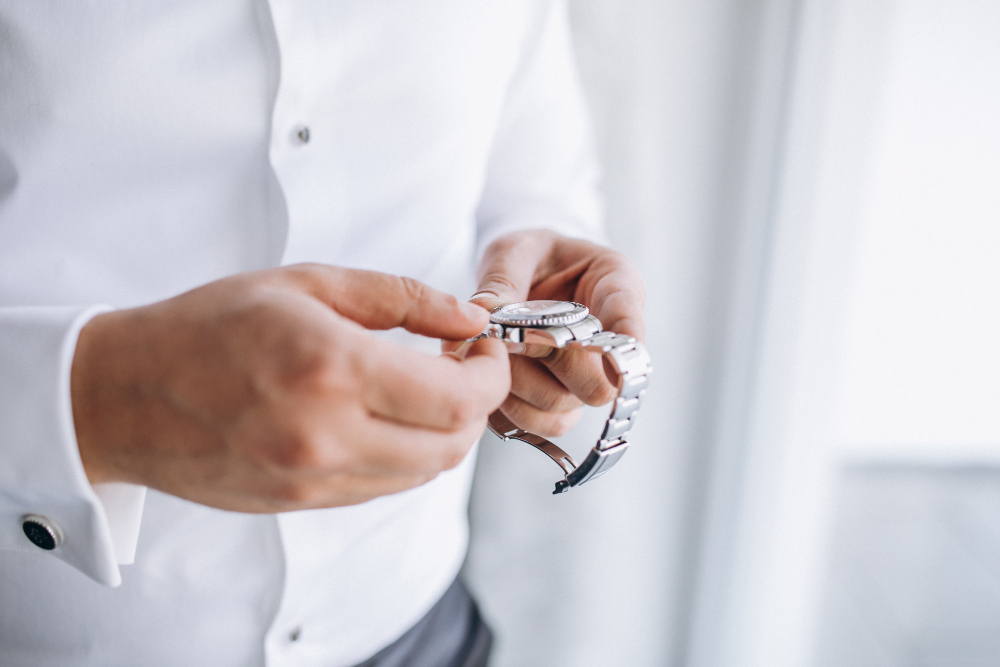
316L, 904L and surgical steel – what is your watch made of?
Most steel watches, from affordable models to luxury constructions, are made of 316L steel. 904L steel contains more nickel, chromium and molybdenum, and therefore offers higher corrosion resistance, but in itself it does not mean greater scratch resistance. The term “surgical steel”, in turn, does not point to one strictly defined alloy. In watches it most often refers to 316L, but without a specific material designation it may simply be a marketing name. If you are choosing a watch for years, look therefore not only at the words “stainless steel”, but also at the grade of steel, which components are made of the given material and how they are finished.
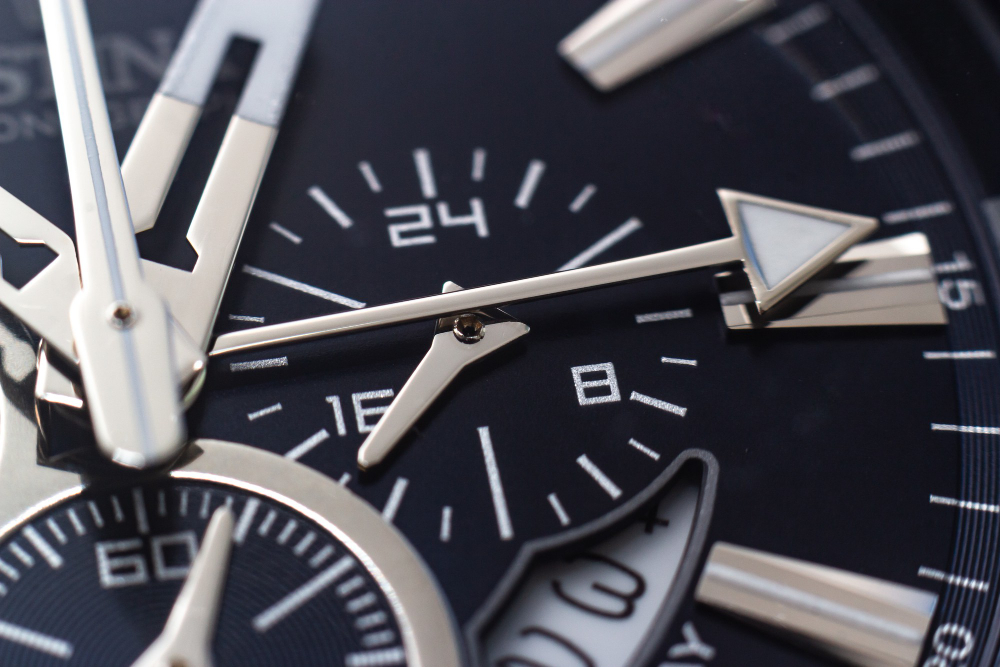
Japanese or Swiss watches? We compare quality, movements and prices
If you are wondering whether Japanese or Swiss watches are better, the name of the country alone will not give you a good answer. In both cases you will find simple models for relatively little money, solid mid-range automatics and designs belonging to the world's watchmaking high end. Far more about quality will be told to you by the specific movement, the way the case and bracelet are made, the crystal, quality control, accuracy and price. Check how Japanese watches really differ from Swiss ones and what to pay attention to before you choose a model for yourself.

The lifespan of a quartz watch – how long does it really last, and when is it no longer worth repairing?
We value quartz watches above all for their accuracy, convenience and modest day-to-day demands. That does not mean, however, that they can run indefinitely and need nothing more than a new battery once every few years. Over time, the components of the movement itself also wear out, and the moment a watch starts giving trouble can look completely different depending on the model, the way it is used and the availability of parts. So how long can a quartz watch last, what wears out in it most often and when does repair still make sense? Check what its lifespan really depends on.
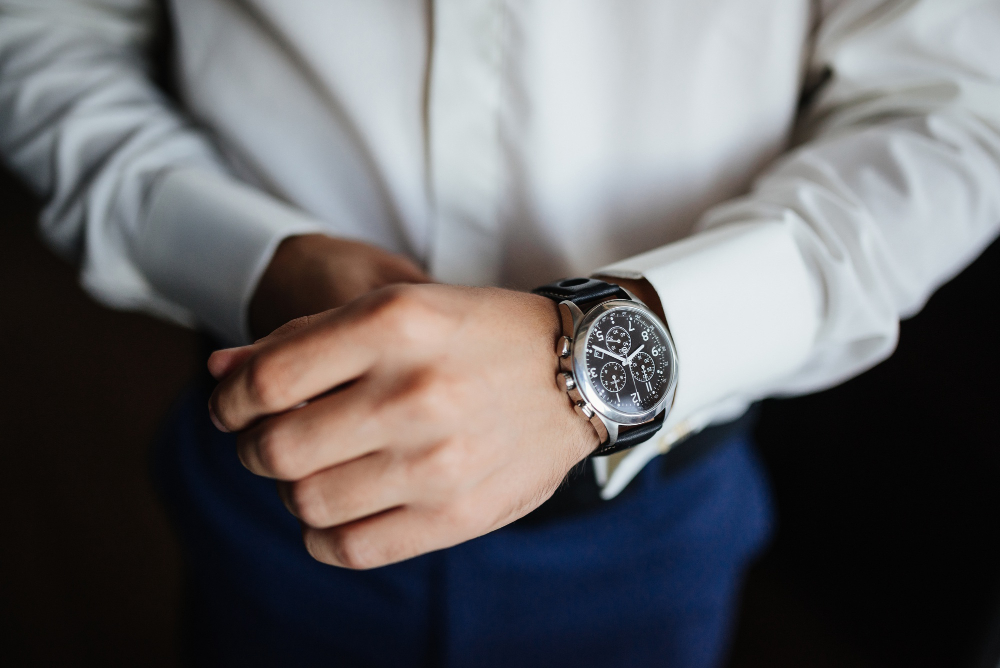
The second hand on a watch – why does it jump, move smoothly or stop?
The way the seconds hand moves can tell you a lot about a watch's movement, but it is not an infallible test. A single distinct jump per second most often points to quartz, several small movements per second are typical of a mechanical movement, and an almost continuous glide is associated with Spring Drive. There are exceptions, however: there is a quartz watch with a sweeping seconds hand, and a mechanical watch that makes exactly one jump per second. What is more, a stopped hand does not have to mean a fault. Check how to read these signals and when you really need a watchmaker's help.

How do you set an automatic watch? Date, time and time zone 21:00–3:00
An automatic watch does not need a battery, but it does require a little knowledge from its owner. Setting the time or date seems simple, yet the wrong moment or the wrong way of using the crown can affect how the movement works. Many questions concern changing the date at night, moving the hands backwards and restarting a watch after a longer break. Check how to set an automatic watch correctly, what to pay attention to with the crown and why people often talk about particular caution between 9:00 pm and 3:00 am.

Wodoszczelność 10 ATM i 20 ATM – czy możesz pływać i nurkować z takim zegarkiem?
Co naprawdę oznacza 10 ATM lub 20 ATM na zegarku i czy takie oznaczenie pozwala bez obaw wejść do basenu, morza albo nurkować? Same liczby mogą być mylące, dlatego sprawdź, jak czytać klasę wodoszczelności i dobrać zegarek do aktywności w wodzie.
Water resistance 3 ATM – what does it mean and what can you do with it?
3 ATM water resistance means the watch is prepared above all for rain, accidental splashes and brief contact with water during everyday activities. It does not mean that you can swim with it, shower in it or submerge it to a depth of 30 metres. It is precisely the “30 m” marking that most often misleads. It is the result of a pressure test carried out under controlled conditions, not a declared working depth. So if you see 3 ATM, 3 bar or Water Resistant 30 m on the case back or in the specification, treat the watch as resistant to everyday moisture, but not as a watch for water activities.

Rolex-style watches – the best alternatives to the Submariner, Explorer and Datejust
For years Rolex has been one of the most important style benchmarks in the watch world, but its price is not within everyone's reach. That is why it is worth looking at watches similar to Rolex and models inspired by its styling, which offer their own character, solid build quality and much more affordable prices. We are not talking about counterfeits here, but about legitimate watches from other brands that draw on similar solutions and design language. Check out watches inspired by Rolex's style and choose the model that suits your style and budget.
A bronze watch – why does each one change over time?
A bronze watch stands out because its appearance changes along with its owner. The case gradually darkens, turns matte and develops a patina, so two identical models can look completely different after just a few months. This is the greatest advantage of bronze, but also a trait you need to accept before buying. If you expect a watch that keeps its factory shine for years, steel may be a better direction. If, on the other hand, you like vintage looks, signs of use and the natural ageing of a material, bronze gives an effect that is hard to achieve in any other metal.