




Big Date – how do the large date display and the dual date window on a watch work?
Some watches display the date in a way that's hard not to notice – with large, clear numerals in a separate window. Behind this simple effect lies an interesting mechanism and several different construction solutions. Discover what big date is, how a dual date disc works, and what sets it apart from classical date indication.
Big Date – what is it and why are two discs used?
Big Date is an enlarged day-of-month indication in which, instead of a classical single disc, two independent elements typically work together. A typical construction divides the date into tens and units. The first disc shows numerals 0, 1, 2, and 3, while the second shows numerals from 0 to 9. This way, in the window you can see, for example, 01, 16, or 31 written in much larger characters than in an ordinary date window.
The reason for using big date is simple: larger numerals are easier to read. Instead of a single disc with 31 markings, several cooperating elements are used, allowing the date to be presented more clearly. Manufacturers employ various constructions – including parallel discs, overlapping discs, or coaxial discs.
The idea itself isn't new. The first constructions using two discs appeared as early as the 1930s. One important example was the Helvetia 75A caliber from 1932. The modern popularity of the solution, however, came with the A. Lange & Söhne Lange 1 presented in 1994. This doesn't mean the brand invented big date – it popularized its contemporary, luxurious form and made the large date window one of the most characteristic elements of watch design.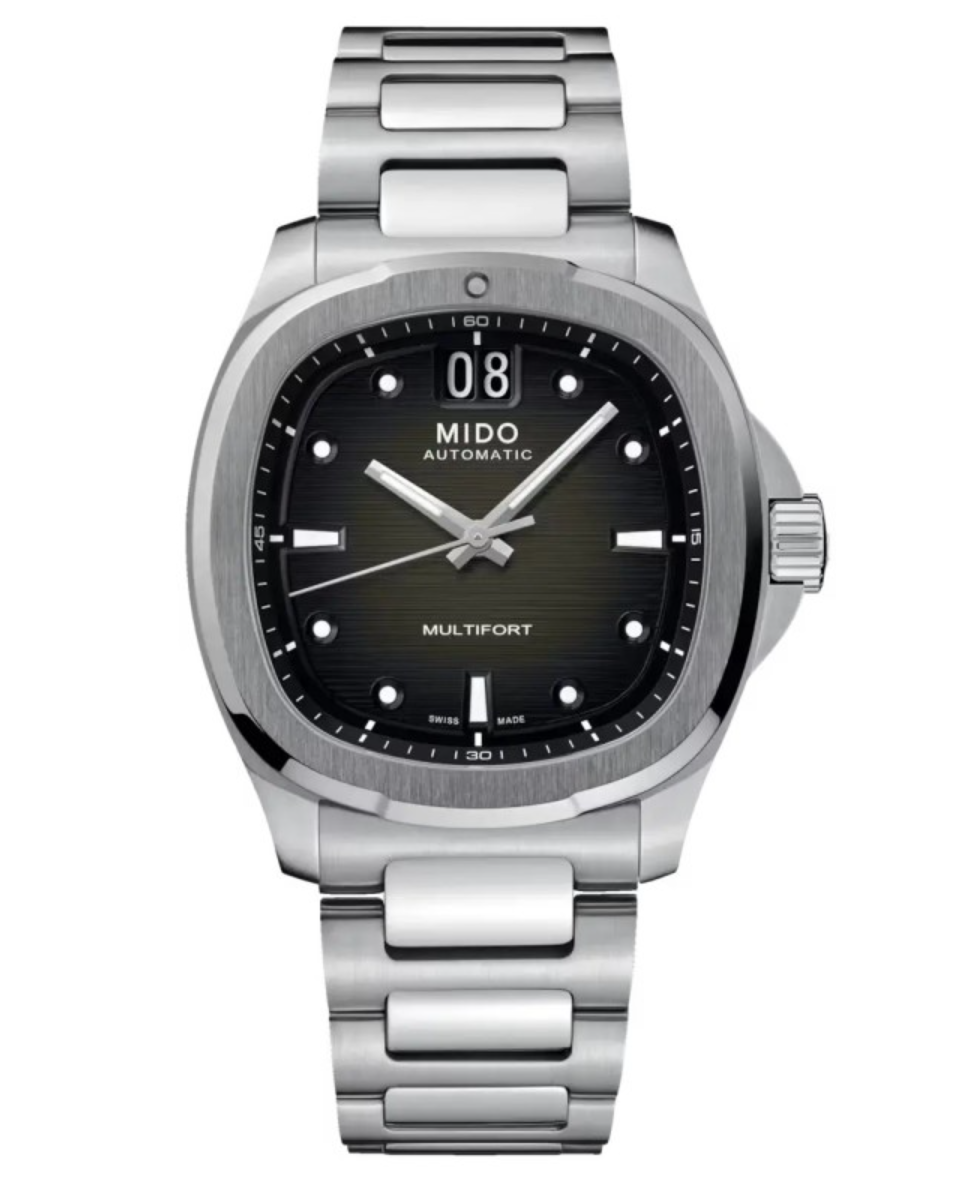
MIDO Multifort TV Big Date Automatic 40 mm demonstrates well how effectively a large date can be used in a modern watch. The double date window positioned at 12 o'clock catches the eye and makes quick reading easy, and the distinctive case gives the model an expressive, sport-elegant character. It's an interesting example in which big date is both a practical function and a strong element of the dial design.
How does a dual date mechanism work in a watch?
The big date mechanism controls two elements so that together they always form the correct day-of-month number. For date 08, the tens disc shows "0" and the units disc shows "8". At 14, you get "1" and "4" respectively, at 27 – "2" and "7", and at 31 – "3" and "1".
Simply placing two discs beneath the dial isn't the greatest challenge. The difficulty begins when you need to synchronize their movement. The units disc must change position every day, while the tens disc should react only at specific moments. The mechanism must therefore correctly handle transitions including:
- 09 → 10,
- 19 → 20,
- 29 → 30,
- 31 → 01.
In simplified terms, the calendar mechanism accumulates energy, then releases it near midnight to move the units disc and – at the appropriate moment – the tens disc. In the historical Helvetia 75A caliber, an element on the units disc every ten days triggered the tens change, showing how important precise synchronization of both indications is here.
Zeppelin LZ 126 Los Angeles 8644-5 has a distinct date window at 12 o'clock that harmoniously fits into the dial styling inspired by historic ship chronometers. It's a good example of how big date can improve legibility while being a cohesive element of watch design.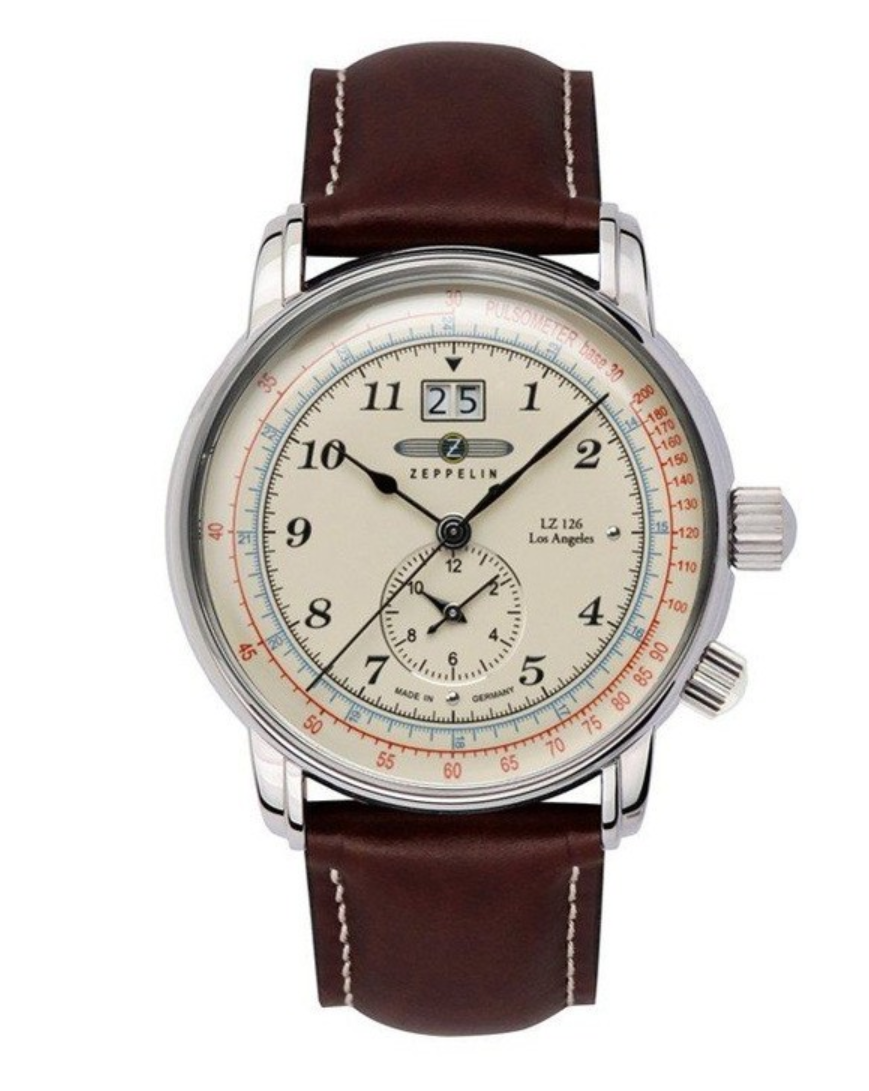
Why is the date change from 31 to 01 the most difficult?
The transition from 31 to 01 requires simultaneous change of both numerals, making it one of the most demanding moments in big date mechanism operation. The tens disc must transition from "3" to "0", and the units disc must settle on "1". In more advanced constructions, the change occurs with a jump or nearly instantaneously, so an incorrect setting isn't visible in the window for an extended period.
You should also remember that big date by itself doesn't recognize month lengths. If the watch doesn't have an annual or perpetual calendar, after 30-day months and after February, the date may require manual correction. When setting the date, it's best to check the instructions for the specific model, as in many mechanisms rapid correction isn't recommended when the date mechanism is already changing.
Big date versus ordinary date window, annual calendar, and perpetual calendar – what's the difference?
Big date primarily describes how the date is presented, not the watch's ability to recognize the length of individual months. This distinction is important if you're choosing a watch and care not only about legibility but also about minimizing manual corrections.
In a classical date window, a single disc with numerals from 1 to 31 typically works. The construction is simpler and usually takes up less space, but the size of the numerals remains limited. In big date, two elements typically appear – a larger window and a more elaborate synchronization system. You gain significantly larger indication as a result, but the mechanism requires more parts and more precise regulation.
However, this doesn't mean a watch with a dual date window automatically knows when February ends. An ordinary big date may require exactly the same calendar corrections as a traditional date window.
Only additional complications change how it functions:
- full calendar can display the day of month, day of week, and month, but usually still requires correction after months shorter than 31 days,
- annual calendar recognizes months with 30 and 31 days and usually requires correction once a year – after February,
- perpetual calendar also accounts for February's length and leap years.
Large date can be part of any of these solutions or appear as a standalone function. That's why when comparing watches, check not only the window's appearance but also the type of calendar used and its correction rules.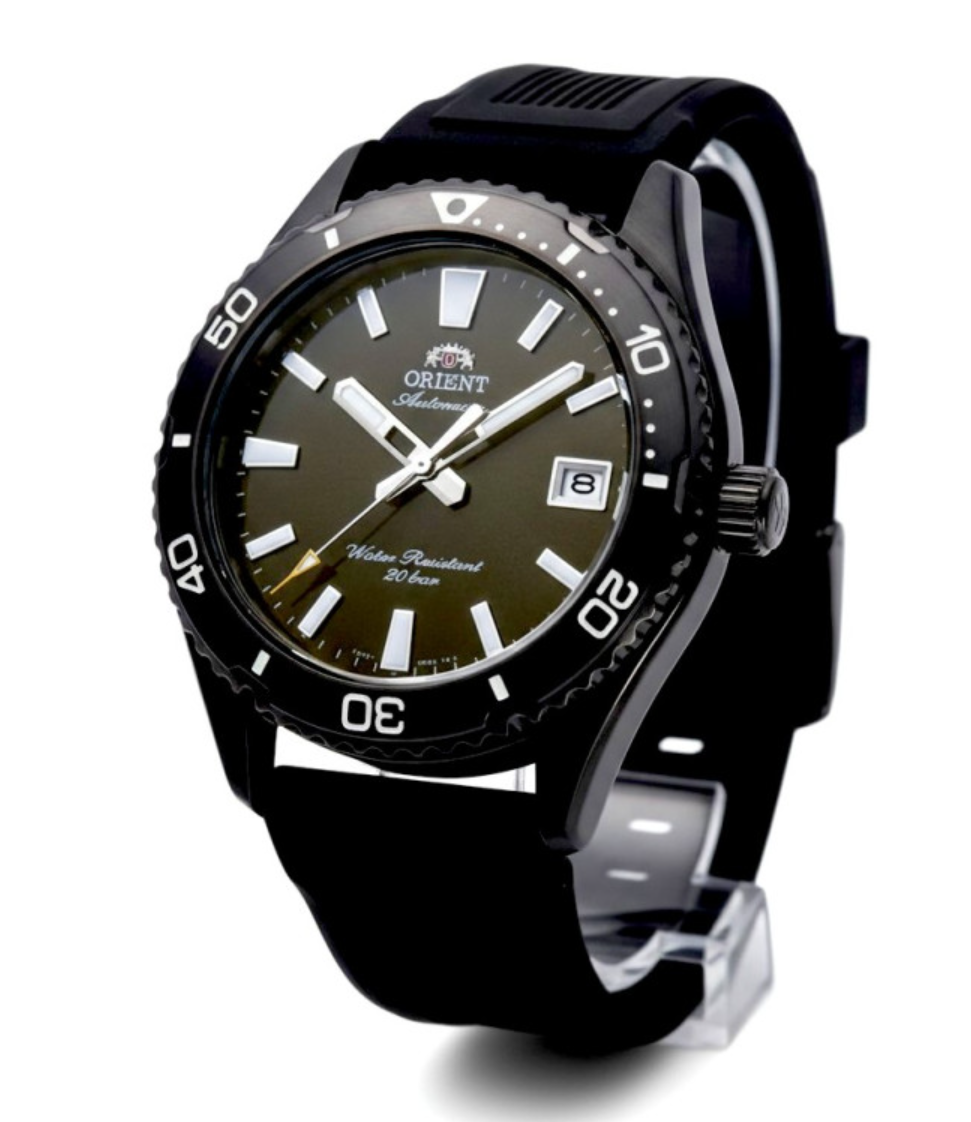
Orient Sports Mako Diver Automatic 40 mm is, by contrast, an example of a watch with a classical date window. A single window at 3 o'clock shows the complete day number on a single disc, so it's smaller and more discreet than in big date constructions. This well demonstrates the difference between standard date indication and a large, dual date window.
Is a watch with a large date worth attention?
A watch with a large date makes sense primarily when you care about legible date indication and a distinctive dial appearance. The most important benefit is quite concrete: you can read larger numerals faster, often without a magnifying glass used over a classical date window.
Big date does, however, have a construction cost. Two cooperating elements require precise setting and synchronization. A slight shift of the numerals is far more visible here than in a small, classical date window. There's also the greater number of parts, potentially more difficult service, and – depending on construction – higher production costs.
If you're looking at a watch with a dual date window, check the numeral legibility, their alignment, the way they change near midnight, and the rules for manual correction. In our online watch store you'll find men's watches with date window or women's watches with date window. These very details show the difference between simple date indication and a truly refined mechanism.

Krzysztof Szopa
Watch Expert
Expert associated with the WestWatches.pl brand, a place that has been supplying watches for every occasion for years. Thanks to many years of experience in the watchmaking and jewelry industry, he passionately shares his knowledge, offering professional advice both in the online store and in the physical location. He specializes in selecting original watches, watch accessories, and jewelry items that combine exceptional quality with competitive prices. His goal is to help customers find the perfect product that meets their expectations and highlights their style.

See popular articles

316L, 904L and surgical steel – what is your watch made of?
Most steel watches, from affordable models to luxury constructions, are made of 316L steel. 904L steel contains more nickel, chromium and molybdenum, and therefore offers higher corrosion resistance, but in itself it does not mean greater scratch resistance. The term “surgical steel”, in turn, does not point to one strictly defined alloy. In watches it most often refers to 316L, but without a specific material designation it may simply be a marketing name. If you are choosing a watch for years, look therefore not only at the words “stainless steel”, but also at the grade of steel, which components are made of the given material and how they are finished.
Japanese or Swiss watches? We compare quality, movements and prices
If you are wondering whether Japanese or Swiss watches are better, the name of the country alone will not give you a good answer. In both cases you will find simple models for relatively little money, solid mid-range automatics and designs belonging to the world's watchmaking high end. Far more about quality will be told to you by the specific movement, the way the case and bracelet are made, the crystal, quality control, accuracy and price. Check how Japanese watches really differ from Swiss ones and what to pay attention to before you choose a model for yourself.

The lifespan of a quartz watch – how long does it really last, and when is it no longer worth repairing?
We value quartz watches above all for their accuracy, convenience and modest day-to-day demands. That does not mean, however, that they can run indefinitely and need nothing more than a new battery once every few years. Over time, the components of the movement itself also wear out, and the moment a watch starts giving trouble can look completely different depending on the model, the way it is used and the availability of parts. So how long can a quartz watch last, what wears out in it most often and when does repair still make sense? Check what its lifespan really depends on.

The second hand on a watch – why does it jump, move smoothly or stop?
The way the seconds hand moves can tell you a lot about a watch's movement, but it is not an infallible test. A single distinct jump per second most often points to quartz, several small movements per second are typical of a mechanical movement, and an almost continuous glide is associated with Spring Drive. There are exceptions, however: there is a quartz watch with a sweeping seconds hand, and a mechanical watch that makes exactly one jump per second. What is more, a stopped hand does not have to mean a fault. Check how to read these signals and when you really need a watchmaker's help.

How do you set an automatic watch? Date, time and time zone 21:00–3:00
An automatic watch does not need a battery, but it does require a little knowledge from its owner. Setting the time or date seems simple, yet the wrong moment or the wrong way of using the crown can affect how the movement works. Many questions concern changing the date at night, moving the hands backwards and restarting a watch after a longer break. Check how to set an automatic watch correctly, what to pay attention to with the crown and why people often talk about particular caution between 9:00 pm and 3:00 am.

Wodoszczelność 10 ATM i 20 ATM – czy możesz pływać i nurkować z takim zegarkiem?
Co naprawdę oznacza 10 ATM lub 20 ATM na zegarku i czy takie oznaczenie pozwala bez obaw wejść do basenu, morza albo nurkować? Same liczby mogą być mylące, dlatego sprawdź, jak czytać klasę wodoszczelności i dobrać zegarek do aktywności w wodzie.
Water resistance 3 ATM – what does it mean and what can you do with it?
3 ATM water resistance means the watch is prepared above all for rain, accidental splashes and brief contact with water during everyday activities. It does not mean that you can swim with it, shower in it or submerge it to a depth of 30 metres. It is precisely the “30 m” marking that most often misleads. It is the result of a pressure test carried out under controlled conditions, not a declared working depth. So if you see 3 ATM, 3 bar or Water Resistant 30 m on the case back or in the specification, treat the watch as resistant to everyday moisture, but not as a watch for water activities.

Rolex-style watches – the best alternatives to the Submariner, Explorer and Datejust
For years Rolex has been one of the most important style benchmarks in the watch world, but its price is not within everyone's reach. That is why it is worth looking at watches similar to Rolex and models inspired by its styling, which offer their own character, solid build quality and much more affordable prices. We are not talking about counterfeits here, but about legitimate watches from other brands that draw on similar solutions and design language. Check out watches inspired by Rolex's style and choose the model that suits your style and budget.
A bronze watch – why does each one change over time?
A bronze watch stands out because its appearance changes along with its owner. The case gradually darkens, turns matte and develops a patina, so two identical models can look completely different after just a few months. This is the greatest advantage of bronze, but also a trait you need to accept before buying. If you expect a watch that keeps its factory shine for years, steel may be a better direction. If, on the other hand, you like vintage looks, signs of use and the natural ageing of a material, bronze gives an effect that is hard to achieve in any other metal.