



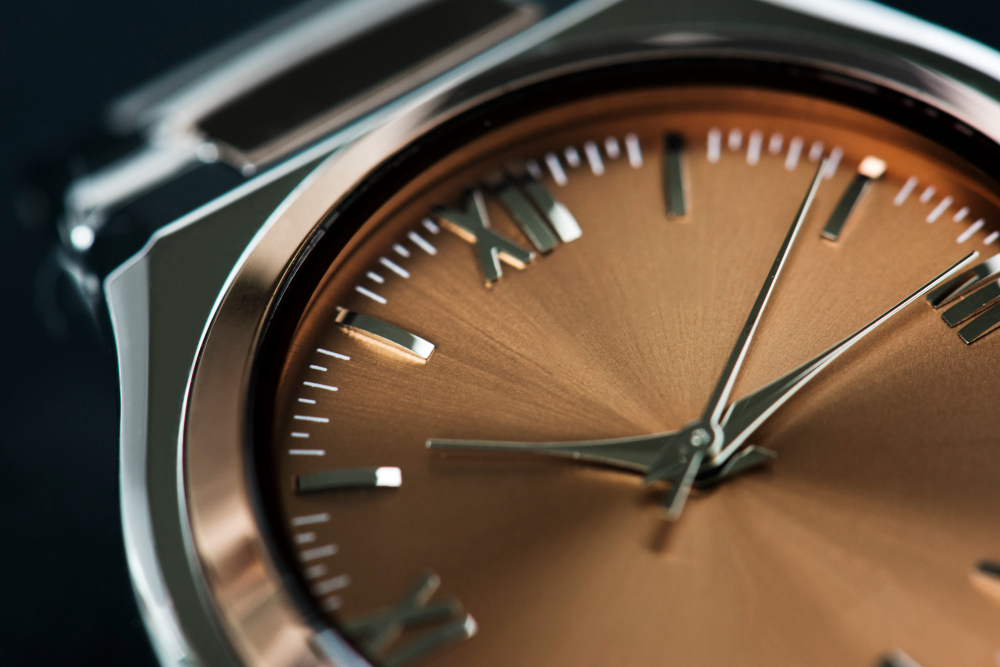
Jumping hour – how does this unusual complication work?
Mechanical watches can display time in far more ways than a classical hand layout suggests. One of the most interesting is jumping hour – a solution that combines traditional mechanics with an unusual way of presenting time. How exactly does this mechanism work, where did the idea come from, and why does it still attract collectors' attention? Discover what lies behind the characteristic "jump" of the hour.
Jumping hour – what exactly is it?
Jumping hour is a way of indicating time using a rotating disc with numerals that you view through an aperture in the watch dial. Instead of observing the slow movement of the hour hand from 10 to 11 over the course of an hour, you look at a clear numeral "10" throughout the hour. Only after 60 minutes does the disc make a quick movement and "11" appears in the window. Minutes are usually read traditionally using a hand moving along the outer scale. This means the hour is readable instantly, and the way time is presented clearly differs from a classical analog watch.
This simplicity is somewhat paradoxical, because behind the stationary numeral lies a mechanism working constantly. The hour disc cannot move freely – for most of the hour it remains precisely locked in one position. Only at a specific moment is the lock released and energy previously accumulated by the mechanism moves the disc by 30°, exactly 1/12 of a full rotation. That's why jumping hour is not a digital display in the electronic sense. It's still pure mechanics, just showing time in a form that might seem like a digital watch at first glance.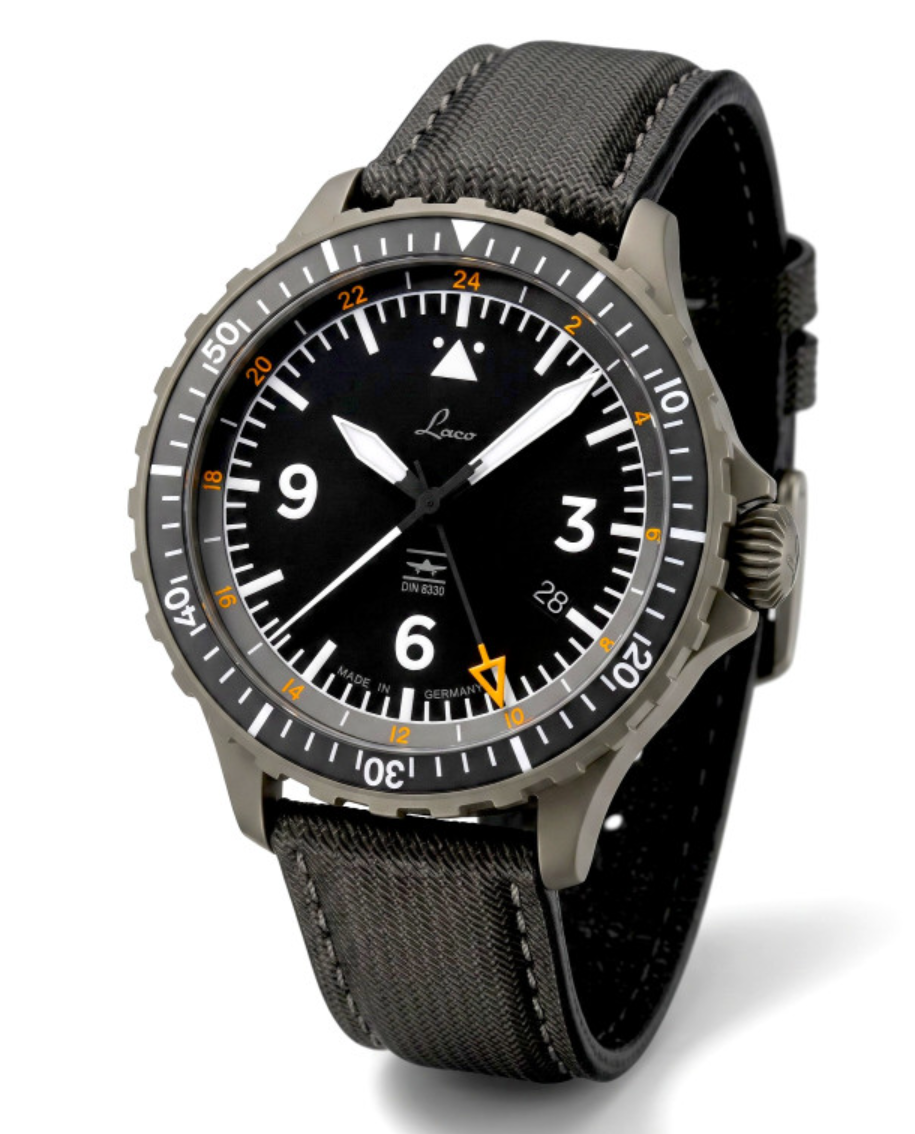
If you're looking for something unusual but jumping hour is too rare, it's worth checking out the Laco Hamburg GMT DIN 8330 Automatic 43.5 mm 862165. This model uses the GMT / Dual Time function, allowing you to simultaneously track time in two time zones. The additional 24-hour scale and distinctive GMT hand give the dial a technical character while offering a function that's truly useful when traveling.
How does a watch with an hour window work?
The jumping hour mechanism accumulates energy for 60 minutes, then releases it in a short impulse that moves the hour disc by one position. One of the most important elements of the system can be a cam called a snail cam. As time passes, it gradually raises a lever arm. Simultaneously, a spring is tensioned, responsible for the later jump. When the minute indication reaches the end of a full hour, the system is released. The spring rapidly expends the accumulated energy, the lever pushes the disc, and the next numeral appears in the aperture.
It's precisely the need to deliver a short and relatively powerful impulse that makes jumping hour construction more demanding than simply moving the hour hand. Classical hands draw energy in a far more even manner. Here the mechanism must first accumulate it, then use it in a single instant without disrupting the watch's timekeeping stability. More advanced constructions employ additional solutions controlling the flow of energy. A good example is the A. Lange & Söhne Zeitwerk, which uses a constant-force spring remontoir solution to help ensure regular jumping of the digital indications.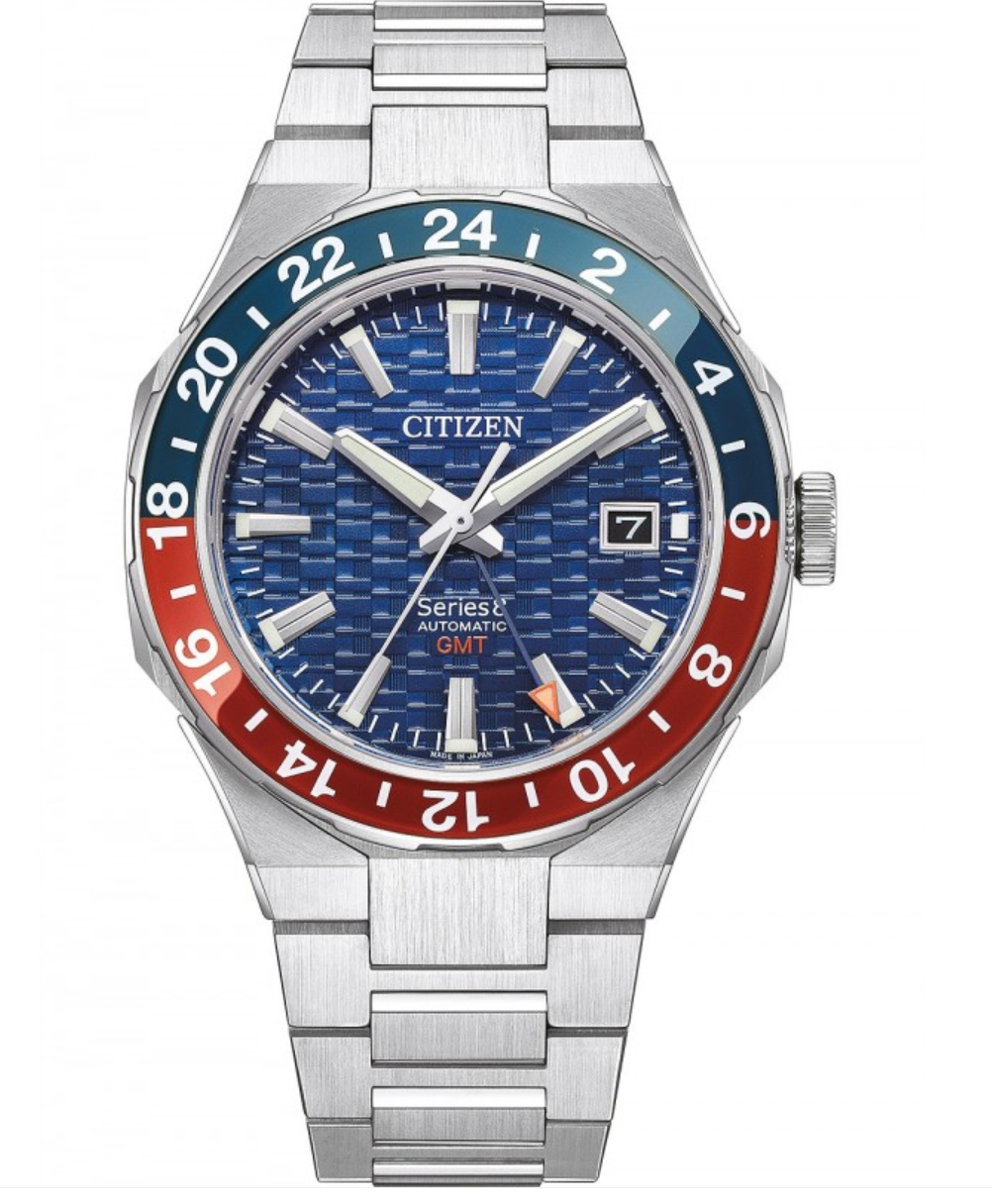
Another interesting alternative to jumping hour is the Citizen Series 8 Automatic GMT 41 mm NB6030-59L. This is an automatic model from the upper series of the Japanese brand, equipped with a practical GMT function, date window, and stainless steel bracelet. The distinctive two-tone bezel with a 24-hour scale and additional GMT hand allow you to track time in another zone, and the modern styling makes the watch combine an eye-catching complication with functionality useful for everyday wear and travel.
How does jumping hour differ from jumping minutes and wandering hour?
In classical jumping hour, primarily the hour jumps, but in more elaborate constructions minutes can change in a similar manner. In the basic version you have the hour numeral in the window plus a traditional minute hand. A full mechanical digital display looks completely different. In the A. Lange & Söhne Zeitwerk, three discs were used: one for hours and two subsequent ones for tens and units of minutes. This means the indication elements must perform a controlled jump every 60 seconds, and when the hour changes several indications shift nearly simultaneously. This is a significantly greater energy challenge than a single jump per hour.
Jumping hour is also easily confused with wandering hour, but the reading principle is different. In wandering hour, the current hour numeral typically moves along an arc corresponding to minutes, often using rotating satellites. Yet another solution is retrograde indication, in which the hand passes through a specific portion of the scale, then snaps back to the starting point. Jumping hour stands out with a numeral that remains still most of the time and suddenly changes to the next hour. It's precisely this moment that gives the complication its characteristic, almost theatrical effect.
You'll find many other interesting complications in watches that change how time is presented and extend its functionality. It's worth learning about GMT, World Time, and Dual Time, which allow tracking time across different zones, as well as retrograde indication, in which the hand reaches the end of the scale and makes a dramatic return to its starting position. Against these solutions, jumping hour remains a far more niche complication and appears less frequently both in watches themselves and in classical divisions or function filters used in watch retailers.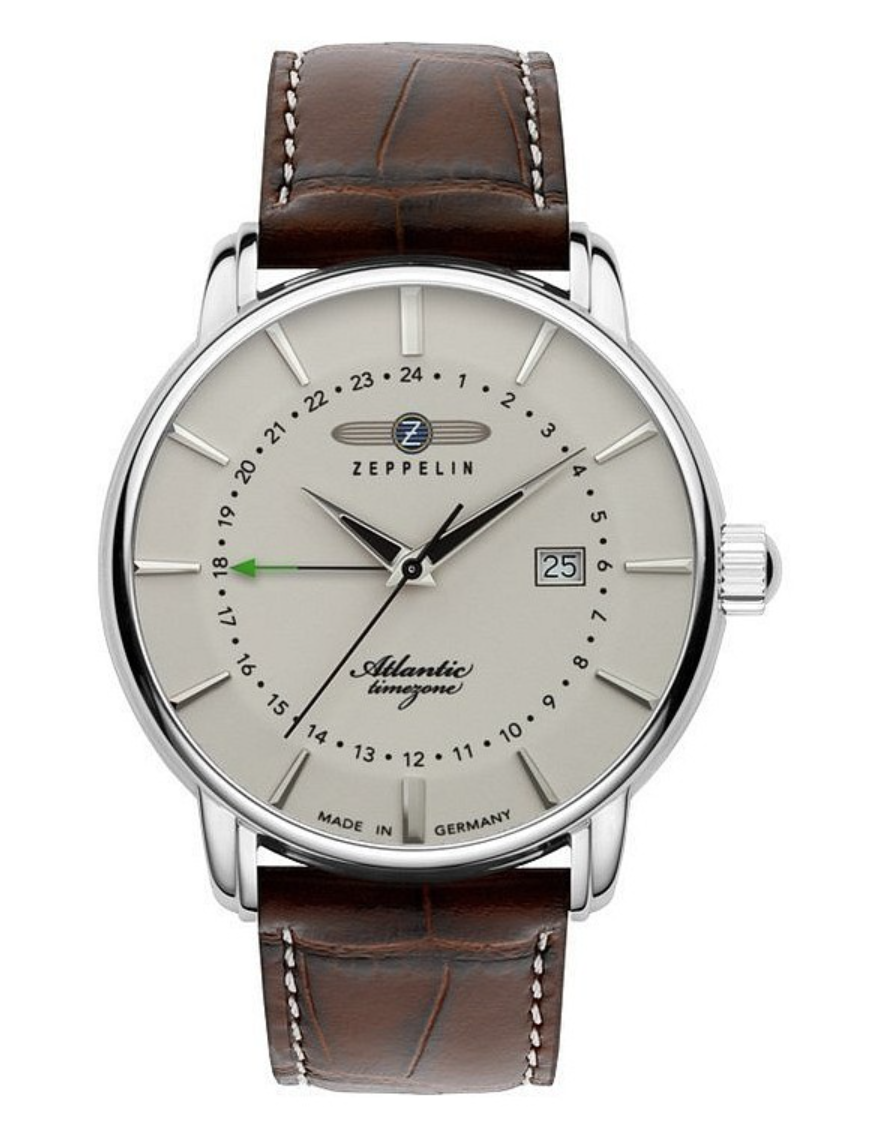
If you want additional functionality but not necessarily a mechanical watch, an interesting proposition is the Zeppelin Atlantic GMT 40 mm 8442-5. This model uses the Ronda 505.24H quartz mechanism with a GMT function, so the additional hand lets you track time in a second time zone.
Where did jumping hour come from?
The history of jumping hour reaches back to the 19th century, long before electronic digital watches. In 1883, Joseph Pallweber from Salzburg patented a system allowing hours and minutes to be presented using numerals visible in windows. The technology was later licensed to companies including IWC and appeared in pocket watches known today as IWC Pallweber. It was an extraordinarily interesting idea: a mechanical watch showed time almost the way electronic devices began doing decades later. Instead of interpreting hand position, the user could simply read the numbers.
In wristwatches, the complication appeared in the 1920s, but for subsequent decades remained a relatively niche solution. One reason was precisely the demands related to energy and precision of the jump moment. The modern chapter of this history opened with A. Lange & Söhne Zeitwerk presented in 2009, combining mechanical operation with full digital time indication. Meanwhile, in 2018, IWC Tribute to Pallweber directly referenced Pallweber's historical design. Jumping hour can thus be treated as one of the oldest mechanical ways of creating what we would today call a "digital" way of reading time.
Today, watches with the jumping hour complication can be found both in collections of prestigious manufactures and brands offering more affordable models. The most well-known examples include A. Lange & Söhne Zeitwerk, IWC Tribute to Pallweber, or Patek Philippe Chiming Jump Hour ref. 5275. Brands such as De Bethune, F.P. Journe, Omega, Baume & Mercier, and Christopher Ward have also experimented with similar solutions. Thanks to this, Men's automatic watches with jumping hour can be found in very different segments – from collector haute horlogerie models to less obvious propositions for those seeking an unusual way to display time.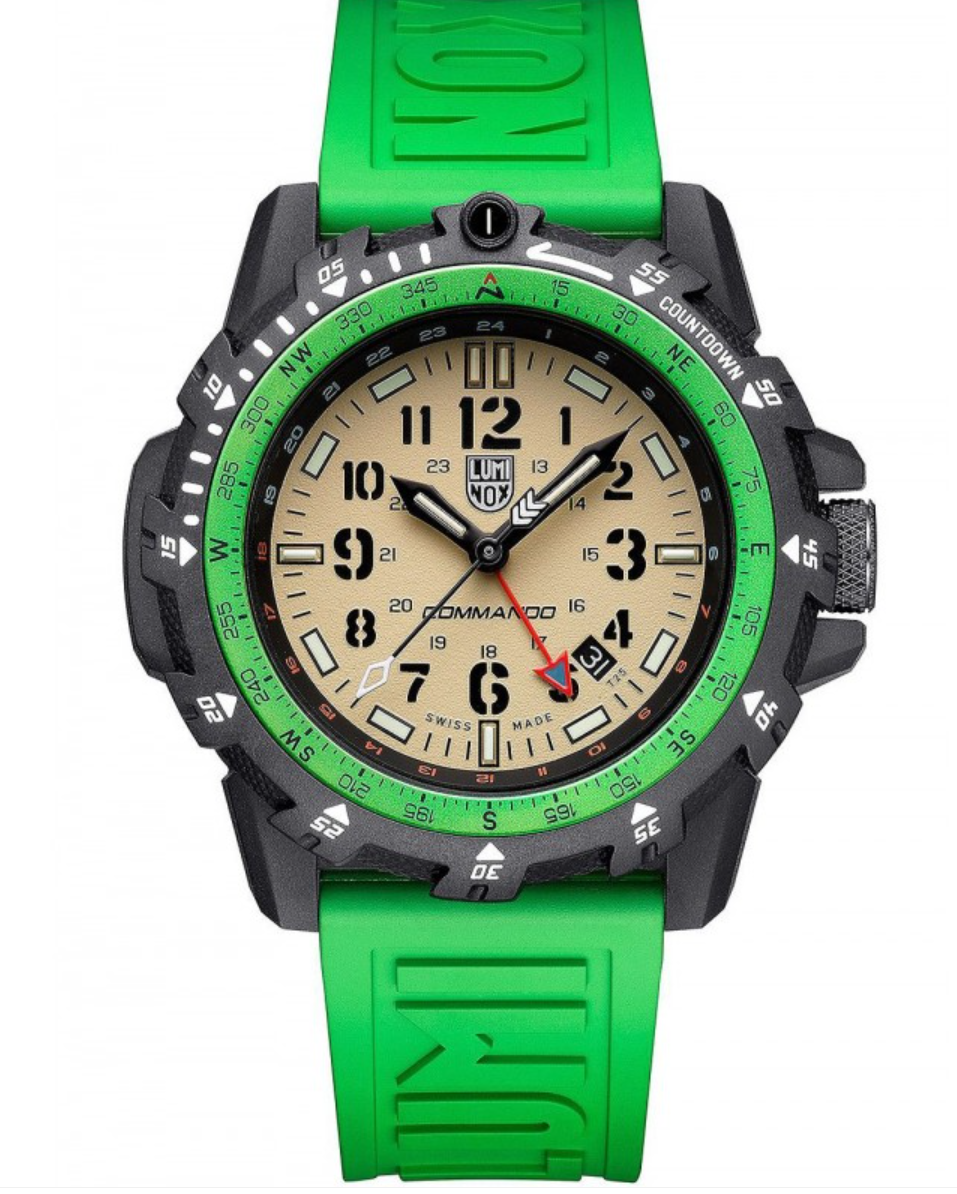
An even more practical approach to time indication is offered by the Luminox Commando Raider Dual Time 46 mm XL.3337. This quartz, tactical-style model has a Dual Time function allowing you to track two time zones while offering high water resistance of 20 ATM. It's a good example of the difference between complications: in Dual Time, the additional hand serves to read time in a second zone, whereas jumping hour presents the current hour in a window and changes it with a jump after a full 60 minutes have passed.
Does jumping hour make sense beyond its visual effect?
Yes, but you choose jumping hour primarily for the way you interact with the mechanics, not because the watch becomes more accurate thanks to it. The most practical advantage is unambiguous hour reading. In the window you see a specific numeral, so you don't have to judge whether the hand is still closer to 10 or already approaching 11. There's also the rarity of the solution itself. Against the backdrop of thousands of classical dials with three hands, a jumping hour immediately catches attention. For a mechanics enthusiast, the additional appeal is the moment of indication change – for an hour seemingly nothing happens, then in a fraction of a second the mechanism shows how much work it performed behind the scenes.
This construction also has limitations. The jump can require considerable energy impulse, complicating mechanism design and potentially affecting balance amplitude and power reserve. The module responsible for jumping hour can also increase mechanism thickness; in some implementations the additional height reaches approximately 2.5 mm. The moment of change doesn't always occur perfectly at the same second – in mechanical constructions it can occur a few seconds before the full hour or shortly after. And therein lies the character of this complication. Jumping hour doesn't try to mimic electronics. It shows how from wheels, springs, and levers you can create an indication that looks digital but remains entirely mechanical.
Jumping hour is a complication that demonstrates how creatively traditional watchmaking can approach time presentation. The characteristic hour jump, the eye-catching mechanism operation, and the relatively limited popularity of this solution make such models particularly interesting to collectors. If you're looking for both classical and more unusual timepieces, the WestWatches online watch store can be a good place to explore various constructions and styles of contemporary watches.

Krzysztof Szopa
Watch Expert
Expert associated with the WestWatches.pl brand, a place that has been supplying watches for every occasion for years. Thanks to many years of experience in the watchmaking and jewelry industry, he passionately shares his knowledge, offering professional advice both in the online store and in the physical location. He specializes in selecting original watches, watch accessories, and jewelry items that combine exceptional quality with competitive prices. His goal is to help customers find the perfect product that meets their expectations and highlights their style.

See popular articles

316L, 904L and surgical steel – what is your watch made of?
Most steel watches, from affordable models to luxury constructions, are made of 316L steel. 904L steel contains more nickel, chromium and molybdenum, and therefore offers higher corrosion resistance, but in itself it does not mean greater scratch resistance. The term “surgical steel”, in turn, does not point to one strictly defined alloy. In watches it most often refers to 316L, but without a specific material designation it may simply be a marketing name. If you are choosing a watch for years, look therefore not only at the words “stainless steel”, but also at the grade of steel, which components are made of the given material and how they are finished.
Japanese or Swiss watches? We compare quality, movements and prices
If you are wondering whether Japanese or Swiss watches are better, the name of the country alone will not give you a good answer. In both cases you will find simple models for relatively little money, solid mid-range automatics and designs belonging to the world's watchmaking high end. Far more about quality will be told to you by the specific movement, the way the case and bracelet are made, the crystal, quality control, accuracy and price. Check how Japanese watches really differ from Swiss ones and what to pay attention to before you choose a model for yourself.

The lifespan of a quartz watch – how long does it really last, and when is it no longer worth repairing?
We value quartz watches above all for their accuracy, convenience and modest day-to-day demands. That does not mean, however, that they can run indefinitely and need nothing more than a new battery once every few years. Over time, the components of the movement itself also wear out, and the moment a watch starts giving trouble can look completely different depending on the model, the way it is used and the availability of parts. So how long can a quartz watch last, what wears out in it most often and when does repair still make sense? Check what its lifespan really depends on.
The second hand on a watch – why does it jump, move smoothly or stop?
The way the seconds hand moves can tell you a lot about a watch's movement, but it is not an infallible test. A single distinct jump per second most often points to quartz, several small movements per second are typical of a mechanical movement, and an almost continuous glide is associated with Spring Drive. There are exceptions, however: there is a quartz watch with a sweeping seconds hand, and a mechanical watch that makes exactly one jump per second. What is more, a stopped hand does not have to mean a fault. Check how to read these signals and when you really need a watchmaker's help.

How do you set an automatic watch? Date, time and time zone 21:00–3:00
An automatic watch does not need a battery, but it does require a little knowledge from its owner. Setting the time or date seems simple, yet the wrong moment or the wrong way of using the crown can affect how the movement works. Many questions concern changing the date at night, moving the hands backwards and restarting a watch after a longer break. Check how to set an automatic watch correctly, what to pay attention to with the crown and why people often talk about particular caution between 9:00 pm and 3:00 am.

Wodoszczelność 10 ATM i 20 ATM – czy możesz pływać i nurkować z takim zegarkiem?
Co naprawdę oznacza 10 ATM lub 20 ATM na zegarku i czy takie oznaczenie pozwala bez obaw wejść do basenu, morza albo nurkować? Same liczby mogą być mylące, dlatego sprawdź, jak czytać klasę wodoszczelności i dobrać zegarek do aktywności w wodzie.
Water resistance 3 ATM – what does it mean and what can you do with it?
3 ATM water resistance means the watch is prepared above all for rain, accidental splashes and brief contact with water during everyday activities. It does not mean that you can swim with it, shower in it or submerge it to a depth of 30 metres. It is precisely the “30 m” marking that most often misleads. It is the result of a pressure test carried out under controlled conditions, not a declared working depth. So if you see 3 ATM, 3 bar or Water Resistant 30 m on the case back or in the specification, treat the watch as resistant to everyday moisture, but not as a watch for water activities.

Rolex-style watches – the best alternatives to the Submariner, Explorer and Datejust
For years Rolex has been one of the most important style benchmarks in the watch world, but its price is not within everyone's reach. That is why it is worth looking at watches similar to Rolex and models inspired by its styling, which offer their own character, solid build quality and much more affordable prices. We are not talking about counterfeits here, but about legitimate watches from other brands that draw on similar solutions and design language. Check out watches inspired by Rolex's style and choose the model that suits your style and budget.
A bronze watch – why does each one change over time?
A bronze watch stands out because its appearance changes along with its owner. The case gradually darkens, turns matte and develops a patina, so two identical models can look completely different after just a few months. This is the greatest advantage of bronze, but also a trait you need to accept before buying. If you expect a watch that keeps its factory shine for years, steel may be a better direction. If, on the other hand, you like vintage looks, signs of use and the natural ageing of a material, bronze gives an effect that is hard to achieve in any other metal.