



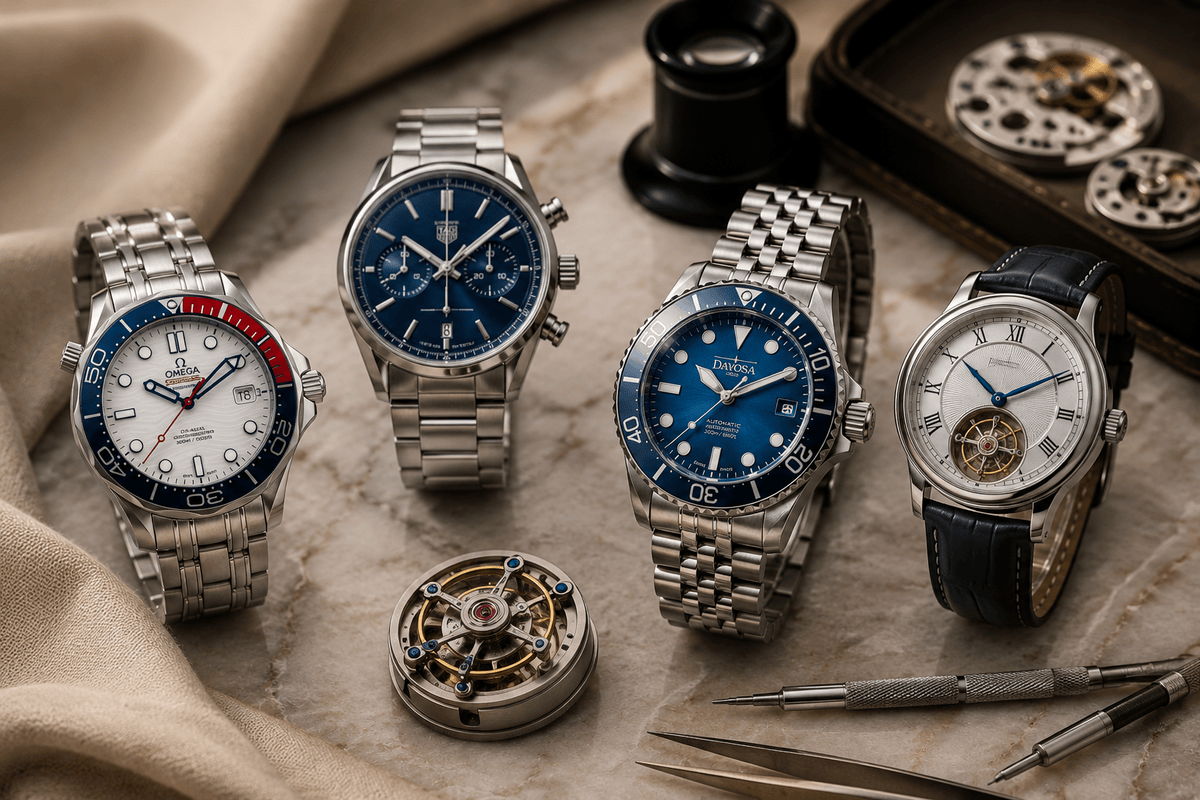
Tourbillon – what is it, and why does this mechanism sometimes cost more than a car?
If you're interested in luxury watches, sooner or later you'll come across the word tourbillon. For some it's a symbol of the highest level of watchmaking, for others a complicated mechanism whose operation is hard to understand without specialist knowledge. In reality, the answer to the question of what a tourbillon is turns out to be simpler than it might seem. It's a special construction used in mechanical watches, whose purpose was to limit the influence of gravity on the accuracy of the movement. Today, however, a watch with a tourbillon is above all a mark of prestige, craftsmanship and advanced watchmaking art.
Tourbillon – what is it and what was it created for?
A tourbillon is a mechanism in which the balance wheel, escape lever and escape wheel have been placed in a rotating cage. The name comes from French and means "whirlwind" or "vortex," which perfectly captures the nature of how this solution works.
The idea appeared at the end of the 18th century, when pocket watches spent most of the time in a single position – most often vertical. In such conditions, gravity affected the operation of the mechanism, causing slight deviations in timekeeping. Abraham-Louis Breguet set out to solve this problem by creating a rotating cage, which was meant to constantly change the position of the elements responsible for measuring time. Thanks to this, errors resulting from the force of gravity could mutually compensate for one another.
The most important features of the tourbillon include a rotating escapement cage, an extremely complex mechanical construction and high precision of manufacture. This mechanism was created in order to limit positional errors caused by gravity, yet today it is above all a symbol of luxury and masterful watchmaking. Nowadays, men's watches with a tourbillon are regarded as an exceptional work of mechanical art, valued by collectors all over the world.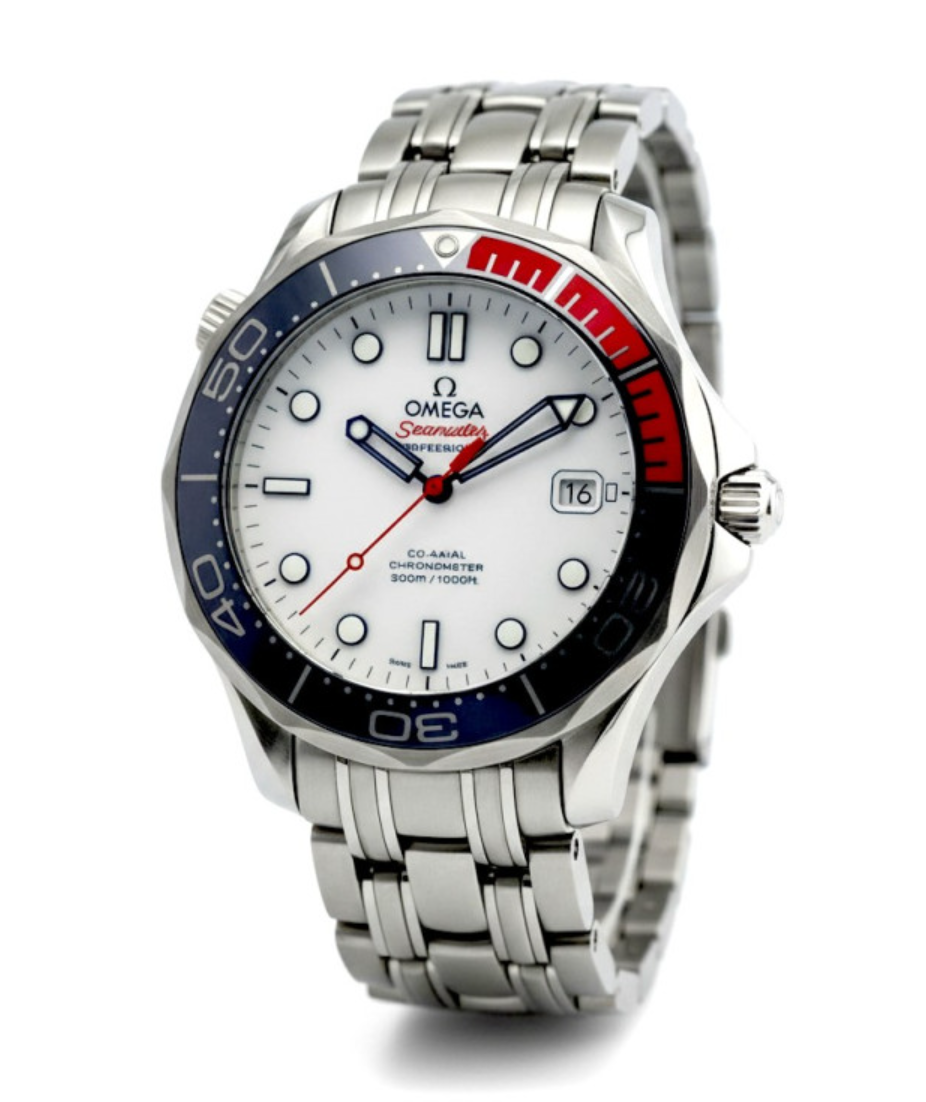
The OMEGA Seamaster 300 Commander's Watch James Bond 212.32.41.20.04.001 is an exceptional edition inspired by the world of agent 007, distinguished by its characteristic combination of navy blue, white and red, referencing the British Royal Navy. The precise Co-Axial Chronometer movement, water resistance to 300 metres and the model's limited character make it a watch valued both by collectors and by lovers of luxury timepieces.
How does a tourbillon work in a watch?
The operating principle of the tourbillon is based on the continuous rotation of the escapement elements around their own axis. In the classic construction, a full rotation of the cage takes 60 seconds, although manufacturers also use other solutions. While the mechanism is running, the balance wheel, lever and escape wheel do not remain stationary. Instead, they perform a regular rotational movement that changes their position relative to gravity. In theory, this allows errors resulting from the force of gravity to be cancelled out.
This is precisely why making such a mechanism is an enormous challenge. The individual elements must be:
- perfectly balanced,
- made with extraordinary precision,
- resistant to microscopic deviations,
- flawlessly assembled by hand.
In some models you can find more advanced variants:
|
Type of tourbillon |
Characteristics |
|
Classic |
One rotating cage |
|
Flying Tourbillon |
Cage supported from only one side |
|
Double Tourbillon |
Two axes of rotation |
|
Triple Axis Tourbillon |
Three axes of rotation for an even more spectacular effect |
It is precisely these solutions that make these watches some of the most impressive constructions in the entire watchmaking industry.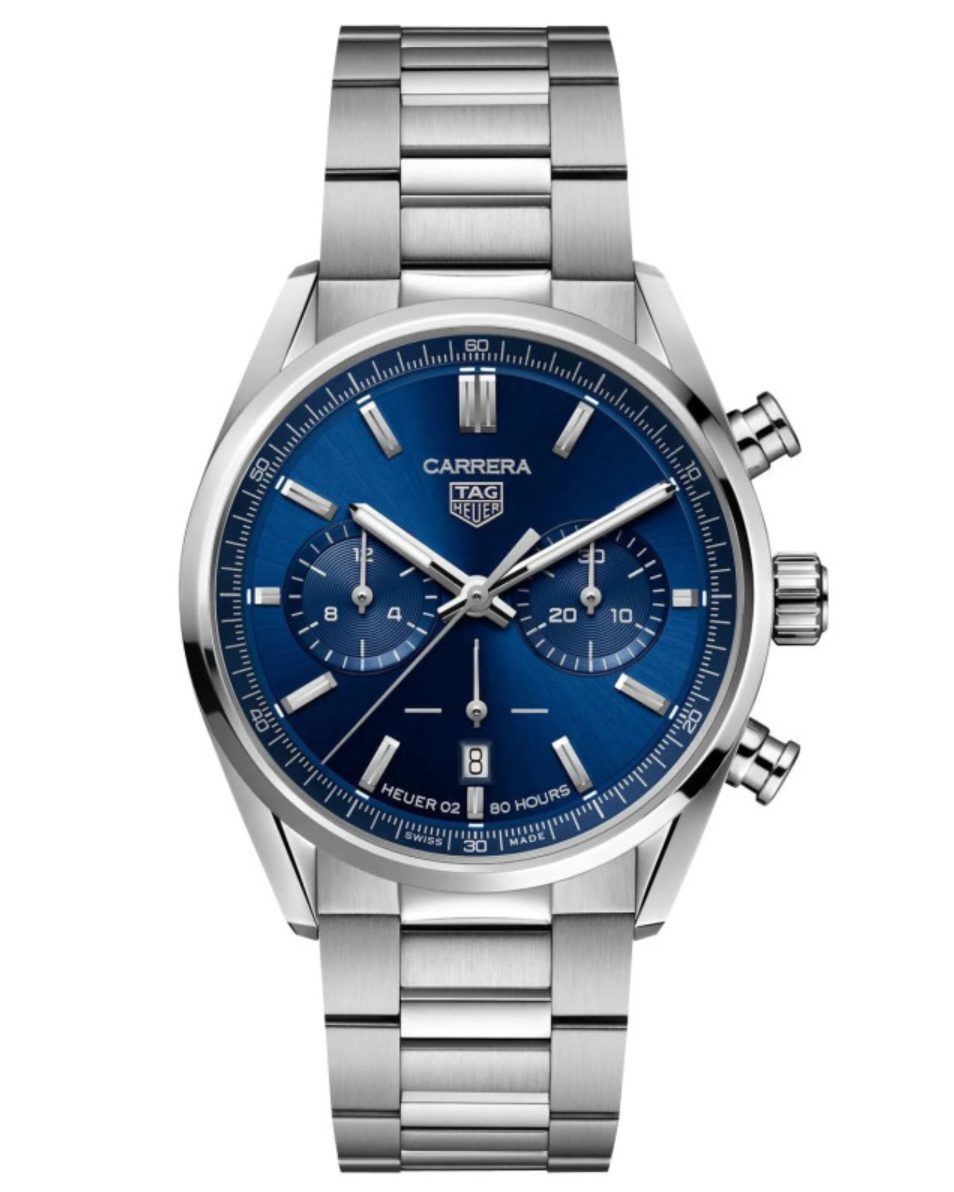
The TAG Heuer Carrera Chronograph Automatic CBN2011.BA0642 is a premium-class sports chronograph that combines the iconic design of the Carrera collection with the modern Heuer 02 movement, offering an impressive 80-hour power reserve. The intensely blue dial, steel bracelet and perfectly finished 42 mm case mean this model is equally at home during business meetings and on the racetrack, which its motorsport DNA references.
Is a watch with a tourbillon movement more accurate?
Historically yes, but in modern wristwatches the advantage of the tourbillon is not always noticeable. This is one of the biggest myths surrounding this complication. When Breguet designed the tourbillon, watches were worn mainly in pockets. The mechanism therefore remained in the same position most of the time.
Today the situation looks completely different. A watch on the wrist constantly changes position while walking, working or driving a car. This means that the influence of gravity is naturally distributed across different axes. That is why many experts emphasise that a modern watch with a tourbillon movement does not have to be more accurate than a high-class watch equipped with a modern escapement or a certified chronometer.
Today, a tourbillon means above all:
- prestige,
- technical sophistication,
- hand finishing,
- uniqueness of construction,
- collector's value.
This is precisely why, for many enthusiasts, the most important thing is not accuracy itself, but the ability to admire the workings of this extraordinarily complex mechanism.
Why do watches with a tourbillon cost a fortune?
The price stems above all from the enormous number of working hours and the exceptionally complex construction. In a standard mechanical watch you can find from a few dozen to over a hundred parts. In the case of a tourbillon, the number of components increases, and the manufacturing tolerances become extremely strict.
Producing a single mechanism often requires:
- many weeks of hand assembly,
- individual adjustment of each element,
- multiple quality tests,
- advanced micromechanical machining.
The prestige of the brand is also significant. The most renowned watches with a tourbillon come from manufacturers such as: Breguet, Patek Philippe, Audemars Piguet, Vacheron Constantin, Jaeger-LeCoultre and Girard-Perregaux. As a result, the prices of such models often start at several tens of thousands of euros, and the most complex constructions reach values exceeding even a million euros.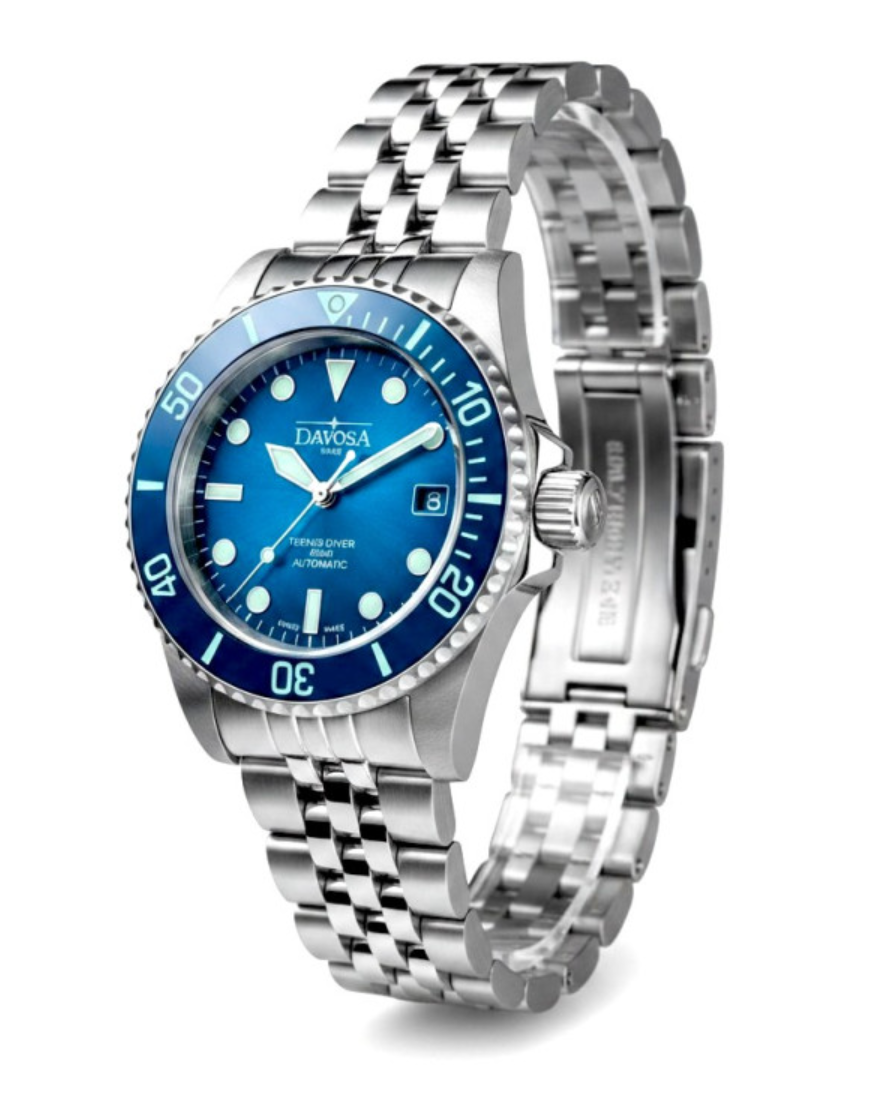
The DAVOSA Ternos Blue Lagoon Automatic 161.554.04 is an elegant diving watch that catches the eye with its hypnotic blue dial and ceramic bezel inspired by the colours of a tropical lagoon. Equipped with a reliable automatic movement, a steel bracelet and a solid construction with a sporty character, it works perfectly both for everyday wear and for water-related activities.
Is it worth buying a watch with a tourbillon?
Yes, if you're looking for an exceptional piece of watchmaking and value mechanical mastery more than functionality itself. Buying such a model rarely stems solely from the need to check the time. In the era of smartphones and electronic watches, far more accurate devices can be bought for a fraction of the price.
So why do collectors choose a tourbillon watch? Because they receive something more than a mechanism that measures time. They buy history, tradition and the result of the work of the world's most outstanding watchmakers.
A tourbillon will be a good choice for people who value luxury watches, are interested in precise mechanics or are looking for an exceptional model with high collector's value. It is also a proposition for those who appreciate hand craftsmanship and treat a watch as an element of prestige. If, however, what matters most is maximum accuracy of indications, a more practical choice may be a modern quartz watch or a certified chronometer. If you're looking for Swiss watches showcasing watchmaking at the highest level, check out the offer of the WestWatches online watch shop, where you'll find models from valued premium brands.

Krzysztof Szopa
Watch expert
An expert associated with the WestWatches.pl brand, a place that has been supplying watches for every occasion for years. Thanks to many years of experience in the watchmaking and jewellery industry, he passionately shares his knowledge, offering professional advice both in the online and the brick-and-mortar shop. He specialises in selecting original watches, watch accessories and jewellery products that combine exceptional quality with competitive prices. His goal is to help customers find the perfect product that will meet their expectations and emphasise their style.

See popular articles
316L, 904L and surgical steel – what is your watch made of?
Most steel watches, from affordable models to luxury constructions, are made of 316L steel. 904L steel contains more nickel, chromium and molybdenum, and therefore offers higher corrosion resistance, but in itself it does not mean greater scratch resistance. The term “surgical steel”, in turn, does not point to one strictly defined alloy. In watches it most often refers to 316L, but without a specific material designation it may simply be a marketing name. If you are choosing a watch for years, look therefore not only at the words “stainless steel”, but also at the grade of steel, which components are made of the given material and how they are finished.
Japanese or Swiss watches? We compare quality, movements and prices
If you are wondering whether Japanese or Swiss watches are better, the name of the country alone will not give you a good answer. In both cases you will find simple models for relatively little money, solid mid-range automatics and designs belonging to the world's watchmaking high end. Far more about quality will be told to you by the specific movement, the way the case and bracelet are made, the crystal, quality control, accuracy and price. Check how Japanese watches really differ from Swiss ones and what to pay attention to before you choose a model for yourself.

The lifespan of a quartz watch – how long does it really last, and when is it no longer worth repairing?
We value quartz watches above all for their accuracy, convenience and modest day-to-day demands. That does not mean, however, that they can run indefinitely and need nothing more than a new battery once every few years. Over time, the components of the movement itself also wear out, and the moment a watch starts giving trouble can look completely different depending on the model, the way it is used and the availability of parts. So how long can a quartz watch last, what wears out in it most often and when does repair still make sense? Check what its lifespan really depends on.

The second hand on a watch – why does it jump, move smoothly or stop?
The way the seconds hand moves can tell you a lot about a watch's movement, but it is not an infallible test. A single distinct jump per second most often points to quartz, several small movements per second are typical of a mechanical movement, and an almost continuous glide is associated with Spring Drive. There are exceptions, however: there is a quartz watch with a sweeping seconds hand, and a mechanical watch that makes exactly one jump per second. What is more, a stopped hand does not have to mean a fault. Check how to read these signals and when you really need a watchmaker's help.

How do you set an automatic watch? Date, time and time zone 21:00–3:00
An automatic watch does not need a battery, but it does require a little knowledge from its owner. Setting the time or date seems simple, yet the wrong moment or the wrong way of using the crown can affect how the movement works. Many questions concern changing the date at night, moving the hands backwards and restarting a watch after a longer break. Check how to set an automatic watch correctly, what to pay attention to with the crown and why people often talk about particular caution between 9:00 pm and 3:00 am.

Wodoszczelność 10 ATM i 20 ATM – czy możesz pływać i nurkować z takim zegarkiem?
Co naprawdę oznacza 10 ATM lub 20 ATM na zegarku i czy takie oznaczenie pozwala bez obaw wejść do basenu, morza albo nurkować? Same liczby mogą być mylące, dlatego sprawdź, jak czytać klasę wodoszczelności i dobrać zegarek do aktywności w wodzie.
Water resistance 3 ATM – what does it mean and what can you do with it?
3 ATM water resistance means the watch is prepared above all for rain, accidental splashes and brief contact with water during everyday activities. It does not mean that you can swim with it, shower in it or submerge it to a depth of 30 metres. It is precisely the “30 m” marking that most often misleads. It is the result of a pressure test carried out under controlled conditions, not a declared working depth. So if you see 3 ATM, 3 bar or Water Resistant 30 m on the case back or in the specification, treat the watch as resistant to everyday moisture, but not as a watch for water activities.

Rolex-style watches – the best alternatives to the Submariner, Explorer and Datejust
For years Rolex has been one of the most important style benchmarks in the watch world, but its price is not within everyone's reach. That is why it is worth looking at watches similar to Rolex and models inspired by its styling, which offer their own character, solid build quality and much more affordable prices. We are not talking about counterfeits here, but about legitimate watches from other brands that draw on similar solutions and design language. Check out watches inspired by Rolex's style and choose the model that suits your style and budget.
A bronze watch – why does each one change over time?
A bronze watch stands out because its appearance changes along with its owner. The case gradually darkens, turns matte and develops a patina, so two identical models can look completely different after just a few months. This is the greatest advantage of bronze, but also a trait you need to accept before buying. If you expect a watch that keeps its factory shine for years, steel may be a better direction. If, on the other hand, you like vintage looks, signs of use and the natural ageing of a material, bronze gives an effect that is hard to achieve in any other metal.