



Watch water resistance – how can you test it without visiting a watchmaker?
In theory, everything seems clear – the watch has a WR marking, the manufacturer declares water resistance, so you can use it without much concern. In practice, however, the topic is not that simple. Water resistance in watches is not permanent, and the markings are very often misinterpreted. On top of that, there is natural gasket wear, temperature changes, and minor damage that can reduce the level of protection. And suddenly it turns out that something that was supposed to "withstand water" no longer offers the same safety as it did at the beginning.
Will Your Watch Really Hold Up Underwater?
Before you move on to any testing, it's worth starting with the basics – understanding how to recognize what water resistance the manufacturer actually declares. Every watch has an appropriate marking – most often you'll find it on the case back (the underside of the watch), sometimes also on the dial or in the documentation included with the model. That's where symbols such as WR, ATM, bar, or values in meters appear, indicating the level of water resistance.
At first glance, everything seems straightforward – if the manufacturer declares water resistance, the matter is settled. In practice, however, water resistance in watches is a parameter that changes over time and very often has little to do with what was written on the case back a few years ago. Gaskets age, lose elasticity, and any intervention – even something as simple as a battery replacement – can cause the water resistance to fall short of what it should be.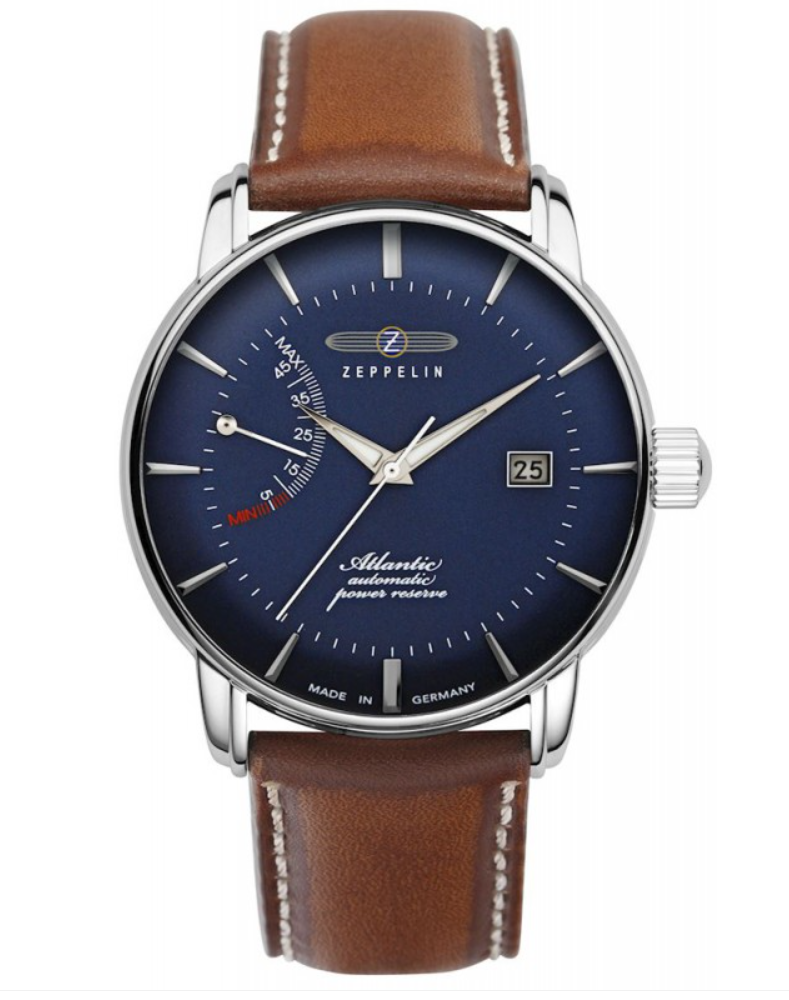
Elegant, minimalist, and refined in every detail – the Zeppelin Atlantic Automatic 42 mm is a watch that fits perfectly into everyday wear, but requires a conscious approach to water exposure. The model is equipped with the currently standard water resistance rating of 5 ATM, which in practice means resistance to splashes, rain, or hand washing, but not necessarily intensive use in water.
Watch Water Resistance Rating – What Does It Really Mean, and Where Does Theory End and Practice Begin?
In practice, designations like ATM, bar, or meters are one of the most common sources of confusion when it comes to watch water resistance. You see 5 ATM and intuitively assume the watch can handle a depth of 50 meters – but in reality, this refers exclusively to resistance to a specific pressure under laboratory conditions, not actual use underwater. That's precisely why a 5 ATM water resistance rating in a watch does not mean you can swim or submerge it to greater depths – it only means it can handle basic water contact, such as splashes or brief immersion.
In everyday situations, movement, temperature changes, and even a pressurized stream of water all come into play and significantly affect actual water resistance. That's why a watch's water resistance rating expressed in ATM should be treated as a general guideline, not a literal description of what you can do with the watch. Especially if you're unsure when it was last serviced, it's better to be cautious – because the gap between theory and practice can be surprisingly large.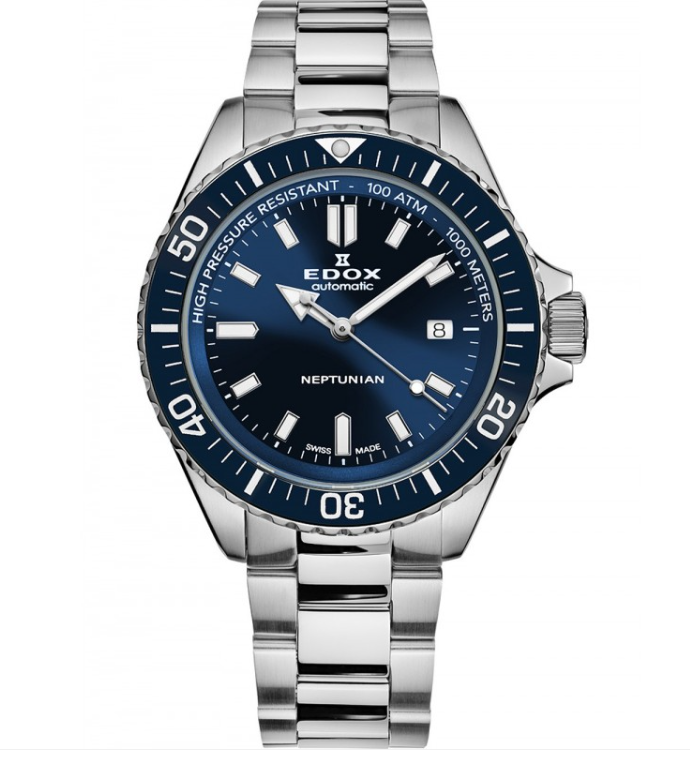
This is a completely different league from classic everyday watches – the Edox SkyDiver Neptunian Automatic 44 mm is a true diver's watch, designed with real underwater conditions in mind rather than just manufacturer declarations. Its impressive water resistance of 100 ATM (1,000 meters) makes it clear that this is equipment built for extreme pressure.
It's worth noting that men's diving watches represent an entirely different category in terms of specifications – in their case, the minimum standard is 20 ATM (200 m), and models reaching 30 ATM (300 m) or more are common. These values are no accident – they result from real usage requirements and far more rigorous testing than classic everyday watches undergo.
Water Resistance Test – Check This in 5 Minutes Before You Damage Your Watch
Before you even think about exposing your watch to water, it's a good idea to perform a simple, indicative water resistance test that can catch obvious problems. It only takes a moment and can save you a lot of stress and money.
The most commonly used method at home is the condensation test, which requires no specialized equipment. Simply warm the watch gently to a temperature close to body temperature, then place a drop of cooler water on the crystal. If condensation appears on the inside, you have a clear signal – the case is not sealed properly. This isn't a full diagnosis, but it's a very clear warning. That's exactly what home tests are for – not to confirm full functionality, but to quickly catch a problem before it becomes serious. And that really makes a difference, especially if the watch holds any value to you.
It's worth remembering one simple thing that is often overlooked – properly tightening the crown is crucial for a watch's water resistance, especially in women's and men's automatic watches. If it remains even slightly unscrewed or not fully pushed in, water can very easily get inside the case, regardless of the declared water resistance rating. That's why it's always worth checking this before any contact with water. It's precisely through such basic rules and simple tests that you'll find out whether a watch is truly waterproof or merely water-resistant to a limited degree.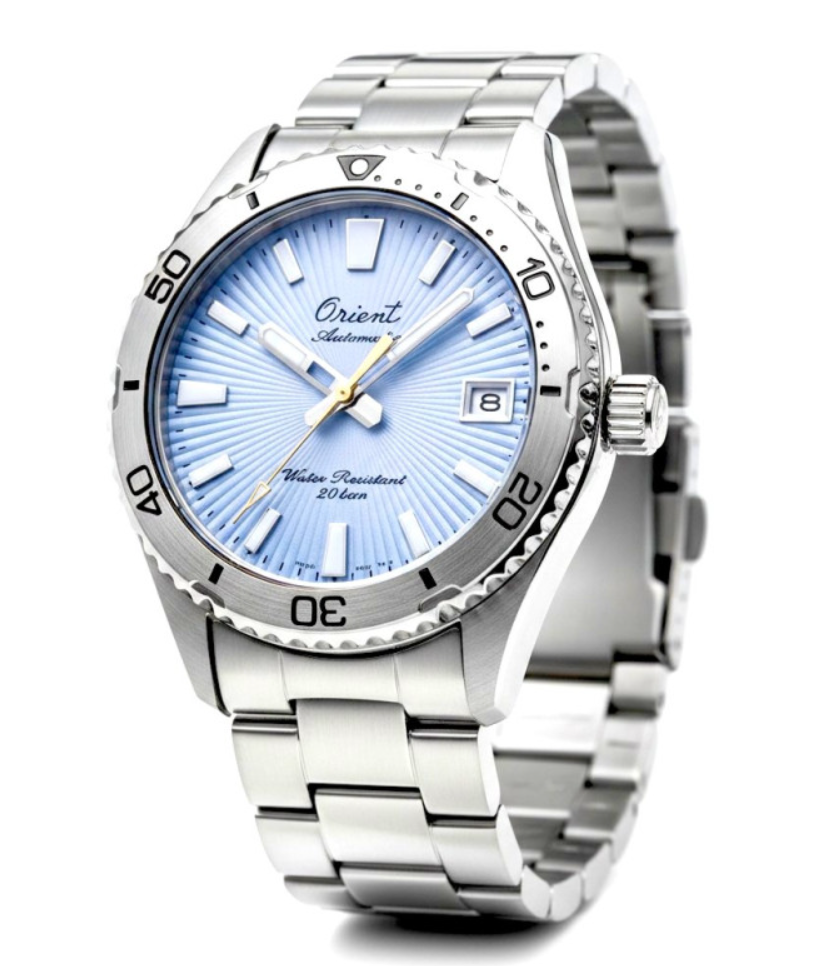
The Orient Sports Mako Automatic 40 mm Limited Edition is a watch built for water activities, offering water resistance of 20 ATM (200 m). It handles bathing, swimming, water sports, and recreational diving without issue, though it's worth keeping in mind that stated values refer to laboratory tests. Its solid, sporty construction makes it an excellent choice for those who want to use their watch freely in everyday contact with water.
Home Water Resistance Test – A Quick Warning Sign or Asking for Trouble?
The idea of testing your watch at home seems reasonable – after all, you want to know where you stand. The problem starts when risky experiments are chosen over safe methods. Submerging a watch in a bowl, under a tap, or in a pool is one of the worst ideas if you're not certain of its condition. Contrary to what you might think, such a "test" doesn't provide a reliable answer and may only accelerate damage. If the gaskets are worn, water will get inside and only then will you find out something was wrong – but by then it will be too late.
That's why a sensible home water resistance test should be as non-invasive as possible. The condensation test or gentle temperature changes can give you a clue without exposing the movement to direct water contact.
Among the commonly suggested home methods for checking water resistance are temperature-based approaches, such as the ice or freezer test and the heat exposure test. In the first case, the watch is placed in a sealed bag with a moisture absorber, cooled down, and then observed after removal – if mist or droplets appear under the crystal, it indicates a lack of water resistance. The hot water method involves placing the watch face-down over a container of hot water for a few minutes – if condensation appears on the inside, it's a clear signal that the gaskets are no longer doing their job.
However, it must be said clearly – these are only indicative tests. They are no substitute for professional pressure testing performed under controlled conditions using specialized equipment. Home methods serve one purpose – to warn you that something might be wrong. And in that role, they work quite well, as long as you don't try to draw overly broad conclusions from them.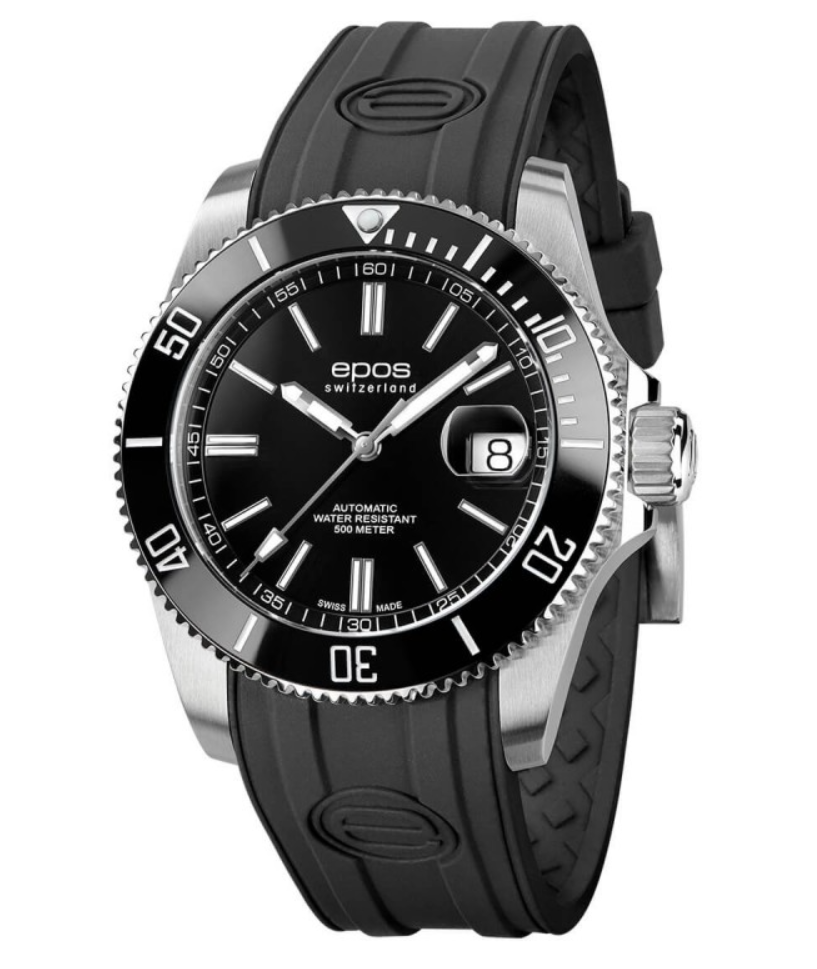
The Epos Sportive Diver 41.5 mm is a model that shows what truly solid construction for demanding tasks looks like – water resistance of 50 ATM (500 meters) provides an enormous safety margin in the water and clearly indicates its professional purpose. This is a watch that not only looks great but above all offers Swiss craftsmanship you can trust – both during intense water activities and in everyday wear.
A Fogged Crystal Is No Accident – How to Detect a Watch's Water Resistance Failure Before It's Too Late
One of the first signs of water resistance issues is condensation on the inside of the crystal. And importantly – this doesn't happen without a reason. Even a slight haze can indicate that moisture has entered the case. In many cases, this happens gradually and goes unnoticed for a long time. That's why it's worth paying attention to such details, especially after temperature changes – stepping into a warm room or coming into contact with cool water. Those are precisely the moments when it's easiest to notice something is wrong.
If you see condensation under the crystal, don't ignore it. It's a clear signal that water resistance in watches is not a permanent feature and requires monitoring. In such a situation, it's best to minimize exposure to moisture as quickly as possible and consider having the watch serviced. The sooner you react, the greater the chance of avoiding more serious damage, such as corrosion of the movement components. Contrary to what you might think, it's these small symptoms that most often determine whether a watch will function flawlessly for years to come or start causing problems.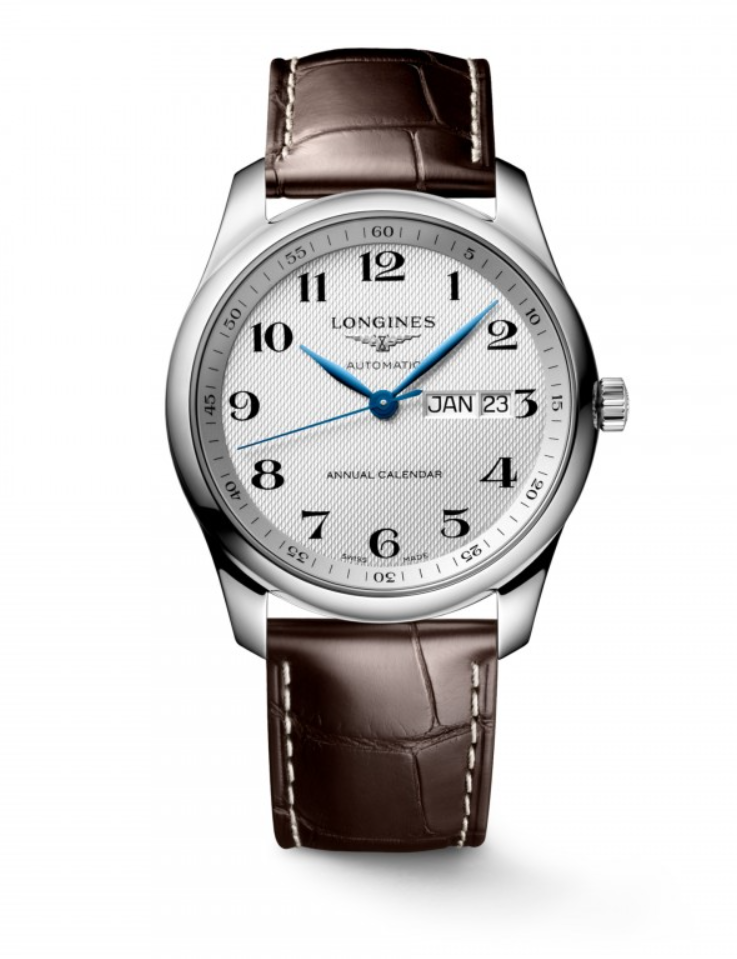
The Longines Master Collection Automatic 40 mm is an elegant everyday watch equipped with 3 ATM (30 m) water resistance. This means it offers protection against splashes, hand washing, and light rain only – not full submersion, even though the number "30 m" might suggest otherwise. It's a good example of why understanding the markings matters and why matching a watch to real usage conditions is so important.
The Longines Master Collection Automatic 40 mm is a classic, elegant model that works beautifully in everyday settings, but requires a mindful approach to water exposure. The watch offers water resistance of 3 ATM (30 m), providing protection mainly against accidental splashes, hand washing, and light rain. It's worth keeping in mind that this is the lowest water resistance class – the 30 m marking does not mean the watch can be submerged to that depth, so this model is definitely not intended for swimming or bathing. It's a prime example of how important it is to understand the markings and match the watch to real-world use.
The natural instinct is to want to test everything yourself. The problem is that with watches, this approach can be costly. Contact with water without certainty about water resistance is always a risk, especially if the watch hasn't been serviced for a while. Rather than taking that risk, it's better to approach the matter sensibly. Watch water resistance markings are only a starting point, not a guarantee of safety in every situation – at our online watch store Westwatches, you'll find precisely described models. If you plan on regular water exposure, it's worth periodically checking the condition of the gaskets and having the water resistance verified under professional conditions. That's a small cost compared to repairing a damaged movement. And if you have any doubts – it's better to skip the live test and opt for safe methods that won't put your watch at unnecessary risk.

Krzysztof Szopa
Watch Expert
An expert associated with WestWatches.pl, a place that has been delivering watches for every occasion for years. Thanks to many years of experience in the watchmaking and jewelry industry, he passionately shares his knowledge, offering professional advice both in the online and brick-and-mortar store. He specializes in selecting original watches, watch accessories, and jewelry that combine exceptional quality with competitive prices. His goal is to help customers find the perfect product that meets their expectations and enhances their personal style.

See popular articles
316L, 904L and surgical steel – what is your watch made of?
Most steel watches, from affordable models to luxury constructions, are made of 316L steel. 904L steel contains more nickel, chromium and molybdenum, and therefore offers higher corrosion resistance, but in itself it does not mean greater scratch resistance. The term “surgical steel”, in turn, does not point to one strictly defined alloy. In watches it most often refers to 316L, but without a specific material designation it may simply be a marketing name. If you are choosing a watch for years, look therefore not only at the words “stainless steel”, but also at the grade of steel, which components are made of the given material and how they are finished.
Japanese or Swiss watches? We compare quality, movements and prices
If you are wondering whether Japanese or Swiss watches are better, the name of the country alone will not give you a good answer. In both cases you will find simple models for relatively little money, solid mid-range automatics and designs belonging to the world's watchmaking high end. Far more about quality will be told to you by the specific movement, the way the case and bracelet are made, the crystal, quality control, accuracy and price. Check how Japanese watches really differ from Swiss ones and what to pay attention to before you choose a model for yourself.
The lifespan of a quartz watch – how long does it really last, and when is it no longer worth repairing?
We value quartz watches above all for their accuracy, convenience and modest day-to-day demands. That does not mean, however, that they can run indefinitely and need nothing more than a new battery once every few years. Over time, the components of the movement itself also wear out, and the moment a watch starts giving trouble can look completely different depending on the model, the way it is used and the availability of parts. So how long can a quartz watch last, what wears out in it most often and when does repair still make sense? Check what its lifespan really depends on.
The second hand on a watch – why does it jump, move smoothly or stop?
The way the seconds hand moves can tell you a lot about a watch's movement, but it is not an infallible test. A single distinct jump per second most often points to quartz, several small movements per second are typical of a mechanical movement, and an almost continuous glide is associated with Spring Drive. There are exceptions, however: there is a quartz watch with a sweeping seconds hand, and a mechanical watch that makes exactly one jump per second. What is more, a stopped hand does not have to mean a fault. Check how to read these signals and when you really need a watchmaker's help.

How do you set an automatic watch? Date, time and time zone 21:00–3:00
An automatic watch does not need a battery, but it does require a little knowledge from its owner. Setting the time or date seems simple, yet the wrong moment or the wrong way of using the crown can affect how the movement works. Many questions concern changing the date at night, moving the hands backwards and restarting a watch after a longer break. Check how to set an automatic watch correctly, what to pay attention to with the crown and why people often talk about particular caution between 9:00 pm and 3:00 am.

Wodoszczelność 10 ATM i 20 ATM – czy możesz pływać i nurkować z takim zegarkiem?
Co naprawdę oznacza 10 ATM lub 20 ATM na zegarku i czy takie oznaczenie pozwala bez obaw wejść do basenu, morza albo nurkować? Same liczby mogą być mylące, dlatego sprawdź, jak czytać klasę wodoszczelności i dobrać zegarek do aktywności w wodzie.
Water resistance 3 ATM – what does it mean and what can you do with it?
3 ATM water resistance means the watch is prepared above all for rain, accidental splashes and brief contact with water during everyday activities. It does not mean that you can swim with it, shower in it or submerge it to a depth of 30 metres. It is precisely the “30 m” marking that most often misleads. It is the result of a pressure test carried out under controlled conditions, not a declared working depth. So if you see 3 ATM, 3 bar or Water Resistant 30 m on the case back or in the specification, treat the watch as resistant to everyday moisture, but not as a watch for water activities.

Rolex-style watches – the best alternatives to the Submariner, Explorer and Datejust
For years Rolex has been one of the most important style benchmarks in the watch world, but its price is not within everyone's reach. That is why it is worth looking at watches similar to Rolex and models inspired by its styling, which offer their own character, solid build quality and much more affordable prices. We are not talking about counterfeits here, but about legitimate watches from other brands that draw on similar solutions and design language. Check out watches inspired by Rolex's style and choose the model that suits your style and budget.
A bronze watch – why does each one change over time?
A bronze watch stands out because its appearance changes along with its owner. The case gradually darkens, turns matte and develops a patina, so two identical models can look completely different after just a few months. This is the greatest advantage of bronze, but also a trait you need to accept before buying. If you expect a watch that keeps its factory shine for years, steel may be a better direction. If, on the other hand, you like vintage looks, signs of use and the natural ageing of a material, bronze gives an effect that is hard to achieve in any other metal.