



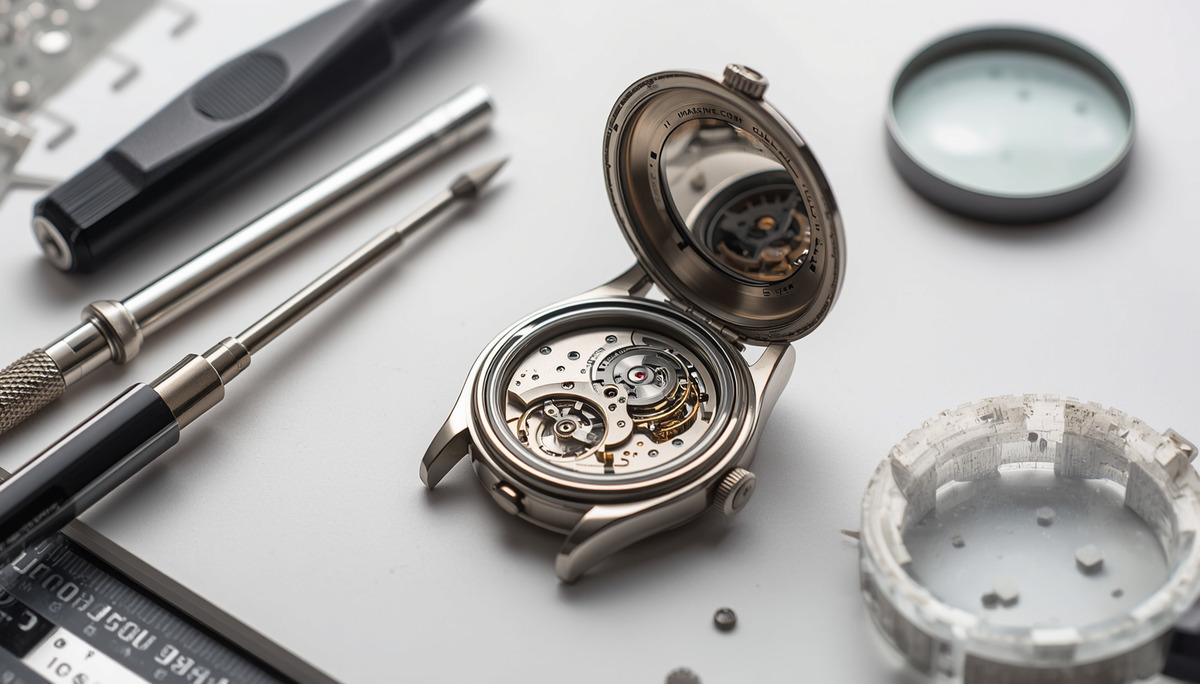
How to open a watch without scratches or stress? A simple guide for beginners
Do you want to replace the battery or check how to open a watch without damaging the case? Start by identifying the type of case back, because a press-fit model opens differently than a screw-down one, and a watch with screws requires yet another approach. The most important things are steady movements, a soft surface, and not forcing the case. If your watch is expensive, water-resistant, sporty, or has great value to you, it is safer to take it to a watchmaker.
How to open a watch and where to start to avoid damaging the case?
To open a watch safely, first determine what kind of case back your model has: press-fit, screw-down, or screw-secured. The working method, the tools you need, and the risk of damaging the case all depend on this. The watch case is the housing that protects the movement, and the case back is its rear cover. The case back is exactly what you remove when you want to replace the battery or check the inside of the watch.
Before you pick up a tool, prepare your workspace. Place the watch on a soft cloth, preferably on a stable countertop and in good light. If the bracelet gets in the way, unfasten it or arrange it so it does not block access to the back of the case.
You will find useful:
- a soft cloth under the watch,
- protective tape to safeguard the case,
- a case knife or a thin flat tool,
- a watch case back wrench,
- a small precision screwdriver,
- tweezers,
- a rubber ball for unscrewing case backs.
The worst-case scenario begins when the case back resists and you press the tool harder and harder. A scratched case, damaged gasket, or bent case back are common results of forcing things. If something does not give way after a few calm attempts, stop.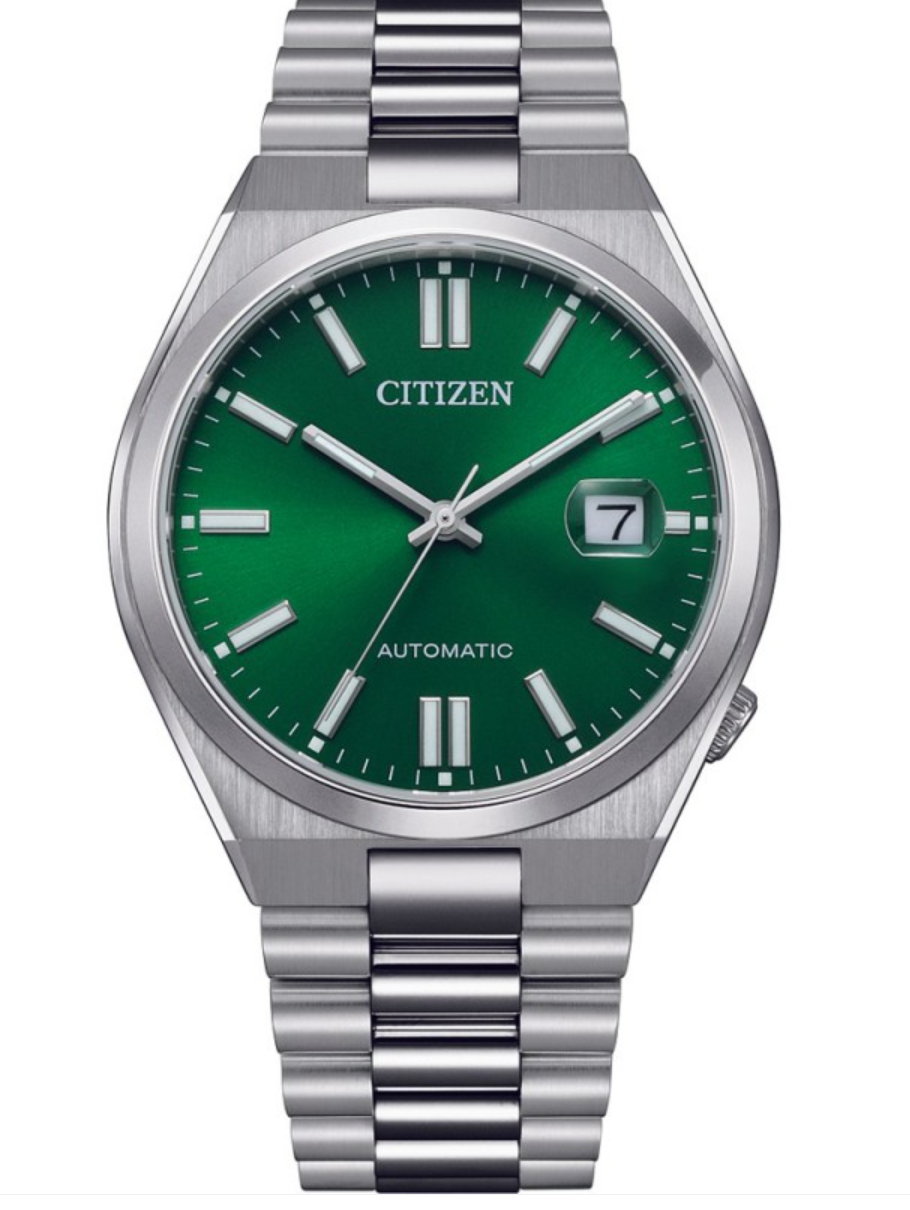
The Citizen Tsuyosa Green Automatic 40 mm NJ0150-81X catches the eye with its vivid green dial, steel bracelet, and elegant form that works perfectly both for everyday wear and for more refined outfits. This is a watch for people who appreciate an automatic movement, a striking design, and the timeless character of the Citizen brand.
How to open a snap-on watch case back?
A press-fit case back is opened by gently prying it at a small notch or slot on the edge of the case. This is the most commonly encountered type of case back in simple quartz watches, especially those where the user wants to quickly replace the battery. Examine the back of the watch in good light. Look for a small groove, gap, or flattened section at the edge of the case back. Insert a very thin tool into that spot — preferably a case knife, or in an emergency a thin flat knife. Do not push the blade in deeply. A minimal movement is enough to lift the case back.
If you are wondering how to open a watch case without causing damage, remember three rules. First, secure the edge with tape, especially if the case is polished. Second, rest the watch stably so it does not shift at the moment you pry. Third, work with a short, controlled movement rather than a wide jerk.
With a snap-on case back, it is not about force, but about the point of leverage. Once you hit the right spot, the case back usually pops off slightly. If you do not see any gap, do not try to drive the blade in at a random location. The watch may have a screw-down case back, in which case prying could end in damage.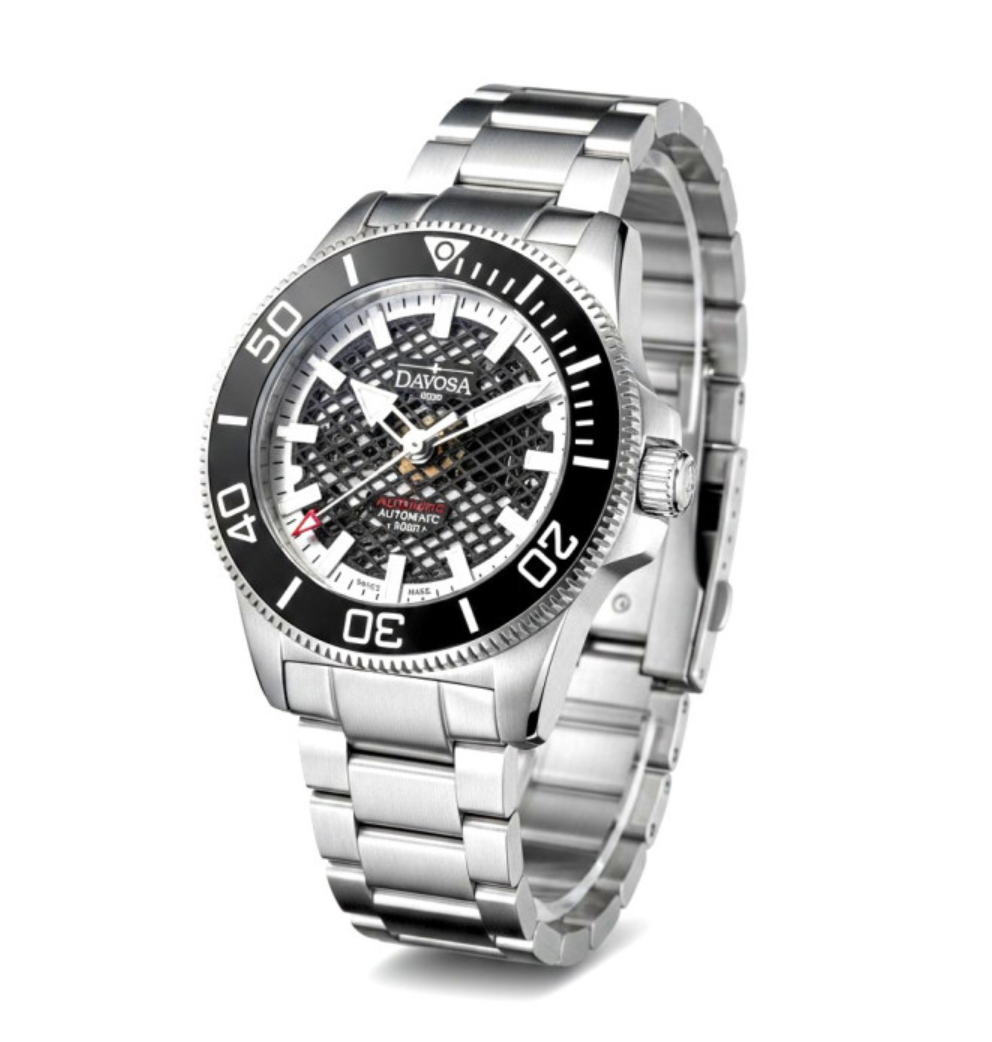
The men's Davosa Argonautic Shark Diver Automatic 41 mm 161.541.50 is a strong, sporty model with a characteristic black bezel, steel bracelet, and an expressive dial inspired by diver-style aesthetics. It is a proposition for men looking for a watch with an automatic movement, a solid look, and a technical character for everyday wear as well as more demanding occasions.
How to open a watch case with a screw-down case back?
A screw-down case back must be unscrewed with a tool matched to the grooves or notches on the rear of the watch. This type of case back often appears in sports watches, dive watches, and models with increased water resistance.
On the back of the watch you will usually see several notches distributed around the circumference. They are operated with a watch case back wrench with adjustable jaws. The tool must fit well into the notches. If it is set too loosely, it can slip and leave a deep scratch.
Unscrew slowly, without jerking. The watch should rest stably on a soft surface, and the pressure should be even. If the wrench skips on the case back, stop and reposition it. One strong slip is enough to ruin the look of the case.
With water-resistant watches, pay attention to the gasket. After opening, it may stay on the case back or on the case itself. Do not stretch it, do not wipe it with aggressive cleaners, and do not lose it. The gasket is responsible for the seal, so damaging it may cause the watch to lose its resistance to moisture. After opening the watch yourself, you also have no guarantee that the watch will retain its declared water resistance.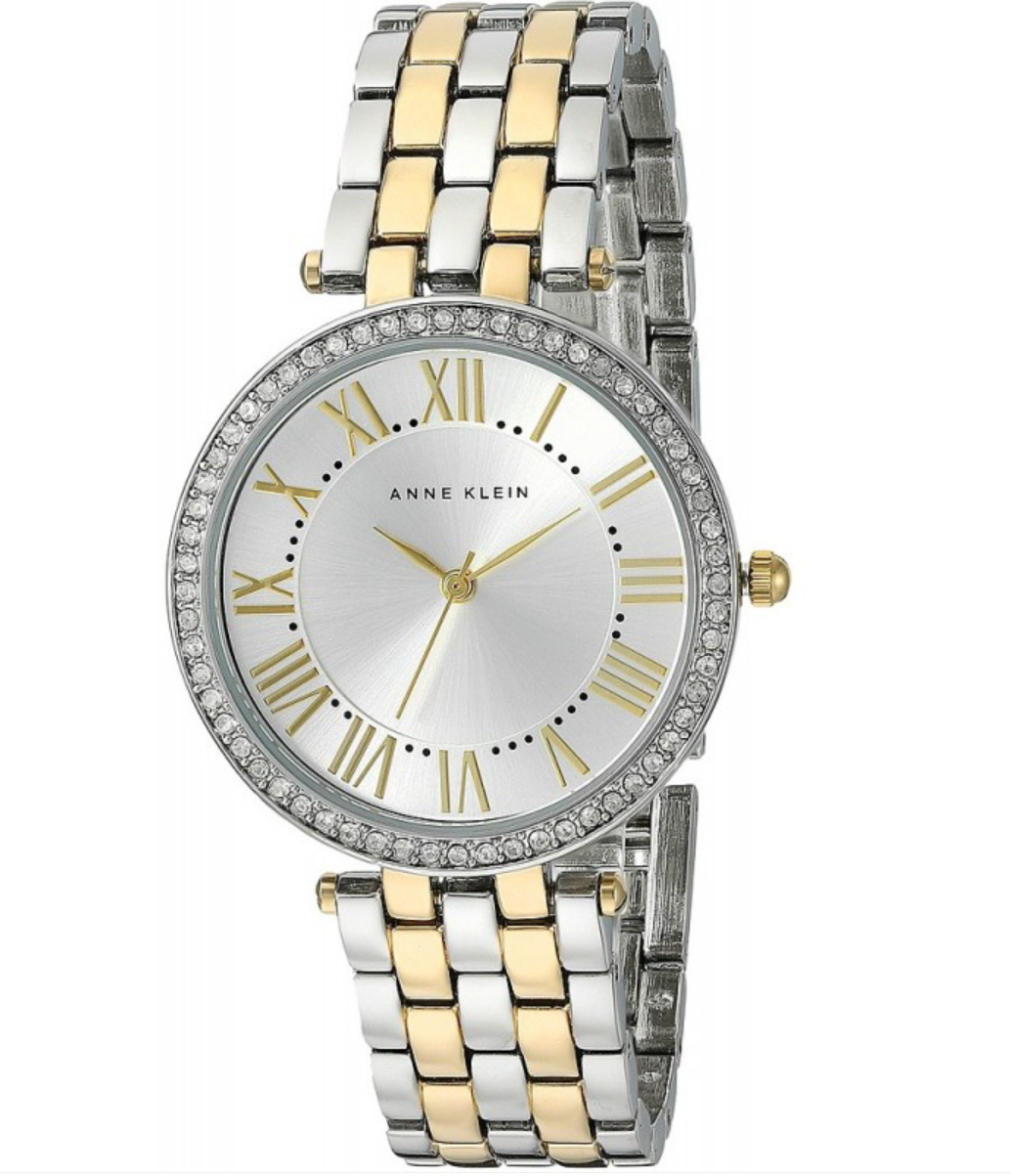
The women's Anne Klein 34 mm AK-2231SVTT combines a jewellery-like character with an elegant, two-tone bracelet and a dial adorned with Roman numerals. It is a subtle proposition for women who love a classic style with a hint of sparkle — perfect for everyday outfits, work, and evening occasions.
How to open a watch without a wrench and when it is better not to?
You can sometimes open a watch without a wrench in an emergency, but only when the case back is press-fit or screw-down and does not put up much resistance. This is a method for a one-off situation, not a safe servicing standard.
With a press-fit case back, some people use a thin kitchen knife or a stiff card. A card is less risky for the case, but it works only with very light snap fits. A thin knife gives greater precision but requires a steady hand. Do not use a screwdriver with a thick tip, because it can easily chip the edge of the case back.
With a screw-down case back, a rubber ball for case backs can be helpful. You press it against the back of the watch and try to turn the case back counterclockwise. This method works only when the case back is not strongly tightened. If it does not move right away, do not keep increasing the pressure indefinitely.
Skip home methods when:
- the watch is expensive or a collector's piece,
- the model has a declared water resistance,
- the case back is heavily seized,
- the case has an unusual shape,
- you cannot see any gap or notches,
- you are afraid of scratching the housing.
In such cases, a watchmaker is not an exaggeration, but a reasonable way to protect the watch. The cost of repairing a damaged case back or gasket can be greater than a simple battery replacement.
How to disassemble a wristwatch with screws?
You will open a watch with screws using a small precision screwdriver, matched exactly to the slot in the screw head. A screwdriver that is too large or too small can damage the screw, and then opening the case back becomes much harder.
First, place the watch on a cloth and check how many screws hold the case back in place. Unscrew them calmly, preferably diagonally if there are more than two. Set each screw aside in a safe place. They are small, light, and disappear from the table very easily. A small bowl, a service magnet, or a piece of adhesive tape laid sticky-side up all work well.
When reassembling, do not tighten the screws with all your strength. Stable, even tightening is enough. Too much pressure can destroy the thread, deform the case back, or make the next service problematic.
After removing the case back, do not touch the movement with your fingers. Grease, dust, and the accidental shifting of small parts can harm the watch. If your only goal is to replace the battery, focus exclusively on the battery and its mounting.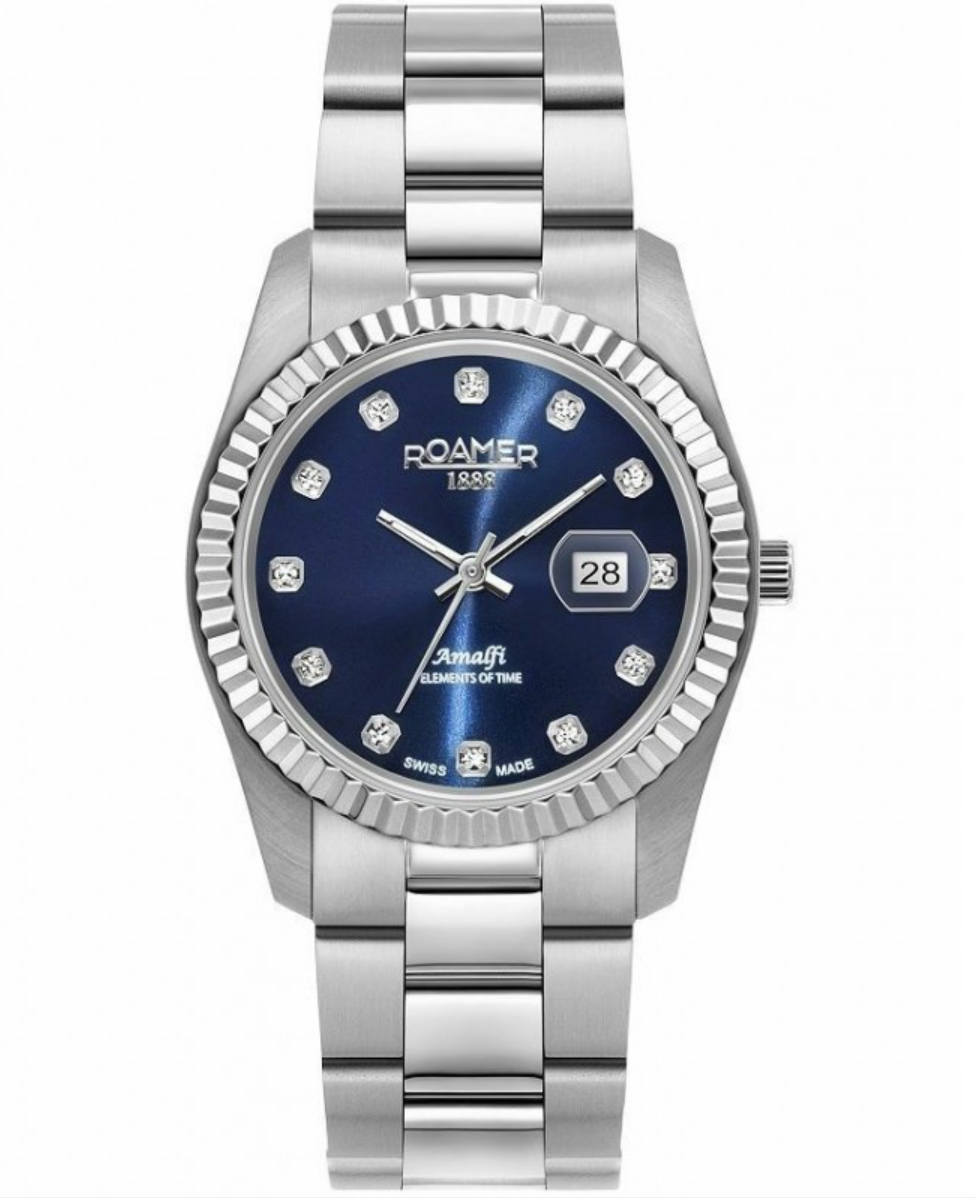
The women's Roamer Amalfi 34 mm 852844 41 49 20 delights with an elegant navy dial, subtle indexes with a shimmer, and a steel bracelet, which makes it a great fit for business, evening, and everyday outfits. It is a proposition for women who value Swiss precision, classic design, and the jewellery-like character of a watch.
How to open a watch case without damage — the most common mistakes
You will open a watch case most safely when you match the method to the type of case back and stop at the first clear resistance. Most damage does not come from a lack of knowledge, but from haste.
The most common mistake is using random tools. A thick screwdriver, a knife with a wide blade, or pliers may seem helpful, but in practice it is easy to scratch the case with them. The second mistake is working on a hard table without any protection. The watch slips, turns, and the tool ends up where it should not. The third issue is ignoring the gasket. After opening the watch, you have to check whether the gasket is not cracked, stretched, or dirty. If it looks bad, do not count on everything working as before once you close the watch. Water resistance after a home-made opening is not guaranteed.
If after opening the watch you can see its condition leaves much to be desired, or you are simply looking for a new model, check out the WestWatches offer. In our online watch store you will find a wide selection of men's watches and women's watches — from elegant everyday models to more classic and prestigious propositions. Our offer also includes watch accessories, which help you care for the look, comfort of wear, and daily maintenance of your favourite timepiece.

Krzysztof Szopa
Watch expert
An expert associated with the WestWatches.pl brand, a place that has been delivering watches for every occasion for years. Thanks to many years of experience in the watchmaking and jewellery industry, he shares his knowledge with passion, offering professional advice both in the online store and in the brick-and-mortar shop. He specialises in selecting original watches, watch accessories, and jewellery products that combine exceptional quality with competitive prices. His goal is to help customers find the perfect product that meets their expectations and highlights their style.

See popular articles
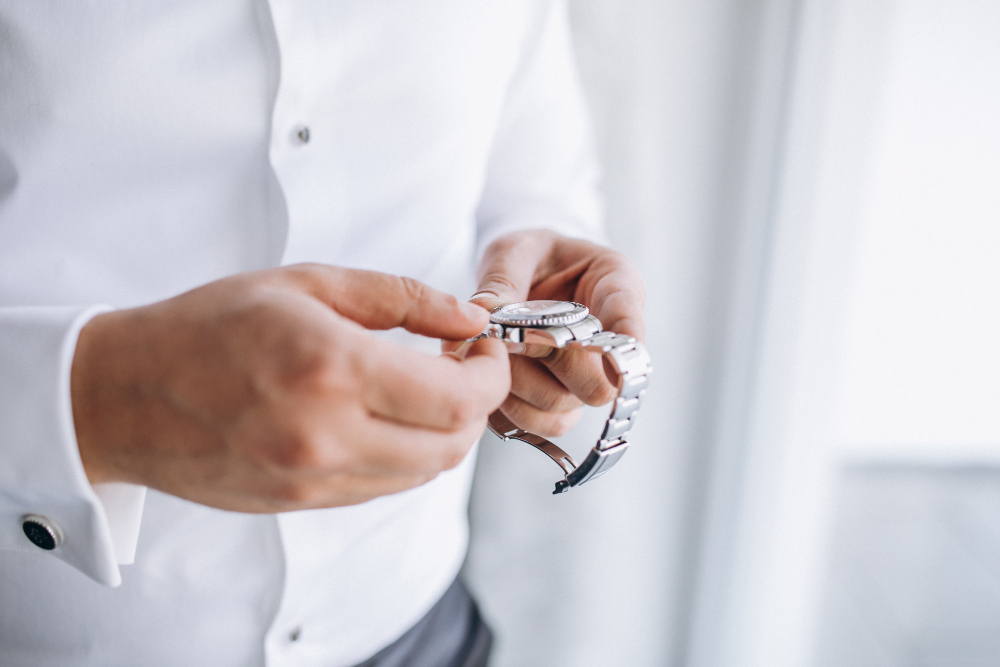
316L, 904L and surgical steel – what is your watch made of?
Most steel watches, from affordable models to luxury constructions, are made of 316L steel. 904L steel contains more nickel, chromium and molybdenum, and therefore offers higher corrosion resistance, but in itself it does not mean greater scratch resistance. The term “surgical steel”, in turn, does not point to one strictly defined alloy. In watches it most often refers to 316L, but without a specific material designation it may simply be a marketing name. If you are choosing a watch for years, look therefore not only at the words “stainless steel”, but also at the grade of steel, which components are made of the given material and how they are finished.
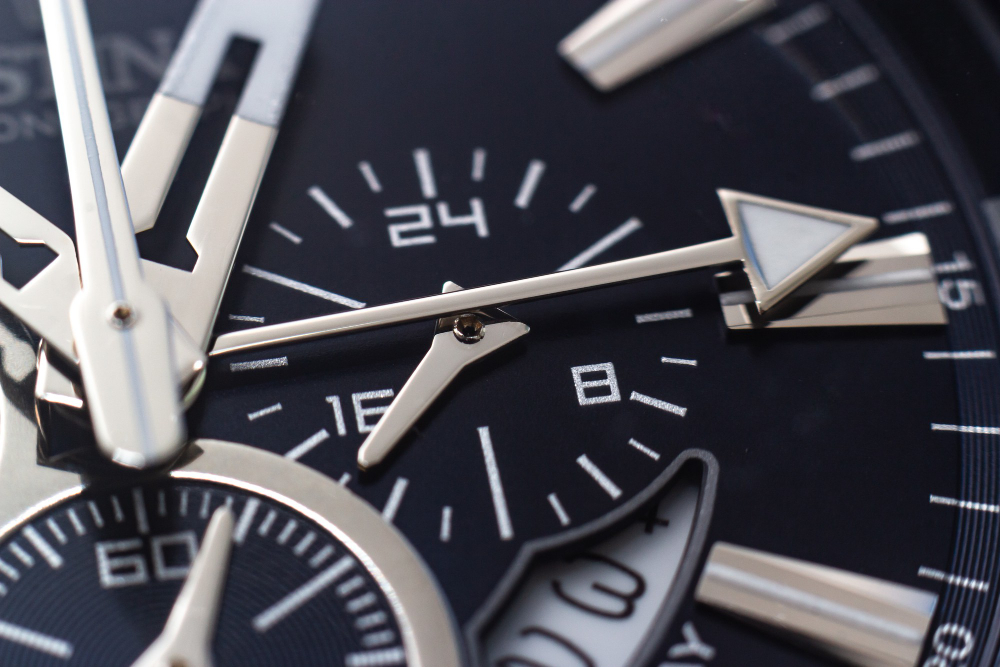
Japanese or Swiss watches? We compare quality, movements and prices
If you are wondering whether Japanese or Swiss watches are better, the name of the country alone will not give you a good answer. In both cases you will find simple models for relatively little money, solid mid-range automatics and designs belonging to the world's watchmaking high end. Far more about quality will be told to you by the specific movement, the way the case and bracelet are made, the crystal, quality control, accuracy and price. Check how Japanese watches really differ from Swiss ones and what to pay attention to before you choose a model for yourself.
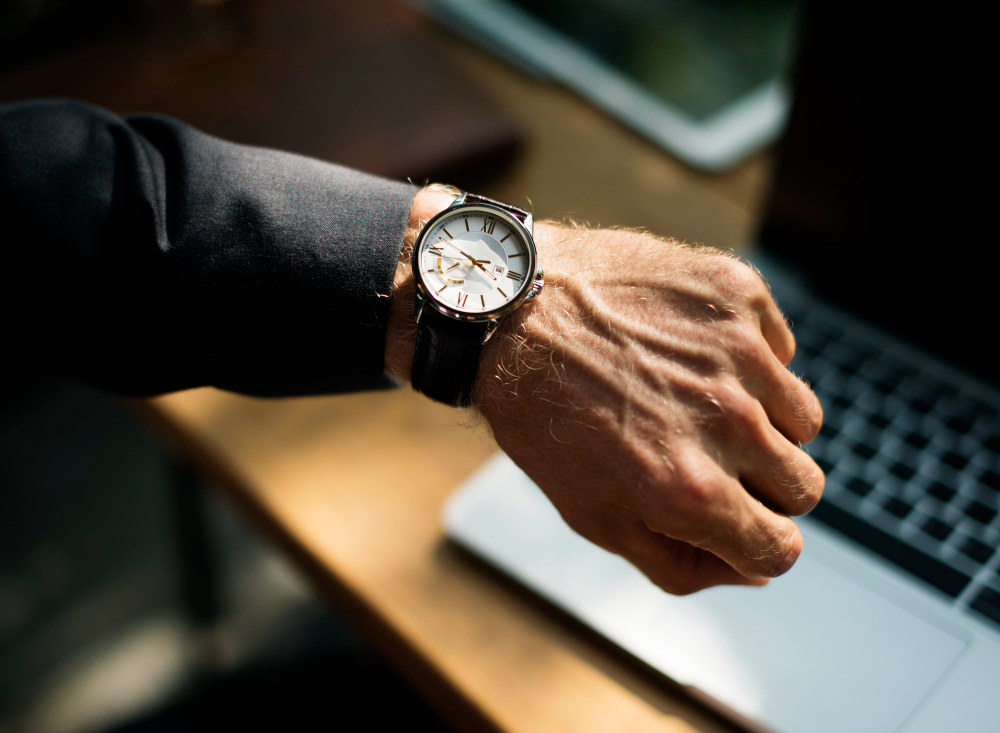
The lifespan of a quartz watch – how long does it really last, and when is it no longer worth repairing?
We value quartz watches above all for their accuracy, convenience and modest day-to-day demands. That does not mean, however, that they can run indefinitely and need nothing more than a new battery once every few years. Over time, the components of the movement itself also wear out, and the moment a watch starts giving trouble can look completely different depending on the model, the way it is used and the availability of parts. So how long can a quartz watch last, what wears out in it most often and when does repair still make sense? Check what its lifespan really depends on.
The second hand on a watch – why does it jump, move smoothly or stop?
The way the seconds hand moves can tell you a lot about a watch's movement, but it is not an infallible test. A single distinct jump per second most often points to quartz, several small movements per second are typical of a mechanical movement, and an almost continuous glide is associated with Spring Drive. There are exceptions, however: there is a quartz watch with a sweeping seconds hand, and a mechanical watch that makes exactly one jump per second. What is more, a stopped hand does not have to mean a fault. Check how to read these signals and when you really need a watchmaker's help.

How do you set an automatic watch? Date, time and time zone 21:00–3:00
An automatic watch does not need a battery, but it does require a little knowledge from its owner. Setting the time or date seems simple, yet the wrong moment or the wrong way of using the crown can affect how the movement works. Many questions concern changing the date at night, moving the hands backwards and restarting a watch after a longer break. Check how to set an automatic watch correctly, what to pay attention to with the crown and why people often talk about particular caution between 9:00 pm and 3:00 am.

Wodoszczelność 10 ATM i 20 ATM – czy możesz pływać i nurkować z takim zegarkiem?
Co naprawdę oznacza 10 ATM lub 20 ATM na zegarku i czy takie oznaczenie pozwala bez obaw wejść do basenu, morza albo nurkować? Same liczby mogą być mylące, dlatego sprawdź, jak czytać klasę wodoszczelności i dobrać zegarek do aktywności w wodzie.
Water resistance 3 ATM – what does it mean and what can you do with it?
3 ATM water resistance means the watch is prepared above all for rain, accidental splashes and brief contact with water during everyday activities. It does not mean that you can swim with it, shower in it or submerge it to a depth of 30 metres. It is precisely the “30 m” marking that most often misleads. It is the result of a pressure test carried out under controlled conditions, not a declared working depth. So if you see 3 ATM, 3 bar or Water Resistant 30 m on the case back or in the specification, treat the watch as resistant to everyday moisture, but not as a watch for water activities.

Rolex-style watches – the best alternatives to the Submariner, Explorer and Datejust
For years Rolex has been one of the most important style benchmarks in the watch world, but its price is not within everyone's reach. That is why it is worth looking at watches similar to Rolex and models inspired by its styling, which offer their own character, solid build quality and much more affordable prices. We are not talking about counterfeits here, but about legitimate watches from other brands that draw on similar solutions and design language. Check out watches inspired by Rolex's style and choose the model that suits your style and budget.
A bronze watch – why does each one change over time?
A bronze watch stands out because its appearance changes along with its owner. The case gradually darkens, turns matte and develops a patina, so two identical models can look completely different after just a few months. This is the greatest advantage of bronze, but also a trait you need to accept before buying. If you expect a watch that keeps its factory shine for years, steel may be a better direction. If, on the other hand, you like vintage looks, signs of use and the natural ageing of a material, bronze gives an effect that is hard to achieve in any other metal.