



How to remove scratches from a watch? We examine the available methods
Damaged crystal, matte scratches on the case, or minor marks that spoil the entire effect – these are some of those details that can irritate even the most patient watch owner. Fortunately, many distortions can be reduced faster than it seems, as long as you know what material you're dealing with and what methods you can reach for without risk. This guide will take you through the most effective ways, suggest when home action makes sense and when it's better to immediately put the timepiece in a specialist's hands – so your watch looks the way you like it again.
How to remove scratches from a watch at home? Discover methods that really work
Before you start experimenting with pastes, cloths, and other inventions, it's good to understand that not every watch reacts the same to home treatments. In practice, only hesalite crystal allows safe attempts on your own. If you're holding a model with such crystal, you can try gentle polishing – first with something light, only later with something stronger. Contrary to what can be read on forums, toothpaste is not a magical remedy, but with really minor scratches it can give a noticeable effect. It's only worth approaching the subject calmly, using a soft cloth and evaluating the result in good light. This allows avoiding unnecessary mistakes that are later hard to fix.
When the scratch looks deeper and you feel that paste alone may not be enough, polishing paste created specifically for watches can be helpful, for example PolyWatch. Its use doesn't require specialist knowledge but requires patience – polishing must be even and pressure controlled. Each of these methods is cheap, accessible, and works for surface damage, but remember that mineral and sapphire crystal don't react to home remedies. So if you have doubts, it's always better to check model specifications before starting action. Thanks to this, you'll avoid a situation where scratch removal from the watch ends with a bigger problem than was there at the beginning.
How to remove scratches from watch crystal without visiting a watchmaker? Check step by step and assess whether your model is suitable for this
Often the first thought after noticing a scratch is quick searching for home methods. There's nothing wrong with that – provided you know what crystal protects the dial. Minor scratches on acrylic crystal can disappear after just a few minutes of gentle polishing, but the same methods have no effect on mineral crystals, and in the case of sapphire ones you shouldn't even try. So if you're organizing a "home spa for your watch," make sure you choose tools adequate to the material. Often a damp cloth and a bit of paste are enough for the effect to be really satisfying and the watch to look fresh and well-maintained.
It's also worth paying attention to the degree of damage. Micro-scratches, barely visible to the naked eye, often disappear easiest. Deeper ones require patience and repetitions, and sometimes – simply realistic situation assessment. If the scratch is clear enough to interfere with reading time, it's a sign you may not be able to handle it yourself. Then giving up on home attempts isn't defeat but a sensible choice. After all, too much polishing can weaken crystal structure, especially when using the wrong agent. Therefore, the more precisely you analyze crystal type and scratch depth, the greater the chance the final effect will be what you expect.
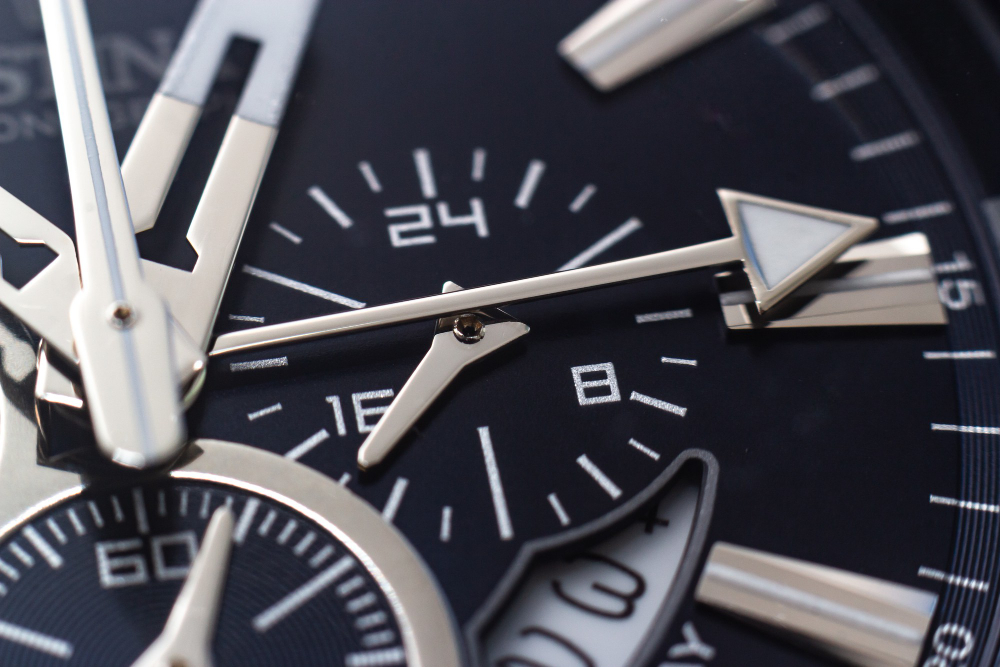
Seiko Conceptual Regular Chronograph SSB415P1 is a watch with decidedly masculine character, combining deep black with dynamic, sporty design. Its precise chronograph, steel bracelet, and expressive details make it an ideal choice for people who value strong, modern style.
How to remove scratches from watch case and bracelet? Home tricks that restore shine
Metal watch elements bear traces of use fastest, so it's no wonder that watch case scratch removal is one of the most frequently discussed topics. Stainless steel allows gentle polishing without complicated equipment, as long as you know what finish the problem concerns. Polished surfaces are easy to "refresh" because they like shine, while brushed ones require greater caution – inappropriate method can completely change texture character. For first attempts, it's best to use a specialist polishing cloth. Many of them work quickly and subtly, so you can restore watch aesthetics without interfering with its construction.
However, if scratches are more visible, some people decide on fine high-grit sandpaper. This is an effective method but requiring really great precision. A moment's inattention is enough to over-sand too large a surface, and then the whole starts looking unnatural. Therefore, before moving to sandpaper, consider whether it's not better to focus on minimal corrections and daily care. Sometimes even a few minutes of work with a proven polishing agent improves appearance so much that there's no sense risking further intervention. The better you recognize finish type and damage level, the easier it will be to make a decision about which method will be safest for you.
Watch scratch removal – when do home methods fail and when do they really save the situation?
There's no one ideal method that will work in every situation, so realistic approach to home method possibilities is crucial. With hesalite crystals, the matter is simple – it's an elastic material that reacts well to polishing and allows restoring transparency even in a few minutes. The problem begins when the scratch has greater depth or the surface is clearly deformed. In such cases, home treatments can improve appearance but rarely achieve full damage removal effect. That's precisely why it's worth observing the surface at different angles and assessing whether further polishing makes sense.
The situation looks different in the case of mineral and sapphire crystal. Here home methods have practically no effectiveness, and aggressive polishing attempts can only lead to errors difficult to reverse. So if you see a clear scratch on one of these materials, the only sensible option remains professional service. Contrary to fears, such services are quick, predictable, and performed in a way that doesn't interfere with watch construction. That's precisely why so many people decide to entrust their model to a specialist when damage concerns crystal other than hesalite. Thanks to this, you have certainty the effect will be lasting and the watch will maintain its original appearance and value.
Regardless of whether you're fighting minor scratches or thinking about professional refreshing of your timepiece, the most important thing is conscious approach to materials and methods. Thanks to this, your watch can regain great appearance for a long time. And if you're looking for a new model or want to supplement your collection with something really exceptional, visit WestWatches – online watch store for the demanding. You'll find carefully selected proposals there that stand out for quality, design, and reliability. The perfect moment to choose something for yourself.

Krzysztof Szopa
Watch Expert
An expert associated with the WestWatches.pl brand, a place that has been providing watches for every occasion for years. Thanks to many years of experience in the watchmaking and jewelry industry, he passionately shares his knowledge, offering professional advice both in the online and physical store. He specializes in selecting original watches, watch accessories, and jewelry products that combine exceptional quality with competitive prices. His goal is to help customers find the ideal product that will meet their expectations and emphasize their style.

See popular articles
316L, 904L and surgical steel – what is your watch made of?
Most steel watches, from affordable models to luxury constructions, are made of 316L steel. 904L steel contains more nickel, chromium and molybdenum, and therefore offers higher corrosion resistance, but in itself it does not mean greater scratch resistance. The term “surgical steel”, in turn, does not point to one strictly defined alloy. In watches it most often refers to 316L, but without a specific material designation it may simply be a marketing name. If you are choosing a watch for years, look therefore not only at the words “stainless steel”, but also at the grade of steel, which components are made of the given material and how they are finished.
Japanese or Swiss watches? We compare quality, movements and prices
If you are wondering whether Japanese or Swiss watches are better, the name of the country alone will not give you a good answer. In both cases you will find simple models for relatively little money, solid mid-range automatics and designs belonging to the world's watchmaking high end. Far more about quality will be told to you by the specific movement, the way the case and bracelet are made, the crystal, quality control, accuracy and price. Check how Japanese watches really differ from Swiss ones and what to pay attention to before you choose a model for yourself.
The lifespan of a quartz watch – how long does it really last, and when is it no longer worth repairing?
We value quartz watches above all for their accuracy, convenience and modest day-to-day demands. That does not mean, however, that they can run indefinitely and need nothing more than a new battery once every few years. Over time, the components of the movement itself also wear out, and the moment a watch starts giving trouble can look completely different depending on the model, the way it is used and the availability of parts. So how long can a quartz watch last, what wears out in it most often and when does repair still make sense? Check what its lifespan really depends on.
The second hand on a watch – why does it jump, move smoothly or stop?
The way the seconds hand moves can tell you a lot about a watch's movement, but it is not an infallible test. A single distinct jump per second most often points to quartz, several small movements per second are typical of a mechanical movement, and an almost continuous glide is associated with Spring Drive. There are exceptions, however: there is a quartz watch with a sweeping seconds hand, and a mechanical watch that makes exactly one jump per second. What is more, a stopped hand does not have to mean a fault. Check how to read these signals and when you really need a watchmaker's help.

How do you set an automatic watch? Date, time and time zone 21:00–3:00
An automatic watch does not need a battery, but it does require a little knowledge from its owner. Setting the time or date seems simple, yet the wrong moment or the wrong way of using the crown can affect how the movement works. Many questions concern changing the date at night, moving the hands backwards and restarting a watch after a longer break. Check how to set an automatic watch correctly, what to pay attention to with the crown and why people often talk about particular caution between 9:00 pm and 3:00 am.

Wodoszczelność 10 ATM i 20 ATM – czy możesz pływać i nurkować z takim zegarkiem?
Co naprawdę oznacza 10 ATM lub 20 ATM na zegarku i czy takie oznaczenie pozwala bez obaw wejść do basenu, morza albo nurkować? Same liczby mogą być mylące, dlatego sprawdź, jak czytać klasę wodoszczelności i dobrać zegarek do aktywności w wodzie.
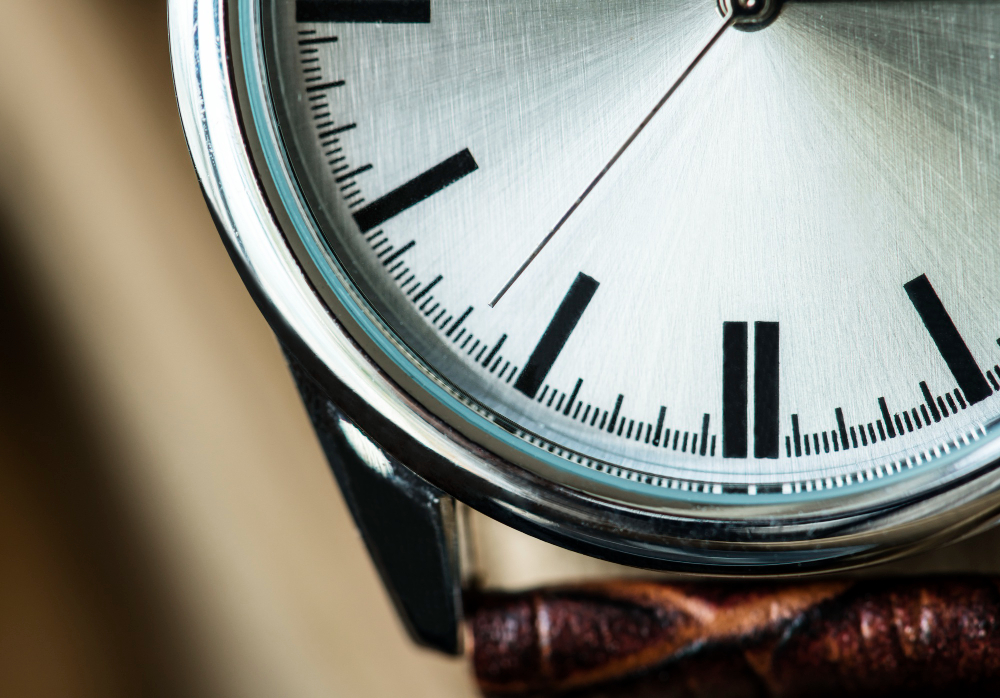
Water resistance 3 ATM – what does it mean and what can you do with it?
3 ATM water resistance means the watch is prepared above all for rain, accidental splashes and brief contact with water during everyday activities. It does not mean that you can swim with it, shower in it or submerge it to a depth of 30 metres. It is precisely the “30 m” marking that most often misleads. It is the result of a pressure test carried out under controlled conditions, not a declared working depth. So if you see 3 ATM, 3 bar or Water Resistant 30 m on the case back or in the specification, treat the watch as resistant to everyday moisture, but not as a watch for water activities.

Rolex-style watches – the best alternatives to the Submariner, Explorer and Datejust
For years Rolex has been one of the most important style benchmarks in the watch world, but its price is not within everyone's reach. That is why it is worth looking at watches similar to Rolex and models inspired by its styling, which offer their own character, solid build quality and much more affordable prices. We are not talking about counterfeits here, but about legitimate watches from other brands that draw on similar solutions and design language. Check out watches inspired by Rolex's style and choose the model that suits your style and budget.
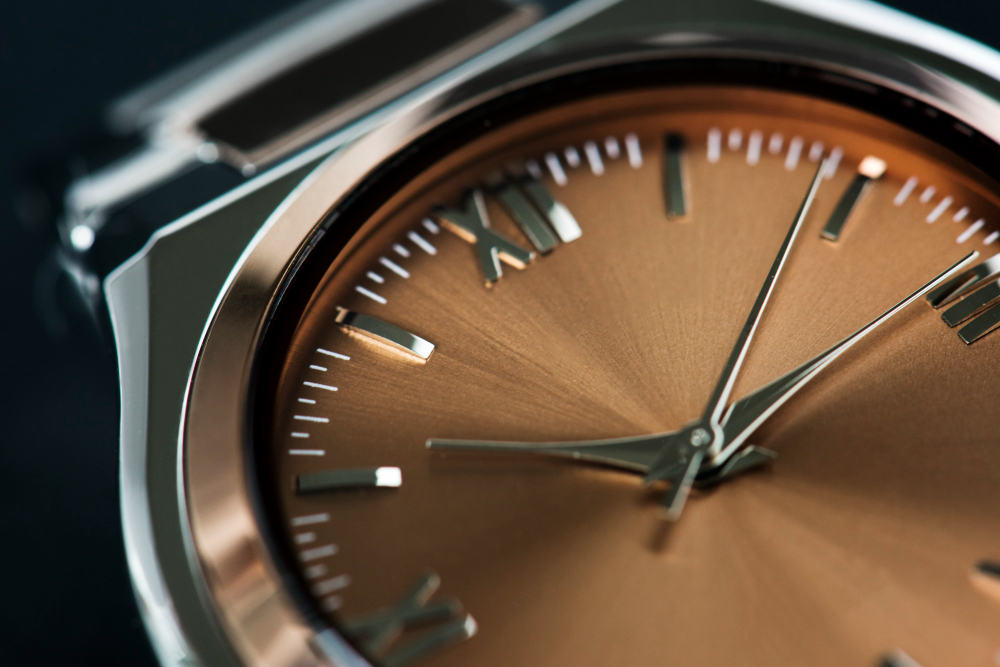
A bronze watch – why does each one change over time?
A bronze watch stands out because its appearance changes along with its owner. The case gradually darkens, turns matte and develops a patina, so two identical models can look completely different after just a few months. This is the greatest advantage of bronze, but also a trait you need to accept before buying. If you expect a watch that keeps its factory shine for years, steel may be a better direction. If, on the other hand, you like vintage looks, signs of use and the natural ageing of a material, bronze gives an effect that is hard to achieve in any other metal.