




Water resistance of 10 ATM and 20 ATM – can you swim and dive with a watch like this?
What does 10 ATM or 20 ATM on a watch really mean, and does such a marking let you go into a pool or the sea, or dive, without worry? The numbers alone can be misleading, so check how to read a water resistance class and how to match a watch to your water activities.
What do 10 ATM and WR100 mean in practice?
10 ATM, 10 bar, 100 m and WR100 describe the same level of a watch's declared resistance to water pressure. In a simple conversion, about 10 metres of water column is assumed per 1 ATM, so 10 ATM corresponds to the 100 m marking. This value should not, however, be read as the maximum depth to which you can go with the watch on your wrist. The tightness test is carried out in controlled conditions, whereas in a pool or the sea there are also arm movement, sudden immersion, temperature differences and the condition of the watch itself.
If you have come across lower classes before, also check what 5 ATM water resistance means on a watch – the difference in everyday use is clear.
In practice, a 10 ATM watch can be treated as a model prepared for normal use in water, not just for accidental splashes. This is a level suited to someone who swims in a pool, goes into a lake or the sea with the watch on, or wants to wear it on holiday without taking it off before every swim. That does not mean complete freedom, however.
Before entering the water, check that the crown is properly closed, and if the construction uses a screw-down crown, that it has actually been screwed down. You can read more about this safeguard in the guide to the screw-down crown in watches. It is also worth knowing the difference between the terms waterproof watch and water-resistant watch, because marketing names do not always say as much as a specific WR value.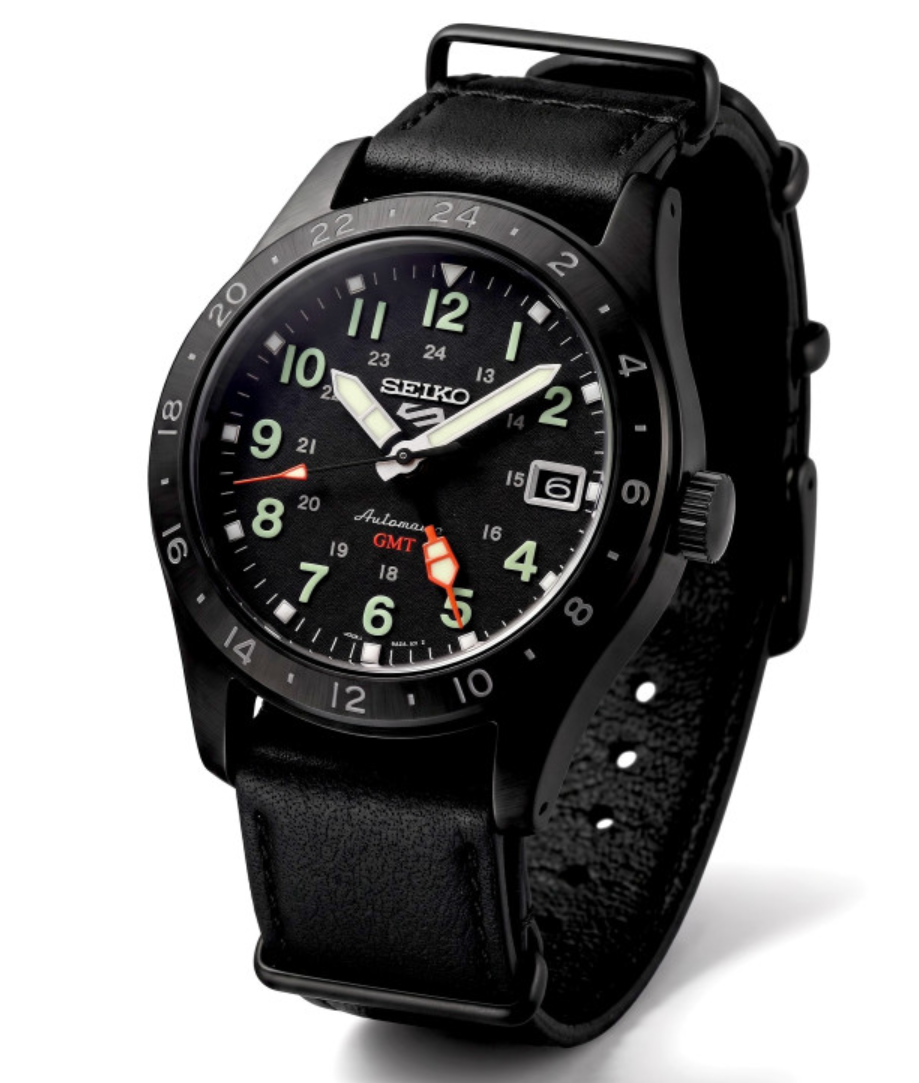
Seiko 5 Sport Field Automatic GMT SSK025K1 attracts attention with its field-watch character and GMT function, but before taking it to the pool or on a holiday by the water it is worth checking something else – what water resistance class it has and what it really means in practice. Is 10 ATM enough for swimming, and when is it better to opt for 20 ATM? In this guide we explain how to read these markings and how to match a watch to your water activities.
Can you swim and do water sports with a 10 ATM watch?
Yes – 10 ATM water resistance is suitable for recreational swimming, snorkelling near the surface and many water sports. You can go into a pool with such a watch, swim in a lake or the sea and use it while sailing or surfing, as long as the manufacturer of the specific model does not introduce additional restrictions. WR100 gives far more freedom than the basic 3 or 5 ATM, which is why it is a sensible starting point if the watch is to be not only an everyday accessory but also to accompany you on an active holiday. When choosing, you can immediately narrow your search to men's sports watches or women's sports watches and check models specifically for the 10 ATM marking or higher.
There are limits, though. With 10 ATM it is better to avoid jumping into the water from a great height, hard impacts against the water surface and scuba diving as a standard use of the watch. What matters is not only the pressure resulting from depth, but also sudden loads and the condition of the construction. After a swim in salt water, rinse the watch with clean, lukewarm water to remove salt from the case, crown, bracelet or strap. If you swim often, checking the tightness becomes more important than the marking on the case back. WR100 says which class the watch was designed and tested for, but does not guarantee unchanging tightness throughout its lifetime. An older watch in particular, after servicing, a battery change or a hard knock, is worth checking before the next swimming season.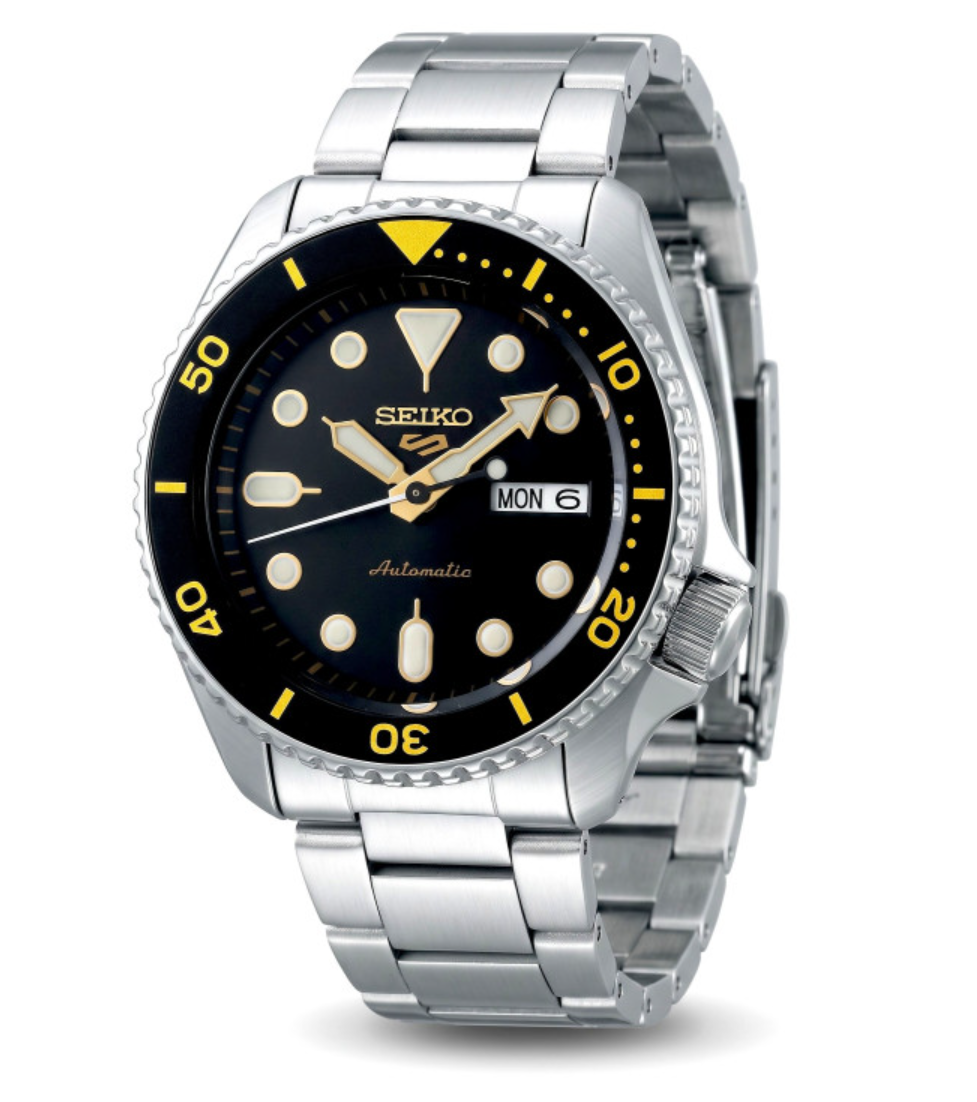
Seiko 5 Automatic SRPD57K1 is a good example of a watch for which the 10 ATM marking has real significance in everyday use. Such a water resistance class gives freedom when swimming, bathing or relaxing by the water, but does not mean full resistance in all conditions. Check what exactly 10 ATM means and where the capabilities of WR100 end.
When do 20 ATM and WR200 make more sense?
Choose 20 ATM, i.e. WR200, when the watch is to work regularly in more demanding water conditions. This applies to frequent swimming, intense water sports, breath-hold diving or situations in which you want a greater margin of resistance than with 10 ATM. The marking 20 ATM = 20 bar = 200 m still should not be treated as simple permission to go down to a depth of 200 metres. It does show, however, that the construction has been prepared for higher pressure than a WR100 watch.
Among G-Shock watches you can find many designs with exactly the 20 ATM class.
The WR level alone should not be the only filter, however. If the watch is going to end up in water several times a week, also pay attention to the way the crown is secured, the construction of the pushers, the strap material and the manufacturer's recommendations on operating functions underwater. Do not press chronograph pushers or other functions while submerged if the instructions for the given model clearly do not allow it. For someone who swims recreationally 10 ATM is usually enough, while 20 ATM gives a larger margin with frequent training and more demanding activities. It is also a sensible direction when you want one sports watch both for everyday wear and for trips to the sea, kayaking, paddleboarding or more intense activities in the water.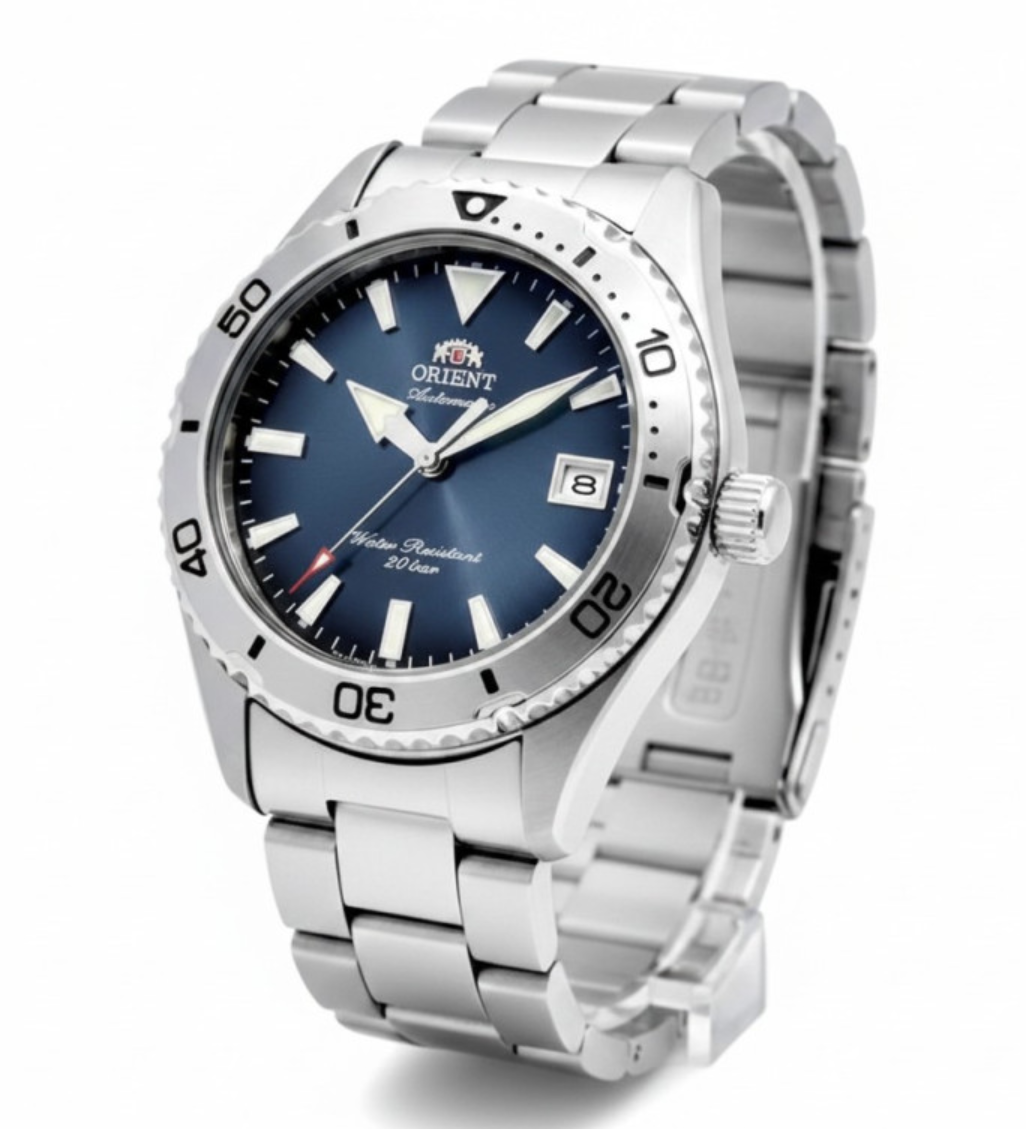
Orient Sports Mako Diver Automatic RA-AC0Q14L30B is a model that immediately draws attention not only with its sporty looks, but also with its 20 ATM water resistance. Such a parameter gives a larger margin when in contact with water and makes the watch better suited to swimming, water sports and more demanding use. Check what 20 ATM means in practice and when such a water resistance class makes a real difference.
Is a 20 ATM watch suitable for scuba diving?
20 ATM is a good starting point when choosing a watch for diving, but WR200 alone does not make every model a dive watch. If you want to use a timepiece during scuba diving, check whether the manufacturer has actually provided for such use. Look above all for information on compliance with ISO 6425, the “Diver’s” marking, a suitable system for measuring dive time, good luminescence and a securely protected crown. The ISO 6425:2018 standard sets out requirements and test methods for dive watches; according to ISO, the current edition was reconfirmed in 2024. The standard applies to watches intended for diving and covers more than simply checking the case's resistance to pressure.
That is why, when buying, do not stop at a large “200 m” inscription. In the category of men's dive watches, check the specification of each model separately and compare the water resistance class with its construction and declared purpose. For recreational scuba diving, a watch designed as a diver is a better choice than a random 20 ATM model, even if both have a similar WR value on the dial. Technical or saturation diving involves different requirements again, and equipment intended for specific procedures and working conditions is needed. A watch can be a useful tool and an additional way of keeping track of time, but it should not be treated as a substitute for essential diving equipment.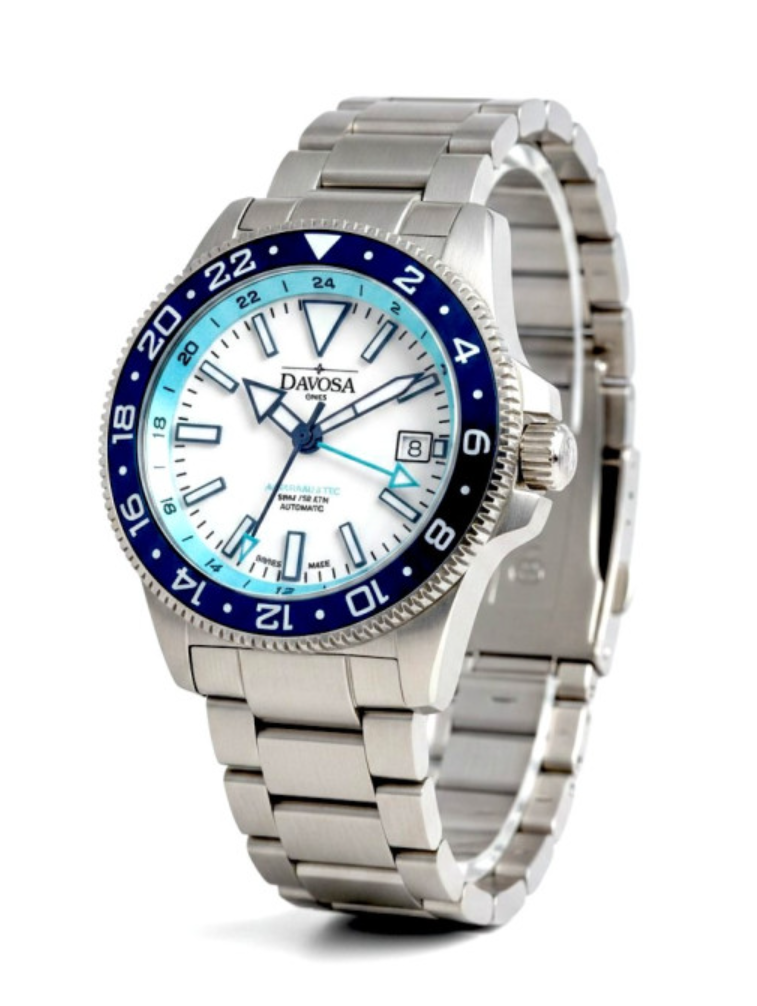
Davosa Argonautic World Traveller Automatic 161.542.40 combines a GMT function with 20 ATM water resistance, so it fits well into the topic of watches intended for frequent contact with water. The manufacturer also specifies a screw-down crown, which further supports its sporty character.
Why does a watch's water resistance decline over time?
Water resistance is not a property given to a watch once and for all – over time gaskets and other protective elements can lose their properties. The most important are the seals around the case back, crown and crystal. They are affected by temperature, UV radiation, detergents, chlorine, salt, sweat and the ordinary ageing of the material. On top of that come mechanical situations: a hard knock, opening the case during a battery change or an imprecisely closed crown. Even a 10 ATM or 20 ATM watch may stop meeting its original class if its seals are worn or were incorrectly fitted after servicing.
Also avoid saunas, very hot showers and jacuzzis. High temperature and steam place different demands on seals than ordinary swimming in water, so a high WR value is not automatic protection against every environment. After contact with sea water, rinse the watch with fresh water and dry it gently, and if you swim often, have a tightness test performed periodically in line with the recommendations of the manufacturer or service centre. If you notice fogging of the crystal or droplets inside the case, do not wait for it to dry on its own – see the guide what to do when water has got into your watch. For the pool and recreational swimming aim for 10 ATM, for more demanding activities consider 20 ATM, and for diving look above all for a construction actually designed as a dive watch.

Krzysztof Szopa
Watch Expert
An expert associated with the WestWatches.pl brand, a place that has been supplying watches for every occasion for years. Thanks to many years of experience in the watchmaking and jewellery industry, he passionately shares his knowledge, offering professional advice both in the online and in the brick-and-mortar store. He specialises in selecting original watches, watch accessories and jewellery that combine exceptional quality with competitive prices. His goal is to help customers find the ideal product that meets their expectations and highlights their style.

Zobacz Popularne artykuły
Stal 316L, 904L i stal chirurgiczna – z czego jest zrobiony Twój zegarek?
Większość stalowych zegarków, od przystępnych cenowo modeli po konstrukcje luksusowe, powstaje ze stali 316L. Stal 904L zawiera więcej niklu, chromu i molibdenu, dlatego zapewnia wyższą odporność na korozję, ale sama w sobie nie oznacza większej odporności na zarysowania. Z kolei określenie „stal chirurgiczna” nie wskazuje jednego, ściśle określonego stopu. W zegarkach najczęściej odnosi się do 316L, lecz bez konkretnego oznaczenia materiału może być po prostu nazwą marketingową. Jeśli wybierasz zegarek na lata, patrz więc nie tylko na napis „stainless steel”, lecz także na gatunek stali, elementy wykonane z danego materiału i sposób ich wykończenia.
Zegarki japońskie czy szwajcarskie? Porównujemy jakość, mechanizmy i ceny
Jeśli zastanawiasz się, czy lepsze są zegarki japońskie, czy szwajcarskie, sama nazwa kraju nie da Ci dobrej odpowiedzi. W obu przypadkach znajdziesz proste modele za stosunkowo niewielkie pieniądze, solidne automaty ze średniej półki oraz konstrukcje należące do światowego zegarmistrzowskiego high-endu. O jakości znacznie więcej powiedzą Ci konkretny mechanizm, sposób wykonania koperty i bransolety, szkło, kontrola jakości, dokładność oraz cena. Sprawdź, czym naprawdę różnią się zegarki japońskie od szwajcarskich i na co zwrócić uwagę, zanim wybierzesz model dla siebie.

Żywotność zegarka kwarcowego – ile naprawdę działa i kiedy naprawa przestaje się opłacać?
Zegarki kwarcowe cenimy przede wszystkim za dokładność, wygodę i niewielkie wymagania związane z codzienną obsługą. Nie oznacza to jednak, że mogą działać bez końca i potrzebują jedynie nowej baterii raz na kilka lat. Z czasem zużywają się również elementy samego mechanizmu, a moment, w którym zegarek zaczyna sprawiać problemy, może wyglądać zupełnie inaczej w zależności od modelu, sposobu użytkowania czy dostępności części. Jak długo może więc działać zegarek kwarcowy, co najczęściej się w nim zużywa i kiedy naprawa nadal ma sens? Sprawdź, od czego naprawdę zależy jego żywotność.

Sekundnik w zegarku – dlaczego skacze, płynie albo się zatrzymuje?
Sposób poruszania się sekundnika może dużo powiedzieć o mechanizmie zegarka, ale nie jest nieomylnym testem. Jeden wyraźny skok na sekundę najczęściej wskazuje na kwarc, kilka drobnych ruchów na sekundę jest typowe dla mechanizmu mechanicznego, a niemal ciągły ślizg kojarzy się ze Spring Drive. Są jednak wyjątki: istnieje zegarek kwarcowy z płynącym sekundnikiem, a także mechaniczny zegarek wykonujący dokładnie jeden skok na sekundę. Co więcej, zatrzymana wskazówka wcale nie musi oznaczać awarii. Sprawdź, jak odczytać te sygnały i kiedy rzeczywiście potrzebna jest pomoc zegarmistrza.

Jak ustawić zegarek automatyczny? Data, godzina i strefa 21:00–3:00
Zegarek automatyczny nie wymaga baterii, ale wymaga od właściciela odrobiny wiedzy. Ustawienie godziny czy daty wydaje się proste, jednak niewłaściwy moment lub sposób użycia koronki może mieć znaczenie dla pracy mechanizmu. Szczególnie dużo pytań budzi zmiana datownika w godzinach nocnych, cofanie wskazówek oraz ponowne uruchamianie zegarka po dłuższej przerwie. Sprawdź, jak poprawnie ustawić zegarek automatyczny, na co zwrócić uwagę przy koronce i dlaczego często mówi się o szczególnej ostrożności między 21:00 a 3:00.

Water resistance of 10 ATM and 20 ATM – can you swim and dive with a watch like this?
What does 10 ATM or 20 ATM on a watch really mean, and does such a marking let you go into a pool or the sea, or dive, without worry? The numbers alone can be misleading, so check how to read a water resistance class and how to match a watch to your water activities.
Wodoszczelność 3 ATM – co oznacza i na co pozwala?
Wodoszczelność 3 ATM oznacza, że zegarek jest przygotowany przede wszystkim na deszcz, przypadkowe zachlapania i krótki kontakt z wodą podczas codziennych czynności. Nie oznacza natomiast, że możesz z nim pływać, brać prysznic czy zanurzyć go na głębokość 30 metrów. Właśnie oznaczenie „30 m” najczęściej wprowadza w błąd. To wynik testu ciśnieniowego przeprowadzanego w kontrolowanych warunkach, a nie deklarowana głębokość użytkowa. Jeśli więc na deklu lub w specyfikacji widzisz 3 ATM, 3 bar albo Water Resistant 30 m, traktuj zegarek jako model odporny na codzienną wilgoć, ale nie jako zegarek do aktywności w wodzie.

Zegarki podobne do Rolexa – najlepsze alternatywy dla Submarinera, Explorera i Datejusta
Rolex od lat jest jednym z najważniejszych wyznaczników stylu w świecie zegarków, ale jego cena nie jest dostępna dla każdego. Dlatego warto przyjrzeć się zegarkom podobnym do Rolexa i modelom inspirowanym jego stylistyką, które oferują własny charakter, solidne wykonanie i znacznie bardziej przystępne ceny. Nie mówimy tu o podróbkach, lecz o legalnych zegarkach innych marek, które czerpią z podobnych rozwiązań i wzornictwa. Sprawdź zegarki inspirowane stylem Rolexa i wybierz model, który pasuje do Twojego stylu i budżetu.
Zegarek z brązu – dlaczego każdy egzemplarz z czasem staje się inny?
Zegarek z brązu wyróżnia się tym, że jego wygląd zmienia się razem z właścicielem. Koperta stopniowo ciemnieje, matowieje i pokrywa się patyną, dlatego dwa identyczne modele już po kilku miesiącach mogą wyglądać zupełnie inaczej. To największa zaleta brązu, ale również cecha, którą trzeba zaakceptować przed zakupem. Jeśli oczekujesz zegarka zachowującego przez lata fabryczny połysk, lepszym kierunkiem może być stal. Jeśli natomiast lubisz vintage, ślady użytkowania i naturalne starzenie materiału, brąz daje efekt trudny do uzyskania w jakimkolwiek innym metalu.